NPA Account: Meaning, Impact, and Recovery Process
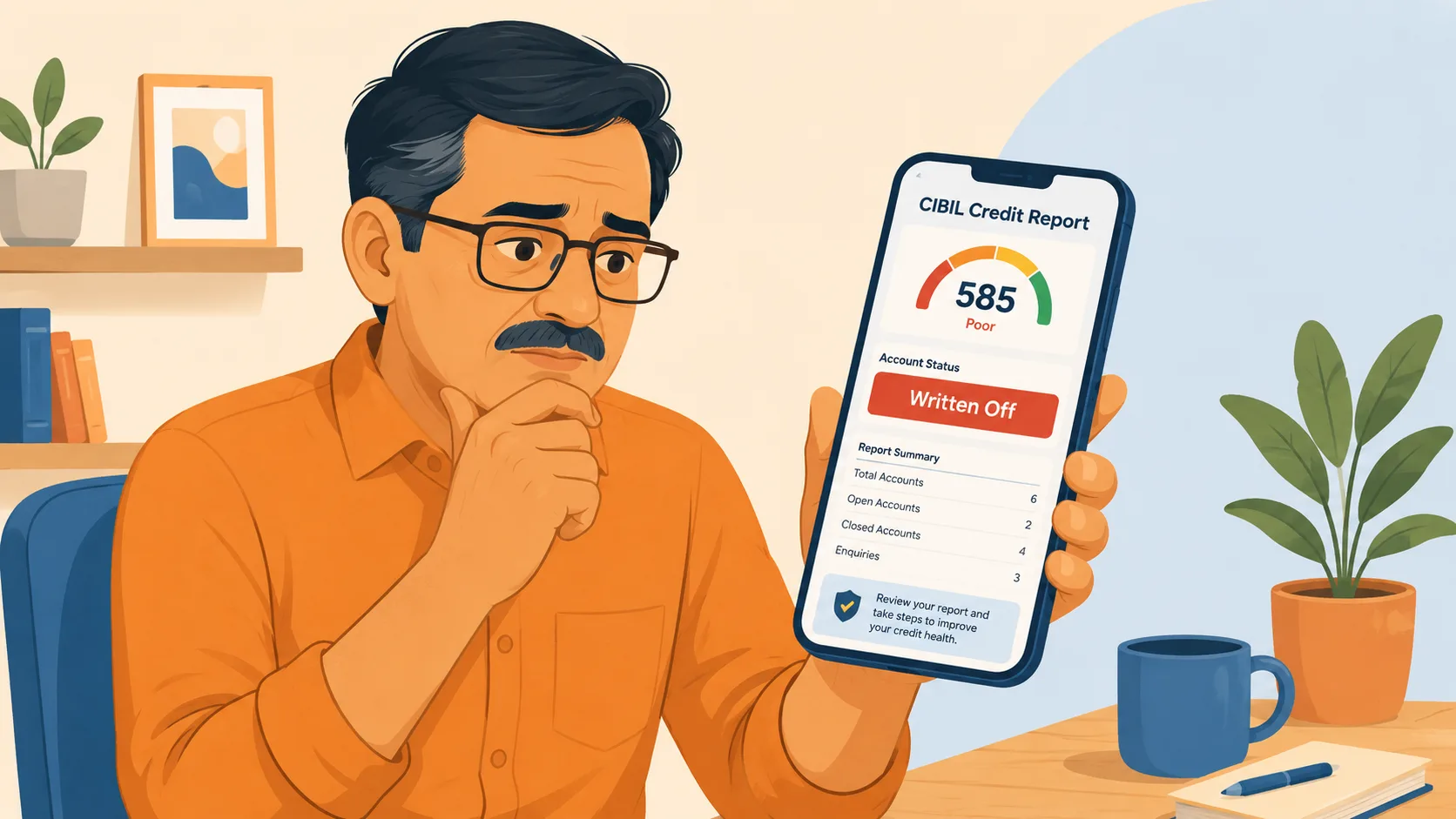
Everything an NPA account means for your loan, your CIBIL score, and what happens after your bank marks your account NPA. An NPA account is a loan the bank marks as bad debt after you miss payments for more than 90 days. Once this happens, the bank stops earning interest on it and moves it into a separate, high-risk category on its books.

Mohit Juneja
Reviewed by FREED India, Debt Resolution Specialists
 4.7/5
4.7/5 ₹3,200Cr+
 20,000+
 20,00,000+4.7/5₹3,200Cr+20,000+20,00,000+
KEY TAKEAWAYS

An NPA account is a loan marked as bad debt after 90 days of missed payment.
An NPA classification may significantly affect your credit profile and future lender assessments.
NPA accounts move through three stages: sub-standard, doubtful, and loss asset, based on how long they stay unpaid.
For secured loans, banks can use the SARFAESI Act. For unsecured loans, recovery usually goes through a civil suit or the Debt Recovery Tribunal.
Settlement is not something a borrower chooses out of preference. Banks and financial companies only consider it when you are in genuine financial difficulty and truly unable to repay the full amount.
What Is an NPA Account?
NPA stands for Non-Performing Asset. In simple words, it's a loan that has stopped "performing" for the bank, because you haven't paid the interest or the instalment for more than 90 days.
Before this point, your account is called a standard asset. The bank still treats it as a healthy loan. Once you cross 90 days of non-payment, the bank has no choice. RBI rules require it to reclassify your account as NPA.
Think of it the way you'd sort your own bills. Paid ones in one pile, overdue ones in another, so you always know what's actually still owed. The bank runs the same logic across millions of loans, and NPA is just the label for the overdue pile.
The moment your account becomes NPA, two things change for the bank. It has to stop counting the interest on your loan as income. And it has to set aside extra money, called a provision, in case the loan is never repaid.
For you as the borrower, the tag itself doesn't erase your debt. You still owe every rupee. What changes is how your bank, and your credit report, now treat that debt. An NPA is not the same as a written off loan or a settled loan. Those come later, after an NPA account stays unresolved for a longer stretch.

Talk Through Your Situation, Free
No paperwork, no pressure. Just clarity on where you stand.
Start My Debt Assessment
Why Does a Loan Become an NPA?
An NPA account rarely happens because of one missed payment. It usually builds up over a few months.
Maybe a few EMIs slipped over the last few months. Maybe a credit card bill kept rolling for a while. Maybe income stopped matching the total EMI load, and something had to give. None of this makes you careless with money. It means the numbers stopped adding up, and the bank's clock kept running in the background either way.
Here's what that clock looks like in practice:
- Day 1 to 30: The first missed payment. The bank sends reminders by SMS, email, and call. No recovery agent is involved yet. This is the easiest stage to fix, a call to the bank about your situation goes a long way here.
- Day 30 to 60: The account is now overdue long enough that the bank flags it internally as an early warning account, sometimes called SMA-1. Reminders get more frequent. Still no recovery agent.
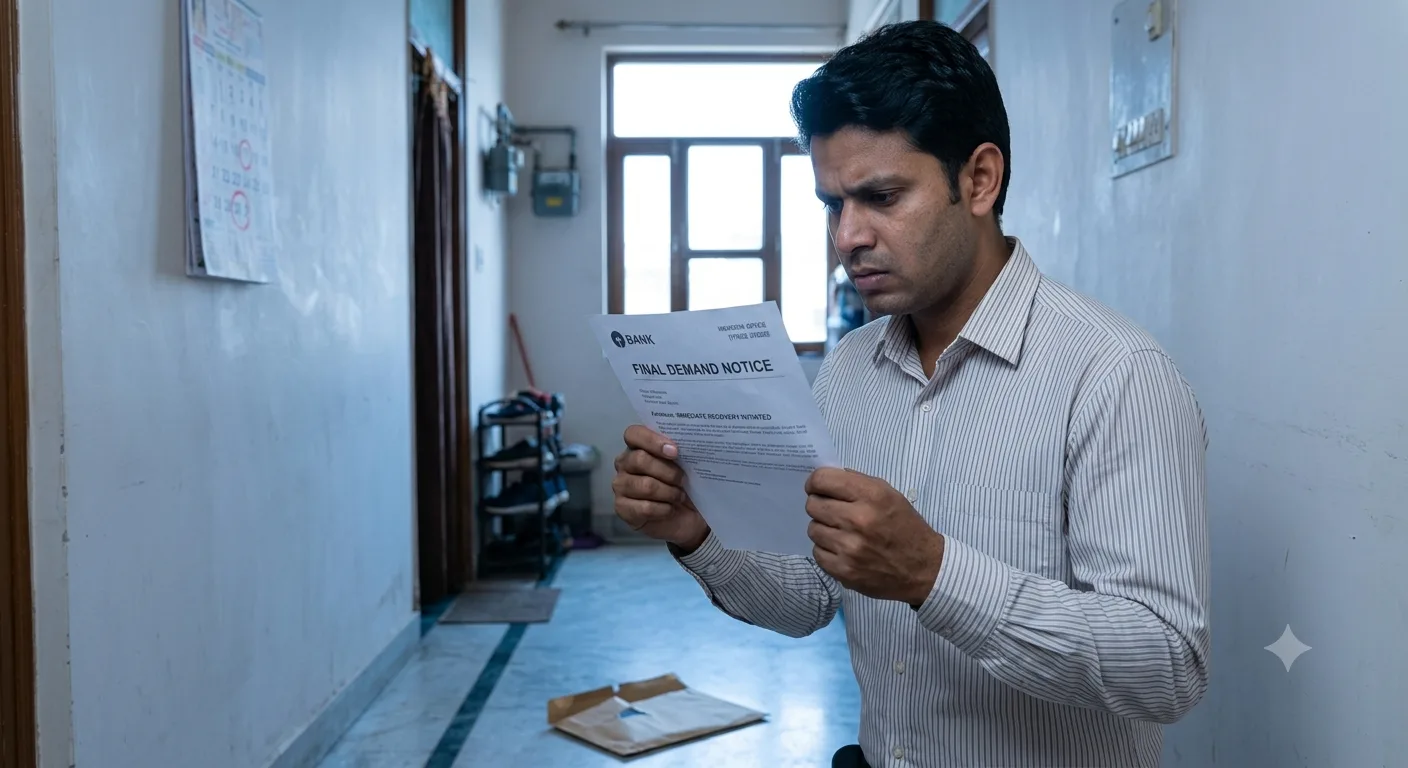
- Day 60 to 90: A formal pre-NPA notice usually arrives, warning in writing that the account will turn NPA if dues aren't cleared. This is the last real window to act before the classification changes.
- Day 90 onward: The account is now NPA. Recovery agents may be assigned. For unsecured loans, no asset can be seized. Agents must call only between 8 AM and 7 PM, under RBI's conduct rules.
If your total EMIs already eat up more than 50% of your take-home salary, you're heading into the kind of stretch that often ends here. Catching that number early gives you room to act before day 90.
What Are the Stages of NPA Classification?
Stage | Duration | What It Means for Recovery |
Sub-standard | First 12 months as NPA | Recovery still seen as realistic; repayment, restructuring, or settlement all possible |
Doubtful | 12+ months as NPA | Bank sets aside a much larger provision; recovery seen as less likely |
Loss asset | Final stage | Loan seen as effectively uncollectible, may not yet be formally written off |
The amount you owe stays the same through all three stages. What shifts is how badly your bank wants the account resolved, and that pressure is often where a borrower gets the most room to negotiate.
What Happens After Your Account Becomes NPA?
Your CIBIL score drops. Typically by 75 to 100 points, depending on your starting score and how much else on your report is affected. New credit gets harder to get, sometimes impossible, until the situation changes.
Recovery calls begin, usually from the bank or NBFC directly at first, then a recovery agent if the bank assigns one. Under RBI's Fair Practices Code, agents can only call between 8 AM and 7 PM, and cannot use threats or abusive language.
Legal recovery becomes possible too, depending on the loan type. If your loan is secured, like a home loan, car loan, or gold loan, the bank can use the SARFAESI Act, which lets it issue a 60-day notice and, if unresolved, take possession of the secured asset without going to court first. For unsecured loans, personal loans, credit cards, BNPL, there's no asset to seize. Recovery instead goes through the Debt Recovery Tribunal for amounts above ₹20 lakh, or a regular civil court suit for smaller amounts. Both routes take months.
The NPA tag doesn't disappear on its own. It stays on your report and keeps affecting how lenders see you until the account is resolved, through full repayment, a settlement, or in the worst case, a write-off.


What the Law Says
RBI's Fair Practices Code limits recovery agent calls to 8 AM to 7 PM and bans threats, abusive language, or public shaming during collection.
Understand Your RightsWhat Are Your Options If Your Account Is NPA?
Not every NPA account needs the same fix. The right option depends on whether you can still manage some repayment, or whether that's no longer possible at all.
If you can still manage partial repayment, talk to your bank about restructuring: a longer tenure, a revised EMI, or a short repayment pause. These options keep your credit report cleaner than a settlement would, and they're worth asking for first.
If multiple loans are the real issue rather than the amount owed, debt consolidation may help by combining eligible unsecured loans into a structured repayment, subject to lender approval and eligibility. This only works if you're not yet in default, so it fits accounts still in the earlier stages best.
If repaying in full has become genuinely impossible, that's a different conversation. Settlement is not something a borrower chooses out of preference. Banks and financial companies only consider it when you're in genuine financial difficulty and truly unable to repay the full amount. Reaching a personal loan settlement comes with real CIBIL consequences, but for accounts already NPA with no realistic repayment path, it's often what stops the situation from getting worse.
Even a partial fix beats no move at all.
How FREED Helps If Your Account Has Turned NPA
If repaying an NPA account in full is no longer realistic, FREED's Loan Settlement Plan helps you move through the process step by step.
FREED first understands your complete financial picture: outstanding loans, income, and what you can realistically set aside each month. From this, a personalised settlement plan gets built. You then follow a monthly savings routine, building funds into a dedicated account held independently, not by FREED. Once enough is saved, FREED negotiates with your bank on your behalf, working toward the best terms possible for your situation.
If your bank agrees, you pay the settled amount and receive a settlement letter confirming the account is resolved. FREED charges a fee only once the settlement is successfully completed- nothing upfront.
We work with your banks to bring down your total debt by up to 50%*, without you having to take on any new loan to do it. The exact figure ultimately depends on your bank.
Rates and figures shown are indicative. Final terms are decided by your bank. FREED is not a loan provider and does not guarantee any specific outcome.
Savings need to build before any negotiation can start, so this isn't an overnight fix. But for an NPA account with no realistic repayment path left, it beats an open-ended standoff with recovery calls.
What Helps If Your Account Has Become NPA
Respond to every notice in writing, not just over the phone. A written reply creates a record that can matter later, especially if the matter ever reaches a tribunal or court.
Keep copies of everything: notices, letters, payment records. They help if you ever need to correct a report error or challenge a wrong classification.
Don't take a new loan to pay off an NPA account. It's one of the fastest ways borrowers slide into a deeper trap, one debt paying off another with no real resolution.
Ask about restructuring, consolidation, or settlement early, rather than waiting for recovery action to escalate.

Freed Expert Tip
If your account has just turned NPA, respond to the bank's notice in writing, even a short one. A written reply creates a record and keeps your options open.
Talk to a FREED CounsellorSources
Claim in Blog | Source |
|---|---|
NPA = loan overdue 90+ days; three stages sub-standard (≤12 months), doubtful (12+ months), loss asset | Master Direction — RBI (Commercial Banks – Income Recognition, Asset Classification and Provisioning) Directions, 2025, RBI/DOR/2025-26/164 — rbi.org.in link |
SMA early-warning tags around day 30 / day 60 before full NPA at day 90 | Same Master Direction, para 31 (illustration on SMA-1/SMA-2 timing) — rbi.org.in link |
Recovery agents can only call 8 AM–7 PM, no threats/intimidation | RBI/2022-23/108, DOR.ORG.REC.65/21.04.158/2022-23, Aug 12, 2022 — rbi.org.in link |

Mohit Juneja
Mohit Juneja writes educational content at FREED on debt management, credit scores, loan repayment, and borrowing best practices. His content is shaped by expert insights and industry knowledge, helping readers better understand their financial options and make informed decisions.
mohit.juneja@freed.care

FREED is India's trusted loan management platform. Founded in 2020 and headquartered in Gurugram, FREED has counselled 20 lakh+ people on personal loans, credit cards, and app loans. FREED charges fees only on successful settlement, not upfront. FREED does not handle secured loans (home loans, car loans, gold loans).
Media Mentions