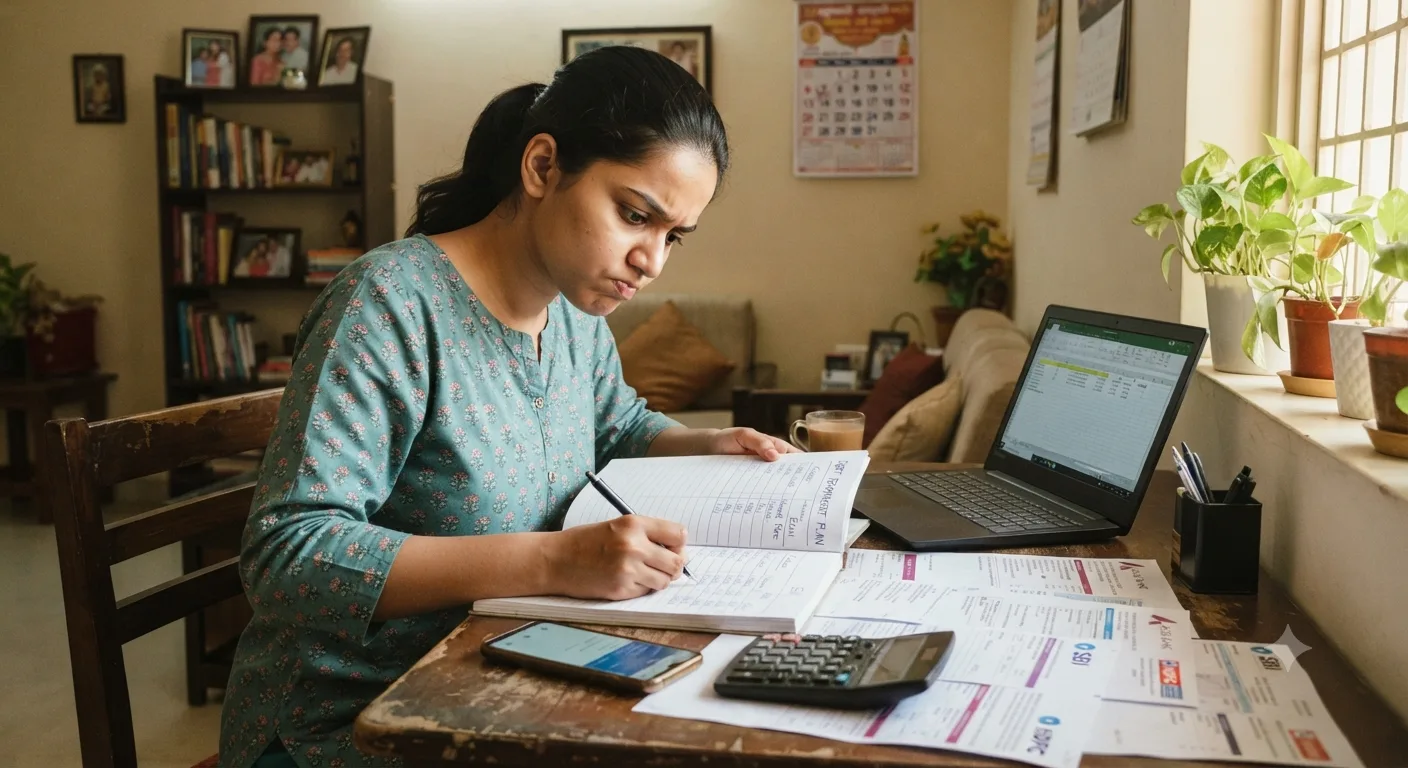
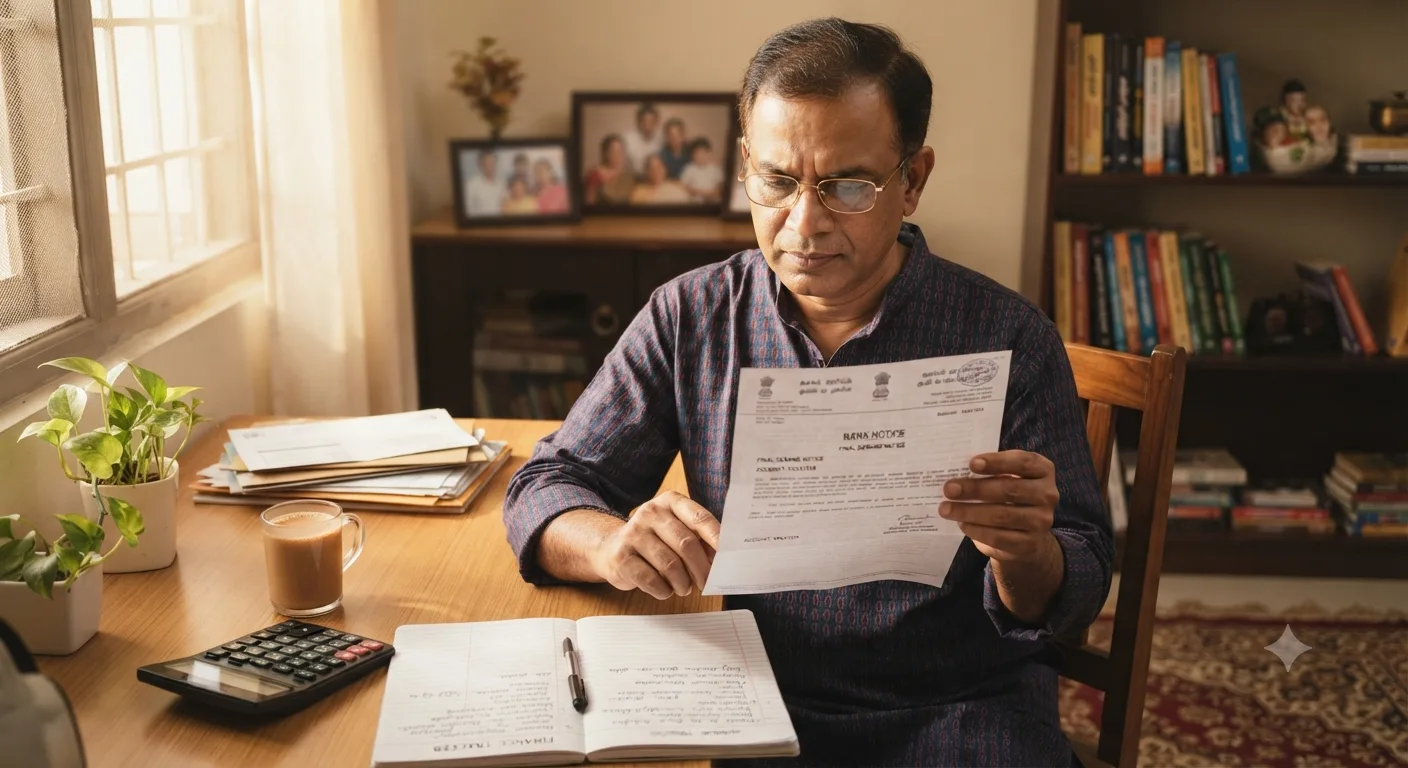
Loan Recovery Process in India: What Happens After You Miss EMIs
The loan recovery process is the sequence of steps a bank or NBFC (non-bank loan company) follows to collect overdue loan payments after a borrower misses EMIs (equated monthly instalments). It starts with reminder calls and moves through formal notices, recovery agents, and in extreme cases legal action. The exact path depends on whether your loan is secured (backed by property) or unsecured (personal loan, credit card, BNPL).
Mohit Juneja
Reviewed by FREED India, SEO Intern
 4.7/5
4.7/5 ₹3,200Cr+
 20,000+
 20,00,000+4.7/5₹3,200Cr+20,000+20,00,000+
Key summury

The loan recovery process begins from day 1 of a missed EMI. The 90-day mark is only the NPA (Non-Performing Asset) classification threshold, not the start of recovery.
From January 2025, RBI mandates credit bureau updates every 15 days. Missed EMIs now appear on your CIBIL report faster than before.
A 30-day delay can drop a CIBIL score by 90–100 points. At 90 days, NPA classification triggers formal recovery proceedings.
For unsecured loans, personal loans, credit cards, BNPL banks cannot seize your assets. Recovery is limited to communication, agents, and civil court.
The 90-day window before NPA classification is your most valuable negotiating period. Restructuring, tenure extension, and repayment plans are all available inside it.
What Is the Loan Recovery Process in India?
When you miss an EMI, a timer starts. Banks and NBFCs (non-banking financial companies) don't wait. They have a structured process governed by RBI (Reserve Bank of India) rules that begins from day 1 and moves through defined stages depending on how long the account stays unpaid.
This process is not random. Banks follow a Fair Practices Code that RBI mandates under its Master Circular (DBR.LEG.BC.21 writer to verify current citation). That means recovery calls have permitted hours. Agents must carry ID. Threats are prohibited. The process is regulated, even when it doesn't feel that way.
The path the bank takes depends on the type of loan:
Secured loans: home loans, car loans are backed by collateral. If the account remains unpaid, the bank can eventually seize the asset under the SARFAESI Act (Securitisation and Reconstruction of Financial Assets and Enforcement of Security Interest Act, 2002). It's a slower, more formal process, but asset seizure is a real possibility.
Unsecured loans: personal loans, credit cards, BNPL (buy now, pay later) have no collateral attached. Personal loans and credit cards generally do not involve pledged collateral. Recovery is limited to communication, recovery agents operating within RBI rules, and civil court action if the amount is large enough.
As of March 2023, gross NPAs (loans gone bad) of Indian banks stood at 3.9% of total loans, per RBI data. Writer to verify the most current figure and update. The number reflects millions of accounts in some stage of this process at any given time.
FREED works only with unsecured loans. This article focuses primarily on that path.
Why Do Borrowers Fall Into the Recovery Process?
Nobody plans to miss an EMI. The people who end up in the loan recovery process are mostly people whose situation changed: a job loss, a medical emergency, an income cut, a business that stopped generating enough. One income disruption was enough, because the monthly EMI burden was already high.
When a large share of income is committed to debt repayments, there is no cushion. Any disruption, even a brief one, tips the balance. That is the structural trap, not a character flaw.
A TransUnion CIBIL report from 2024 noted that over 23% more Indians faced prolonged loan defaults that year, compared to prior years writers to verify and source this figure. The "90 days past due" delinquency rate for personal loans was 1.14% in 2025 ( writer to verify). These are real numbers about real people in real situations.
What matters now is not how you got here. It's what you do next. The options available to you in the early stages of the recovery process are meaningfully better than what's available later. A borrower who calls their bank at 30 DPD (Days Past Due, the bank's metric for tracking overdue accounts) has more room to negotiate than one who goes silent until 90 DPD.
How you respond in the first few weeks shapes every stage that follows.
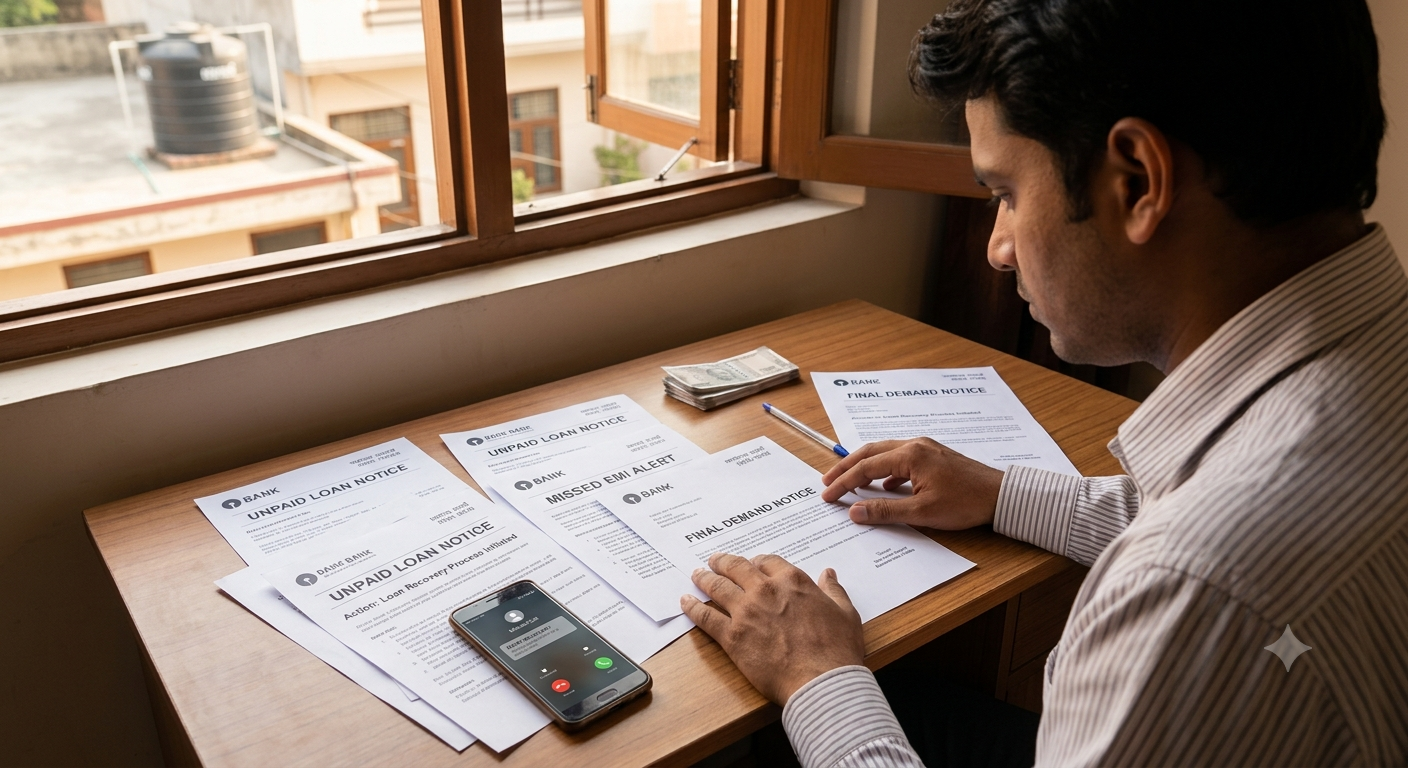
What Are the Stages of the Loan Recovery Process and When Does Each Happen?
Banks track every overdue account by DPD Days Past Due. Your DPD count starts from day 1 of a missed payment. Here is what happens at each stage:
Stage 1: Day 1 to 30 DPD Reminder SMS, emails, and calls. Late payment fees are typically added. The exact amount varies by bank and loan type, as RBI does not prescribe a universal rate. [(RBI Master Circular - Fair Practices Code for Lenders: https://www.rbi.org.in/scripts/NotificationUser.aspx?Id=12378&Mode=0)], though this varies by bank (writer to verify typical slab). Your credit bureau record is updated. At this stage, the account is marked late but not yet classified as NPA.
Stage 2: Day 30 to 60 DPD Calls increase in frequency. The bank may now offer to restructure the loan, extend the repayment time, change the EMI due date, or set up a partial payment plan. A formal written notice may be issued. This is still a negotiation window.
Stage 3: Day 60 to 90 DPD: A pre-NPA demand notice. The bank formally warns that the account will be classified as NPA (a loan gone bad, in RBI's classification) if dues are not cleared. Tone becomes sharper, but the account is still technically not an NPA. This is the last real window before classification and the most important time to act.
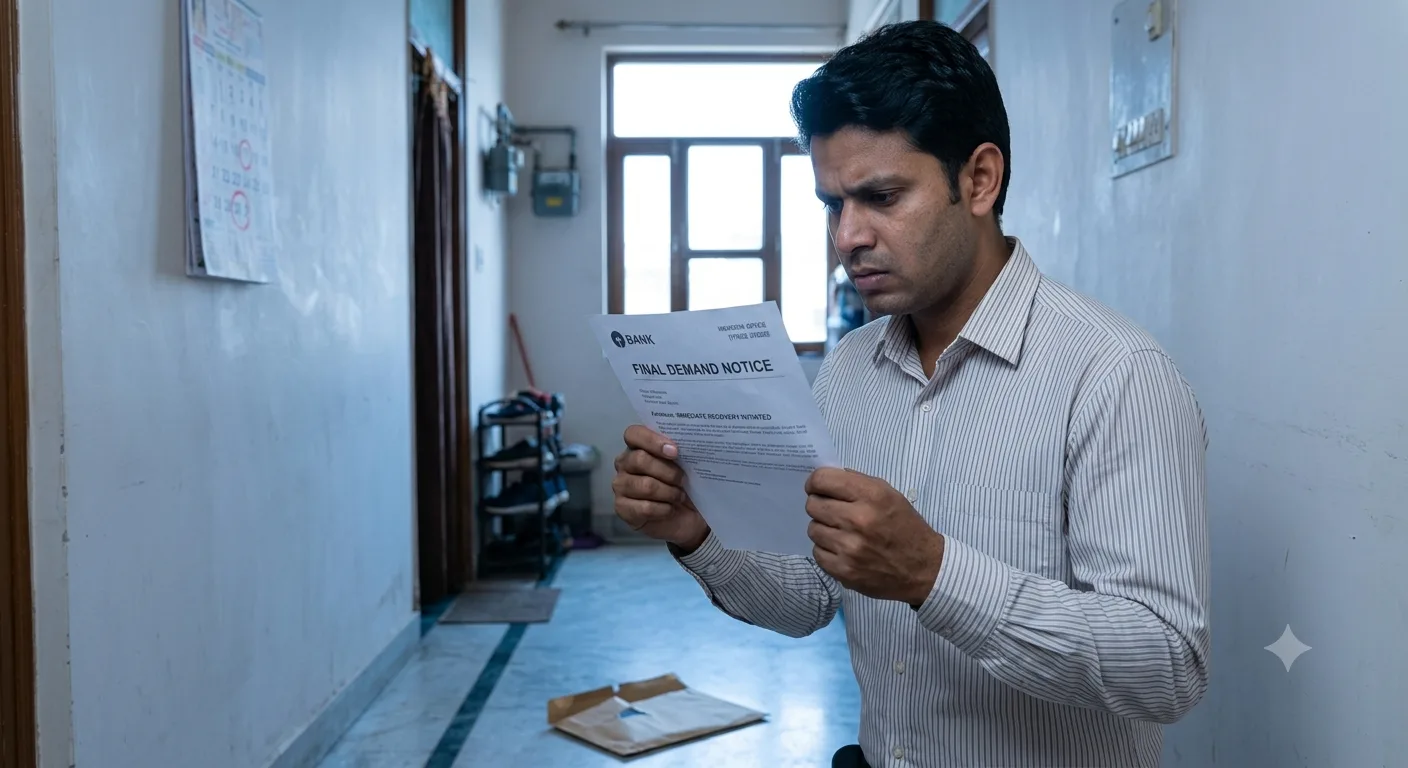
Stage 4: Day 90+ DPD (NPA classification) The loan is classified as a Non-Performing Asset. Recovery agents may now be deployed. For unsecured loans, no asset seizure is possible. Agents must follow RBI conduct rules; they can call only between 8 AM and 7 PM. For secured loans, a SARFAESI notice (a 60-day repayment demand) may follow at this stage.
Stage 5: Post-NPA, unresolved. For unsecured loans above ₹20 lakh: the bank may approach the DRT (Debt Recovery Tribunal, a special government court for large loan disputes). For amounts below ₹20 lakh: the bank may file a civil recovery suit, a slower process that typically takes months to years. If the account remains unresolved long enough, the bank may write it off internally, but this does not cancel the debt. The "Written Off" status stays on your CIBIL report for up to 7 years.
From January 2025, RBI mandates credit bureau updates every 15 days instead of monthly, so missed EMIs now appear on your CIBIL record significantly faster than before (source: Business Standard, March 2025 writer to verify and cite).

What the Law Says
Under RBI's Fair Practices Code, banks cannot refer a case to a recovery agent if the borrower has a pending complaint against the bank that is not yet resolved or dismissed.
Filing a complaint first protects you.How Is the Loan Recovery Process Different for Unsecured Loans?
This is the question most people with personal loans or credit card debt need answered clearly: can the bank take my home or car if I default on a personal loan?
No. It cannot.
The SARFAESI Act, 2002, applies only to secured loans where collateral has been pledged. A personal loan, credit card balance, or BNPL outstanding has no collateral attached. There is nothing for the bank to seize. The SARFAESI Act does not apply to these accounts at all (source: SARFAESI Act text; writer to verify from official source).
For unsecured loan defaults, the only legal escalation paths are:
Recovery agents calling within RBI-permitted hours and conduct rules
Civil court proceedings (for amounts under ₹20 lakh; writer to verify current threshold)
DRT (Debt Recovery Tribunal) for amounts above ₹20 lakh, under the RDDBFI Act, 1993
Civil court proceedings take months to years. DRT proceedings are faster but still formal. Neither path involves anyone walking into your home or touching your car.
Loan default in India is a civil matter, not a criminal one. A genuine borrower cannot be imprisoned for missing EMIs writer should verify this clearly. Note: cheque dishonour under Section 138 of the Negotiable Instruments Act is a separate matter with different legal consequences.
Knowing this doesn't make the debt disappear. But it does mean the fear of losing your home over a personal loan default is not a realistic outcome. Don't let that fear stop you from engaging with the process.

Expert Tip
If your loan is an unsecured personal loan, credit card, no recovery agent or bank can legally seize your home, car, or salary without a court order. Don't let threats change that fact.
Know MoreWhat Happens to Your CIBIL Score During the Loan Recovery Process?
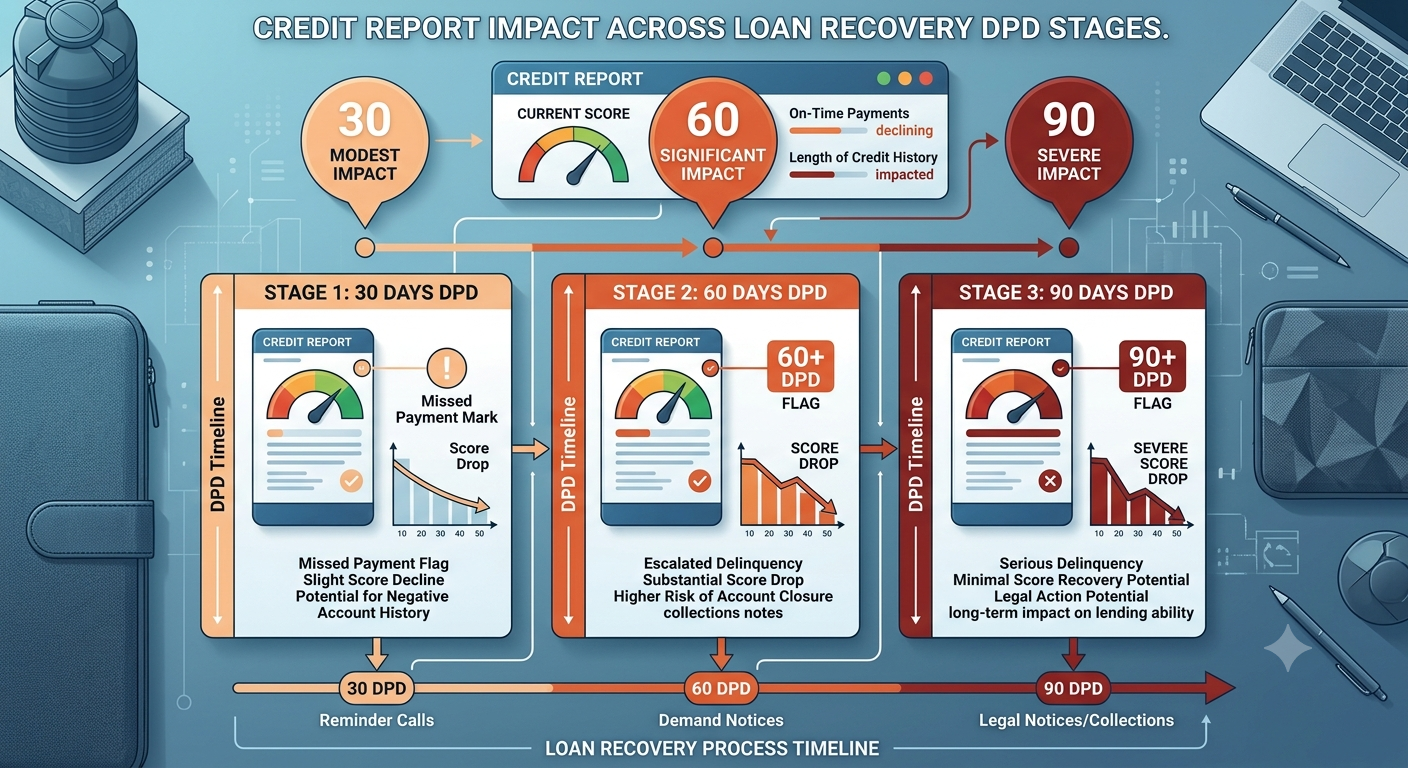
Every stage of the recovery process leaves a mark on your credit report. The damage compounds at each DPD milestone, and from January 2025, it compounds faster.
A single 30-day delay can drop a CIBIL score by 90–100 points (source: Business Standard, March 2025, writer to verify). For someone at 750+, that's a drop into territory where future borrowing may become more difficult. For someone already below 700, it can push the score into ranges where any new credit becomes very difficult.
From January 1, 2025, the RBI mandated that banks update credit bureau records every 15 days instead of monthly. That means two credit bureau updates per month. Missed EMIs now show up in your CIBIL report twice as fast as before (source: Business Standard, March 2025, writer to verify and cite).
At 90 DPD, the loan is classified NPA. This is recorded as a severe DPD entry on your CIBIL report. Future loan approvals become difficult, sometimes impossible, until the status changes.
Two end-states matter here:
"Settled" CIBIL status: this appears when a loan is resolved through settlement; the borrower pays less than the full outstanding amount, and the bank marks the account closed. This status stays on your CIBIL report for up to 7 years. It's negative, but less severe than "Written Off."
"Written Off" CIBIL status: This appears when a bank removes the account from its active books after prolonged default. The debt still legally exists. The borrower still owes the money. And this status, the most damaging possible on a credit report, also stays for up to 7 years.
Neither status is permanent. CIBIL records reset over time. And with a structured repayment or settlement path, the recovery timeline becomes predictable. The damage is real. It's also reversible.
What Are Your Rights During the Loan Recovery Process?
Recovery agents operate under rules. Those rules exist because agents have, historically, not always followed them. Here is what you are entitled to regardless of how much you owe:
Calling hours: Recovery agents can contact you only between 7 AM and 7 PM. Calls at midnight or early morning are a direct RBI violation (RBI Master Circular 2024 writer to verify).
No contact with family or employer: Recovery agents should not improperly disclose your loan information to unrelated third parties. This is prohibited.
ID and authorisation: Every recovery agent must carry a bank-issued photo ID and a written authorisation letter from the bank. You have the right to ask for both before the conversation starts.
No threats or public shaming: Threatening language, public confrontation, or any attempt to humiliate you in front of others is a violation of the RBI's Fair Practices Code.
Bank accountability: Under RBI Circular RBI/2022-23/108, Banks remain responsible for overseeing authorised recovery agents. If an agent misbehaves, the bank cannot blame the agency. The bank owns that liability.
Complaint protection: If you have filed a complaint against the bank that is unresolved, the bank cannot refer your case to a recovery agent until that complaint is dismissed or resolved. [(RBI Fair Practices Code / Circular RBI/2022-23/108: https://www.rbi.org.in/scripts/NotificationUser.aspx?Id=12378&Mode=0)]
A note on draft norms: RBI proposed in 2025 that banks must send a written 30-day notice before deploying recovery agents. Writer to verify whether this norm is currently operative or still in draft, and note accordingly.
Knowing your rights doesn't cancel the debt. But it stops the process from becoming abuse. An agent who calls at 2 AM, threatens to visit your office, or refuses to show ID is breaking rules. You can document it. You can report it. That documentation has value in every stage that follows.

Recovery Calls Getting Aggressive? Know What You Can Do.
Free assessment. No commitment. A counsellor explains your rights and your options.
Talk to a Free CounsellorWhat Options Do You Have Before the Recovery Process Goes Legal?
Settlement is not something a borrower chooses out of preference. Banks and financial companies only consider it when you are in genuine financial difficulty and are truly unable to repay the full amount. It is a last resort, not a shortcut.
Before that point, there are real options and timing matters. The 60 to 90 DPD window is the most valuable negotiating period you have. Banks prefer resolution over NPA classification. NPA classification costs them capital provisioning. A borrower who engages early gives the bank a reason to offer better terms.
Here are the options, in order from least to most drastic:
Are You in a Loan Trap? Quick Check
Move the slider to your total EMIs as a % of monthly salary. See your debt stress level instantly.
EMIs as % of Monthly Salary
Not Sure Where You Stand in the Recovery Process?
One free call. We'll tell you exactly what stage you're at and what's still possible.
Book My Free CallWhat Helps When You're Already in the Recovery Process?
If you're already receiving recovery calls or formal notices, here is what actually helps:
Document everything. Every call, every letter, every agent visit. Note the time, the caller's name (if given), and what was said. If an agent visits, ask for their ID and authorization letter and write down the details. This documentation is evidence, and it keeps your options open.
Respond to formal notices even if you can't pay. A written legal notice that goes unanswered is treated as acceptance by default. You don't need to have the money to respond. A simple written reply stating your situation and your intent to resolve it keeps the negotiation alive.
Never give financial details to unverified callers. Anyone claiming to be from your bank who calls asking for account numbers, OTPs, or transfer details is not acting on behalf of your bank. Verify before sharing anything.
Don't promise payment you can't deliver. If you tell the bank you'll pay on a specific date and you don't, it damages your credibility for future negotiations. Only commit to what you can actually do.
Don't ignore legal notices. A notice from a court or DRT has a specific response window. Missing that window has legal consequences. If you receive a court notice, respond within the timeline stated, ideally with the help of a legal professional.
Partial payment before NPA classification can reset the DPD counter writer to verify if this applies broadly or under specific conditions. Even a small amount paid and documented signals engagement to the bank.
Banks cannot refer your case to a recovery agent if you have filed an unresolved complaint against the bank. If calls have turned threatening or abusive, that complaint has protective value; file it.
Staying in contact, documenting everything, responding to formal notices. These three things keep your negotiating options alive longer than silence ever will.

Secured vs Unsecured Loans: How the Recovery Process Differs at Each Stage
Stage | DPD Window | Secured Loan (Home / Car) | Unsecured Loan (Personal / Credit Card / BNPL) |
Reminders | Day 1–30 | SMS, calls, late fees | SMS, calls, late fees |
Escalated Notices | Day 30–60 | Written notices, restructuring offer | Written notices, restructuring offer |
Pre-NPA Demand | Day 60–90 | Formal demand notice | Formal demand notice |
NPA + Recovery Agents | Day 90+ | Recovery agents deployed; SARFAESI notice (60-day repayment demand) possible | Recovery agents deployed; no asset seizure possible |
Legal Action | Post-NPA, unresolved | SARFAESI asset seizure; DRT for balance recovery | Civil recovery suit; DRT if outstanding exceeds ₹20 lakh |
Write-off | Prolonged default | Asset sold at auction; balance written off | Account written off; "Written Off" on CIBIL for up to 7 years |
FREED handles only unsecured loan settlements, personal loans, credit cards, and BNPL products. FREED does not handle secured loans. This table is indicative; timelines vary by bank and loan type.

Mohit Juneja
Mohit Juneja writes educational content at FREED on debt management, credit scores, loan repayment, and borrowing best practices. His content is shaped by expert insights and industry knowledge, helping readers better understand their financial options and make informed decisions.
mohit.juneja@freed.care

FREED is India's trusted loan management platform. Founded in 2020 and headquartered in Gurugram, FREED has counselled 20 lakh+ people on personal loans, credit cards, and app loans. FREED charges fees only on successful settlement, not upfront. FREED does not handle secured loans (home loans, car loans, gold loans).
Media Mentions