How to Prioritize Debt Payoff: Which Debt to Pay First
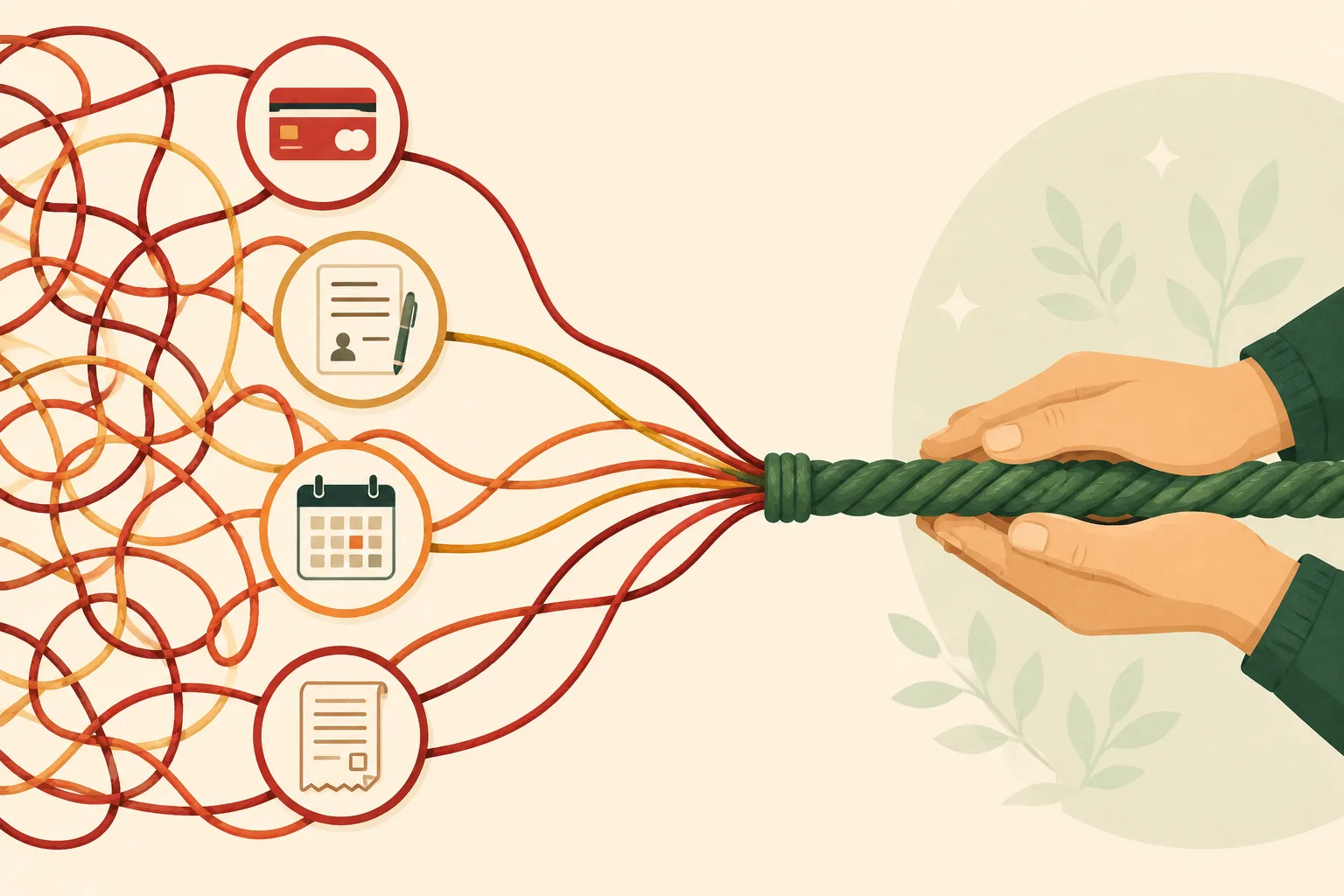
How to prioritize debt payoff is deciding the order in which you pay several debts, usually by paying every minimum first and then putting extra money on the costliest debt. If the minimums themselves don’t fit your pay, the order isn’t the problem.

Mohit Juneja
Reviewed by FREED India, Debt Resolution Specialists
 4.7/5
 ₹3,200Cr+
 20,000+
 20,00,000+4.7/5₹3,200Cr+20,000+20,00,000+
Key Summary

How to prioritize debt payoff: pay every minimum on time, then put extra money on the costliest debt.
In our example, ordering cuts interest by about ₹82,000 against paying only the minimums.
Avalanche and snowball differ by about ₹3,600 in our example, so pick the one you’ll stick to.
A consolidation loan costs more interest in our example than ordering, but gives back about ₹7,100 a month.
RBI bars prepayment charges on floating-rate loans to individuals sanctioned or renewed from 1 January 2026.
How to Prioritize Debt Payoff: Which Debt Should You Pay First?
Pay every minimum on time. Protect any debt that puts an asset at risk. Then put extra money on the debt that costs you the most.
That’s the whole answer in three lines, and the rest of this guide explains each line. Take Priya, 34, who pays a credit card, a loan app, a BNPL (buy now, pay later) bill and a personal loan every month. She isn’t behind. She just wants to know where her next spare ₹5,000 should go, and she’s afraid of getting the order wrong.
Here’s the first thing to know. Getting the order right matters, but it matters less than people think, and it matters far less than paying on time. A missed EMI (your fixed monthly payment) adds late charges and can show up on your credit report, and that cost often beats any saving you’d get from a clever order. So the minimums come first, every month, without exception.
There’s one honest caveat. If you can’t cover the minimums, the order isn’t the problem. That’s a cash-flow problem, and we cover it in its own section further down.
For everyone who can still pay, the goal is simple. You want your extra rupees to land where they save the most. Our pillar guide explains the thinking behind paying off several loans in the right order when you’re juggling many accounts.
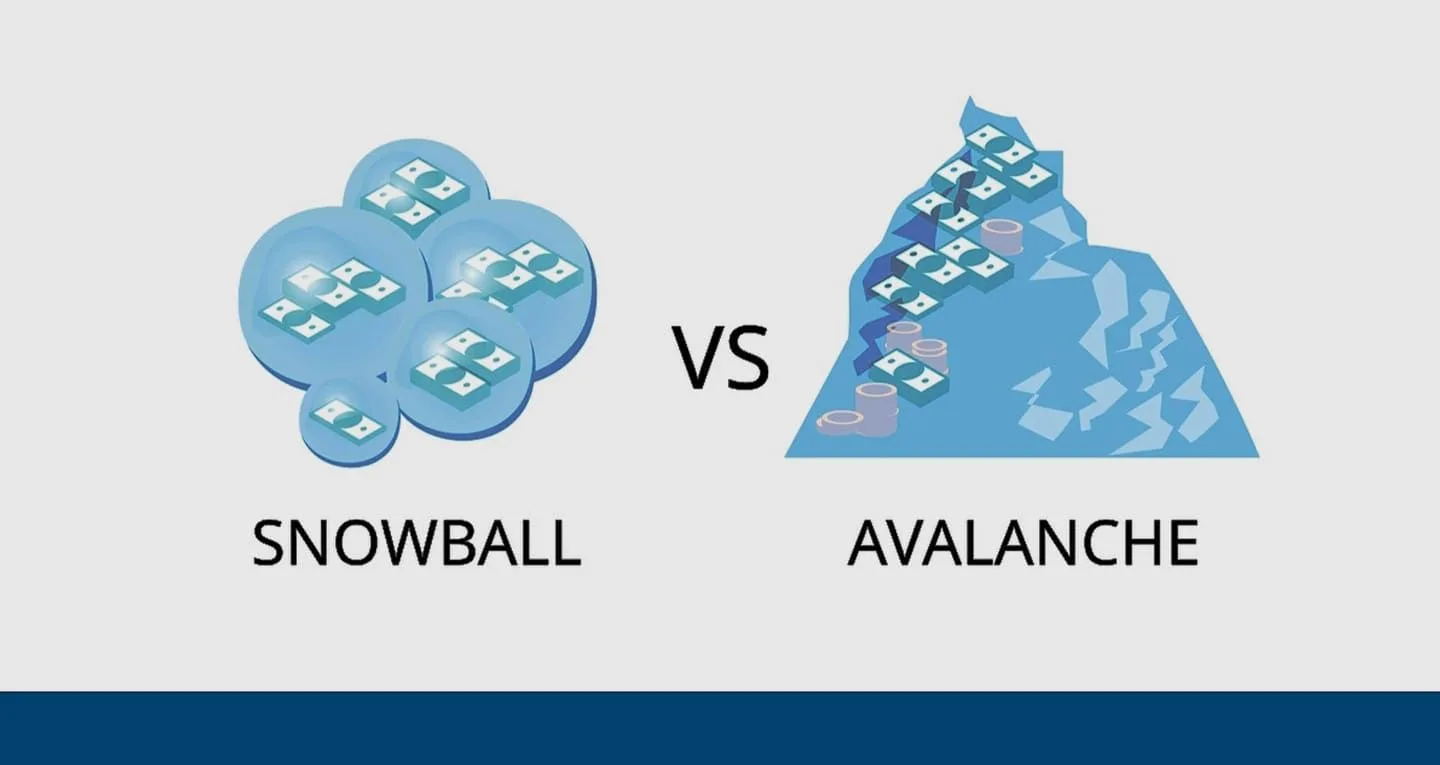
You’ll also hear about two named methods, avalanche and snowball. We compare them in our guide on the snowball method vs avalanche method, so we won’t repeat the full explanation here. What this guide adds is the step before the method: a ladder that tells you what to protect and what to pay first. Let’s start with that ladder.

See What Share of Your Salary Goes to EMIs
Check how much of your pay your EMIs take today.
Check My EMI ScoreWhat Is the Priority Order for Credit Cards, Loan Apps, BNPL and Loans?
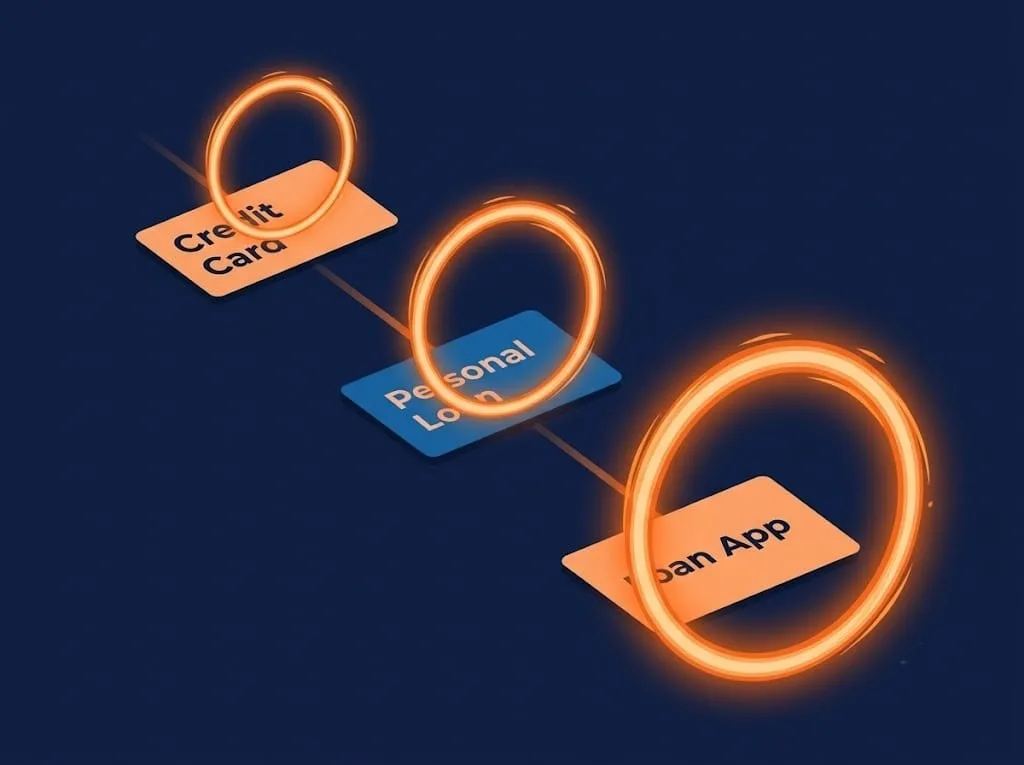
A short ladder tells you where each rupee goes, so you don’t have to decide again every month. It has six rungs, and you climb them in order. The debt payoff order you choose at the top rung depends on the rungs below it.
- Pay every minimum or EMI on time. Late charges and report entries add cost, and they make every other step harder.
- Guard any debt that holds an asset. A home, vehicle or gold loan is secured, so missing it can cost you the asset itself.
- Put extra money on the costliest unsecured debt. This is usually a loan app, a card or a BNPL balance, and the rate on your statement tells you which.
- If motivation is low, clear the smallest balance first. A quick win can keep you going when the long plan feels heavy.
- Check prepayment charges before using extra money on a loan. Some loans charge you for paying early, so the saving can shrink.
- If the minimums don’t fit, move to the cash-flow section. No order fixes a payment you can’t make.
The ladder starts by protecting every account from avoidable missed-payment charges and credit-report consequences. Once you have covered the required payments, direct extra money towards the debt that offers the greatest potential saving, after checking any applicable prepayment charges.
Here’s where each debt type usually sits.
| Debt type | Usual cost pattern | Where it sits on the ladder |
|---|---|---|
| Credit card | Check the rate on your statement; cost depends on how much you carry over and for how long | Rung 3, often near the top among unsecured debts |
| Loan app | Check the rate and fees in the app’s terms | Rung 3, often near the top |
| BNPL | Check the terms; some are short and some carry charges | Rung 3, depends on the terms |
| Personal loan | Fixed EMI that includes interest; check the loan’s key facts | Rung 3 or later, after a prepayment check |
| Home, car or gold loan | Secured by an asset | Rung 2, keep current |
Notice the words “usually” and “check”. We can’t tell you the rate on your debts, and we won’t guess. The real number is on your statement.
For card-specific steps, read our guide on how to get rid of credit card debt. Next, let’s look at how to compare a card with a loan.
Which Costs More, Credit Card Debt or a Loan?
Don’t guess. Read the rate off each statement. It’s the only number that settles the question, and it takes about ten minutes.
Here’s how the two usually differ in plain words. A loan generally has a scheduled EMI that includes principal and interest. The repayment amount and schedule depend on the loan’s interest-rate type and terms; floating-rate loans may have changes to the EMI or tenure. A card works differently. Its cost depends on how much you carry over and for how long, so the same card can be cheap for one person and expensive for another.
That’s why a rule like “cards always cost more than loans” doesn’t hold. Some cards carry a small balance for a short time. Some personal loans carry a high rate. You need the numbers for your own debts.
Here’s where to find them.
- For a loan: look at the key facts or the loan statement. It shows the rate and the total you’ll repay.
- For a card: look at the card statement for the monthly or yearly rate on unpaid balances.
- For a loan app or BNPL: check the terms in the app or the agreement, including any fixed charges.
Fees count too. A processing fee, a late charge or a foreclosure (closing a loan early) charge changes the real cost. Add them to your picture before you rank anything.
Now use a simple how-to. List the annualised borrowing cost of each debt, including applicable fees and charges. Direct extra money towards the debt with the highest effective cost, after considering any prepayment charges, payment conditions and consequences of delaying repayment.
This works as a quick answer to the question many readers ask, which is whether to pay off a credit card or a loan first. Compare the rates on each statement, put extra money on the costlier one, and check prepayment charges before you act on a loan. For a ready sheet, see our credit card payoff plan template. To see how a card affects your record, read our guide on whether credit card debt lowers your credit score.

FREED Expert Tip
Write each debt’s yearly rate next to its balance and minimum. The highest rate gets your extra money first, not the biggest balance.
Check My EMI ScoreAvalanche or Snowball: What Does the Same ₹4.6 Lakh Show?
The two methods differ in order, and one worked example shows by how much. Here’s the setup. Every figure is invented, and none of it comes from a real card, app or loan.
Priya has four debts worth ₹4,60,000 in total.
| Debt | Balance | Yearly rate | Minimum or EMI |
|---|---|---|---|
| Credit card | ₹1,20,000 | 42% | ₹6,000 |
| Loan app | ₹60,000 | 36% | ₹5,500 |
| BNPL | ₹30,000 | 24% | ₹3,000 |
| Personal loan | ₹2,50,000 | 16% | ₹9,000 |
Her minimums add up to ₹23,500 a month. She can put ₹30,000 a month toward debt, so ₹6,500 is extra. In the avalanche order she attacks the highest rate first (card, app, BNPL, loan). In the snowball order she attacks the smallest balance first (BNPL, app, card, loan).
| Path | Months to clear everything | Total interest | First account closed |
|---|---|---|---|
| Minimums only | 35 | about ₹1,71,930 | Month 12 |
| Avalanche (card, app, BNPL, loan) | 19 | about ₹89,948 | Month 12 |
| Snowball (BNPL, app, card, loan) | 19 | about ₹93,575 | Month 4 |
Here’s what the table shows.
- Ordering saves a lot. Avalanche saves about ₹81,982 against paying only the minimums.
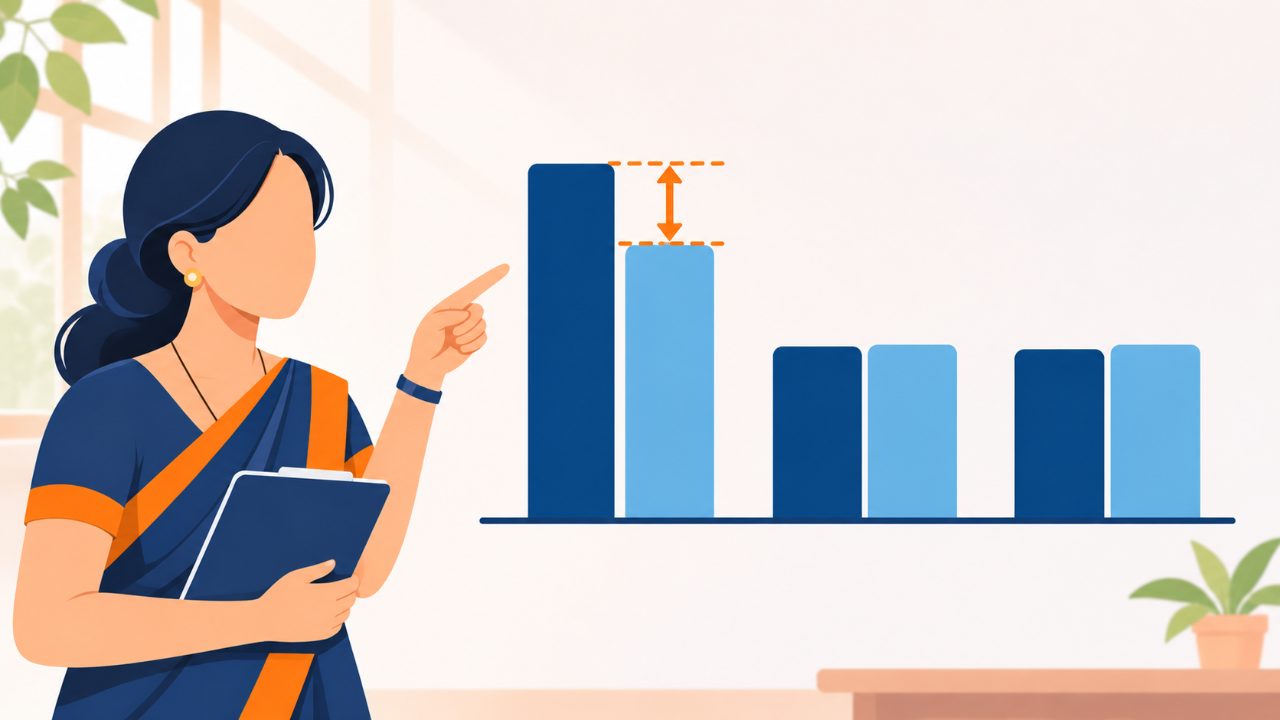
- The two orders are close. Avalanche beats snowball by about ₹3,627 in this example.
- Snowball gives earlier wins. It closes the first account in month 4 and the second in month 7, while avalanche closes its first at month 12.
So the gap between avalanche vs snowball is small here, and the gap between ordering and not ordering is large. That’s the point most guides skip. Motivation can decide the order, because the cost of choosing the “wrong” one is about ₹3,600.
The model is simple, and you should know its limits. It assumes fixed monthly payments of ₹6,000, ₹5,500, ₹3,000 and ₹9,000 on the four debts, with monthly interest calculated as the annual rate divided by 12. It assumes no additional fees and a total monthly payment of ₹30,000 for the avalanche and snowball methods. When a debt closes, its payment is redirected to the next debt. These are simplified assumptions, not the actual minimum-payment formulas or repayment terms of every credit card, loan app, BNPL facility or personal loan. Real debts have fees, changing balances and different terms, so your result will differ.
For each method on its own, read our guides on the debt avalanche method and the debt snowball method. This example is for readers who are still paying every month. If you’ve missed payments, skip ahead to the cash-flow section.
Combine Your Loans Into One Lower EMI
FREED’s Loan Consolidation Plan can reduce your monthly EMI burden by up to 50%.* Rates and ranges shown are indicative. Final terms decided by the bank/lender. FREED is not a Loan Provider. No outcome is guaranteed. Please verify directly with your bank.
Reduce My EMIShould You Pay Extra on a Loan or a Card?
Extra money should go where it saves the most, but a loan may charge you to prepay it. That charge can cancel part of the saving, so check it before you act. Here are the three things to know.
- Card dues have no fixed schedule. Extra payments reduce what you carry, so they usually cut the interest on the next statement.
- Loans may have prepayment or foreclosure charges. It depends on the loan and the bank, so read the loan terms first.
- Divide the extra between the debt’s cost and any charge. If the charge is large, a smaller extra payment may make more sense.
Here’s the rule in practice. Take the interest you’d save by paying extra. Subtract any prepayment charge. If the number is still clearly positive, go ahead. If it’s close to zero, put the money elsewhere.
RBI has set a floor for some loans. Under RBI’s directions on prepayment charges, loans sanctioned or renewed on or after 1 January 2026 can’t carry a prepayment charge if they are floating-rate loans to individuals for non-business purposes. For other loans, the lender’s own policy decides, and the charge must be disclosed in the sanction letter, the loan agreement and the Key Facts Statement. So check which kind of loan you have, and when it was sanctioned.
We can’t say that prepayment is always free of charge, because it isn’t. And we can’t state typical foreclosure percentages, because they vary. Your loan documents hold the real answer. For a closer look at closing charges, read our guide on personal loan foreclosure charges.
One more habit helps. Before you prepay, ask the bank for the foreclosure or part-payment amount in writing. Then you’re comparing real numbers, not a guess.

What the Law Says
RBI’s Pre-payment Charges on Loans Directions, 2025 restrict prepayment charges for specified categories of loans, including floating-rate loans to individuals for non-business purposes sanctioned or renewed on or after 1 January 2026. The rules for other loan categories differ. Check the applicable provisions and your loan documents before making a part-payment or foreclosure request.
Check My Credit InsightsWhat About Home, Car and Gold Loans in Your Payoff Order?
Secured loans work differently, and the main idea is to keep them current. A home, car or gold loan is backed by an asset. If you miss payments, the asset can be at risk, so these sit high on the ladder even when their rate is lower than a card’s.
Here’s what that means in practice.
- Pay these EMIs first, along with every other minimum. Skipping a secured EMI to put extra money on a card is a risky trade.
- Keep them out of your “extra money” race. They aren’t the first place to send spare cash unless the terms clearly favour it.
- Read your agreement. It states what happens after a missed payment, and the terms differ from one loan to another.
This doesn’t mean secured debt never needs a plan. If a home loan feels heavy, talk to your bank about your options early, before a payment is missed. Contact your lender as early as possible to discuss available options. The options offered will depend on the lender’s policies, your repayment history and your financial circumstances.
It also helps to separate the two parts of your list. Put secured loans in one column marked “protect”. Put unsecured debts in a second column marked “rank by rate”. That small step keeps the ladder honest.
This guide focuses on unsecured dues, such as cards, loan apps, BNPL and personal loans. For those, the order and the extra-payment rules above apply. For a secured loan, the best step is usually the simplest one, which is to pay on time.
Know Where Every Account Stands
See your loans and cards in one place, in plain words.
Check My Credit InsightsWhat If You Can’t Cover Even the Minimums?
If the minimums don’t fit your pay, no order will fix it. This is a cash-flow problem, not a ranking problem. Spending effort on avalanche vs snowball won’t help when the monthly total is more than your salary can carry.
It’s worth being honest with yourself here, because many people keep trying to optimise the order. The kinder move is to look at the monthly total. If it’s too heavy, you need a different kind of step. Our pillar guide explains when a payoff order isn’t enough and what to look at next.
There are three paths, depending on your situation.
- Talk to your bank about a new payment plan. Ask what options exist for your loan. Many banks prefer an early conversation to a missed payment.
- If you can still repay, consider one smaller EMI. This is what consolidation is for. It combines several loans into one loan, with one EMI that may be easier to carry.
- If you’ve already missed payments, start with an options talk. Speak with your bank, or with FREED’s team, before you take any new step.
Be clear about the limits. Missed payments may make consolidation harder to qualify for or result in less favourable terms, but they do not automatically rule it out. Before applying, discuss your repayment position with your existing lenders and assess whether a new loan would be affordable. Avoid taking additional high-cost borrowing simply to postpone overdue payments.
If you aren’t sure where you stand, our guide on whether you can consolidate your debt explains who usually qualifies. For support options beyond a bank, see our guide on debt counselling in India. The goal is a monthly payment you can keep, because that’s what protects you.
When Does Consolidation Beat Choosing an Order?
Ordering saves interest, and consolidation gives back monthly cash. Which one you need decides the route. If you’re short of cash each month, a lower EMI helps. If you’re short of total cost, ordering helps.
Let’s extend Priya’s example with a fourth path. This is an illustrative what-if with invented figures. Imagine the same ₹4,60,000 rolled into one loan at 17% a year over 36 months. The EMI would be about ₹16,400. She’d repay about ₹5,90,409, which means about ₹1,30,409 in interest.
| Path | Monthly outgo | Months | Total interest |
|---|---|---|---|
| Minimums only | ₹23,500 to start, falling as debts close | 35 | about ₹1,71,930 |
| Avalanche | ₹30,000 | 19 | about ₹89,948 |
| Snowball | ₹30,000 | 19 | about ₹93,575 |
| One loan at 17% over 36 months | about ₹16,400 | 36 | about ₹1,30,409 |
Here’s how to read it.
- If you can pay ₹30,000 a month, ordering costs less interest than this consolidation. It’s about ₹89,948 against ₹1,30,409.
- If you can pay only about ₹16,000, consolidation brings the monthly outgo down from ₹23,500 to about ₹16,400. That’s about ₹7,100 less each month.
- A lower EMI over a longer time costs more. So compare the total, not just the EMI.
One more point comes out of the table. Against paying only the minimums, the 17% loan costs about ₹41,521 less in interest in this model. So consolidation isn’t automatically the expensive option. It’s the expensive option only when you can afford to pay a lot more each month.
Be careful with the example. The 17% is an illustration, not an offer, and the real rate comes from the loan provider. The model also leaves out fees, and a real loan may carry a processing fee, which would raise the cost. For another worked case, read our guide on a debt consolidation example, and for the wider question, see whether debt consolidation is worth it.
This applies only if you’re still paying. If you’ve missed payments, don’t use this table as a reason to apply. Talk to your bank first.
One EMI Instead of Several
FREED’s Loan Consolidation Plan can reduce your monthly EMI burden by up to 50%.* Rates and ranges shown are indicative. Final terms decided by the bank/lender. FREED is not a Loan Provider. No outcome is guaranteed. Please verify directly with your bank.
Reduce My EMIHow Do You Set Up Your Payoff Order in 30 Minutes?
A one-page sheet and three settings are enough to start today. You don’t need software, and you don’t need account numbers. Here are five steps.
- List every debt on one page. For each one, write the balance, the yearly rate, the minimum and the due date, plus any prepayment charge.
- Mark which are secured and which are unsecured. Secured loans go in the “protect” column. Unsecured ones get ranked by rate.
- Set auto-pay for every minimum. This protects you from a missed payment, which is the most expensive mistake.
- Choose your extra amount and put it on the first debt in your order. Even ₹2,000 a month matters when it goes to the right place.
- Set a monthly 15-minute review. When a debt closes, move its payment, plus your extra, to the next debt.
Here are the columns your sheet needs.
| Column | What to write | Why it matters |
|---|---|---|
| Debt name | Card, app, BNPL, loan | Tells you the type at a glance |
| Secured or unsecured | S or U | Keeps the “protect” rung clear |
| Balance | Amount owed today | Shows progress each month |
| Yearly rate | From the statement | Decides the order |
| Minimum or EMI | Monthly amount | Must be paid every month |
| Due date | Day of the month | Helps you set auto-pay |
| Prepayment charge | From the loan terms, or “none” | Protects you before extra payments |
The review habit matters more than it looks. When the first debt closes, its minimum doesn’t go back to your spending. It rolls to the next debt, so your payment stays steady. That rolling payment is why the example in this guide reaches zero in 19 months.
Treat the sheet as a living page. Update the balances each month and tick off what’s done. Seeing a balance fall is a real motivator.
For extra-payment tactics, read our guide on the debt payoff planner and accelerated strategies. If you want a plain way to pay off multiple loans without a new loan, this sheet is the place to start. And if the sheet shows that the order alone won’t be enough, the next section covers what to do.
What Mistakes Do People Make When Choosing Which Debt to Pay First?
Most mistakes come from guessing instead of checking. A few simple habits avoid them. Here are the common ones.
- Paying the biggest balance first. Size isn’t cost. A smaller debt with a higher rate usually deserves the extra money first.
- Skipping a small minimum to pay extra elsewhere. A missed minimum adds late charges and can show on your report, which erases the saving.
- Using a new card to pay an old one. You don’t reduce debt this way. You move it, and you may add a new fee.
- Forgetting prepayment charges. A loan may charge you to pay early, so the saving can shrink.
- Letting freed-up payments drift. When a debt closes, its payment should roll to the next debt, not back into spending.
- Closing accounts in a hurry. Closing a card can matter for your report, so read the card’s terms before you act.
Each of these has a simple fix. Check the rate before you rank. Pay every minimum before you pay extra. Keep new borrowing out of the plan. And review the sheet once a month.
There’s also a mistake that’s easy to miss. People often change the order every few months because a new tip sounds better. Pick a sensible order and stay with it. The difference between a good order and a perfect one is small, as the example showed.
Keep your plan simple enough to survive a bad month. A plan you can follow for 19 months beats a perfect plan you drop in month three. If the numbers still feel too heavy, that’s a signal about cash flow, not about discipline.
For broader ideas, read our guides on debt management strategies and the key strategies to manage debt in 2026. For a card-focused view, see how to consolidate credit card debt.
See What Your EMIs Take Today
Check your EMIs as a share of your salary before you set your plan.
Check My EMI ScoreHow FREED Helps When Choosing an Order Isn’t Enough
You can set the order yourself. FREED helps when it isn’t enough. Over 20 lakh people trust FREED, India’s trusted loan management platform. When the question is how to prioritize debt payoff and the monthly total is still too heavy, one smaller EMI may be the next thing to look at.
If most of your salary goes towards paying multiple EMIs, FREED’s Loan Consolidation Plan helps you combine multiple loans into a single monthly EMI. This can reduce your monthly EMI burden by up to 50%.*
Here’s how it works:
- FREED assesses your financial profile.
- FREED matches you to a lending partner from its network.
- The partner disburses one new loan that pays off your existing eligible unsecured loans and card dues.
- FREED handles the process end to end, 100% online.
- You’re left with one loan, one EMI and one due date.
Your credit score isn’t hurt by consolidation, and it tends to improve as you pay the new EMI on time. The plan covers unsecured dues, such as personal loans, card dues, BNPL and app loans. It doesn’t cover home loans, car loans or other secured loans.
Not sure whether you qualify? FREED’s team can assess your situation and tell you what options are available. They confirm eligibility and documents during the assessment.
The plan is for people who can still repay. If you can’t cover your minimums, or you’ve already missed payments, FREED’s team can talk through your options with you. You don’t have to work it out alone.
You can read about the Loan Consolidation Plan, or go back to our pillar on what loan consolidation means.
Rates and ranges shown are indicative. Final terms decided by the bank/lender. FREED is not a Loan Provider. No outcome is guaranteed. Please verify directly with your bank.
Combine Your Loans Into One EMI With FREED
One monthly EMI instead of several, with the process handled for you.
Check My Eligibility
Mohit Juneja
Mohit Juneja is FREED’s Content & Communication Lead with 12+ years of experience across content, media, advertising and digital communications. He holds a postgraduate diploma in Communications from Xavier Institute of Communications, Mumbai, and has worked with organisations including NDTV, The Indian Express, McCann Worldgroup and NABARD.
At FREED, he leads content and communication across loan management, debt resolution, debt consolidation and financial well-being. His work combines research, storytelling and consumer-focused communication to make complex financial topics easier to understand and act on. He has also scripted and produced 11 documentaries on rural development and agriculture for NABARD, with film's selected for the Mumbai International Film Festival.
mohit.juneja@freed.care

FREED is India's trusted loan management platform. We help India settle their loans, consolidate their EMIs, improve their credit score, and manage their loans better. Over 20 lakh people trust FREED. We have managed more than ₹3,500 crore in loans and saved our users over ₹450 crore.
Media Mentions