Debt Avalanche Method: How to Use It to Repay Debt Faster
The debt avalanche method is a way to pay off multiple loans or cards faster by putting any extra money toward the one with the highest interest rate first, while still paying the minimum on everything else. Once that highest-interest debt is cleared, you move to the next highest, and so on. It saves you the most money in interest compared to other methods, but it works best when you can stick with it even if the first debt takes a while to clear.

Mohit Juneja
Reviewed by FREED India, Debt Resolution Specialists
 4.7/5
4.7/5 ₹3,200Cr+
 20,000+
 20,00,000+4.7/5₹3,200Cr+20,000+20,00,000+
KEY TAKEAWAYS

The debt avalanche method ranks debts by interest rate, highest to lowest, and attacks the highest-rate debt first while paying minimums on everything else.
It mathematically saves the most money in interest compared to other repayment orders, when followed to completion.
The gap in savings versus other repayment orders grows larger when your highest-rate debt also happens to carry a large balance, common with credit card debt in India, which often runs 30% to 48% annually.
The method requires discipline since the first debt you clear may take months if it also has a large balance.
It stops being enough on its own once you are juggling too many separate debts to track, or the minimums alone are unaffordable, that is a different problem with a different fix.
What the Debt Avalanche Method Is
The debt avalanche method is a repayment strategy where you pay the minimum amount due on every single debt you have, then take every extra rupee you can spare and direct it entirely toward the debt carrying the highest interest rate. Once that debt is fully cleared, the full amount you were paying toward it rolls forward into the next highest-rate debt, and the cycle continues until everything is paid off.
The method is built around one single goal, minimising the total interest you pay over the life of your repayment. It does not prioritise which debt looks easiest to clear or which one is smallest, only which one is costing you the most in interest right now.
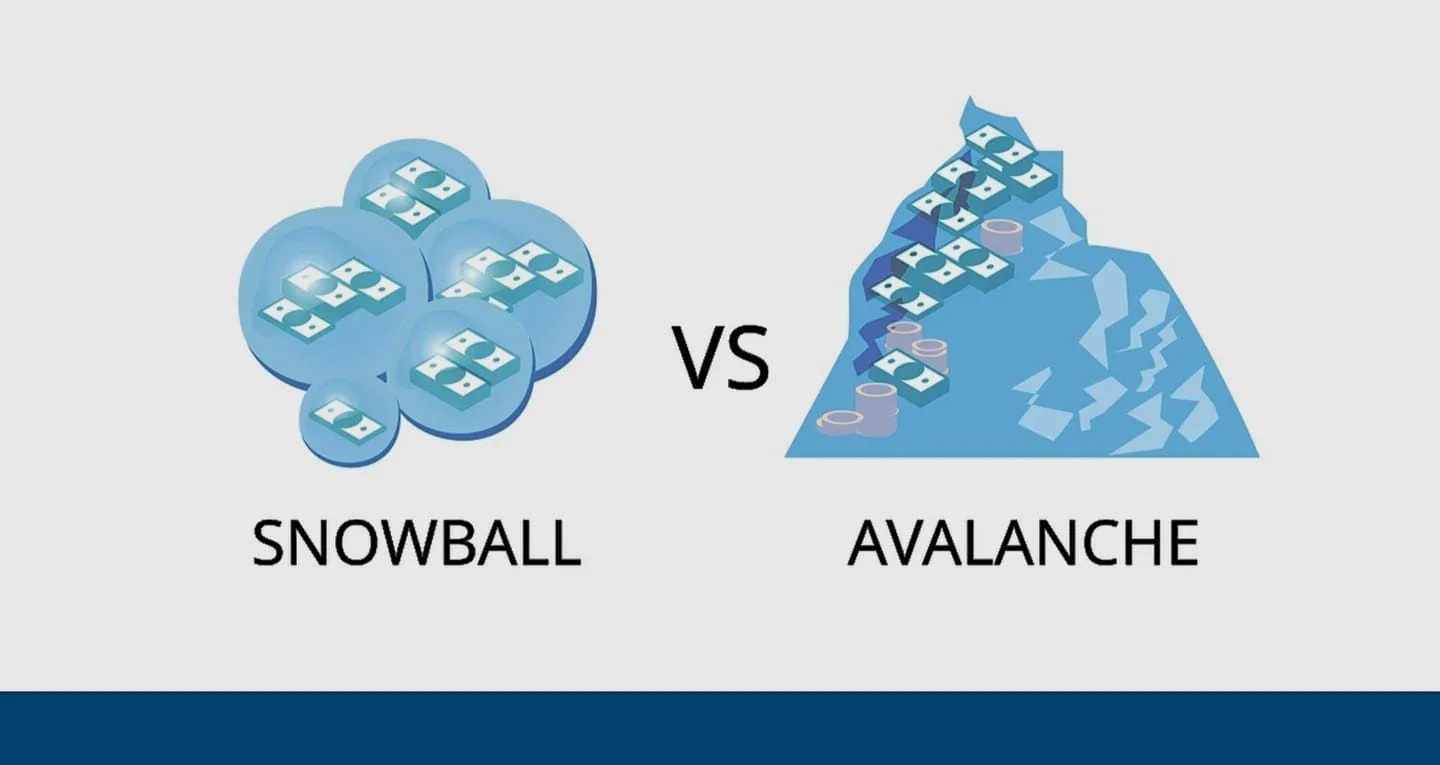
This is different from the debt snowball method, which ranks debts by balance size rather than interest rate, smallest balance first, to give you faster visible wins. This piece focuses only on the avalanche method in depth. If you want the full side-by-side comparison between the two, FREED's dedicated comparison blog covers that in detail, and is linked at the end of this piece.
Step by Step, How to Set Up Your Avalanche
Setting up an avalanche repayment plan is mostly a matter of organising information correctly before you start paying anything differently.
Begin by writing down every single debt you owe, whether it is a credit card, a personal loan, or any other outstanding balance, along with its current balance and its interest rate. This list is the foundation the entire method runs on, so it needs to be accurate and complete.
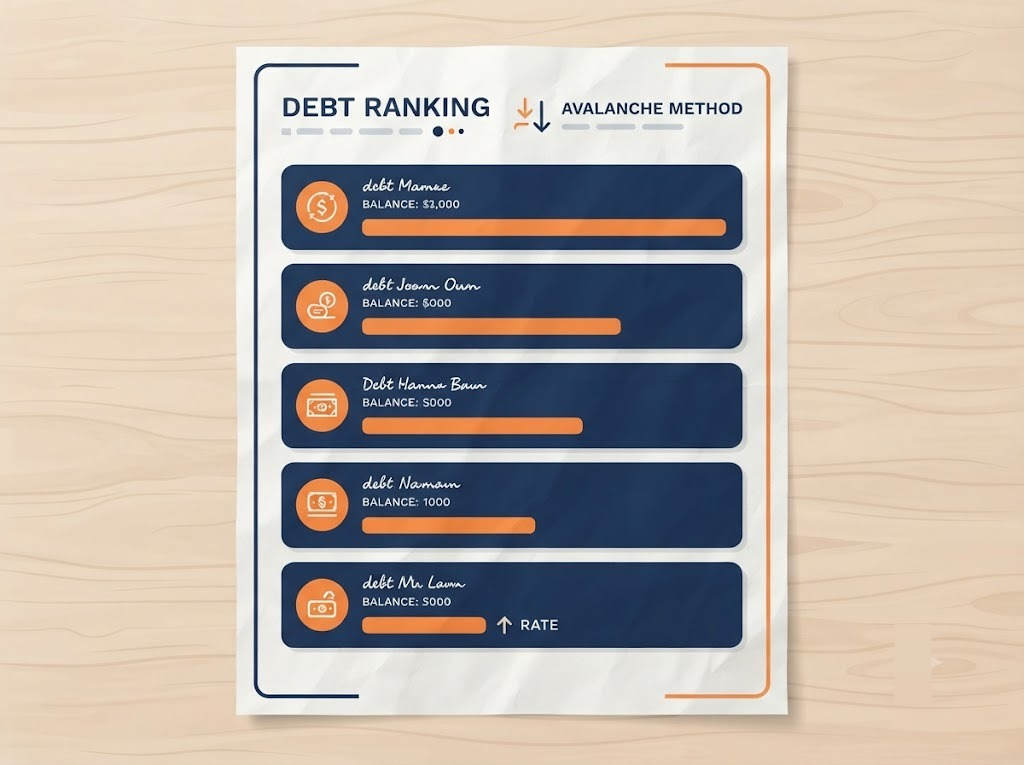
Next, rank this list purely by interest rate, from highest to lowest. At this stage, ignore the balance size entirely. A card with a small balance but a very high rate ranks above a personal loan with a much larger balance but a lower rate.
Once ranked, set up automated minimum payments on every debt except the one at the very top of your list. This protects you from ever missing a minimum payment on the debts you are not currently focused on.
Every extra rupee beyond these minimums then goes entirely toward the top-ranked, highest-rate debt. Once that debt reaches zero, its full former payment amount, minimum plus whatever extra you were adding, rolls forward and becomes the new attack payment on the next highest-rate debt on your list. You repeat this rolling process until every debt on your original list reaches zero.

FREED Expert Tip
Set up autopay for every minimum payment first, before you start directing extra money anywhere. The avalanche method only works if you never miss a minimum on the debts you are not currently attacking.
Get a Free EMI AssessmentA Worked Example in Rupees
Here is how the avalanche method plays out with realistic, illustrative Indian debt figures. Say you have three debts. A credit card with an outstanding balance of ₹1,50,000 at an interest rate of around 40 percent annually. A personal loan with a balance of ₹3,00,000 at around 14 percent annually. And a smaller personal loan of ₹80,000 at around 18 percent annually.
Ranked by interest rate, highest to lowest, the order becomes the credit card first at 40 percent, the smaller personal loan second at 18 percent, and the larger personal loan third at 14 percent, regardless of the fact that the larger loan actually has the biggest balance of the three.
You continue paying minimums on both personal loans, while directing every spare rupee toward clearing the ₹1,50,000 credit card balance first, since it is bleeding interest at roughly double the rate of the next debt on the list. Once that card reaches zero, the full payment you were making toward it rolls into the ₹80,000 loan at 18 percent, clearing it faster than if you had been splitting extra payments evenly across all three debts from the start.
The exact interest savings depend on the loan amounts, interest rates, repayment speed, and overall debt profile.
Why the Avalanche Method Saves the Most Money
Interest compounds fastest on whichever debt carries the highest rate, so every rupee that debt sits unpaid costs you more than the same rupee sitting on a lower-rate debt. By eliminating the highest-rate debt first, you stop the most expensive bleeding as early as possible in your repayment journey, rather than letting it continue accruing while you focus elsewhere.
This is simply how compounding works in reverse. The sooner you remove the debt costing you the most per rupee outstanding, the less total interest accumulates across your entire repayment period, which is exactly why this method, when followed through to completion and when all other factors remain the same, mathematically works out cheaper than repayment orders based on anything other than rate.

What the Law Says
There is no regulatory requirement to follow any particular repayment order. This is a personal strategy choice, not something RBI or your lender mandates
See If Consolidation Fits You BetterWhere the Avalanche Method Gets Hard
The honest challenge with this method shows up when your highest-rate debt also happens to carry a large balance. In that case, you may not see any single debt disappear from your list for several months, even though the underlying math is working entirely in your favour behind the scenes.
This can feel discouraging in a way the snowball method, with its faster visible wins, does not. Watching one number slowly shrink month after month, without the satisfaction of crossing an entire account off your list, takes real patience.
A practical fix here is to shift what you track. Instead of watching for accounts to close, track your total combined balance across all debts declining month over month. Even while your highest-rate debt is still open, your overall debt load is shrinking faster under the avalanche method than it would under most other approaches, and watching that combined number fall can keep you motivated through the stretch before your first debt actually clears.
A Quick Note on the Snowball Method
The debt snowball method takes the opposite approach, ranking debts by balance size rather than interest rate, and clearing the smallest balance first regardless of its rate, to give you faster psychological wins early on. Both methods work, and which one suits you depends on whether you are motivated more by mathematical efficiency or by visible progress. For the full side-by-side breakdown of how the two compare, FREED's dedicated Snowball Method vs Avalanche Method blog covers that comparison in detail.
When the Avalanche Method Isn't Enough
The avalanche method works well when you can comfortably afford the combined minimum payments across all your debts, and your only real decision is which order to pay them off in. In that situation, this method is genuinely one of the most efficient ways to minimise total interest.
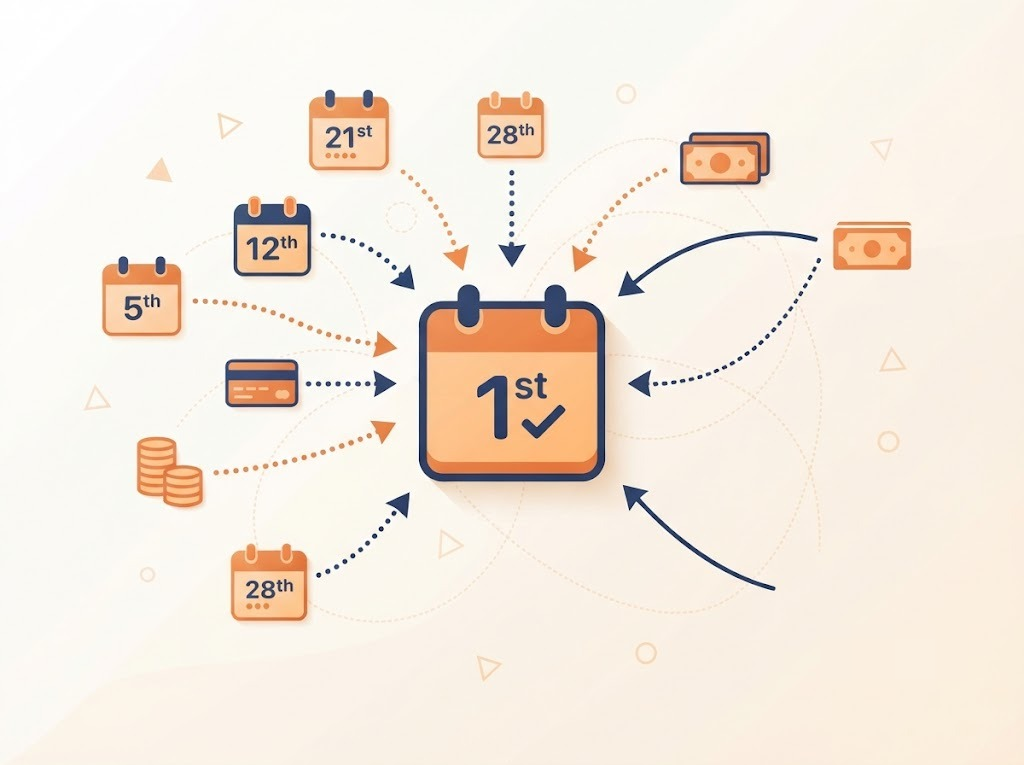
It stops being enough when the problem is no longer about ordering payments correctly. If the combined minimums across all your debts are themselves the burden, meaning you are struggling just to keep every account current, no repayment order will fix that on its own. If managing multiple debts across different lenders has become difficult, the challenge may be less about repayment order and more about repayment structure. In both these situations, the challenge has shifted from an ordering problem to a structural one, too much debt spread across too many separate accounts to manage well, and that calls for a different kind of fix than simply choosing avalanche over snowball.
Too Many EMIs to Track?
See if FREED can combine eligible debts into a single repayment, depending on the approved loan terms.
Check If I Qualify for ConsolidationHow FREED Helps When the Structure Itself Is the Problem
FREED's Debt Consolidation Program, also known as the FREED Loan Consolidation Plan, or by its consumer label, Reduce My EMI, exists specifically for the structural version of this problem, not as a replacement for the avalanche method's discipline.
If you are managing several separate debts across different banks and the real difficulty has become tracking multiple due dates and minimum payments rather than choosing a repayment order, FREED assesses your overall financial profile and matches you to a suitable lending partner from its network. That lending partner then disburses a single new loan, which pays off all your existing eligible debts at once. Debt Consolidation may combine eligible unsecured debts into a single EMI, depending on the approved loan terms.
Debt Consolidation may simplify repayment for eligible borrowers, depending on repayment behaviour and lender reporting. The combined repayment amount depends on the approved loan amount, tenure, and lender terms. FREED charges a success-based fee, only once the consolidation is actually completed, so there is no upfront cost to explore whether this fits your situation. This is a different solution to a different problem than the avalanche method solves, one is about structure, the other is about order.

Steps to Set Up Your Debt Avalanche
- 1
List Every Debt.
Write down each debt you owe with its current balance and interest rate.
- 2
Rank by Interest Rate.
Order the list from highest interest rate to lowest, ignore balance size at this stage.
- 3
Set Minimums on Autopay.
Automate the minimum payment on every debt except the top-ranked one.
- 4
Attack the Highest-Rate Debt.
Direct every extra rupee you can spare toward that one debt.
- 5
Roll the Payment Forward.
Once it is cleared, move its full payment amount to the next highest-rate debt.
- 6
Repeat Until Debt-Free.
Continue the cycle until every account reaches zero.
What the Avalanche Method Optimises For
Factor | Debt Avalanche |
Ranks debts by | Interest rate, highest first |
Best for | Minimising total interest paid |
Trade-off | First debt cleared may take longer if it has a large balance |
Needs | Discipline to stay the course without early visible wins |
This table is intentionally single-method. For the full avalanche versus snowball comparison, see FREED's dedicated comparison blog linked below rather than duplicating it here.
Sources
Claim | Source |
No claims in this blog trace to a specific, locatable RBI circular or regulator document. | Not applicable, this is a personal finance strategy piece, not a regulatory topic. Interest rate ranges (credit card 30 to 44 percent, personal loan 10 to 24 percent) are industry-typical figures without a codified regulatory source and are marked [verify current range] in the body rather than listed here as sourced. |

Mohit Juneja
Mohit Juneja writes educational content at FREED on debt management, credit scores, loan repayment, and borrowing best practices. His content is shaped by expert insights and industry knowledge, helping readers better understand their financial options and make informed decisions.
mohit.juneja@freed.care

FREED is India's trusted loan management platform. Founded in 2020 and headquartered in Gurugram, FREED has counselled 20 lakh+ people on personal loans, credit cards, and app loans. FREED charges fees only on successful settlement, not upfront. FREED does not handle secured loans (home loans, car loans, gold loans).
Media Mentions