Avoid These Common Credit Card Mistakes
A credit card is one of the most useful financial tools available and one of the most expensive to misuse. These are the mistakes that silently drain money and damage credit scores and exactly how to avoid each one.
Mohit Juneja
Reviewed by FREED India, Debt Resolution Specialists
 4.7/5
4.7/5 ₹3,200Cr+
 20,000+
 20,00,000+4.7/5₹3,200Cr+20,000+20,00,000+
Key Takeaways

The minimum due is designed to keep your account active not to help you clear your debt. Paying only the minimum on a Rs 60,000 outstanding at 38% interest takes over 10 years to clear.
Missing even one payment due date creates a late fee, penalty interest, and a CIBIL score drop all preventable with one auto-debit setup.
Cash advances on credit cards have no grace period and attract immediate interest often at an even higher rate than regular purchases.
A credit card limit is not available income. It is borrowed money that must be repaid with interest. Treating it as income is one of the most common causes of credit card debt traps in India.
If credit card mistakes have already led to unmanageable outstanding balances, FREED can help through consolidation or settlement.
Why Credit Card Mistakes Are So Common in India
Credit card adoption in India has grown dramatically in recent years. According to the Reserve Bank of India, credit card outstanding crossed Rs 2.81 lakh crore in 2024 and the number of active credit cards continues to rise.
Most people who get a credit card receive no meaningful education about how it actually works. The bank explains the limit, the rewards, and the minimum due. It does not explain what happens to your credit score when you max out the card. It does not explain what paying only the minimum actually costs you over time. It does not explain that the grace period disappears the moment you carry a balance.
The result is that millions of people use credit cards in ways that quietly cost them money and silently damage their credit scores without ever intending to.
Understanding the most common mistakes is the fastest way to stop making them.
- 1
Mistake 1: Paying Only the Minimum Due
This is the most widespread and most expensive credit card mistake in India. Every credit card statement shows two numbers: Total Amount Due and Minimum Amount Due. The minimum is typically 5% of the outstanding balance. It looks manageable. It is designed to look manageable. What it actually does: the remaining 95% of your outstanding carries forward with full interest
- 2
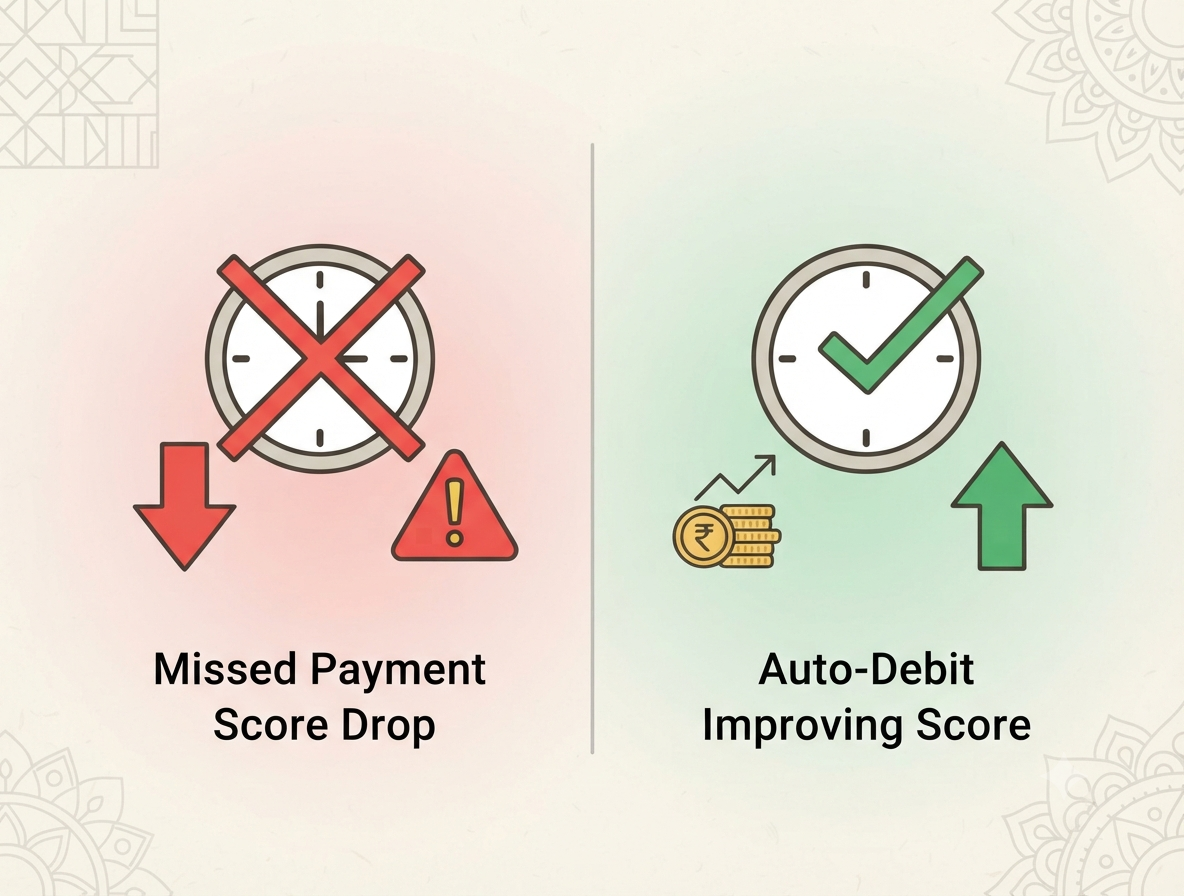
Mistake 2: Missing the Payment Due Date
One missed credit card payment causes three simultaneous problems. A late payment fee is charged typically Rs 500 to Rs 1,500 depending on the bank and outstanding amount. Penalty interest is charged on the full outstanding often at a rate higher than the standard interest rate. Your CIBIL score drops a single missed payment can reduce your score by 25
- 3
Mistake 3: Using the Card for Cash Advances
Taking cash from an ATM using your credit card feels like a simple transaction. It is one of the most expensive financial decisions you can make. Cash advances on credit cards have no grace period. The moment you withdraw cash, interest starts from that very day. Not from the due date. From day one of the transaction. The interest rate
- 4
Mistake 4: Maxing Out Your Credit Limit
Your credit card limit is not a spending target. It is a ceiling. And consistently approaching or reaching that ceiling actively damages your CIBIL score even if every payment is made on time. Credit utilisation is 30% of your CIBIL score, the second biggest factor after payment history. It measures how much of your available credit limit you are currently
- 5
Mistake 5: Applying for Too Many Cards at Once
Every credit card application triggers a hard inquiry on your credit report. A hard inquiry temporarily reduces your CIBIL score by 5 to 10 points and is visible to future lenders for up to two years. One application is manageable. The impact is small and recovers within a few months. But applying for three or four credit cards in a
- 6
Mistake 6: Ignoring Your Credit Card Statement
Many people pay their credit card bill without reading the statement. They see the minimum due, pay it, and move on. This is a mistake for two reasons. First, errors on credit card statements happen. Unauthorised transactions, duplicate charges, fees applied incorrectly these can only be caught and disputed if you read the statement. Disputes must typically be filed within
- 7
Mistake 7: Closing Old Credit Cards
When you clear a credit card outstanding, closing the card feels like a clean finish. It is usually a financial mistake. Two things happen when you close a credit card. Your total available credit limit decreases. If you had two cards with a combined limit of Rs 1,50,000 and one outstanding of Rs 30,000, your utilisation was 20% healthy. Close
- 8
Mistake 8: Using the Card for Daily Expenses Without a Repayment Plan
Using a credit card for daily expenses groceries, petrol, food delivery, utility bills is not inherently wrong. Many people do this to earn rewards and cashback. When managed correctly, it costs nothing and delivers real benefits. The mistake is doing this without a clear, committed repayment plan. If you are swiping the card for daily expenses but not paying the
- 9
Mistake 9: Not Reading the Fine Print on Fees
Credit cards in India come with a range of fees that many cardholders are not fully aware of when they apply. Annual fee or joining fee. Late payment fee. Cash advance fee. Over-limit fee charged if you exceed your credit limit. Foreign currency transaction fee charged on international purchases. Reward redemption fee on some cards. GST on all fees and
- 10
Mistake 10: Treating the Credit Limit as Available Money
This is perhaps the most fundamental credit card misunderstanding and it underlies many of the other mistakes on this list. A credit card limit is not your money. It is borrowed money belonging to the bank that you are permitted to use temporarily, subject to repayment with interest. When people mentally account for their credit limit as part of their
When Credit Card Mistakes Have Led to Unmanageable Debt
If you are reading this having already made several of these mistakes over an extended period and the combined outstanding across your credit cards has grown large enough that minimum payments are consuming a significant portion of your income the tips above are still relevant, but they need to be paired with a debt solution.
Because no amount of changed behaviour will move a Rs 2,00,000 credit card outstanding significantly faster when 36 to 42% interest is working against you every month.
If your combined credit card outstanding is manageable with a lower interest rate: FREED's Debt Consolidation Program combines all card balances into one personal loan at 14 to 20% interest. One EMI. One due date. Much more of each payment goes towards actually reducing the outstanding.
If you have already missed multiple payments and the outstanding cannot realistically be cleared through payments alone: FREED's Debt Resolution Program negotiates with your credit card companies to settle for less than you owe. On average, clients settle at 56% less than the original outstanding.
Both programs include FREED Shield which stops recovery harassment the moment you enrol.
Are You in a Loan Trap? Quick Check
Move the slider to your total EMIs as a % of monthly salary. See your debt stress level instantly.
EMIs as % of Monthly Salary

Mohit Juneja
Mohit Juneja writes educational content at FREED on debt management, credit scores, loan repayment, and borrowing best practices. His content is shaped by expert insights and industry knowledge, helping readers better understand their financial options and make informed decisions.
mohit.juneja@freed.care

FREED is India's trusted loan management platform. Founded in 2020 and headquartered in Gurugram, FREED has counselled 20 lakh+ people on personal loans, credit cards, and app loans. FREED charges fees only on successful settlement, not upfront. FREED does not handle secured loans (home loans, car loans, gold loans).
Media Mentions