Debt Counselling in India: What It Is, How It Works, and When to Seek Help
Debt counselling is guidance from a trained counsellor to help you understand your debt and build a realistic repayment budget. RBI-backed counselling centres are primarily advisory, focused on education and budgeting rather than negotiating with your banks directly. Separately, some private providers also offer negotiation with creditors on your behalf, generally as a paid service distinct from these free advisory centres.

Mohit Juneja
Reviewed by FREED India, Debt Resolution Specialists
 4.7/5
4.7/5 ₹3,200Cr+
 20,000+
 20,00,000+4.7/5₹3,200Cr+20,000+20,00,000+
KEY TAKEAWAYS

Debt counselling in India comes in two forms: advice-only, and advice plus creditor negotiation.
Free counselling centres exist through RBI-backed initiatives, including bank-run centres like Abhay, Disha, and Grameen Paramarsh Kendras.
Counselling is different from loan settlement. Counselling advises and helps you budget. Settlement actually reduces the amount you owe.
It's worth seeking help when your EMIs cross roughly 50% of your take-home income, or when you find yourself paying only the minimum due, month after month.
Reputable providers typically explain their fees only after understanding your situation.
What Does Debt Counselling Actually Mean?
Debt counselling is a conversation with a trained person who looks at your loans, your income, and your monthly expenses, and then helps you make sense of it. It is not a loan. It is not a legal process. In some countries, debt counselling is tied to a court order and comes with legal protection. In India, it works differently. It is voluntary advice, not a legal shield.
In practice, you'll find two types of debt counselling here. The first is advice-only. A counsellor helps you understand where your money is going, builds a budget with you, and explains your options. They don't talk to your bank on your behalf. The second type goes a step further. Along with the advice and the budget, the counsellor or the organisation also reaches out to your banks directly, on your behalf, to see what can be worked out.
Both types are common across India's debt counselling providers, whether it's a bank-run centre or a private service. Knowing which type you're speaking to matters, because it changes what you should expect from the conversation. If you only need clarity on your numbers, advice-only counselling may be enough. If you need someone to actually sit across the table from your bank, you'll need the second kind.
Where Can You Get Debt Counselling in India?
There are three broad places to look. The first is RBI-backed, bank-run centres. The Reserve Bank of India has directed banks to set up debt counselling centres in major districts across the country, specifically to support borrowers in financial distress. These centres are usually free. You'll find names like Abhay (run through Bank of India), Disha (run through ICICI Bank), and Grameen Paramarsh Kendras (run through Bank of Baroda). Each bank runs its own centre, but the purpose across all of them is the same: help borrowers understand their debt and plan a way through it.
The second place is non-profit credit counselling organisations. These operate independently of any single bank and often work with people across different lenders and loan types. Many offer free or low-cost sessions, funded through grants or partnerships rather than fees charged to borrowers.
The third is paid private debt resolution platforms. These typically go beyond advice. Alongside counselling, they help negotiate directly with your banks and manage the process end to end. Fees here are usually charged only when a resolution is actually reached.
None of these three categories is universally better than the other. The right one depends on whether you need advice alone, or advice plus someone who can talk to your banks for you.

What the Law Says
RBI has directed banks to set up debt counselling centres across major districts to support financially distressed borrowers, though these centres offer advice, not legal debt discharge.
Check if your bank runs a counselling centre in your cityDebt Counselling vs Debt Settlement vs Debt Consolidation: What's the Difference?
These three terms get used loosely, and mixing them up leads to the wrong expectations. Debt counselling advises. It helps you understand your situation and build a plan, but it doesn't change what you owe or how many loans you have. Debt consolidation restructures. It combines your existing loans into one new loan, so you're left with a single EMI instead of several. Loan settlement reduces. It's a formal negotiation where your bank agrees to accept a smaller amount as full and final payment, and the loan is marked as settled.
Here's the plain distinction to hold onto: counselling is a conversation, consolidation is a restructuring, and settlement is a reduction. The table below breaks down how each one actually plays out.
Debt Counselling vs Consolidation vs Settlement
Aspect | Debt Counselling | Debt Consolidation | Loan Settlement |
What it does | Advises and budgets | Combines debts into one loan | Reduces amount owed |
Changes total debt? | No | No, restructures only | Yes, reduces principal |
Best for | Anyone wanting clarity and a plan | Still paying, but stretched thin | Genuinely unable to repay |
Credit report impact | Minimal to none | Neutral to positive over time | "Settled" mark stays up to 7 years |
Typical cost | Often free or low-cost | Interest on the new loan | Fee on successful settlement |
Category boundaries can vary by provider. This is a general guide, not a recommendation for a specific path without individual assessment.
If you're still managing your EMIs, even with some effort, consolidation is usually the better fit. It doesn't hurt your credit report and often improves it over time, since you move from several accounts to one clean repayment. Settlement sits at the other end. Banks only consider it when you have reached a genuine inability to repay in full, and it comes with a real, lasting mark on your credit report. Counselling can sit in front of either path, helping you figure out which one actually matches your situation.
What Happens in a Debt Counselling Session?
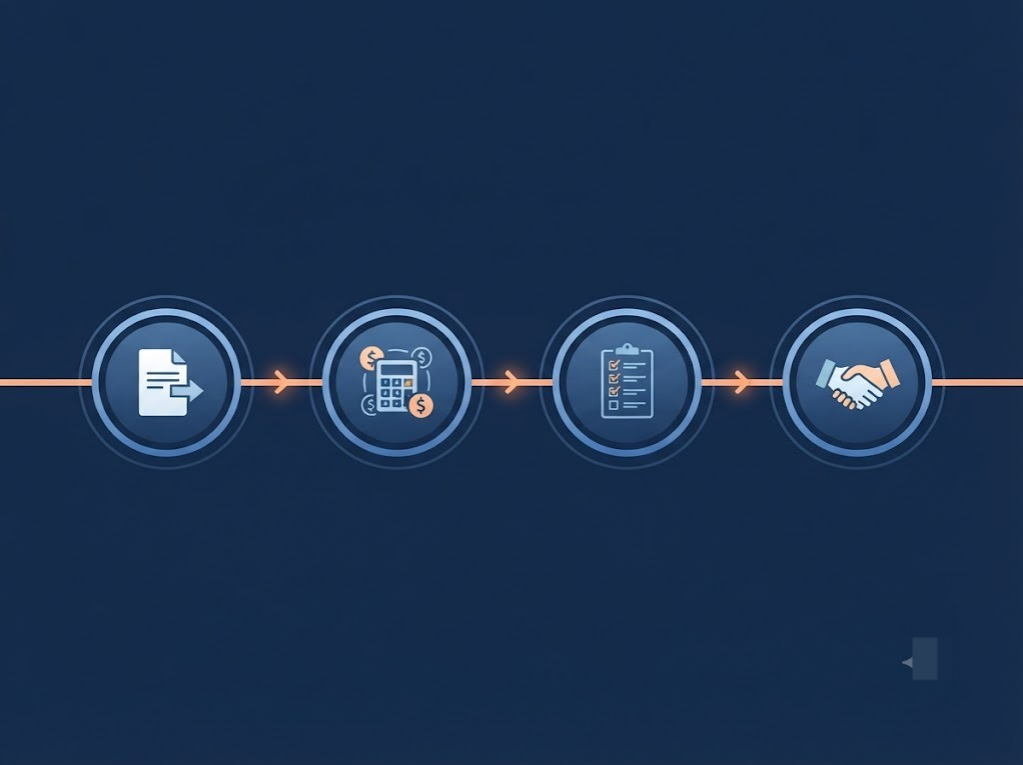
A typical session follows a fairly consistent shape, whether you're speaking to a bank-run centre or a private counsellor.
- 1
Financial assessment.
The counsellor asks about your income, your monthly expenses, and every loan or credit card you're carrying. This isn't a quick tally. It's meant to give both of you an honest, complete picture, because half the picture leads to a plan that doesn't hold up.
- 2
Cause analysis.
Next, the conversation moves to why the debt built up. Was it a job loss, a medical expense, one loan taken to pay another? This matters because the right next step depends heavily on the cause, not just the number.
- 3
Budget creation.
With the full picture in view, the counsellor helps you build a realistic monthly budget. This usually means separating essential expenses from everything else, and figuring out what you can genuinely put toward your debt each month.
- 4
Repayment options review.
The counsellor walks you through what's actually available to you. This could include talking to your bank for a longer tenure, exploring consolidation, or, in a genuine hardship situation, understanding what settlement would involve.
- 5
Next steps on creditor contact.
If the service includes negotiation, this is where the counsellor explains what happens next if you choose to have them reach out to your banks directly.
Signs It's Time to Seek Debt Counselling
Some signs build up gradually, which is exactly why they're easy to miss. Here's what to watch for:
- You're only paying the minimum due on your credit cards. This keeps the account from going overdue, but the remaining balance keeps collecting interest, month after month.
- You've started borrowing from family or friends for daily expenses. Rent, groceries, or basic bills being covered by someone else's money is a sign your own income isn't stretching far enough anymore.
- Your EMIs have crossed roughly 50% of your take-home income. Once half your salary is going toward loan payments before anything else, very little room is left for savings or emergencies.
- Recovery calls have started. Even one or two calls from a bank's recovery team mean an account has already slipped past its due date.
- You feel anxious every time an unknown number calls. This is a common, understandable reaction, and it's usually a sign the situation needs a second, calmer set of eyes on it.
If two or more of these sound familiar, a counselling conversation is worth having now, rather than waiting for things to get harder to untangle.

Talk to a FREED Counsellor, Free of Charge
One honest conversation about your real options, no pressure.
Book My Free CallHow to Choose a Genuine Debt Counselling Service
Not every service calling itself a "debt counsellor" is operating the same way, so a few checks are worth doing before you commit your time and details to one.
No upfront fee for the first consultation. A genuine counsellor talks to you, understands your situation, and only then discusses whether a paid service makes sense. Anyone asking for payment before that first conversation is a red flag.
Clear about what they can and can't do. A trustworthy service will tell you plainly whether they only advise, or whether they also negotiate with your banks. They won't blur the two to sound more capable than they are.
Written terms, not verbal promises. Anything involving fees, timelines, or what the service will actually do for you should be in writing, not just spoken over a call.
No guaranteed-outcome promises. No counsellor or platform can promise a specific waiver percentage or a guaranteed settlement outcome. Banks make the final call in every case. A service that guarantees a number upfront is telling you something they cannot actually control.

Freed Expert Tip
A genuine debt counsellor never asks for payment before your first conversation. If a service demands money upfront just to talk, that's a red flag.
Talk to FREED's team, free of chargeHow FREED's Approach Differs From Traditional Debt Counselling
Traditional debt counselling, especially the advice-only kind, stops at the plan. It tells you what your options are and leaves the execution to you. FREED's approach starts the same way, with a genuine, free first conversation to understand your situation, but it doesn't stop there.
That first call works the same way good counselling should: no pressure, no upfront fee, just an honest look at your loans, your income, and what's realistic for you. From there, FREED offers two structured paths, depending on what your situation actually calls for.
FREED's Debt Consolidation Program may combine eligible unsecured debts into a single repayment, depending on the approved loan amount, tenure, and lender terms. There's no fee charged to you for this. Any processing or foreclosure cost involved sits with the lending partner, not with FREED.
FREED helps borrowers settle their unpaid/overdue loans at up to 50% less*. A fee applies only if the settlement is successfully completed.
Where traditional counselling hands you a plan and steps back, FREED's counsellors stay with you through whichever path fits, from that first conversation through to resolution.

Ready for More Than Advice?
See if consolidation or settlement fits your situation.
Check My OptionsSources
Claim | Source |
RBI has directed banks to set up debt counselling centres in major districts | RBI Circular RBI/2015-16/286, FIDD.FLC.BC.No.18/12.01.018/2015-16 (Jan 14, 2016) — https://www.rbi.org.in/commonman/english/scripts/Notification.aspx?Id=1657 |

Mohit Juneja
Mohit Juneja writes educational content at FREED on debt management, credit scores, loan repayment, and borrowing best practices. His content is shaped by expert insights and industry knowledge, helping readers better understand their financial options and make informed decisions.
mohit.juneja@freed.care

FREED is India's trusted loan management platform. Founded in 2020 and headquartered in Gurugram, FREED has counselled 20 lakh+ people on personal loans, credit cards, and app loans. FREED charges fees only on successful settlement, not upfront. FREED does not handle secured loans (home loans, car loans, gold loans).
Media Mentions