Is My Credit Card Debt Lowering My Credit Score?
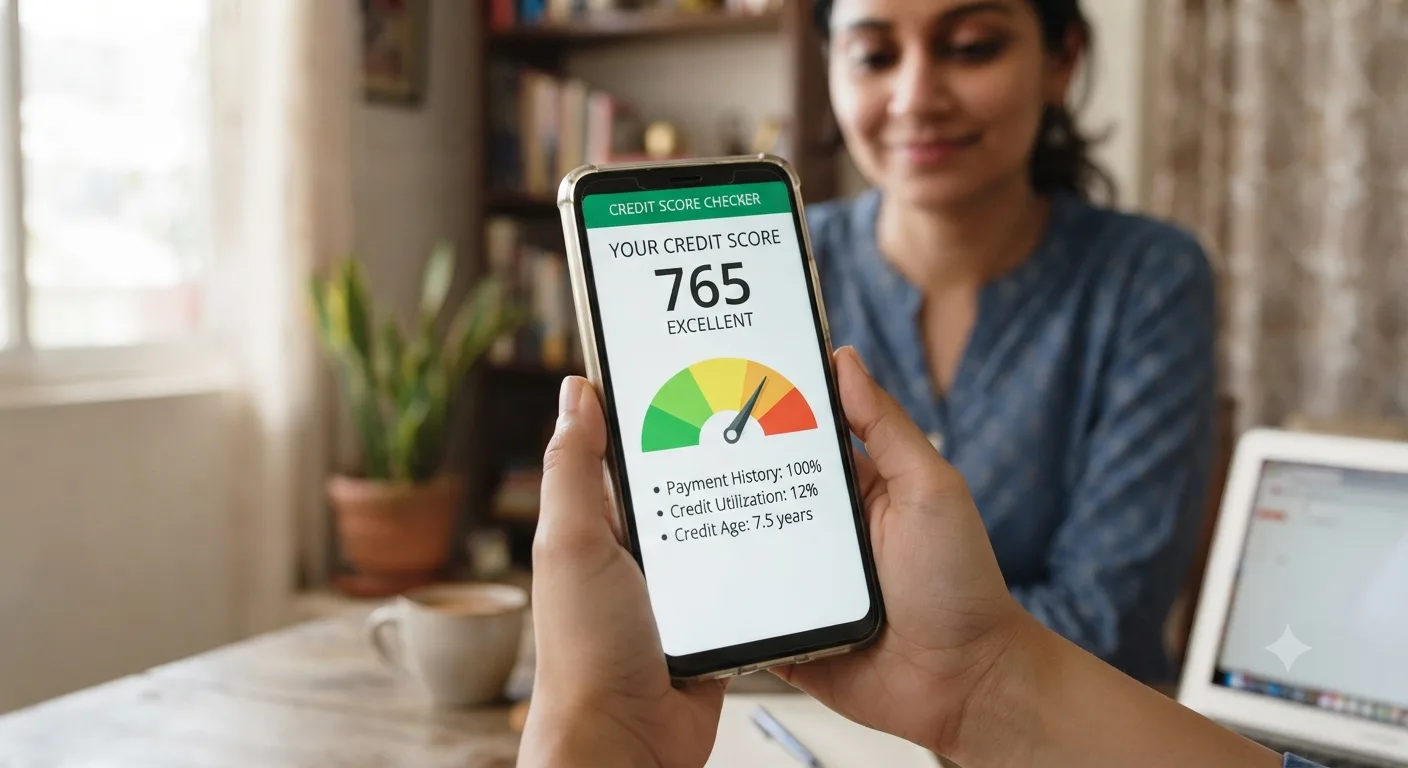
Yes, it almost certainly is. Credit card debt affects your CIBIL score through two separate mechanisms simultaneously. Understanding exactly how, and what to do about it, is what this guide covers.

Mohit Juneja
Reviewed by FREED India, Debt Resolution Specialists
 4.7/5
4.7/5 ₹3,200Cr+
 20,000+
 20,00,000+4.7/5₹3,200Cr+20,000+20,00,000+
Key Takeaways

Credit card debt lowers the CIBIL score through two distinct mechanisms: high credit utilisation (using a large proportion of available credit limit) and missed or insufficient payments (payment history damage).
Both can be happening simultaneously. High utilisation suppresses the score every billing cycle. Missed payments create hard negative marks that persist on the report for up to 3 years.
Paying only the minimum keeps the account from defaulting but does not protect the score from high utilisation, because the balance barely reduces while the limit remains consumed.
The fastest score improvement comes from paying down the credit card balance before the billing statement date, which directly reduces the utilisation recorded by the bureau each month.
If the debt is too large for behaviour changes alone to address, FREED can help reduce the balance through consolidation or settlement, which removes the source of the score damage.
The Two Ways Credit Card Debt Lowers the CIBIL Score
Credit card debt does not damage the CIBIL score in one way. It damages it in two, and they operate independently of each other. This means a person can be doing one thing correctly (paying on time) and still have their score suppressed because of the other mechanism (high utilisation).
Understanding which mechanism is affecting you, and how severely, is what allows a targeted response.
Mechanism 1: High credit utilisation. When the credit card balance is a large proportion of the total available credit limit, the utilisation ratio is high. This directly suppresses the score, even when payments are being made on time.
Mechanism 2: Missed or insufficient payments. When the credit card bill is not paid in full, or when payments are missed entirely, the payment history dimension of the score is damaged. Missed payments create hard negative marks. Minimum-only payments, while avoiding a missed payment mark, keep the balance high, which means utilisation remains high.
Most people carrying significant credit card debt are being affected by both simultaneously.

Tool: FREED Credit Insights
Check your CIBIL score right now and see exactly how your credit card debt is affecting it.
Check Your Credit Score Free →Mechanism 1: High Credit Utilisation
Credit utilisation is the percentage of the total available credit limit that is currently in use.
The formula: total outstanding balance across all credit cards, divided by total credit limit across all credit cards, multiplied by 100.
If the combined credit limit across two cards is Rs. 1,50,000 and the combined balance at billing time is Rs. 1,05,000, the utilisation is 70%.
Credit bureaus, including CIBIL, treat utilisation above 30% as a risk signal. Above 50%, the suppression of the score is significant. Above 70%, it signals financial stress and reduces the score substantially. The specific impact depends on the starting score and other factors, but a utilisation of 70% or higher can suppress the score by 50 to 100 points relative to what it would be at 30% utilisation with otherwise identical credit behaviour.
This suppression is recalculated every time a new billing statement is generated, typically monthly. This means the utilisation effect is not a one-time event. It continues as long as the balance remains high relative to the limit.
The important implication: even if every payment is made on time, a consistently high credit card balance is lowering the CIBIL score every single month.

FREED Expert Tip:
The balance the bureau records is what appears on the billing statement, not the balance at any other point in the month. Paying a significant portion of the balance before the statement is generated, not just before the due date, reduces the utilisation recorded for that month. This is one of the fastest ways to improve the score without changing total spending.
Check Your Optimal Credit UtilisationMechanism 2: Missed or Minimum-Only Payments
Payment history is the highest-weighted factor in the CIBIL score, accounting for approximately 35% of the total score calculation. Every payment made on time adds a positive mark. Every missed or late payment adds a hard negative mark.
A single missed credit card payment can reduce the CIBIL score by 50 to 100 points. The mark is visible on the credit report for up to 3 years from the date of the missed payment. Multiple consecutive missed payments produce compounding damage that takes significantly longer to recover from.
A payment that is more than 90 days overdue triggers NPA (Non-Performing Asset) classification of the account, which produces further, more severe score damage and remains on the report for up to 7 years.
Minimum-only payments do not create a missed payment mark (the account is technically current), but they do very little to reduce the outstanding balance because most of the minimum payment goes toward interest rather than principal. On a Rs. 60,000 balance at 3.5% monthly interest, the interest added per month is Rs. 2,100. If the minimum due is Rs. 3,000, only Rs. 900 reduces the principal. The balance stays at approximately Rs. 59,100. The utilisation barely changes. The score suppression from high utilisation continues.
This is why the minimum payment is doubly problematic for the CIBIL score: it avoids the missed payment mark but does nothing to reduce the utilisation that is also suppressing the score.

Legal Note:
Under RBI guidelines on credit cards, issuers must report payment history accurately to credit bureaus within 30 days. If a payment was made on time but reported as late, this is a credit report error. Raise a formal dispute with CIBIL through their official dispute portal. Under the Credit Information Companies (Regulation) Act, bureaus must investigate and respond within 30 days. Errors found must be corrected.
Know your credit rightsHow Much Does the Score Drop?
The score drop from credit card debt depends on both mechanisms combined.
From high utilisation alone (accounts current, payments on time): a card consistently at 70% utilisation can suppress the score by approximately 50 to 100 points compared to what it would be at 30% utilisation with identical payment history.
From missed payments: a single missed payment reduces the score by 50 to 100 points immediately. Multiple consecutive missed payments over several months can reduce it by 150 to 250 points cumulatively.
From both mechanisms simultaneously, which is the most common situation for people with significant credit card debt: the combined suppression can be 150 to 300 points below what the score would be with the same credit products managed responsibly.
This is why people who have been managing credit cards for years but carrying large balances often find their score is significantly lower than they expect. The debt has been suppressing the score through utilisation every month, and any payment irregularity has compounded the damage through payment history.
The Minimum Payment Trap and the Score
The minimum payment trap refers to the pattern where a credit card balance is never meaningfully reduced because only the minimum is paid each month, and interest charges add to the balance faster than the minimum reduces it.
This trap has a specific credit score consequence: it keeps utilisation perpetually high. A person paying only the minimum on a Rs. 80,000 credit card balance with a Rs. 1,00,000 limit has 80% utilisation month after month. Their score is suppressed by this utilisation every single month for as long as the balance stays near Rs. 80,000.
The minimum payment keeps the account technically current, which is better than a missed payment. But it does not protect the score from the utilisation damage. The only thing that reduces utilisation-based score suppression is reducing the actual balance.
How to Check Which Mechanism Is Affecting You Most
The CIBIL report reveals which mechanism is the primary driver of score suppression.
To identify high utilisation impact: Check the current balance on each credit card as a percentage of its credit limit. Any card above 30% is contributing to utilisation suppression. Cards above 50% are contributing significantly.
To identify payment history damage: Check the payment history section of the report for each credit card account. Each month is shown as either 000 (paid on time) or a number indicating how many days past due. Any month marked above 000 is a negative mark contributing to score suppression.
FREED Credit Insights provides this breakdown clearly, showing what specific factors are currently suppressing the score and which to address first.
Are You in a Loan Trap? Quick Check
Move the slider to your total EMIs as a % of monthly salary. See your debt stress level instantly.
EMIs as % of Monthly Salary
What to Do to Stop the Damage and Start Recovery
The response depends on which mechanism is dominant.
If utilisation is the primary issue (accounts current, payments on time):
Pay down the credit card balance aggressively. Even reducing from 70% to 40% utilisation produces a measurable score improvement within one to two billing cycles, because utilisation is recalculated monthly. Pay the balance before the statement generation date, not just before the due date, to reduce the utilisation recorded that month.
Request a credit limit increase from the card issuer. If spending stays the same but the limit increases, utilisation decreases mechanically. A limit increase from Rs. 1,00,000 to Rs. 1,50,000 on an Rs. 50,000 balance reduces utilisation from 50% to 33% without any change in the actual debt.
If missed payment marks are the primary issue:
Automate all payments immediately. Set up auto-pay for at least the minimum due on every card and loan, 2 to 3 days before the due date. This prevents further missed payment marks from being added to the report.
The existing marks cannot be removed (unless they are errors). They diminish over time as positive payment history accumulates on top of them. Each month of on-time payment reduces the relative weight of past misses.
If both mechanisms are active simultaneously:
Address both: automate payments to stop further missed marks, and direct every available rupee toward reducing the highest-utilisation card first. The utilisation reduction produces the fastest visible score improvement, while the payment automation stops the ongoing payment history damage.
When the Debt Is Too Large to Fix Through Behaviour Alone
There is a specific situation where behaviour changes cannot produce meaningful score improvement: when the credit card balance is so large relative to income that even aggressive above-minimum payments barely reduce utilisation, because interest charges nearly offset the payments.
On a Rs. 2,00,000 combined credit card outstanding at 40% annual interest, the monthly interest is approximately Rs. 6,700. A Rs. 8,000 monthly payment reduces the principal by only Rs. 1,300. Reducing utilisation from 80% to 30% on this balance, through payments alone, would take years of consistent above-minimum payments and significant total interest cost.
In this situation, the score improvement cannot be achieved through payment discipline alone. The balance needs to be structurally reduced. FREED's Debt Consolidation Programme combines credit card balances into one lower-rate loan, reducing the effective interest rate from 40% to 14% to 20%, which means more of each payment reduces the principal. Utilisation on the original cards drops to zero once they are cleared through the consolidation. The score begins to recover from the utilisation dimension almost immediately.
For larger balances that have entered default, FREED's Debt Resolution Programme settles for less than the full outstanding. This results in a "Settled" remark and a further temporary score impact, but for people already in NPA status, it stops the ongoing damage and creates the conditions where score recovery can begin.
Credit card debt lowering your score and the balance too large to pay down quickly?
FREED can help reduce it structurally. Talk to a FREED Expert, Free, no pressure.
Connect Now
Mohit Juneja
Mohit Juneja writes educational content at FREED on debt management, credit scores, loan repayment, and borrowing best practices. His content is shaped by expert insights and industry knowledge, helping readers better understand their financial options and make informed decisions.
mohit.juneja@freed.care

FREED is India's trusted loan management platform. Founded in 2020 and headquartered in Gurugram, FREED has counselled 20 lakh+ people on personal loans, credit cards, and app loans. FREED charges fees only on successful settlement, not upfront. FREED does not handle secured loans (home loans, car loans, gold loans).
Media Mentions