Government Debt Relief Programs in India: What Exists and What Doesn’t
Govt debt relief programs are schemes, rules or channels run or backed by the government that can ease what a borrower owes. Most cover specific groups or loan types, and we found no general scheme that waives individual credit card or personal loan dues.

Mohit Juneja
Reviewed by FREED India, Debt Resolution Specialists
 4.7/5
 ₹3,200Cr+
 20,000+
 20,00,000+4.7/5₹3,200Cr+20,000+20,00,000+
Key Summary

Govt debt relief programs in India mostly cover specific groups. We found none for credit card or personal loan dues.
RBI’s COVID-era Resolution Framework 2.0 stopped taking new cases after 30 September 2021.
A Lok Adalat award is final and binding, and no appeal lies against it.
RBI’s Ombudsman scheme charges nothing for complaints against banks and many NBFCs.
Anyone promising a “government approved” waiver for a fee is a warning sign.
Are There Any Govt Debt Relief Programs in India?
Some government schemes and legal routes exist, but we found none that cuts or writes off an individual’s credit card or personal loan dues. That’s the honest answer, and it’s better to hear it now than after a week of searching. We can’t prove that nothing exists, so we also show you how to check the official sources yourself.
Why is the answer so short? Because the schemes people hear about are built for other borrowers. A farm loan waiver covers named farm loans. An education interest subsidy covers education loans. A business scheme covers a business. None of these was written for a salaried person with a card balance and a personal loan.
First, a plain word about the phrase. “Debt relief” means help with what you owe. It can mean a new payment plan, a lower amount, more time, guidance, or a legal route. Our pillar guide explains what debt relief actually means in full.
That’s why the search is confusing. Many pages use “govt debt relief programs” to describe things that aren’t programs at all. A court forum, a bank policy and a complaint channel all get lumped together. They’re real, and some can help. But none of them is a government giving you money to clear your dues.
So here’s what this guide does. It lists each real route, who it covers, whether it’s open today, and whether it reaches a credit card or personal loan. Then it shows what to do if none fits. The next section has the table.

See What Share of Your Salary Goes to EMIs
Check how much of your pay your EMIs take today.
Check My EMI ScoreWhich Government Schemes and Rules Actually Exist?
Six routes come up again and again when people search. Only some are open, and few reach unsecured consumer dues. Here’s the status of each.
| Route | Who it covers | Status | Reaches a credit card or personal loan? |
|---|---|---|---|
| State loan waivers | Named groups, such as farmers | Announced case by case | We found none for these dues |
| RBI Resolution Framework 2.0 | Individuals and small businesses hit by COVID | Closed (invoke by 30 Sep 2021) | No longer open |
| IBC Part III (personal insolvency) | Personal guarantors to corporate debtors | Only that group is described as notified in an IBBI brochure | Not for a typical consumer |
| Lok Adalat | Disputes before or in court | Open | Yes, if referred |
| RBI compromise settlement framework | Settlements by regulated banks and NBFCs | In force | The bank decides under its board policy |
| RBI Ombudsman | Complaints against banks and NBFCs | Open | Complaints, not debt cuts |
Let’s go through them in plain words.
State loan waivers. State governments have announced waivers for particular groups, such as farmers, from time to time. These cover named loans. State loan-waiver announcements generally apply to specified borrower groups and eligible loan categories. We found no general state waiver covering individual credit card or personal loan dues. Check the relevant state government’s latest notification before relying on a particular scheme.
RBI Resolution Framework 2.0. It was a COVID-era window. It’s closed, so it can’t help a new case today.
IBC Part III. The Insolvency and Bankruptcy Code (IBC) has a part for individuals. In practice, only one group was brought in first. We cover it in its own section.
Lok Adalat. A court-linked forum (the word means “people’s court”) where both sides try to settle a dispute. It’s open, and it can include loan disputes.
RBI compromise settlement framework. It sets rules for how banks and non-bank finance companies (NBFCs) may settle. It doesn’t give you a right to a settlement.
RBI Ombudsman. A complaint channel. It deals with unfair treatment, not with the size of your dues.
If you’ve seen the word “waiver” and want to know what it means, read our guide on loan waive off vs loan write off. The next sections go through the three that matter most for unsecured dues.
What Is a Lok Adalat, and Can It Help With Loan Dues?
A Lok Adalat is a court-linked forum where both sides try to reach a settlement. It isn’t a waiver scheme, and it isn’t among the govt debt relief programs people hope for. But it can touch loan disputes, so you should know how it works. Here’s what the National Legal Services Authority (NALSA) says on its page.
- It has statutory status. It runs under the Legal Services Authorities Act, 1987.
- A dispute not yet in court can be referred. The legal services authority can refer it at a pre-litigation stage, when one of the parties applies. It then sends a notice to the other party.
- No court fee is charged for filing. If a case already in court is referred and settles, the fee paid is refunded.
- The award is treated as a civil court decree. It’s final and binding on all parties, and no appeal against it lies before any court. NALSA’s page also says that parties who are dissatisfied may still litigate in the appropriate court, so ask what that means for your case.
Notice what’s missing. Nothing in this says the forum will reduce your dues. A Lok Adalat helps two sides reach an agreement. The amount depends on what both sides accept.
If a notice arrives, here are four steps.
- Read it for the date and the amount claimed. Check who sent it and what they say you owe.
- Gather your papers. Bring loan statements and proof of your income.
- Work out what you can pay each month. Don’t agree to an amount you can’t repay. The award is binding.
- Ask for the terms in writing. Keep a copy of everything.
Be calm about the notice. A Lok Adalat notice usually indicates that a dispute has been referred or is being considered for settlement. It is an opportunity to present your position and explore an agreement. Read the notice carefully and seek legal advice if you are unsure about the proceedings.
For more, read our guides on resolving bank disputes at a Lok Adalat and what to do with a Lok Adalat notice.

FREED Expert Tip
If you get a Lok Adalat notice, work out what you can pay every month before the date, because an award is binding and can’t be appealed.
Check My EMI ScoreCan Insolvency or Bankruptcy Law Help an Individual With Credit Card Debt?
Part III of the Insolvency and Bankruptcy Code provides for insolvency resolution and bankruptcy processes for individuals and partnership firms. The IBBI brochure dated 5 May 2020 identifies personal guarantors to corporate debtors as the group notified at that time. Because the brochure may not reflect later legal developments, check the latest government notifications and IBBI material before concluding which individual categories are currently covered.
Who is a personal guarantor to a corporate debtor? It’s someone who promised to repay a company’s loan if the company couldn’t. That’s a very specific position. A salaried person with credit card and personal loan dues isn’t in that group.
The brochure describes a phased rollout, with other groups to follow. We found no notice that brings ordinary consumers into Part III for credit card or personal loan dues. Laws change, so check the Insolvency and Bankruptcy Board of India’s site before you rely on this. We can only say what we found.
So there’s no everyday “personal bankruptcy filing” for unsecured consumer dues that we found. That doesn’t mean India has no insolvency law. It means this law doesn’t yet reach the usual borrower.
What does that mean for you? It narrows your real options. Possible routes include discussing revised repayment terms with your lender, evaluating consolidation if you qualify and can afford the new loan, or exploring settlement if genuine financial hardship prevents full repayment. The suitability of each option depends on your circumstances and the lender’s decision. We lay them out as a ladder later in this guide.
For the legal side in detail, read our guides on the difference between insolvency and bankruptcy, debt consolidation vs bankruptcy and bankruptcy alternatives. None of this is legal advice. For a court matter, speak to a lawyer.
Know Where You Stand Before You Decide
See your loans and cards in one place first.
Check My Credit InsightsWhat About RBI Restructuring, Moratorium and Settlement Schemes?
RBI sets rules for banks. It doesn’t give borrowers a scheme to claim. That difference matters, because many pages describe RBI rules as if they were benefits. They’re rules about what a bank may do.
Restructuring and moratorium. A restructuring means the bank changes your repayment terms. A moratorium is a pause on payments. RBI’s Resolution Framework 2.0 (RBI/2021-22/31, 5 May 2021) let eligible individuals and small businesses affected by COVID seek resolution. It covered individuals with personal loans whose accounts were standard on 31 March 2021. Each lender decided whether to offer it. The framework allowed eligible borrowers to seek resolution within the specified invocation window, which closed on 30 September 2021. It is not an open application window for new cases today.
So today, any change to your loan plan is the bank’s own decision under its own policy. No scheme is open for you to claim. For how the first round and the second round differed, read our guide on RBI loan restructuring 2.0. For the rules in general, see loan restructuring and RBI rules. We also track EMI moratorium news, but don’t assume one is open for you.
Compromise settlement. RBI’s compromise settlement framework (RBI/2023-24/40, dated 8 June 2023) requires covered regulated entities to maintain Board-approved policies governing compromise settlements. These policies set the applicable eligibility conditions, approval process and other requirements. A borrower cannot demand a particular settlement amount as a right; the regulated entity assesses the proposal under its policy and applicable RBI requirements.
Here’s the plain point. Asking your bank for a new payment plan is always allowed. It may say no. It may say yes. Either way, asking costs nothing, and your request on paper gives you something to refer back to.
For settlement rules in more depth, see who qualifies under the RBI one-time settlement scheme.
Combine Your Loans Into One Lower EMI
FREED’s Loan Consolidation Plan can reduce your monthly EMI burden by up to 50%.* Rates and ranges shown are indicative. Final terms decided by the bank/lender. FREED is not a Loan Provider. No outcome is guaranteed.
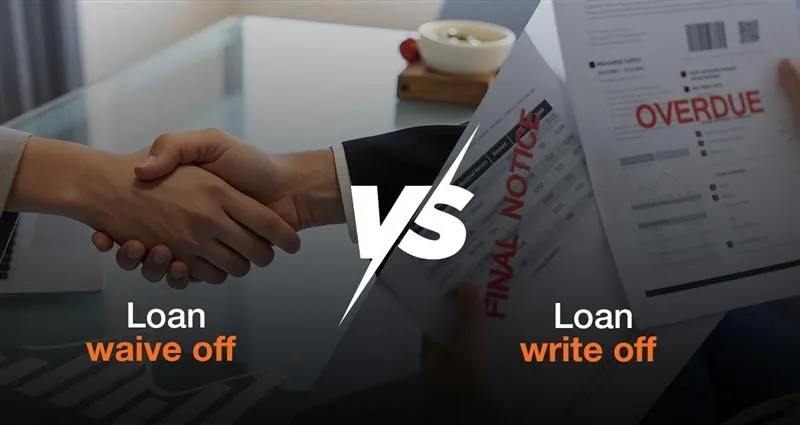
Reduce My EMIWhat Is the Difference Between a Loan Waiver, a Write-Off and a Settlement?
These three words get mixed up, and the mix-up can cost you. People see “written off” on a letter and relax. But a write-off isn’t a waiver. Here’s how they differ.
| Waiver | Write-off | Settlement | |
|---|---|---|---|
| What it means | The lender gives up its claim on the amount | The bank removes the loan from its books for accounting | Both sides agree a payment that closes the account |
| Do you still owe it? | No, for the amount waived | Possibly yes | Not after the agreed payment is made |
| Who decides | The lender, or a government for named groups | The bank, for its own books | Both sides, with the bank deciding |
The middle column is the one to watch. RBI’s compromise settlement framework distinguishes a technical write-off from a waiver of the lender’s claim. A technical write-off is an accounting measure and does not, by itself, extinguish the borrower’s repayment obligation or prevent the lender from continuing recovery action.
A settlement is different. RBI’s framework describes it as a negotiated arrangement to fully settle the bank’s claims against the borrower in cash, and it may involve some sacrifice of the amount due. It isn’t a gift. It’s an agreement, and both sides have to accept it.
So when a company says “we’ll get your loan written off”, ask what they mean. If they mean a bank’s accounting step, you’d still owe the money. If they mean a waiver, ask who is giving it up and on what basis. If they mean a settlement, ask for the terms in writing.
Read our guides on loan waive off vs loan write off and the one-time settlement scheme for NPAs for more.
How Do You Spot a “Government-Approved” Debt Relief Scam?
Because people hope for a waiver, “government approved” is a common hook. A hopeful borrower is easy to catch. So slow down, and use these red flags. They’re framed as “check this”, because one flag doesn’t prove anything, but several together are a warning.
- A promise that your dues will be waived or cancelled. We found no general scheme that does this for credit card or personal loan dues.
- A fee to “apply” for a government scheme. Ask which scheme, and where it’s published.
- A caller who says they’re from a government or RBI office and asks for OTPs or card details. Never share these.
- A refusal to put terms in writing. If it isn’t on paper, it isn’t a promise.
Then do two things. Ask which law or circular the offer rests on, and look it up on RBI’s or the government’s own site. If it isn’t there, treat the offer with care. And keep a record of every call and message.
If a regulated bank or NBFC has treated you unfairly, complain to it first. Under the Reserve Bank–Integrated Ombudsman Scheme, 2026, borrowers must first raise their complaint with the regulated entity. If the entity rejects the complaint wholly or partly, or the borrower is dissatisfied with its response, the borrower may approach the RBI Ombudsman. If the entity does not respond within 30 days, the borrower may also approach the Ombudsman. Check the Scheme’s applicable filing time limits before submitting a complaint. The complaint process is free.
You can file at cms.rbi.org.in, by email to crpc@rbi.org.in, or by post. The helpline, 14448, gives guidance but can’t take complaints. The scheme covers banks and many NBFCs, though not every NBFC, so check yours.
We don’t name any company here, and we don’t claim that every provider who charges a fee is illegal. The test is simple: what do they do with what you owe, what do they charge, and is it in writing?
Read our guides on debunking debt relief myths and how to choose a debt relief company. A “government approved” claim from a company is also a good reason to compare it with real govt debt relief programs, which, as this guide shows, don’t reach these dues.

What the Law Says
Under RBI’s Integrated Ombudsman Scheme, 2026, complaining to the RBI Ombudsman costs nothing. First complain to your bank or NBFC. If you get no reply in 30 days, or you’re unhappy with the reply, you can take the complaint to the RBI Ombudsman. The helpline, 14448, gives guidance but doesn’t take complaints.
Check My Credit InsightsHow Do You Ask Your Bank for Relief in Writing?
When no scheme fits, your bank is usually the first door. Many people avoid it because they fear the answer. But asking early, and in writing, is one of the few things fully in your hands.
Here’s a simple way to do it.
- Write down what changed. A job loss, a salary cut, a medical bill. Be specific and short.
- State what you can pay. Work it out from your real income, after rent, food and bills. Don’t promise more than you can keep.
- State what you’re asking for. It might be a longer time to repay, a revised plan or a short pause. Use the bank’s own words if you can.
- Attach your papers. Loan statements and proof of income are enough to start.
- Ask for a written reply. A phone promise can’t help you later.
- Keep copies and note the date. Save every letter, message and call note in one folder.
Send it by email or through the bank’s app or branch, and keep the acknowledgement. If you get no reply, you can follow up, and if you still get nowhere, the complaint route in the previous section is open to you.
Be honest in the letter. A bank is more likely to listen to a clear, realistic request than to a long plea. And don’t stop talking to the bank while you wait. Silence makes everything harder.
What if the bank says no? Then you’ve learned something, and you’ve got it on paper. The next section shows what to do from there.
For how restructuring works, read our guides on how to restructure debt and debt counselling in India.
Want Every Account in One Place Before You Write?
Your loans, cards and balances in plain words.
Check My Credit InsightsWhat Can You Do If No Government Program Fits?
When no scheme fits, the options are still real, and your situation picks them. Our pillar guide lists the debt relief options that exist today. Here’s a worked example of two cases. The details are made up.
Reader A takes home ₹40,000 a month. Their EMIs on two cards and a personal loan total ₹22,000, which is 55% of take-home pay (₹22,000 ÷ ₹40,000). They pay on time, but barely. A can still repay. A’s options are to talk to the bank about a new payment plan, to get counselling, and to consider consolidation, which brings several EMIs into one.
Reader B has ₹4,50,000 of unsecured dues. After a job loss, B has missed four EMIs, and a Lok Adalat notice has arrived. B’s options are to read the notice and attend with statements and an honest monthly figure, to ask the bank for terms in writing, and to have an options talk. Consolidation is unlikely to be open to B, and applying for new credit wouldn’t help.
Settlement is not something a borrower chooses out of preference. It’s for borrowers who genuinely can’t repay in full because of real financial difficulty. It’s a patient process, and the bank decides.
Here’s the ladder, in order.
- Speak to your bank. Ask for a new plan, in writing.
- Get counselling. A counsellor can explain your options and help you plan.
- Consider consolidation, if you can still repay. It combines several EMIs into one.
- Look at settlement, only if you genuinely cannot repay.
Read it from the top and stop at the first step that fits. Most people shouldn’t skip steps. To see who qualifies for consolidation, read can I consolidate my debt.

Can’t Repay Your Loans in Full?
If you genuinely cannot repay your loans, FREED negotiates with your lenders to settle them for less than 50%* of your outstanding dues. Rates and ranges shown are indicative. Final terms decided by the bank/lender. FREED is not a Loan Provider. No outcome is guaranteed.
Settle My LoansHow FREED Helps When No Government Program Applies
No government program may reach your dues. FREED helps with what can. Over 20 lakh people trust FREED, India’s trusted loan management platform. FREED isn’t a government scheme, and it isn’t government-approved. It’s a private platform, and it works through banks and loan providers.
For people who can still repay: the Loan Consolidation Plan.
If most of your salary goes towards paying multiple EMIs, FREED’s Loan Consolidation Plan helps you combine multiple loans into a single monthly EMI. This can reduce your monthly EMI burden by up to 50%.*
Here’s how it works:
- FREED assesses your financial profile.
- FREED matches you to a lending partner from its network.
- The partner disburses one new loan that pays off your existing eligible unsecured loans and card dues.
- FREED handles the process end to end, 100% online.
- You’re left with one loan, one EMI and one due date.
Debt consolidation does not guarantee that your credit score will remain unchanged or improve. The impact depends on factors such as credit enquiries, the new loan account, the status of existing accounts and subsequent repayment behaviour. Timely payments can support a positive credit history. FREED charges a success-based fee, and the evaluation fee is non-refundable. The lending partner’s own fees may apply, so check the Key Facts Statement. FREED’s team confirms eligibility during the assessment.
The plan covers unsecured dues, such as personal loans, card dues, BNPL and app loans. It doesn’t cover home loans, car loans or other secured loans.
For people who genuinely cannot repay: the Loan Settlement Plan.
Settlement is not something a borrower chooses out of preference. If you genuinely cannot repay your loans, FREED negotiates with your lenders to settle them for less than 50%* of your outstanding dues.
The process runs in plain steps:
- FREED looks at your full financial picture.
- FREED builds a savings routine with you.
- FREED negotiates with your bank once the funds are enough.
- The bank’s decision is final. If it accepts, a settlement letter follows.
It takes time, and it isn’t a quick fix. FREED charges a success-based fee, and the evaluation fee is non-refundable.
Not sure which one fits? FREED’s team can look at your situation and tell you what options are available. You can read the Loan Consolidation Plan and Loan Settlement Plan pages, our guide on what loan consolidation means, or what happens when you join the debt relief program.
Rates and ranges shown are indicative. Final terms decided by the bank/lender. FREED is not a Loan Provider. No outcome is guaranteed. Please verify directly with your bank.
Combine Your Loans Into One EMI With FREED
One monthly EMI instead of several, with the process handled for you.
Reduce My EMI
Mohit Juneja
Mohit Juneja is FREED’s Content & Communication Lead with 12+ years of experience across content, media, advertising and digital communications. He holds a postgraduate diploma in Communications from Xavier Institute of Communications, Mumbai, and has worked with organisations including NDTV, The Indian Express, McCann Worldgroup and NABARD.
At FREED, he leads content and communication across loan management, debt resolution, debt consolidation and financial well-being. His work combines research, storytelling and consumer-focused communication to make complex financial topics easier to understand and act on. He has also scripted and produced 11 documentaries on rural development and agriculture for NABARD, with film's selected for the Mumbai International Film Festival.
mohit.juneja@freed.care

FREED is India's trusted loan management platform. We help India settle their loans, consolidate their EMIs, improve their credit score, and manage their loans better. Over 20 lakh people trust FREED. We have managed more than ₹3,500 crore in loans and saved our users over ₹450 crore.
Media Mentions