Loan Waive Off vs Loan Write Off - Know the Difference
Loan waive-off or Loan write-off? Learn how loan waive-off is different from loan write-off, How does it impact your credit score.
Mohit Juneja
Reviewed by FREED India, Debt Resolution Specialists
 4.7/5
4.7/5 ₹3,200Cr+
 20,000+
 20,00,000+4.7/5₹3,200Cr+20,000+20,00,000+
Key Takeaways

A loan write off means the bank has given up hope of recovering the money, but you still legally owe it.
Write offs hurt your CIBIL score badly. Waive offs hurt it too, but less severely.
Neither option means you are "free" in the full sense, both leave a mark on your credit report for up to 7 years.
If you're struggling with loan repayment, there are better options before it reaches this stage, FREED can help you explore them.
What is a Loan Write Off?
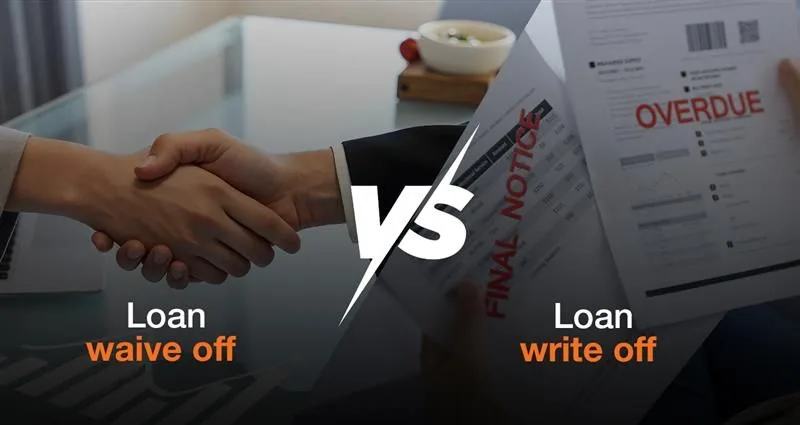
A loan write off happens when the bank decides to remove your loan from its books. A write-off reflects the lender's accounting treatment of a loan it considers difficult to recover; it does not by itself cancel the borrower's liability.
But here's the important part, the bank is not forgiving your debt. You still owe the money. The bank can still chase you for it. They can use collection agents, legal action, or sell your debt to a recovery agency.
A loan can become an NPA after the applicable period of overdue payments. A write-off is a separate accounting decision that may happen later, depending on the lender's policies and recovery process. The bank tries everything to collect. If recovery efforts are unsuccessful, the lender may eventually classify the account for write-off in accordance with its accounting policies and applicable regulations. A write-off does not by itself extinguish the borrower's liability.
Think of it this way, the bank stopped counting on you. But your debt is still very much alive. Understanding exactly what "Written Off" means on your CIBIL report is worth reading if you've already seen this status appear on your own file.

Freed Expert Tip
Get your bank's exact reporting status in writing before you agree to anything. "Written Off," "Settled," and "Waived Off" all look different on your CIBIL report, and each one affects your credit differently.
Check My CreditWhat is a Loan Waive Off?
A loan waive off is different. Here, the bank actually forgives the debt, fully or partially. For the amount that has been formally waived, the borrower is no longer required to repay that amount, subject to the terms of the waiver.
Waive offs are rare. They are usually given in very specific situations, natural disasters, government relief schemes, severe medical conditions, or cases where repayment is truly impossible.
The most common example in India is farm loan waivers, when the government steps in after a bad monsoon or flood and pays the bank on behalf of farmers.
For regular personal loans or credit cards, a full waive off is very uncommon. A partial waive off, where part of the loan is forgiven, is slightly more common in hardship cases. Before a waiver even enters the picture though, most accounts first pass through NPA classification, the formal stage at which a bank considers a loan for write-off in the first place.
Are You in a Loan Trap? Quick Check
Move the slider to your total EMIs as a % of monthly salary. See your debt stress level instantly.
EMIs as % of Monthly Salary
The Key Difference, Side by Side
Loan Write Off | Loan Waive Off | |
What happens | Bank removes loan from its books | Bank forgives the loan fully or partly |
Do you still owe money? | YES, legally you still owe it | NO, debt is cancelled |
Can bank recover later? | YES, they can still chase you | NO, no recovery attempts |
Who decides? | Bank's internal decision | Bank or government (rare) |
Common for? | Personal loans, credit cards | Agricultural loans, govt schemes |
Report status | Shows "Written Off" | Shows "Waived Off" or "Settled" |

Worried Your Loan Is Heading Toward a Write-Off?
If your EMIs have started slipping, don't wait for the write-off to happen. FREED can look at your full financial picture and show you what options exist right now.
Start My Debt AssessmentHow Does Each One Affect Your CIBIL Score?
This is the part that matters most to your financial future.
Write Off, Heavy Impact
When a loan is written off, your CIBIL score can drop sharply. The words "Written Off" appear on your credit report. Future banks and lenders see this as a serious red flag. It tells them you stopped paying and the bank gave up trying.
Getting a new loan or credit card after a write off is very difficult.Negative credit information can remain part of your credit history for a period determined by applicable reporting rules and the way the account is reported.
Waive Off, Moderate Impact
A waive off also shows up on your credit report. It signals that the original repayment terms were not completed. However, it is seen as slightly less damaging than a write off, because the debt was officially resolved.
You may still face higher interest rates or stricter terms when you apply for credit in the future.
Both can have implications for your credit profile, depending on how the account is reported and the circumstances surrounding the resolution. The best outcome is always to repay the loan as agreed, or to restructure it before it reaches either stage.
When Does a Write Off Happen?
Step 1, You miss an EMI. One missed payment makes your account irregular.
Step 2, 90 days of non-payment. Your loan is now classified as a Non-Performing Asset (NPA). The bank starts recovery efforts.
Step 3, Recovery attempts fail. The bank calls, sends notices, tries to collect. If nothing works over several months, they internally move your account to their "loss" category.
Step 4, Loan is written off. The loan is removed from active books. But your legal liability remains. The bank may still pursue recovery through agents or courts.

What the Law Says
RBI rules let banks write off bad loans from their own books for accounting purposes. This is called a prudential write-off. It does not cancel your duty to repay. The bank can still take legal steps to recover the money after a write-off.
Talk to FREED's TeamWhen Does a Waive Off Happen?
Waive offs don't happen automatically. You usually can't just ask for one. They happen in specific situations:
- Government announces a relief scheme (like farm loan waiver)
- Natural disaster affects your ability to earn, flood, earthquake, etc.
- Certain hardship, relief or insurance arrangements may result in some or all of an outstanding amount being discharged, depending on the terms and circumstances.
- A bank or NBFC decides to write off and waive off a bad debt as a one-time measure
- As part of a negotiated debt settlement, where part of the outstanding is waived
For most urban borrowers, with personal loans or credit card debt, a full waive off is very rare. What's more common is a negotiated settlement where part of the amount is waived as part of an agreement.
Write Off vs Waive Off vs Settlement, What's the Difference?
Write Off | Waive Off | Settlement | |
Debt cancelled? | No | Yes (fully or partly) | Partly |
You still owe money? | Yes | No | No (after payment) |
Initiated by? | Bank internally | Bank or government | You + Bank (negotiated) |
You make any payment? | No | No | Yes, reduced amount |
CIBIL impact | Very high | Moderate | High |
Common for regular borrowers? | Yes | Rare | Yes |
For borrowers who cannot repay the full outstanding amount, settlement may be one option to discuss with the lender after considering alternatives such as restructuring or consolidation. Understanding what the settlement amount actually represents is worth reading before assuming settlement means paying nothing at all, it still involves a real, negotiated payment.
Still Paying, But Barely Managing?
You don't have to wait until things get worse. See if merging your loans into one lower EMI can ease the pressure now.
See If Consolidation Works for YouWhat Should You Do If You're Struggling to Repay?
If you're missing EMIs or worried about default, don't wait. Here's what to do right now:
Talk to your bank first. Many banks have hardship programs. You may be able to restructure your EMI or get a short-term pause on payments.
Explore debt consolidation. If eligible, debt consolidation may combine multiple debts into a single repayment structure. Compare the interest rate, fees, tenure and total repayment cost before choosing this option. This is the cleanest option, your credit score stays intact.
Consider settlement if repayment is truly impossible. If full repayment is not possible, discussing restructuring or settlement with the lender may be preferable to simply allowing the account to deteriorate without communication.
Get professional help. A certified debt counsellor can assess your situation, talk to the bank on your behalf, and find the best way out, before things reach the write off stage.
What the Law Says
RBI-mandated credit reporting rules require settled and written-off loan entries to stay on your credit report for a set period, generally up to 7 years. This lets future lenders see your full repayment history.
Check My Credit
Mohit Juneja
Mohit Juneja writes educational content at FREED on debt management, credit scores, loan repayment, and borrowing best practices. His content is shaped by expert insights and industry knowledge, helping readers better understand their financial options and make informed decisions.
mohit.juneja@freed.care

FREED is India's trusted loan management platform. Founded in 2020 and headquartered in Gurugram, FREED has counselled 20 lakh+ people on personal loans, credit cards, and app loans. FREED charges fees only on successful settlement, not upfront. FREED does not handle secured loans (home loans, car loans, gold loans).
Media Mentions