Debt Management Process: Steps From Assessment to Repayment
The debt management process is an ordered set of steps for getting debt under control. Assess what you owe, choose the right path, make a repayment plan, act on it, track it monthly, and close each debt properly with the right paperwork. Each stage has a clear finish line before you move on.
Mohit Juneja
Reviewed by FREED India, Debt Resolution Specialists
 4.7/5
 ₹3,200Cr+
 20,000+
 20,00,000+4.7/5₹3,200Cr+20,000+20,00,000+
Key Summary

The debt management process runs in six stages, from assessment to closing each debt properly.
Each stage has a finish line, so you know when to move on.
If EMIs take more than 50% of take-home pay, the plan needs more than budgeting.
Lenders must SMS or email you when they report you as overdue. Treat it as a signal to re-plan.
After a debt ends, check your credit report about 4 to 6 weeks later; errors must be fixed within 30 days.

Start Stage 1 in Minutes
Your EMI Score reads your income, savings, and current loans.
Check My EMI ScoreWhat Are the Steps in the Debt Management Process?
The debt management process has six stages, and the order matters. Most people jump straight to “pay more” without knowing exactly what they owe, which is why so many plans stall. Here’s the full process, with a clear finish line for each stage:
Stage | What you do | Documents you need | You’re done when |
|---|---|---|---|
1. Assess | List every debt and work out your numbers | Statements, credit report, salary slip, expense list | Every debt is listed and matches your credit report |
2. Choose a path | Pay it down yourself, restructure, consolidate, or settle | Your numbers from Stage 1 | One path is chosen |
3. Plan | Set a monthly amount, an order, and a target date | A budget sheet | The plan is written down, and the monthly amount fits your income |
4. Act | Send requests, applications or negotiations, and set up autopay | Letters, emails, the new schedule | You have written confirmation of the new terms |
5. Track | Do a 10-minute review every month | Statements, any SMS alerts | Each debt reaches zero |
6. Complete | Collect the paperwork and check your report | NOC, closure or settlement letter, an updated credit report | Your report shows the right status |
The “You’re done when” column is the part that makes this work. It stops you rushing ahead with half the picture, and it tells you exactly when to move on.
You can go through these stages on your own, or with a counsellor beside you. If you’d like to know how credit counseling works, and whether it fits your situation, that guide covers it.
FREED has a tool for several of these stages too. Credit Insights and EMI Score help with Stage 1, and FREED’s consolidation and settlement plans cover Stage 4. More on that further down.
Let’s start with Stage 1.
What Happens in the Assessment Stage of Debt Management?
Assessment is the first stage of the debt management process, and it’s the one people most want to skip. Opening every statement can feel stressful. But every later stage depends on getting this one right. Here are the 4 actions:
Gather every statement. Pull out the latest statement for every loan, card, BNPL plan, and app loan. Even the small ones count, because a forgotten ₹3,000 app loan can still bring a late mark.
Pull your free credit report. It lists every account in your name, so it catches anything you’ve missed, like an old BNPL plan or app loan. Every bureau gives you a free annual credit report.
Write down each debt’s balance, rate, EMI, and due date. Put them in one list, on paper or in your phone. Seeing everything side by side is often the moment the real picture becomes clear.
Work out your EMI share of salary. That’s your FOIR (how much of your salary goes to EMIs): add up all EMIs and card payments, then divide by your take-home pay. Here’s more on FOIR and how it’s calculated.
One more thing while you’re in your credit report. If any entry looks wrong, like a loan you closed still showing as active, note it now. You can dispute it at Stage 6, or straight away if it’s urgent. Here’s how to read your CIBIL report.
You’re done with Stage 1 when every debt is on your list, and your list matches your credit report.
FREED’s Credit Insights speeds this stage up. It lists every account on your Experian report and points to what’s pulling your score down. EMI Score then works out where your income, savings, and loans stand.
Not Sure Every Loan Is on Your List?
See every account on your credit report, in plain words.
Check My Credit InsightsHow Do You Choose the Right Debt Management Path?
Stage 2 of the debt management process comes down to two questions:
Do your EMIs take more than 50% of your take-home pay?
Have you missed any EMIs?
Your answers point to one of four paths, in this order:
Under 50% and nothing missed. Pay it down yourself, in a sensible order.
One loan getting tight. Ask your bank about restructuring (changing the loan plan). Here’s how loan restructuring works.
Several loans, over 50%, but still paying. Look at consolidation, where one new loan pays off the rest and leaves one EMI. Here’s what loan consolidation is.
EMIs missed and genuinely unable to repay. Settlement is not something a borrower chooses out of preference. Banks consider it only when repaying in full has become genuinely impossible. Here’s the personal loan settlement process.
The paths go in that order for a reason. The ones at the top keep more options open and do less to your credit score. Settlement sits at the bottom because it’s the route for when the others are no longer possible.
If you can’t tell which path fits, one credit counseling session can usually settle it. For a wider view of what debt management covers, including budgeting habits, that guide goes deeper.
You’re done with Stage 2 when you’ve picked one path.
Still Can’t Tell Which Path Is Yours?
Your EMI Score shows where your numbers really sit.
Check My EMI ScoreHow Do You Build a Debt Repayment Plan?
Stage 3 of the debt management process turns your chosen path into a plan you can follow. Every good repayment plan has 4 parts:
A monthly amount that fits after essentials. Rent, food, school fees, and bills come first. The plan uses what’s left, not what you hope will be left.
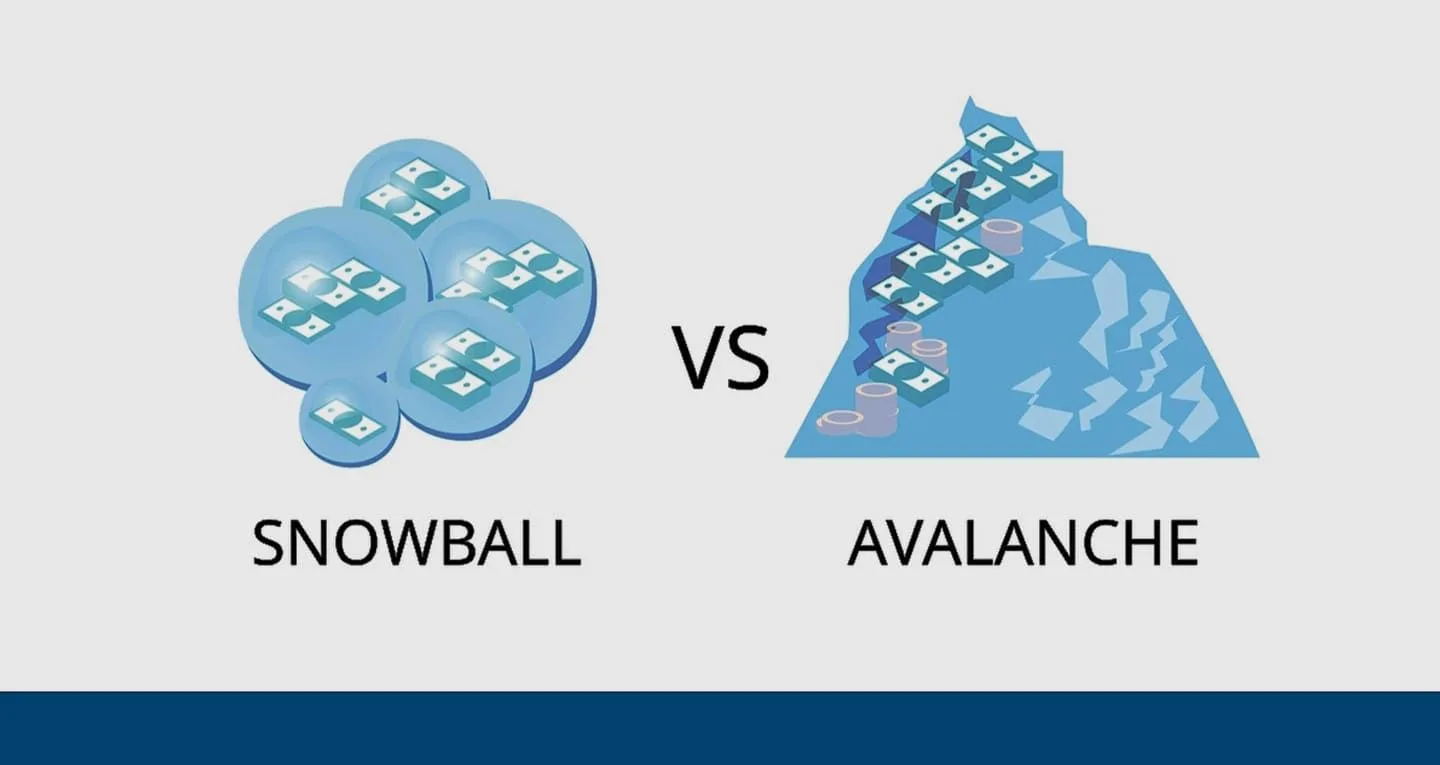
An order. Extra money goes to the highest-rate debt first (avalanche) or the smallest balance first (snowball). Here’s how the snowball and avalanche methods compare.
A target date. A date gives you something to aim for, and a way to tell whether you’re on track.
A small emergency buffer. Without it, one surprise bill pushes you back to Stage 2. Here’s why an emergency fund matters.
Here’s how it looks for one person, carried through the stages. Say you take home ₹35,000 a month.
Assess: You owe ₹60,000 on a card (paying ₹6,000 a month), ₹2,40,000 on a personal loan (₹9,000 EMI), and ₹30,000 on an app loan (₹4,000). That’s ₹19,000 a month, about 54% of your salary.
Choose: You’re over 50% and still paying, so consolidation fits.
Plan: One loan of ₹3,30,000 at an illustrative 14% for 36 months works out to about ₹11,279 a month. That’s about 32% of your salary, which leaves room for a small buffer.
Act, Track, Complete: covered in the next sections.
One honest note. The monthly amount drops a lot, but you’re now paying over 3 years, so check the total interest too, not just the EMI.
This example is illustrative. Rates and ranges shown are indicative. Final terms are decided by the bank. FREED is not a Loan Provider. No outcome is guaranteed. Please verify directly with your bank.
If you want a ready layout to write your plan down, here’s a budget adjustment template.
You’re done with Stage 3 when the plan is written down, and the monthly amount fits your income.
Will Your Plan’s Monthly Amount Really Fit?
EMI Score shows how much room your income has.
Check My EMI ScoreHow to Put Your Debt Repayment Plan Into Action
Stage 4 of the debt management process is where things actually change. Follow these 5 steps:
Send every request in writing. Restructuring requests, consolidation applications, and settlement discussions should all go by email or letter. Written requests leave a record you can point to later.
Get written confirmation of any new terms before changing what you pay. A phone promise isn’t a new schedule. Wait for the letter or email, then switch.
Set up autopay for every EMI, and at least each card’s total due. It removes the risk of forgetting a date in a busy month.
Stop new borrowing while the plan is running. A new loan or card spend undoes the plan and sends you back to Stage 1.
Keep one folder for every document. Paper or phone, it doesn’t matter. What matters is that you can find any letter in under a minute.
For the person in the example, Stage 4 is simple. The new ₹3,30,000 loan pays off the card, the personal loan, and the app loan at once. The three old accounts show as paid off, and there’s now one EMI of about ₹11,279 on one date.
You’re done with Stage 4 when you have written confirmation of the new terms.
If consolidation is your path, FREED’s Loan Consolidation Plan handles this stage from start to finish, from matching you with a lending partner to paying off the old loans.
Ready to Turn Several EMIs Into One?
FREED matches you with a lending partner and handles the process.
Reduce My EMIHow Do You Track Progress During Debt Repayment?
Stage 5 of the debt management process is the longest, and the easiest to let slide. Set aside 10 minutes once a month, and check 4 things:
Did every payment go through?
Is each balance actually dropping?
Are there any new charges, like late fees or interest you didn’t expect?
Have you had any alerts by SMS or email?
That last check matters more than it sounds. Under RBI’s rules, lenders must SMS or email you when they report you overdue to a credit bureau. If you get one, act the same day. It’s the earliest warning you’ll get that the plan has slipped.
Plans also need to change when life changes. Here are the triggers to go back a stage:
Your income drops. Go back to Stage 2, because the path that fit before may not fit now.
A payment is missed. Go back to Stage 2 and check whether your path still works.
You take a new loan. Go back to Stage 1, since your list and numbers have changed.
Recovery calls turn abusive. Know your rights. Here’s the RBI complaint process for recovery agent harassment.
Going back a stage isn’t failure. It’s what keeps a plan honest.
If you use FREED’s Credit Insights, its monthly refresh fits neatly into your monthly review, so you can watch each balance fall on your report.
You’re done with Stage 5 when each debt reaches zero.

What the Law Says
RBI rules require lenders to SMS or email you when they report you as overdue to a credit bureau.
Settle My LoansWhat Should You Do When a Debt Is Fully Repaid or Settled?
Stage 6 of the debt management process makes sure each finished debt stays finished. Work through this checklist:
Get the NOC or the bank’s settlement letter. The NOC (no-dues certificate) is the bank’s clearance letter for a loan repaid in full. For a settled loan, keep the settlement letter. Here’s more on the NOC after loan settlement.
Keep proof of the final payment. The transaction reference or receipt is your proof the money reached the bank.
Check your credit report about 4 to 6 weeks later. Lenders report to bureaus at least every 15 days, and the bureau then loads the data. Here’s how to update your CIBIL after loan closure.
Confirm the status. A loan repaid in full should show “Closed”. A settled loan shows “Settled”, which stays for up to 7 years. “Settled” and “Closed” are different statuses, and lenders read them differently.
Dispute anything wrong. If the report still shows a balance or the wrong status, dispute it with the bureau. The fix must happen within 30 days of your complaint, or you’re owed ₹100 a day.
For the person in the example, the three old accounts show as paid off once the consolidated loan clears them. When the new loan is fully repaid, it shows “Closed”.
Keep every document from this stage permanently. Years later, a lender may ask about an old account, and your letter answers the question in seconds.
You’re done with Stage 6, and with that debt, when your report shows the right status.
FREED’s Credit Insights helps here too. It shows how each finished account appears on your Experian report, and lets you raise a dispute in a few steps if something’s wrong.
What the Law Says
A wrong entry on your credit report must be fixed within 30 days of your complaint, or RBI rules entitle you to ₹100 a day.
Check My Credit InsightsHow FREED Helps at Each Stage of the Debt Management Process
FREED’s products line up with the stages of the debt management process. FREED is India’s trusted loan management platform, and over 20 lakh people trust it. Its founding team brings 50+ years of debt-resolution experience from the US.
Assess and Choose (Stages 1 and 2)
FREED identifies exactly what is pulling your credit score down and gives you a personalised action plan to improve it. That’s Credit Insights. It uses Experian’s report and refreshes monthly, so it doubles as a Stage 5 check later.
Your EMI Score tells you how healthy your finances really are. It reads your income, savings, and current loans, and shows exactly where you stand. That’s the Stage 1 maths, done for you.
Act, If You Can Still Repay (Stage 4): Loan Consolidation Plan
If most of your salary goes towards paying multiple EMIs, FREED’s Loan Consolidation Plan helps you combine multiple loans into a single monthly EMI. This can reduce your monthly EMI burden by up to 50%.*
FREED assesses your profile and matches you to a lending partner from its network. One new loan pays off your unsecured loans and card dues at once. Loan consolidation may initially cause a temporary dip in your credit score due to a new credit enquiry and loan account. However, consistent, timely repayments and reduced credit utilisation may help improve your score over time. FREED has helped consolidate over ₹320 crore in loans so far.
Not sure if you qualify? Talk to FREED’s team. They’ll assess your situation and let you know if you’re eligible.
Act If You Genuinely Can’t Repay (Stage 4): Loan Settlement Plan
If you genuinely cannot repay your loans, FREED negotiates with your lenders to settle them for less than 50%* of your outstanding dues.
Your monthly savings go into a Special Purpose Account (SPA) in your own name, held by an independent trustee. You authorise each settlement before any bank is paid. The first settlement typically happens within about 4 months, and the full programme typically takes around 1.5 years. FREED has settled 33,000+ accounts so far.
During Repayment (Stage 5)
If recovery calls turn abusive or threatening while you’re repaying, FREED Shield is available to everyone. FREED helps you understand your legal rights as a borrower, report inappropriate recovery practices, and raise complaints with your lender.
FREED handles unsecured loans only, like personal loans, credit cards, BNPL, and app loans.
*Rates and ranges shown are indicative. Final terms are decided by the bank. FREED is not a Loan Provider. No outcome is guaranteed. Please verify directly with your bank.
What Helps the Debt Management Process Stay on Track?
The debt management process only works if you keep it moving. These 5 habits help:
Finish each stage before starting the next. A plan built on a half-finished list will miss something. Use the “You’re done when” column as your checkpoint.
Put a monthly review date in your calendar. Pick a date just after salary day, and treat it like any other appointment.
Keep every document until your report shows the right status, then keep it anyway. Old accounts can come up years later. The letter saves you an argument.
Go back a stage the moment a trigger hits. An income drop or a missed payment is a reason to re-plan, not to give up.
Celebrate each cleared debt. Clearing the first loan is proof the plan works. That’s what keeps you going through the next one.
If you use FREED’s Credit Insights, each cleared debt shows up on your report within a reporting cycle or two, which is a good reason to check.
Six stages, one debt at a time, every finish line ticked off. Start with the list, and the rest has somewhere to stand.

FREED Expert Tip
Don’t skip Stage 1 because opening statements feels stressful. Most plans fail because one small loan was left off the list.
Check My Credit Insights
Mohit Juneja
Mohit Juneja is FREED’s Content & Communication Lead with 12+ years of experience across content, media, advertising and digital communications. He holds a postgraduate diploma in Communications from Xavier Institute of Communications, Mumbai, and has worked with organisations including NDTV, The Indian Express, McCann Worldgroup and NABARD.
At FREED, he leads content and communication across loan management, debt resolution, debt consolidation and financial well-being. His work combines research, storytelling and consumer-focused communication to make complex financial topics easier to understand and act on. He has also scripted and produced 11 documentaries on rural development and agriculture for NABARD, with film's selected for the Mumbai International Film Festival.
mohit.juneja@freed.care

FREED is India's trusted loan management platform. Founded in 2020 and headquartered in Gurugram, FREED has counselled 20 lakh+ people on personal loans, credit cards, and app loans. FREED charges fees only on successful settlement, not upfront. FREED does not handle secured loans (home loans, car loans, gold loans).
Media Mentions