How to Adjust Your Monthly Budget When Expenses Change
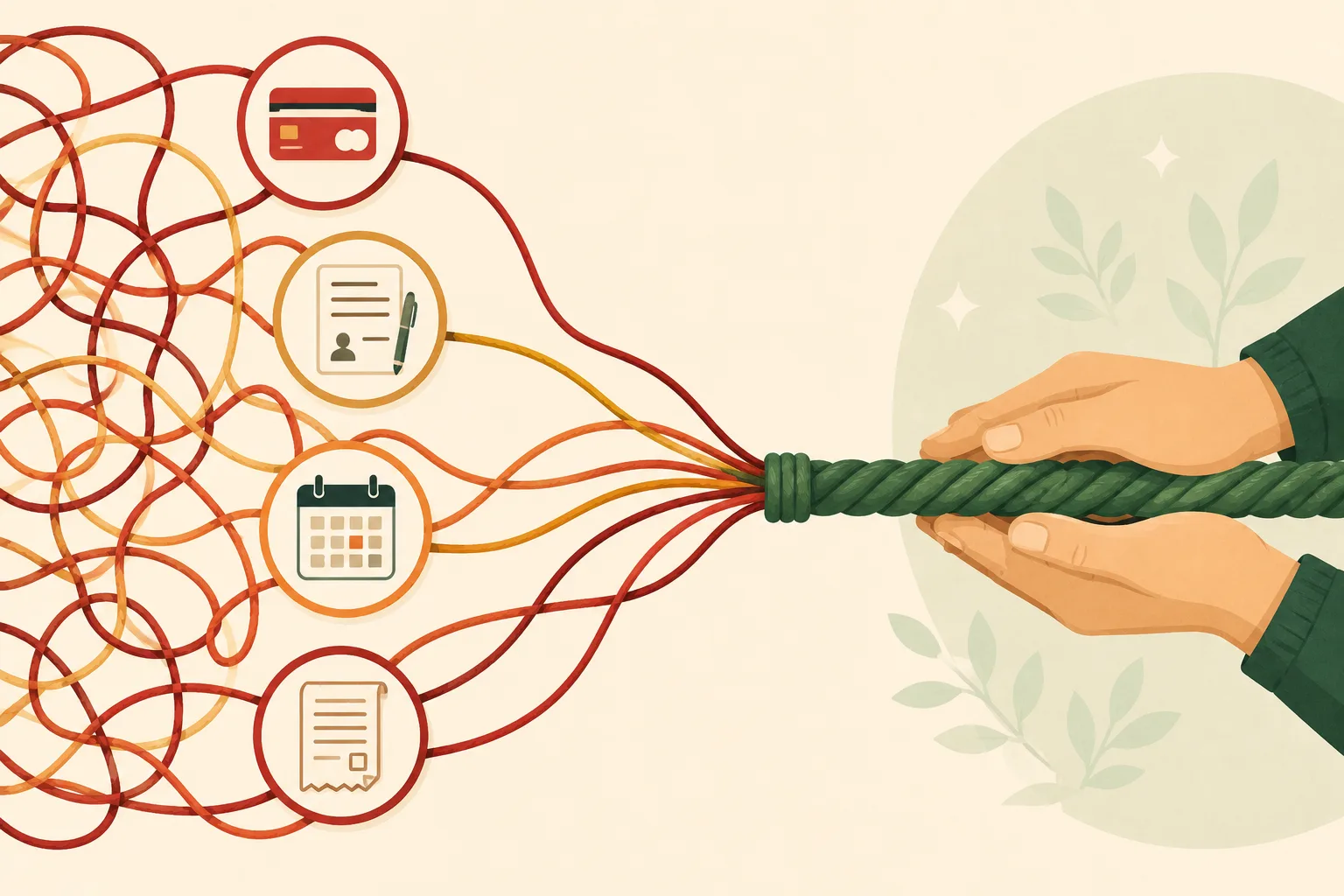
Budget adjustment means revising how you allocate your income after something changes, a rent increase, a new expense, a pay cut, or even a raise. It's different from building a budget from scratch, you're working from an existing plan that no longer fits reality. This guide walks through the adjustment process using a worked example, with a template you can copy directly.

Mohit Juneja
Reviewed by Shweta, FREED India's Debt Resolution Specialists
 4.7/5
4.7/5 ₹3,200Cr+
 20,000+
 20,00,000+4.7/5₹3,200Cr+20,000+20,00,000+
Key Summary

A budget needs adjusting whenever income or a major expense changes meaningfully, not just once a year on a fixed schedule.
A useful starting order is to recalculate income first, then review fixed costs and flexible spending.
Fixed costs such as EMIs can be harder to change quickly because they are governed by existing loan or contractual terms.
A simple three-column template, category, old amount, new amount, covers most household budget adjustments without needing complex software.
What Budget Adjustment Actually Means?
Adjustment is different from building a budget from scratch. It starts from an existing plan and a specific trigger, a rent increase, a new baby, a job change, rather than a blank slate you're filling in for the first time.
This can go in two directions: expenses rising, which needs cuts made elsewhere, or income changing, in either direction, up or down. Both use the same underlying process, just starting from a different side of the equation.
Take a household currently budgeting ₹60,000 in monthly income against ₹52,000 in expenses. They're now facing a rent increase from ₹15,000 to ₹18,000, a ₹3,000 monthly gap that simply didn't exist last month. This household's numbers will carry through the rest of this guide.
Budgets don't need adjusting on a fixed yearly schedule, they need adjusting when specific things actually change.

Expert Tip
Name the specific trigger before you start adjusting, "rent went up ₹3,000" is something you can plan against, "money feels tighter lately" isn't.
Talk to FREEDWhy Budgets Need Adjusting in the First Place?
A few common triggers account for most budget adjustments. A rent or EMI increase is one, common on lease renewal or when a floating-rate loan resets. A new recurring expense is another, a new dependent, a medical need, or a subscription that quietly became a habit without much notice.
An income change works the other direction, a pay cut, a job loss, or reduced variable income for self-employed households. And inflation on regular categories, groceries and utilities creeping up gradually rather than in one visible jump, is easy to miss until the gap has already grown meaningfully.
The ₹3,000 rent increase in the worked example is exactly this kind of concrete trigger, specific, dated, and clearly the cause rather than a vague sense that things feel tighter. The earlier this kind of change gets caught, the smaller the actual fix required to accommodate it.
Signs You Need to Adjust Your Budget Now
A handful of signs suggest an adjustment is overdue, not just theoretically useful.
You're dipping into savings to cover a regular monthly expense, not a genuine one-off.
A specific category has grown for two or three months running, not just one unusual month that could be a fluke.
You're using a credit card for expenses that used to come from your regular income, a quiet sign the numbers have already shifted.
You genuinely don't know, off the top of your head, whether this month's numbers will work out.
A known, specific change just happened, like the worked example's rent increase. Waiting to "see how it goes" for a month or two often just delays an adjustment that's already needed.

Noticing These Signs Yourself?
Get a free, honest read on your full financial picture.
Get a Free AssessmentHow to Adjust Your Budget, Step by Step?
Here's the process, in a fixed order, worked through with the example above.
Recalculate income first. Confirm the actual number hasn't also changed. In the example, income stays flat at ₹60,000.
List fixed costs and their new amounts. Rent is now ₹18,000 instead of ₹15,000, alongside EMIs, insurance, and anything else contractually fixed.
Total the fixed-cost change. A ₹3,000 increase in this case, this is the actual gap to close, not a vague sense of things feeling "tighter."
Look at flexible spending categories next. Groceries, entertainment, dining out. These absorb the adjustment before fixed costs ever get touched, since fixed costs are the hardest category to change quickly.
Apply specific cuts to specific categories. Not a vague "spend less" resolution. In the example, trimming ₹1,500 from dining out and ₹1,000 from entertainment covers most of the ₹3,000 gap, leaving ₹500 still unaccounted for.
Decide how to handle any remaining gap. Here, the ₹500 shortfall could be covered temporarily from a buffer while the household checks whether the higher expense continues.
Expert Tip
Where practical, review flexible spending before making changes to longer-term fixed commitments. Trying to renegotiate rent or an EMI first takes longer and has a lower success rate than trimming discretionary spending this month.
Book My Call
A Simple Budget Adjustment Template
Here's the actual template, filled in with the worked example so you can see exactly how to use it, not just an empty shell.
What to Do When Your EMIs Don't Fit the New Budget?
Flexible spending can only absorb so much. If the gap after a change is larger than what dining out and entertainment can realistically cover, if the worked example's rent increase had instead been ₹8,000 rather than ₹3,000, fixed costs themselves need addressing, not just flexible ones.
EMIs specifically are the hardest fixed cost to adjust unilaterally. You generally can't simply decide to pay less on an EMI; depending on the situation, you may need to discuss options such as restructuring, refinancing, or consolidation with the relevant lender or provider. This is honestly the point where budget adjustment alone stops being enough on its own, and a structural change to the debt itself becomes the more relevant tool. What those options actually look like is worth understanding directly.
Common Mistakes When Adjusting a Budget
A handful of avoidable mistakes come up repeatedly when people go through this process.
Reducing savings contributions immediately without first reviewing other options. Depending on the situation, however, temporarily adjusting savings may be reasonable if it prevents reliance on high-cost borrowing.
Making vague cuts ("spend less on food") instead of specific ones ("₹1,500 less on dining out"). Vague cuts rarely survive the following month intact.
Adjusting once and not revisiting. A trigger like a rent increase is usually permanent, and a one-off correction that isn't rechecked next month often quietly drifts back.
Ignoring a small remaining gap because it seems too minor to matter. In the worked example, an unaddressed ₹500 gap becomes ₹6,000 over a year if left unattended.
Treating every gap as a spending problem when it's sometimes a fixed-cost problem, covered in the previous section.
Expert Tip
Revisit your adjusted budget after one full month, not just once. The first month often reveals a category you underestimated or overestimated.
Check My Credit ScoreHow FREED Helps When Adjustment Alone Isn't Enough?
For households where the gap sits in fixed costs, specifically multiple unsecured EMIs, rather than something flexible spending can absorb, FREED's Debt Consolidation Program, ‘Reduce My EMI,’ is designed to combine eligible unsecured EMIs into one new loan with a single monthly payment, which may reduce the monthly payment depending on eligibility and lender terms.
For genuine, sustained inability to make the numbers work even after consolidation, FREED's Debt Resolution Program is the separate, later-stage path built for that specific situation instead.
See What Consolidation Could Free Up
A free assessment shows your real numbers.
Start My Free AssessmentTips for Keeping Your Budget Adjusted Going Forward
A few habits keep future adjustments smaller and easier than this one.
Revisit fixed costs specifically every few months. They change less often, but matter more when they do.
Where your income allows, keep a small buffer for unexpected expenses. It absorbs the next small surprise without requiring a full re-adjustment from scratch.
Use the same template structure every time. Consistency makes each future adjustment faster than the last one was.
Treat a raise or income increase with the same deliberate process as a cut, not just as automatically available spending room to fill.
Share the adjusted budget with anyone else in the household affected by it. A plan only one person knows rarely survives contact with shared expenses.
Expert Tip
Keep a copy of every adjusted version of your budget, not just the current one. Seeing the pattern of changes over a year is often more useful than any single month's numbers.
Start My Free Assessment
Mohit Juneja
Mohit Juneja writes educational content at FREED on debt management, credit scores, loan repayment, and borrowing best practices. His content is shaped by expert insights and industry knowledge, helping readers better understand their financial options and make informed decisions.
mohit.juneja@freed.care

FREED is India's trusted loan management platform. Founded in 2020 and headquartered in Gurugram, FREED has counselled 20 lakh+ people on personal loans, credit cards, and app loans. FREED charges fees only on successful settlement, not upfront. FREED does not handle secured loans (home loans, car loans, gold loans).
Media Mentions