CIBIL Report: What It Shows and How to Read It
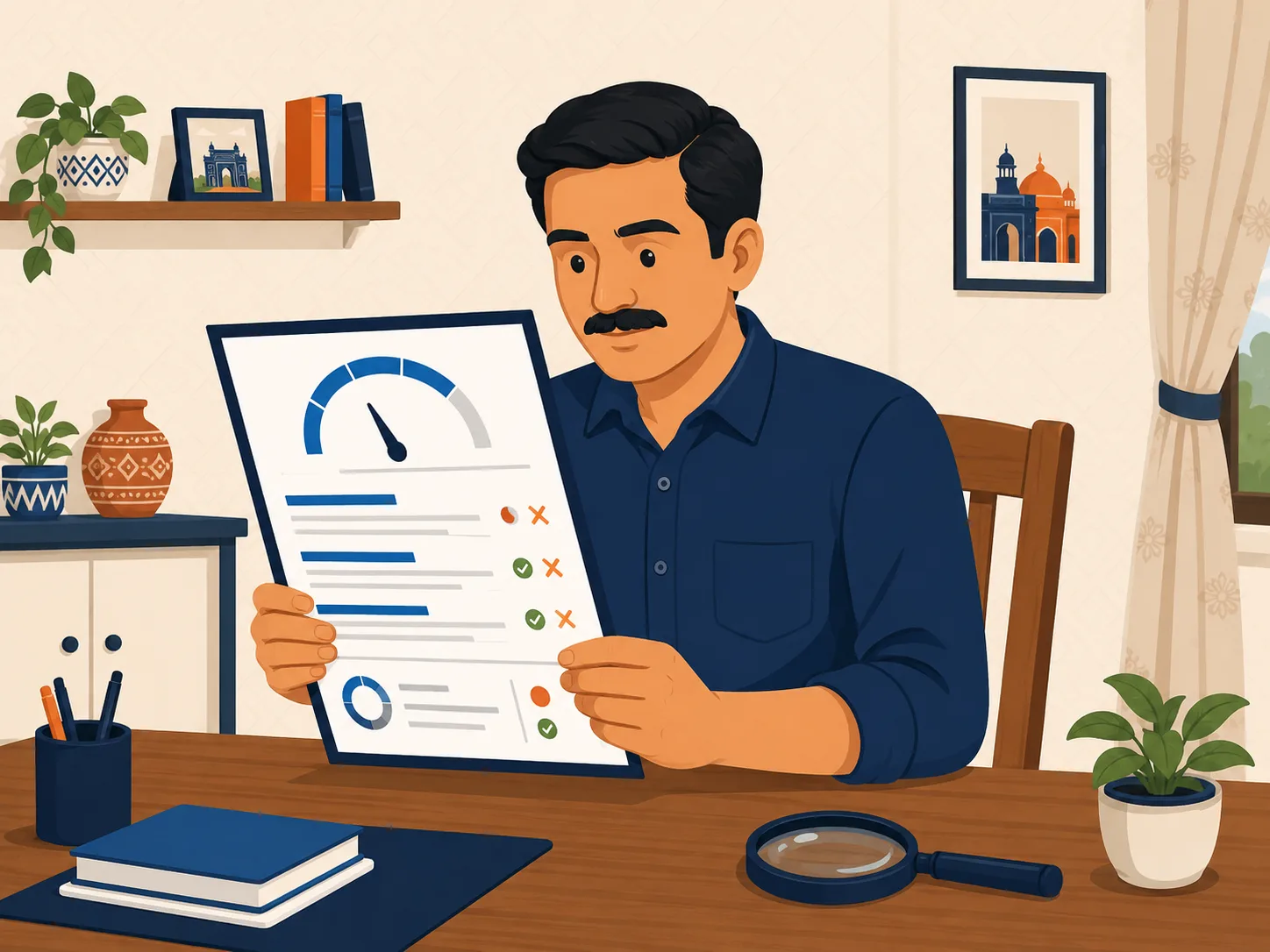
Your CIBIL report is the full document behind your 3-digit score: personal details, every loan and credit card you've held, your month-by-month payment record, and every time a lender checked your credit. The score is a summary. The report is where lenders actually look, and where most errors that hurt your score tend to hide.

Mohit Juneja
Reviewed by FREED India, Debt Resolution Specialists
 4.7/5
4.7/5 ₹3,200Cr+
 20,000+
 20,00,000+4.7/5₹3,200Cr+20,000+20,00,000+
Key Takeaways

A CIBIL report has several sections: personal information, contact details, employment information, account information, and enquiry information, alongside the score itself.
The account information section, especially the DPD, or Days Past Due, grid, is the most important part. It's a 36-month timeline of your payment behaviour on every account.
A DPD of 000 or XXX is safe. Any other number means a payment was late by that many days.
Account status codes like STD, SUB, and LSS tell lenders how a loan was ultimately classified: standard, substandard, or settled or written off.
Credit reports include information on payment history, account status, and enquiries. The duration for which information is reflected depends on the credit bureau's reporting practices and applicable regulations.
What a CIBIL Report Actually Is
Your score and your report aren't the same document, and mixing them up is one of the most common misunderstandings people have about their own credit. The score is a single 3-digit number, a summary that compresses everything about your credit behaviour into one figure a lender can glance at.
The report is the underlying document from which the number gets calculated. It's longer, more detailed, and it's what a lender actually reviews when deciding on your application, not just the score at the top. Errors that drag your score down, a wrongly reported late payment, an account that isn't yours, usually live inside the report itself, not in the score. Understanding what's actually in it is the only way to catch those before they cost you an approval.
Personal, Contact, and Employment Information
These three sections are lighter than the rest, but worth a quick scan, mainly to catch identity issues rather than credit problems.
Personal information covers your name, date of birth, and PAN, the core identifiers a lender uses to confirm you are who you say you are. Contact information lists every address and phone number linked to your file, often more than you'd expect, since old addresses tend to stick around as accounts age.
Employment information includes your job details, employer name, income bracket, and occupation type, where reported. This section is informational only. It isn't used in the score calculation itself, though lenders may glance at it separately when assessing an application.
The main reason to check these sections carefully isn't score accuracy, it's fraud detection. An address you never lived at, or a phone number you don't recognise, can be an early sign that someone else has taken credit in your name. Catching this here, before it shows up as an unfamiliar account further down the report, is worth the thirty seconds it takes to scan through.

Account Information: The Most Important Section
This is where the real story of your credit history lives. Every loan and credit card you've ever held, active or closed, is listed here individually, and each entry carries the details a lender actually cares about: the lender's name, the type of account, the date it was opened, the sanctioned credit limit or loan amount, and the current outstanding balance.
Beneath each account sits a payment history row, commonly covering the past 36 months, showing exactly how that account has been serviced month by month. This is denser reading than the personal information section, but it's also where nearly every genuine credit problem, and nearly every reporting error, actually shows up.
If you're only checking your score and skipping this section, you're missing the part of the report a bank will actually scrutinise. A lender reviewing your application doesn't stop at the 3-digit number. They open exactly this section and read through account by account, checking whether the pattern behind the score holds up.
Reading it takes a bit of patience the first time, mostly because of how dense it looks: rows of numbers, short codes, dates. But once you know what each piece means, which is exactly what the next two sections walk through, it stops looking like noise and starts reading like a fairly plain timeline of your borrowing history.

FREED Expert Tip
Don't just glance at your score and close the tab. Scroll to the account information section every time, that's where most people's real problems are hiding, not in the 3-digit number up top.
See what your accounts are actually showingUnderstanding DPD, Days Past Due
DPD stands for Days Past Due, and it's the single most useful piece of data on the entire report once you know how to read it.
Each account carries a DPD row, one cell per month, covering roughly the past 36 months. Read left to right, it's a timeline: this month, last month, the month before, and so on. Two values mean everything is fine. 000 means the payment for that month arrived on time, no delay at all. XXX means the lender simply didn't report data for that month, which isn't a red flag on its own, just a reporting gap.
Any other number tells you exactly how late that specific payment was. 030 means a payment was 30 days late. 060 means 60 days. 090 or higher generally signals a serious delinquency, the kind of delay that starts pulling real weight against the score and can eventually lead to the account being reclassified as high risk. [Writer to verify current classification thresholds against the latest bureau guidance before publication.]
Here's a simple way to read a real row: 000 000 030 000 000 tells you five months of history where everything was on time except one, a single payment that slipped by 30 days before things went back to normal. That single 030 sitting inside an otherwise clean row is exactly the kind of detail a lender, and you, should be looking for.
Account Status Codes: STD, SUB, DBT, and LSS
While DPD tracks month-by-month delay, account status codes summarise how the lender ultimately classified the account overall. These sit right alongside the DPD row for each account, and they're worth understanding on their own.
STD stands for Standard, the baseline healthy status. It means the account is being serviced regularly, with no overdue balance exceeding 90 days. Most accounts with a clean payment history sit here.
SUB stands for Substandard, and it kicks in once an account has stayed overdue for more than 90 days. An account can remain in this classification for up to roughly 12 months, depending on how repayment goes from there.
DBT stands for Doubtful, the next stage down, applied once an account has sat in the Substandard category for 12 months or more without resolving.
LSS is the one that trips up the most readers, since it covers two related but distinct outcomes: a loan settled for less than the full amount owed, or a loan the lender has written off entirely as uncollectible. Both get logged under this code, and both are treated as serious negative marks, but they aren't identical. Settled means you negotiated and paid a reduced amount to settle the account. Written off means the lender gave up trying to collect and simply absorbed the loss, generally without any resolution from your side. Confusing the two matters, because "settled" at least shows the debt was addressed, while "written off" shows it wasn't.

What the Law Says
Under the Credit Information Companies (Regulation) Act, 2005, bureaus are required to retain and report credit data for a minimum of 7 years; there's no legal cap forcing removal after that point. In practice, credit information is retained in accordance with applicable laws and the credit bureau's reporting practices.
See what's currently on your reportEnquiry Information: Why It Matters
Every time a lender formally checks your report for a credit application, it gets logged here, and this includes applications that were eventually rejected, not just approved ones.
This is different from checking your own score, which is a soft enquiry and carries no weight at all. What's logged in this section are hard enquiries, the kind triggered specifically by a lender reviewing your file as part of an actual application decision.
A single hard enquiry has a small effect on its own. The issue is what a cluster of them signals to whoever looks at your report next. Several applications close together, even for entirely legitimate reasons, read as credit-hungry behaviour, as though something has gone wrong and you're applying wherever you can get approved. Hard enquiries remain part of your credit report in line with the credit bureau's reporting practices.
A Quick Walkthrough: Reading Your Own Report Section by Section
Now that you know what each section means, here's the order worth following the first time you actually open your own report, rather than scanning it top to bottom without a plan.
Start with personal details. Confirm your name, date of birth, and address history are accurate.
Scan employment information. Check this is informational only; it isn't used to calculate your score.
Go straight to account information. Review every loan and card listed, along with the DPD grid for each.
Check account status codes. Look for STD, SUB, DBT, or LSS next to each account and confirm they match reality.
Review enquiry information. See how many hard enquiries are logged and whether they match applications you actually made.
Note anything that looks wrong. Flag unfamiliar accounts, incorrect DPD entries, or mismatched status codes for a dispute.
If Something Looks Wrong
If you spot an account you don't recognise, a DPD entry that doesn't match your actual payment history, or a status code that seems off, that's a dispute, not something to just make a mental note of and move on from.
Walking through the full dispute process here would duplicate ground FREED has already covered in detail elsewhere. Rather than repeat it, the short version is: document what looks wrong, raise the dispute directly with the bureau or the lender in question, and follow it through to resolution rather than letting it sit.
For the complete step-by-step, including how disputes actually get processed and common DPD errors people run into, see FREED's dedicated guide on checking your correct CIBIL score and disputing errors.
How FREED Helps If Your Report Reflects Real Debt Struggles
Not every issue in a report is an error. Sometimes, what you're looking at, several accounts under strain, a SUB or LSS status that accurately reflects a genuinely difficult period, is a real picture of a debt situation that needs addressing, not correcting.
If that's what your report shows, FREED can help in two different ways depending on where you stand. For borrowers still current on their payments but managing too many loans or cards at once, FREED's Debt Consolidation Program may help eligible borrowers combine multiple eligible loans into a single repayment plan through a lending partner. The final EMI depends on the loan terms offered. For borrowers in genuine financial difficulty who are truly unable to repay in full, FREED's Debt Resolution Program supports eligible borrowers through a structured loan settlement process, subject to the lender's willingness to negotiate.
Which one applies, if either, depends entirely on your specific situation, not something a blog post can determine for you. FREED's team can review what your report is actually showing on a free call and point you toward whichever option, if any, genuinely fits.

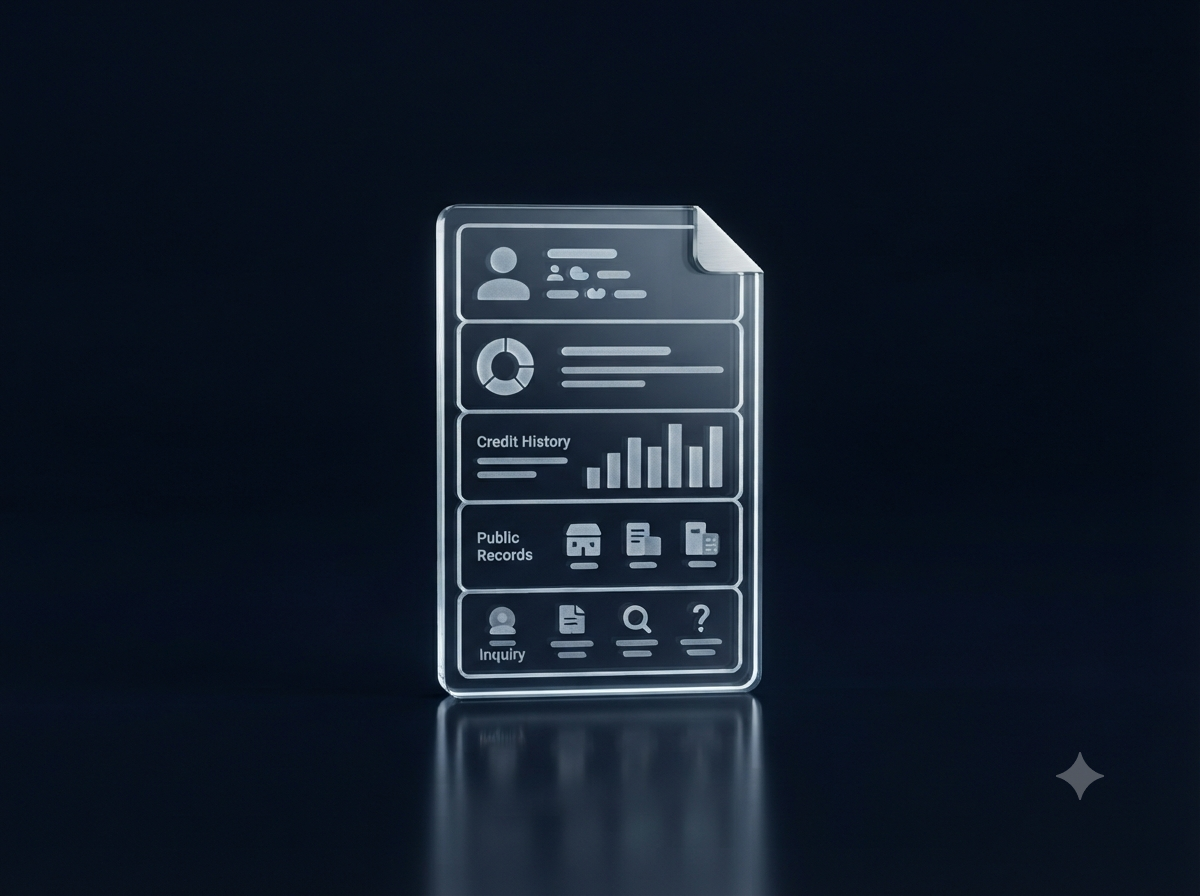
Comparison: CIBIL Report Sections at a Glance
Section | What It Shows |
Personal Information | Name, date of birth, and address history |
Contact Information | Phone numbers and addresses on file |
Employment Information | Job details, informational only, not used in score calculation |
Account Information | Every loan and card, balances, and the 36-month DPD grid |
Enquiry Information | Every hard enquiry made by a lender for a credit application |

Mohit Juneja
Mohit Juneja writes educational content at FREED on debt management, credit scores, loan repayment, and borrowing best practices. His content is shaped by expert insights and industry knowledge, helping readers better understand their financial options and make informed decisions.
mohit.juneja@freed.care

FREED is India's trusted loan management platform. Founded in 2020 and headquartered in Gurugram, FREED has counselled 20 lakh+ people on personal loans, credit cards, and app loans. FREED charges fees only on successful settlement, not upfront. FREED does not handle secured loans (home loans, car loans, gold loans).
Media Mentions