CIBIL Clearance Agency
A ‘CIBIL clearance agency’ is an informal term used for a third-party company that helps consumers review, dispute or follow up on information in their credit reports. It can dispute wrong entries and follow up with your bank. It cannot delete a real default. Only your bank can change what it reported, and only after the facts change.

Mohit Juneja
Reviewed by FREED India, Debt Resolution Specialists
 4.7/5
4.7/5 ₹3,200Cr+
 20,000+
 20,00,000+4.7/5₹3,200Cr+20,000+20,00,000+
Key Summary

A CIBIL clearance agency can dispute wrong entries and chase banks, but cannot delete accurate defaults.
Disputes are free. RBI rules give banks and bureaus 30 days to fix a wrong entry.
Miss that 30-day limit and you are owed ₹100 for each day of delay.
Each credit bureau gives you 1 free full report every calendar year.
A Settled mark can stay for up to 7 years. No agency can promise to erase it.
What Is a CIBIL Clearance Agency?
Search "CIBIL clearance agency" and you will find pages promising a cleared report. The word "clearance" covers 3 different things:
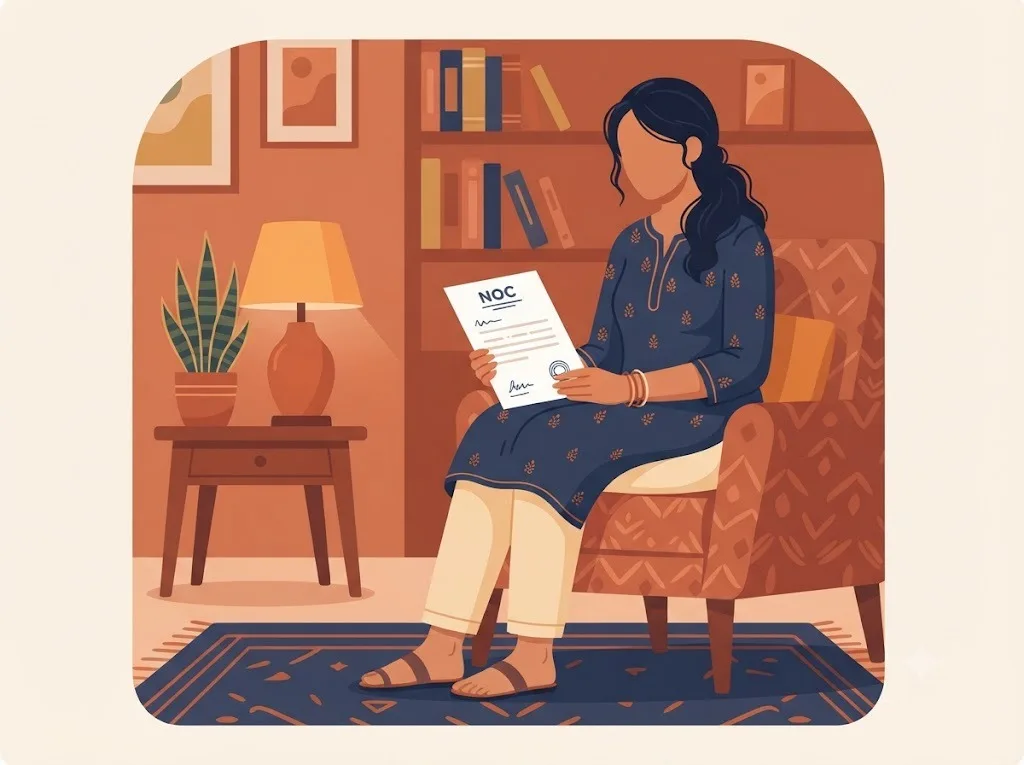
The NOC. A No Objection Certificate is the paper your bank gives after a loan is repaid or settled. See how to get a clearance letter.
A corrected report after a dispute. A wrong entry is fixed at the source, then updated at the bureau.
Deleting a real default. An accurate mark stays until the facts change. Nobody can sell this one.
A CIBIL clearance agency is a paid middleman. It files disputes and follows up with banks on your behalf. Hiring one is legal. You can also do the same work free, as the steps below show. The choice comes down to your time and how comfortable you are with paperwork.
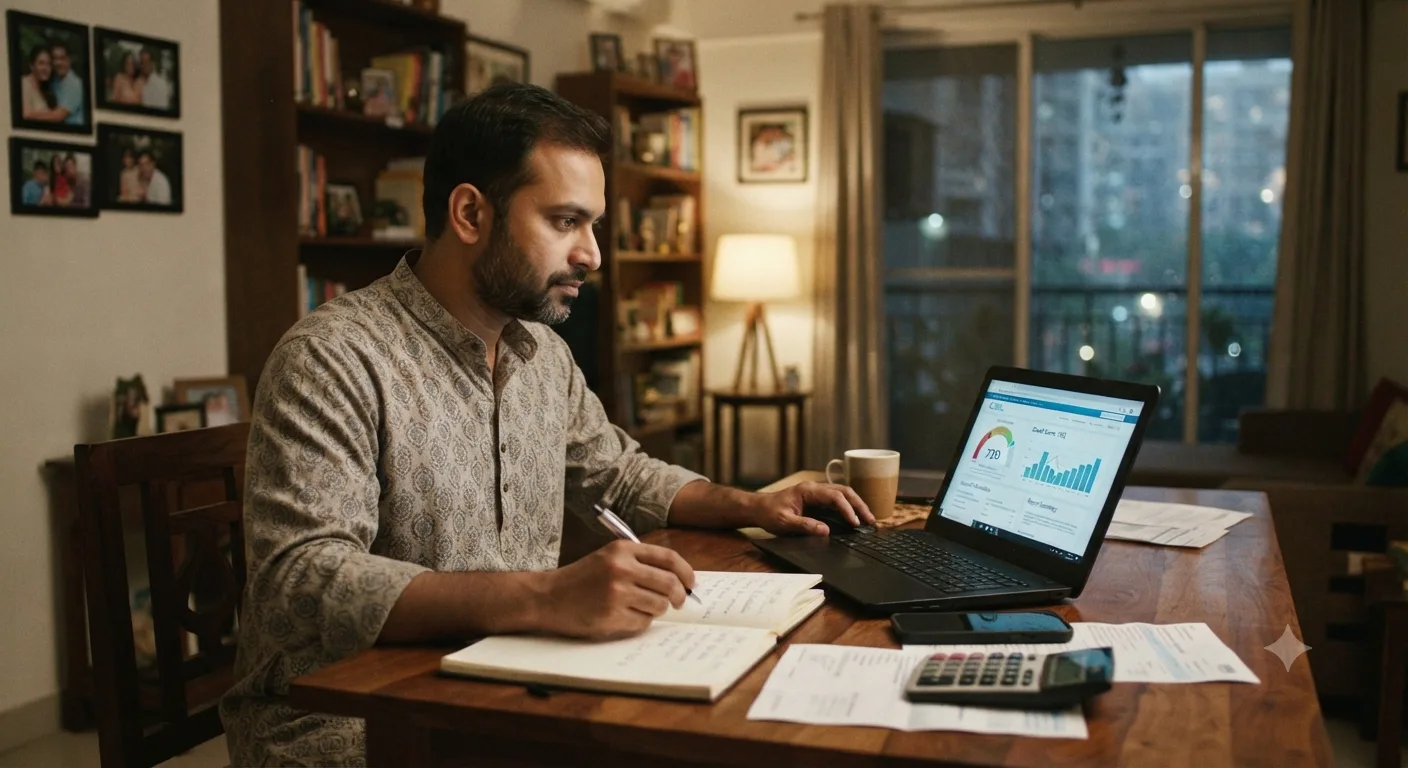
A good agency can spot an error, write the request and chase the bank. It cannot change a true entry, and it cannot set your score. The score comes from the bureau's own model.
One detail is often missed. CIBIL is 1 of 4 credit bureaus, the companies that hold your repayment record. The others are Experian, Equifax and CRIF High Mark. Each keeps its own report. Scores run from 300 to 900 on all 4, and a wrong entry can sit in 1 report and not the others.

FREED Expert Tip
Pull your free report before talking to any agency. Mark each entry correct or wrong. Only wrong entries can be fixed by dispute.
Check My Credit InsightsWhy Does My CIBIL Report Still Show Old Defaults After I Paid?

How Do I Know If I Need Help With My CIBIL Report?
Your situation falls into 1 of 2 groups. Each leads to a different next step.
Group A: something looks wrong
An account you never opened appears. This can be an error or a sign someone used your details, so check it first.
A loan you finished still shows a balance. The bank may not have sent the final update.
A late-payment mark appears where your bank statement shows on-time. Your statement is your proof.
The same account appears twice. A duplicate can distort your report.
A repaid loan has no NOC. Ask the bank for it in writing.
Group B: the entry is true and you cannot repay
Your EMIs have slipped for a few months. After that, the account may show DPD (days past due, how many days a payment is overdue). It may also reach SMA, the early warning stage before a loan turns bad. See DPD and SMA.
Your EMIs take more than 50% of your take-home pay. You can check your own load with EMI Score.
Recovery calls have started. If calls turn abusive or threatening, FREED Shield helps you understand your rights and report it. It does not stop the calls.
There are also alerts to watch. The bureau must send an SMS or email when a bank accesses your report. The bank must send an alert when it reports a default or DPD. Treat an alert you did not expect as a reason to check your report. A loan marked as bad by the bank is called an NPA (usually after 90 days of missed EMIs).
Group A goes to the dispute steps next. Group B goes to the options section after that.
How Does a CIBIL Clearance Agency Work, Step by Step?
A genuine CIBIL clearance agency does exactly the steps below. You can do the same free. You can follow these steps yourself for free, or you can pay a third party for administrative assistance. If you use an agency, check its fees, privacy practices, credentials and promises carefully.”
Download Your Free Reports
Get 1 full report from each bureau. A single bureau shows only its own view, so wrong entries can hide in 1 report and not the others. Use your free report.Mark Each Entry Right or Wrong
Compare with your bank statements and NOC. Only wrong entries can be fixed by dispute. See how to fix wrong entries.Write to Your Bank First
RBI rules say wrong data is corrected at the source. The bureau cannot change it unless the bank that sent it does. Attach proof and keep the reference number.Raise the Dispute With the Bureau
File it in parallel. If more than 1 bank is involved, file it with the bureau, which coordinates with all of them. The detailed clicks are in how to raise a dispute.Track the 30-Day Clock
Banks get 21 days and bureaus get the remaining 9. Note the filing date.Claim Compensation for Delay
Give your bank account or UPI ID in the complaint form. Payment is due within 5 working days of resolution.Escalate to the Ombudsman If Denied
This applies when compensation is wrongly refused. Take it to the RBI Integrated Ombudsman Scheme. If you need to file a complaint, keep every reference number.
Here is a worked example. You file a complaint on 1 November. The 30-day limit ends on 1 December. The issue is resolved on 11 December. That is 10 days of delay, so 10 x ₹100 = ₹1,000.
A corrected copy goes free to anyone who received your report in the previous 6 months. The rules exclude disputes about how the score is calculated, and cases already in court or consumer forums.
Agency fees are a convenience charge. You decide whether the time saved is worth it.

What the Law Says
Wrong entries must be fixed within 30 days of your complaint. After that, RBI rules entitle you to ₹100 for each day of delay.
See My Report Before I FileCan a CIBIL Clearance Agency Remove a Settled or Written-Off Status?
No agency can delete an accurate mark. The bank decides how it reports the account. Only the bank can change that, and only when the facts change.
There is 1 real route. If you pay the full balance and the bank agrees to update a status, it sends the new status to the bureaus. That is the bank's call, case by case. It is not guaranteed.
An agency can legitimately gather your proof, write the request and follow up. It cannot change a true status. It cannot guarantee a score. It cannot shorten the "up to 7 years" a Settled mark can stay.
Two terms help here. A "Settled" status means the bank accepted less than the full amount as final. See how lenders view settled accounts. "Written-Off" means the bank has written the loan off in its own books and reports it that way. The dues still stand. Read what written off means and how to clear a written-off mark.
The pitch is tempting. Your score affects loans, and you are tired. A promise to "mask" or "clear old credit history" sounds like relief. It is a promise, not a service. Scores run from 300 to 900 and the bureau's model sets them, so no agency can set 1.
If a status needs updating after payment, the steps are in how to remove a settlement remark. No point jumps or timelines can be promised.
What Are Your Options Besides a CIBIL Clearance Agency?
Softer options come first. Settlement comes last. Read the table by asking 2 questions: who does the work, and what can it not change?
Ways to Deal With a CIBIL Problem
Route | Who Does the Work | What It Can Change | What It Cannot Change | Realistic Time |
Dispute it yourself | You | Wrong or outdated entries | Accurate defaults | About 30 days once filed |
Pay a clearance agency | The agency, for a fee | Same as above, handled for you | Accurate defaults, guaranteed scores | Same 30-day limit applies |
Ask your bank for an NOC and status update | You | How the bank reports a fully paid account | Anything the bank refuses to update | 1 to 2 reporting cycles |
With FREED: Loan Settlement Plan | FREED, with the bank deciding terms | Resolves unpaid unsecured loans through a bank-approved settlement | Does not erase history. A Settled mark can stay up to 7 years | Months, not days |
Rates and ranges shown are indicative. Final terms decided by the bank. FREED is not a Loan Provider. No outcome is guaranteed. Please verify directly with your bank.
If you are still paying every EMI but stretched, consolidation is a different product. FREED's Debt Consolidation Program merges several dues into 1 new loan with 1 EMI, and your credit score starts to improve.
Settlement is not something a borrower chooses out of preference. It is for people who genuinely cannot repay in full. A Settled mark can stay up to 7 years, and the effect on your report is real.
Before you hire anyone, look at the CIBIL score repair agency checklist. To see how banks and agents handle settlements, read about a loan settlement agency. For the basics, see what loan settlement is.
If you are unsure, FREED's team can look at your situation on a free call and tell you what options exist.
How FREED Helps If You Cannot Repay and Your Report Shows a Default?
Settlement is not something a borrower chooses out of preference. Banks only consider it when you are in genuine financial difficulty and truly unable to repay the full amount.
For people in that position, FREED's Loan Settlement Plan, also called "Settle My Loans", is a structured path. Here is what FREED does for you:
FREED looks at your full picture: loans, income, expenses and what you can repay.
It builds a plan around that picture.
You save a fixed amount each month into a settlement fund.
When the fund is enough, FREED negotiates with the bank.
The bank decides the terms. You accept or decline each offer.
You pay, and you receive a settlement letter.
FREED also follows through on the NOC and the report update. Read what a loan settlement agency does, and how settlement affects your score.
This takes months, not days. Any settlement reduction depends on the lender's decision and the specific account. No particular percentage can be guaranteed. A Settled mark can stay up to 7 years.
FREED covers unsecured loans only: credit cards, personal loans, BNPL and app loans. It does not handle home, car or gold loans.
More than 20,00,000 people have been counselled by FREED, which started in 2020 in Gurugram.
Rates and ranges shown are indicative. Final terms decided by the bank. FREED is not a Loan Provider. No outcome is guaranteed. Please verify directly with your bank.
How Much Will Settlement Affect Your CIBIL Score?
Settlement affects your report, and the effect depends on your starting score and the account's history. No single figure fits everyone.
Rates and ranges shown are indicative. Final terms decided by the bank. FREED is not a Loan Provider. No outcome is guaranteed.
Use the result as a guide only. Your real report decides what happens. For what comes after, read how to recover after a default.
Are You in a Loan Trap? Quick Check
Move the slider to your total EMIs as a % of monthly salary. See your debt stress level instantly.
EMIs as % of Monthly Salary
What Helps While Your CIBIL Report Updates?
Updates take a few cycles. These 5 habits keep you steady.
Tip 1: Keep the NOC and the settlement letter in paper and digital copies. They are your proof if a status looks wrong later.
Tip 2: Put every follow-up in writing and note the reference number. A written trail makes any dispute easier to prove.
Tip 3: Re-check the report after each reporting cycle. Banks report on 4 dates a month, so changes can show in the next cycle.
Tip 4: Never share an OTP or login with anyone offering to "clear" your report. Your OTP gives access to your accounts.
Tip 5: After a default, rebuild with small steps. Pay every bill on time and keep your use of any limit low.
You get 1 free report per bureau per calendar year. Read how to read a CIBIL report before you compare entries.
For the NOC details, see the clearance letter guide.

SOURCING / VERIFICATION TABLE
Claim in blog | Source |
1 free full report per bureau per calendar year | RBI Master Direction, Credit Information Reporting Directions, 2025, Section 9(1)(i): https://www.rbi.org.in/Scripts/BS_ViewMasDirections.aspx?id=12764 |
Scores run 300 to 900 | Same, Section 9(1)(h) |
Wrong data is corrected at source by the bank | Same, Section 10(2) |
30-day limit; 21 days bank, 9 days bureau | Same, Section 17(1) |
₹100 per day of delay; paid within 5 working days | Same, Sections 17(1) and 17(11) |
Ombudsman route for wrongful denial | Same, Section 17(12) |
Exclusions (score-model disputes, cases in court) | Same, Section 17(14) |
Bank alert when it reports a default or DPD; bureau alert when a lender accesses your report | Same, Section 16(1)(a) and (b) |
Banks report to bureaus on 4 dates a month (9th, 16th, 23rd, last day), with up to 4 calendar days to send data, from 1 July 2026 | RBI, Credit Information Companies Directions, 2025 (updated 1 July 2026): https://www.rbi.org.in/scripts/NotificationUser.aspx?Id=12926 |
The "up to 7 years" Settled-mark line has no verified RBI source and no row here. The writer must re-read each section number on RBI's own PDF.

FREED is India's trusted loan management platform. Founded in 2020 and headquartered in Gurugram, FREED has counselled 20 lakh+ people on personal loans, credit cards, and app loans. FREED charges fees only on successful settlement, not upfront. FREED does not handle secured loans (home loans, car loans, gold loans).
Media Mentions