Pay Off Debt With a Consolidation Loan: Is It a Good Idea?
Payoff debt consolidation involves taking a new loan to repay multiple existing debts, leaving you with one loan repayment instead of several. It may be suitable when the new loan’s total cost is reasonable, the EMI is affordable and you can avoid accumulating fresh debt.
Mohit Juneja
Reviewed by FREED India, Debt Resolution Specialists
 4.7/5
 ₹3,200Cr+
 20,000+
 20,00,000+4.7/5₹3,200Cr+20,000+20,00,000+
Key Summary

Payoff debt consolidation works when the total cost, the new EMI and your habits all hold up.
In our example, the payoff amounts add up to ₹13,000 more than the statement balances.
RBI says a digital loan is paid into your account, with listed exceptions. Ask how your payoff will be routed.
RBI requires a card issuer to honour a closure request within seven working days, once dues are paid.
RBI gives ₹100 a day if a complaint about your credit information isn’t resolved within 30 days.
What Does Payoff Debt Consolidation Mean, and Is It a Good Idea?
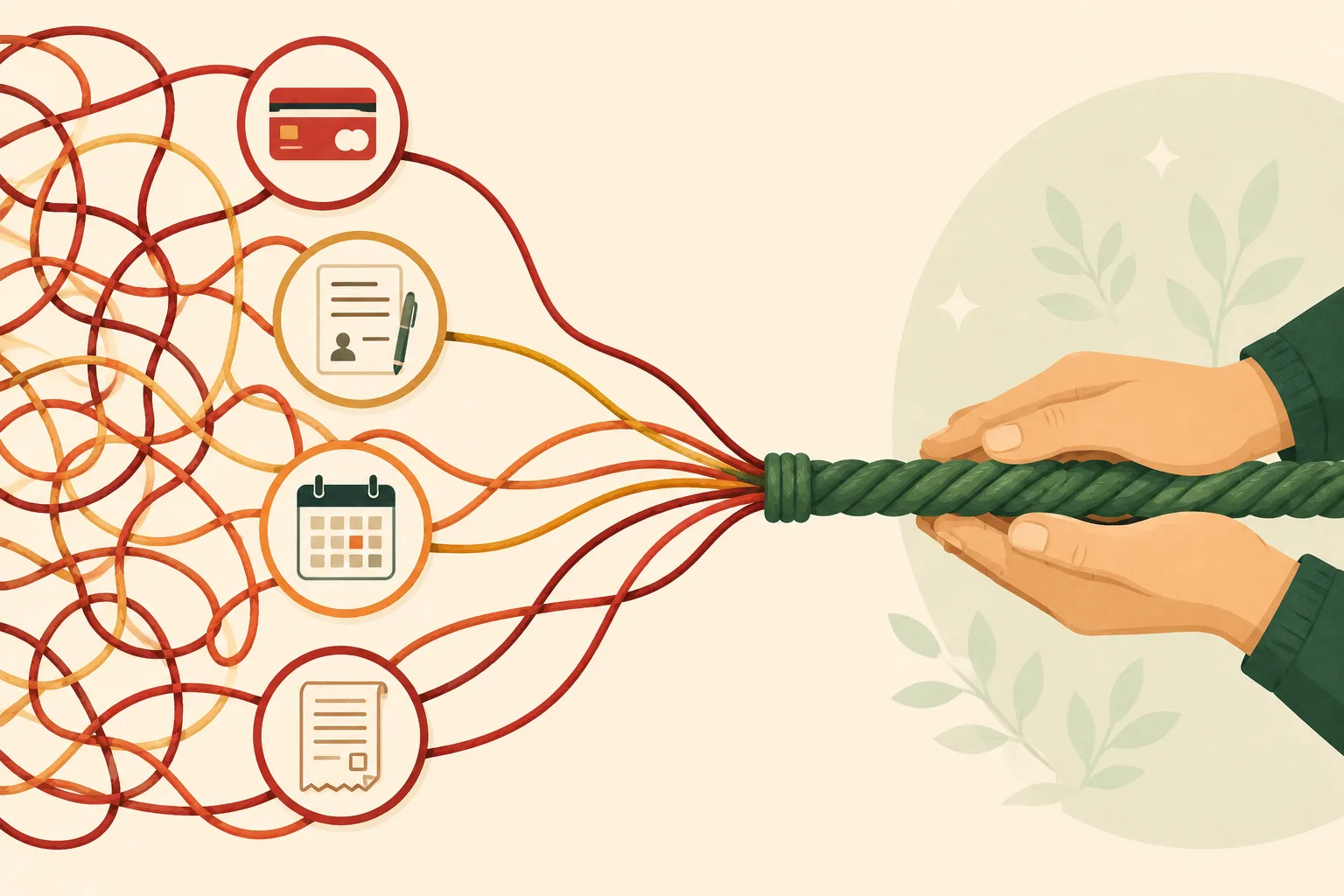
Payoff debt consolidation means one new loan clears your old dues, and you repay one EMI (your fixed monthly payment) instead of several. Picture Priya, 34, who pays a credit card, a personal loan, a loan app and a buy now, pay later (BNPL) bill every month. Four due dates, four reminders, and a salary that’s gone by the 15th. She’s never missed a payment, but she’s tired and stretched.
For someone like Priya, payoff debt consolidation can bring real relief. For someone whose spending runs above their income, it can make things worse. The product is the same in both cases. The difference is the borrower’s numbers and habits.
This guide focuses on the payoff itself: how the money moves, what can go wrong, and what to check afterwards. If you want the wider picture first, our pillar guide explains what loan consolidation means from start to finish.
Before you apply, ask yourself three questions.
- Can you still repay every month? A new loan is built for a borrower who can keep paying.
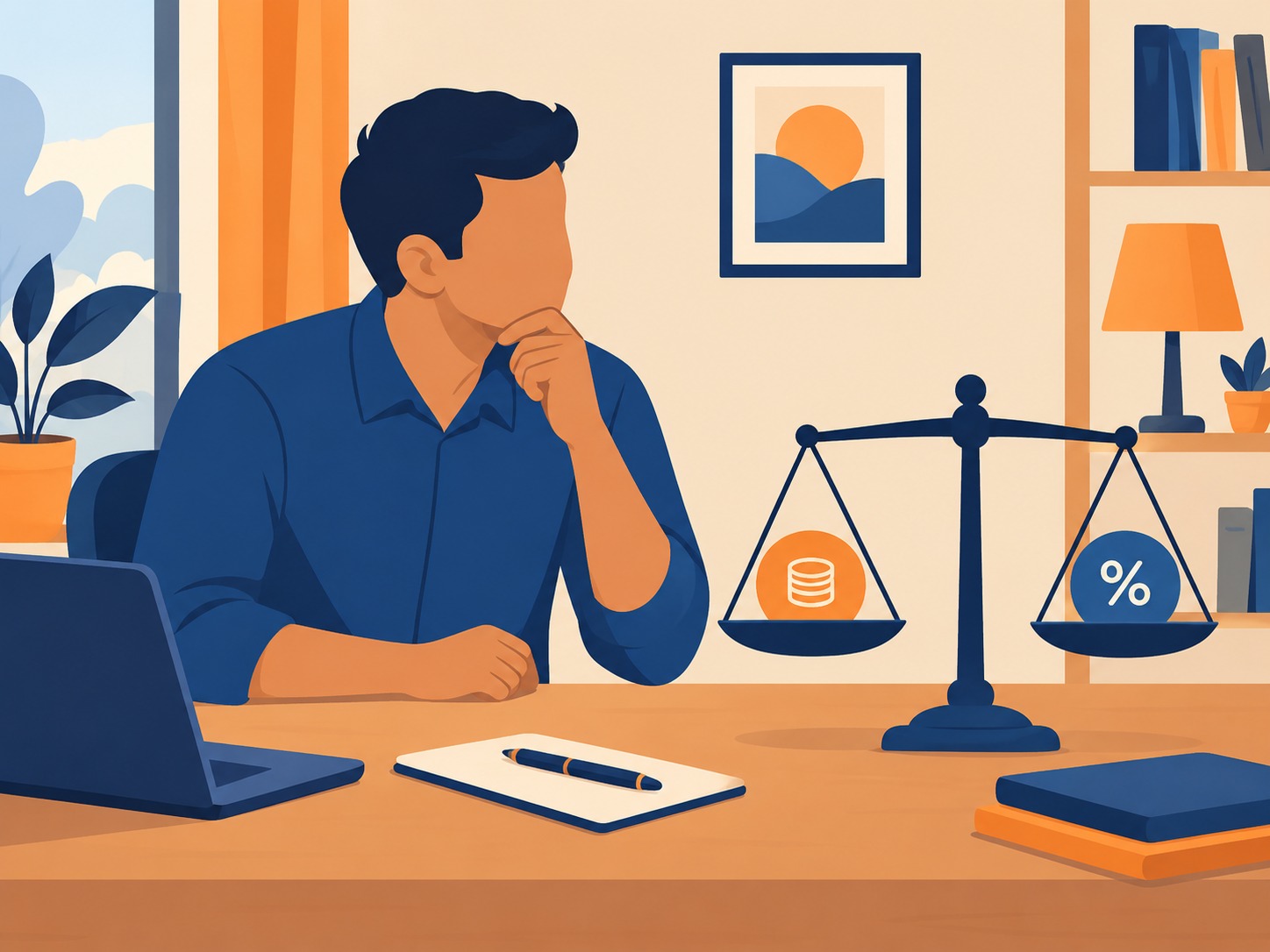
- Does the new loan’s total cost, not just the EMI, work for you? A smaller EMI over a much longer time can cost more overall.
- Will you avoid new dues while you repay? If the cleared cards fill up again, you’ll carry both the old habit and the new loan.
Be honest with yourself on each one. If you can’t say yes to all three today, that’s useful information, and it’s better to learn it before you sign than after. If you are unsure about your ability to avoid new borrowing, address that risk before taking another loan.
For the full weighing, read our guide on whether debt consolidation is worth it. For the math test and the behaviour test, see does debt consolidation work. Next, let’s look at when the answer tends to be yes.

See What Share of Your Salary Goes to EMIs
Check how much of your pay your EMIs take today.
Check My EMI ScoreWhen Is It a Good Idea to Pay Off Debt With a Consolidation Loan?
It tends to work when four things line up, and each one matters. If even one is missing, slow down before you sign. Here are the two sides.
| Usually a good idea | Think twice |
|---|---|
| You pay on time, but several EMIs strain your salary | You’ve already missed payments |
| The new loan’s total cost is close to, or below, what you’d pay on the old ones | The new loan needs a much longer time, which raises the total cost |
| The new EMI fits comfortably | Fees eat much of the benefit |
| You’ll stop using the cleared cards for new spending | Your spending is what caused the debt |
Let’s go through the left column.
You pay on time, but it’s tight. Consolidation is built for the person who is stretched, not for the person who has stopped paying. It tidies several payments into one and can ease the monthly pressure. That alone can make a household calmer, because one due date is easier to protect than four.
The total cost is fair. Compare what you’d pay on the old loans with what you’d pay on the new one, fees included. A lower EMI is attractive, but if it comes from a much longer loan, you may pay more in total. Ask for the total repayment amount in rupees and put it next to your old total. The gap tells you the truth.
The EMI fits with room to spare. If the new EMI takes almost all of your free money, you have no cushion for a surprise. A medical bill or a repair can push you back to a card within a month. A comfortable EMI leaves space for real life.
You’ll change the habit. This is the hard one. A cleared card is a tempting card, and the plan only works if it stays cleared. Decide in advance what you’ll do with each card, and write it down.
The right column is a list of reasons to pause, not a verdict. If your spending caused the debt, for example, fix the spending first. A new loan can’t do that for you.
For both sides in more detail, read our guides on the benefits of debt consolidation and the disadvantages of debt consolidation. Now, let’s see how the payoff actually happens.
How Does the Payoff Actually Happen?
The new loan doesn’t clear your old dues by magic. Money has to move, and someone has to send it to the right place at the right time. That one fact explains most payoff problems.
There are two common ways it can happen.
- The new loan lands in your bank account, and you pay the old dues yourself. You control the timing, and you carry the responsibility. You also need to move quickly, because every day an old balance stays open, it can keep charging interest.
- The lender pays your old creditors directly. You don’t handle the money, which removes one risk. But you still need to confirm that each payment reached each account.
Under the RBI Digital Lending Directions, 2025, digital loan disbursals are generally required to be made directly into the borrower’s bank account. The Directions provide specified exceptions, including payments for a specific end use directly to the end beneficiary, disbursals under a statutory or regulatory mandate, and arrangements involving co-lending between regulated entities. The applicable route depends on the lending arrangement and the relevant exception.
Ask the regulated lender to explain how the loan will be disbursed and, if funds are paid directly to existing creditors, which applicable exception permits that route. Request written confirmation of the payment process, the payoff amounts and the expected dates. Also ask who confirms the payoff amounts, and by when.
If the money lands in your account, don’t wait. Pay the old dues the same week, from that money, and keep proof of every payment. If you leave a few thousand rupees “for later”, you’ve left an open balance that keeps growing. A delay of even a few days can add up.
If the lender pays directly, ask for a payment confirmation for each old account. Then check each account yourself a few days later. A confirmation from the new lender is useful, but the old lender’s record is the one that matters.
For help vetting providers, read our guide on debt consolidation companies.
Want Every Loan and Card on One Page?
See your accounts and balances in plain words.
Check My Credit InsightsWhat Is the Payoff Gap, and How Do You Avoid It?
The balance on your statement isn’t always what you must pay to close an account. That difference is the payoff gap, and it’s the most common reason a new loan comes up short. Here’s an example using Priya’s four accounts. Every figure is invented.
Priya owes ₹6,00,000 across four accounts and gets a ₹6,00,000 loan. She asks each old lender for the payoff amount on the day she plans to pay.
| Account | Statement balance | Payoff amount on the day | Why it’s higher |
|---|---|---|---|
| Credit card | ₹2,10,000 | ₹2,14,600 | ₹4,600 more interest to the payoff date |
| Personal loan | ₹1,90,000 | ₹1,95,300 | ₹1,500 accrued interest plus a ₹3,800 foreclosure charge |
| Loan app | ₹1,20,000 | ₹1,22,200 | ₹2,200 more |
| BNPL (buy now, pay later) | ₹80,000 | ₹80,900 | ₹900 more |
| Total | ₹6,00,000 | ₹6,13,000 | ₹13,000 gap |
The loan is ₹6,00,000, but the payoff total is ₹6,13,000. Priya is ₹13,000 short before anything else happens.
Now add a fee. Say the new lender deducts a 2% fee (₹12,000) from the loan. Priya receives ₹5,88,000, and against a ₹6,13,000 payoff, the gap grows to ₹25,000. She started with a plan that looked balanced and ended with a hole.
Three habits protect you from this.
- Ask each old lender for a payoff statement valid to a stated date. The statement balance alone isn’t enough.
- Ask how much interest builds up each day after that date. Then you know what a delay costs.
- Plan to cover any gap from savings, not new borrowing. Using a new card to close an old loan just moves the problem.
These figures are invented, and your real ones will differ. They come from your own statements and your lender’s offer. Never rely on the statement balance alone. And if you’ve missed payments, don’t use this example as a reason to apply in a rush. Talk to your bank first.
For a plain EMI example, read our guide on a debt consolidation example. For closing charges, see personal loan foreclosure charges.

FREED Expert Tip
Ask each old lender for a payoff statement valid to a stated date, plus the daily interest after that date. It tells you the real amount to clear and what a delay costs.
Check My Credit InsightsWhat If the New Loan Falls Short of Your Payoff Total?
If the loan is smaller than your payoff total, you have a gap to close, and there’s a calm way to do it. The worst move is to leave one account partly paid and hope for the best. A partly paid account keeps charging interest, and it can keep showing as open on your report.
Here are your options, in a sensible order.
- Cover the gap from savings. Even a modest buffer helps. In Priya’s example, ₹13,000 or ₹25,000 feels like a lot, but it’s far smaller than the ₹6,00,000 debt.
- Ask the old lender about the charges. Some charges can be discussed, and some can’t. Asking costs nothing, and you may learn something useful.
- Decide which account to leave for last. If you can’t clear everything at once, clear the highest-cost dues first. Keep the smaller, cheaper one running for a short while, and set a date to close it.
- Ask the new lender about a slightly larger loan. Borrowing a little more raises your EMI and your total interest, so do this only if the EMI still fits comfortably.
What not to do matters just as much. Don’t use a credit card or a loan app to fill the gap. You’d be borrowing from a new source to close an old one, and the whole point of the exercise is fewer dues.
It also helps to know the gap before you accept the offer. Ask for payoff statements first and add them up. Then compare that total with the amount you’ll actually receive after any fee. If the numbers don’t work, you can say no, or ask for different terms, before you sign.
Keep a simple note of what you did and when. If an account still shows a balance later, you’ll have the record. Next, let’s look at what to check inside the new loan itself.
Combine Your Loans Into One Lower EMI
FREED’s Loan Consolidation Plan can reduce your monthly EMI burden by up to 50%.* Rates and ranges shown are indicative. Final terms decided by the bank/lender. FREED is not a Loan Provider. No outcome is guaranteed. Please verify directly with your bank.
Reduce My EMIWhat Should You Check in the New Loan’s Real Cost?
The EMI is the number everyone looks at, and it’s only one of several. Before you accept payoff debt consolidation, look at the full cost of the new loan. A lower EMI can hide a longer time and a higher total.
Start with the Key Facts Statement (KFS). RBI’s Digital Lending Directions, 2025 say the lender must give you a KFS before the contract is signed, and that the documents you sign should reach you by email or SMS once the loan is executed. The KFS is a standard summary of the loan’s key terms, so use it as your checklist.
Here’s what to read in it.
- The annual percentage rate (APR). This shows the yearly cost of the loan, including charges, in one number.
- The total amount you’ll repay. Compare this with what you’d pay on your old loans.
- The processing fee and when it’s taken. A fee deducted from the loan is the one that creates a payoff gap.
- The tenure. A longer tenure lowers the EMI and usually raises the total interest.
- Prepayment and late charges. Know what it costs to close early, and what a missed EMI costs.
Don’t treat the cooling-off period as a plan. It’s a safety net for the case where you’ve read the KFS again and noticed something wrong. Read it carefully before you sign, so you never need to use it.
Do one more calculation. Take your old total, add the payoff gap, and compare it with the new loan’s total repayment. If the new total is clearly lower, or close with a much lighter EMI, that’s a fair deal. If it’s much higher, the lower EMI is mostly a delay.

What the Law Says
Under para 10 of RBI’s Digital Lending Directions, 2025, you can exit a digital loan during a cooling-off period by repaying the principal and the proportionate APR. The lender’s Board sets the period, and it must be at least one day. A one-time processing fee can be charged only if it was disclosed upfront in the KFS.
Check My Credit InsightsWhat Should You Do During Payoff Week?
A short, careful week protects you from double charges and accounts that don’t close. Treat it as a checklist, and do it in order. Here are seven steps.
- Get payoff statements for each account. Ask for the amount valid to a stated date, and the daily interest after it.
- Confirm the new loan’s disbursal date and how it will move. Know whether the money comes to you or goes to your old lenders.
- Clear the old dues, starting with the highest-cost one. If the money lands with you, do it the same week, not “soon”.
- Keep proof of every payment. Save the receipt, the reference number and a screenshot.
- Ask each lender for a closure letter. It’s often called an NOC (no-objection certificate), a letter that says nothing is owed.
- Cancel any auto-debit on the closed accounts. An auto-debit through NACH (the system that pulls EMIs from your bank) can keep running and charge you twice.
- Note a date to check your credit report. Give lenders time to update, then look.
Take step six seriously. A closed loan can still have an auto-debit set up behind it. If it isn’t cancelled, money can leave your account for a loan that no longer exists. Check your bank’s mandate list, and cancel anything linked to a closed account.
Step five matters for a different reason. A closure letter is the document that settles arguments. If an old lender’s system still shows a balance months later, that letter and your payment proof are what you’ll send.
Keep everything in one folder. Payoff statements, receipts, closure letters and the new loan’s KFS belong together. If a question comes up in a year, you’ll find the answer in minutes.
For how your record changes through all this, read our guide on consolidating debt without hurting your credit score. Next, let’s look at the cards.
What Happens to Your Credit Cards and Old Accounts After Payoff?
Paying off a card doesn’t close it. The card can stay open with a zero balance, and a zero-balance card is still a card you can swipe. That’s the part that needs a decision.
Here’s the rule on closing. Under RBI’s credit card directions, a card issuer must honour a cardholder’s closure request within seven working days, provided there are no outstanding dues. The issuer must communicate the closure to the cardholder through email or SMS.
So you have a choice. Keep the cleared card open, or ask the issuer to close it. Neither is right for everyone. What matters is that you don’t use it for new dues while you repay the new loan.
If you keep a card, three habits help.
- Ask for a low limit. A smaller limit means a smaller risk.
- Take it off your phone’s wallet and online stores. Fewer taps means fewer impulse buys.
- Treat it as closed, even if it isn’t. A card is a tool for a planned bill, not a cushion for a bad month.
If you close a card, keep the closure message and ask for a confirmation in writing. Then check that the account shows as closed on your report later. Make sure any reward points, annual fee or pending charge is dealt with before you ask, so the closure isn’t delayed by a small balance.
For other old accounts, such as a paid-off personal loan or a loan app, ask for the closure letter. You’ll want it if anything shows incorrectly later. Also uninstall loan apps you no longer need, and remove stored card details from shopping apps.
For more on getting rid of card debt, read our guide on how to get rid of credit card debt. Next, let’s see how to check that everything shows correctly.
Know Where Every Account Stands
See your loans and cards in one place, in plain words.
Check My Credit InsightsHow Do You Check Your Credit Report After Payoff?
After a payoff, your report should show each old account as closed, with nothing owed. If it doesn’t, you want to find out early. A wrong entry that sits for months is much harder to fix than one you catch in the first few weeks.
Here are four steps.
- Wait for the lenders to update, then request a report. Give them some time, then ask for your full report.
- Confirm each old account shows closed, with a zero balance. Check every one, not just the biggest.
- Confirm the new loan appears as one account. The amount and EMI should match your papers.
- Raise any mistake with the lender and the credit information company. Include your proof of payment and the closure letter.
Here’s what RBI says about complaints. RBI’s framework on compensation for delayed updating or correction of credit information provides for compensation of ₹100 per calendar day where an eligible complaint remains unresolved beyond 30 calendar days. The framework sets timelines for the credit institution and credit information company to address the issue. Compensation is subject to the framework’s conditions and exclusions, including its treatment of disputes relating to credit scoring models.
Keep proof, because it’s the strongest part of any complaint. A payment receipt, a closure letter and a dated screenshot show what you did and when. File the complaint in writing, and keep the date.
Don’t expect the report to change overnight, and don’t count on a particular score change. The report’s job is to show the truth. Your job is to check that it does.
For how to request a report, read our guide on the annual credit report.
What the Law Says
Under RBI’s framework on credit information complaints, you’re entitled to ₹100 a day if your complaint about delayed updating or correction of your credit information isn’t resolved within 30 calendar days of filing it.
Check My Credit InsightsHow Do You Avoid Taking On New Dues After Payoff?
A payoff only works if the old dues stay gone. The loan clears the past, and your habits decide the next year. Here’s a simple plan that most people can keep.
- Set the new EMI date just after your salary arrives. The payment goes out before the money gets spent.
- Keep a small buffer fund. Even one month of EMI in a separate account stops a surprise bill from becoming a new card balance.
- Write down your fixed costs. Rent, food, school and medicines come first. What’s left is what you can spend.
- Check your accounts once a week. A five-minute look keeps small leaks from growing.
- Lower or close unused limits. Fewer open limits means fewer chances to slip.
Be honest about what caused the debt. If it was a one-time shock, such as a medical bill, a buffer fund is your best defence. If it was steady spending above income, a new loan won’t fix that. Look at the spending first.
Think of it as two jobs. The new loan does the first one, which is to close the old dues. You do the second, which is to stop new ones. If either job fails, you end up with the same problem and a longer loan.
If you slip, don’t hide it. One new card balance is far easier to handle than five. Pause, list what happened, and talk to your bank early.
For more on card routes, read our guides on consolidating credit card debt and using a personal loan to pay off credit cards.
See What Your EMIs Take Today
Check your EMIs as a share of your salary before you plan your buffer.
Check My EMI ScoreWhen Is Paying Off Debt With a Consolidation Loan Not a Good Idea?
Sometimes the better move is a different one. Our pillar guide explains when to avoid a consolidation loan in more detail. Here are the main cases where payoff debt consolidation isn’t the right step.
- You’ve already missed payments. A new loan is unlikely to help, and each application can leave a mark on your credit report. Talking to your bank first is wiser.
- The new EMI would still be too big for your salary. A new loan doesn’t help if the payment is still too heavy to keep.
- The longer repayment time would cost far more in total. A lower EMI that comes from a much longer loan can leave you worse off.
- The debt came from spending you haven’t changed. A cleared card with the same habits fills up again.
Be honest about the first one. If you’ve missed payments, pause before applying. Review your repayment capacity and speak with your existing lenders about available options. Consolidation should be considered only if the new loan is genuinely affordable and suitable.
If that’s you, FREED’s team can talk through your options without any pressure. They can look at your whole situation and explain what fits. You don’t have to work it out alone.
For everyone else, a quick check can save a lot of trouble. If you only have a few small debts, and one or two are nearly done, a payoff order may fit better than a new loan. Read our guide on the snowball and avalanche methods. For who usually qualifies, see can I consolidate my debt.
How FREED Helps With Paying Off Debt Through Consolidation
You can run the payoff yourself. FREED helps with the assessment and the process. Over 20 lakh people trust FREED, India’s trusted loan management platform.
If most of your salary goes towards paying multiple EMIs, FREED’s Loan Consolidation Plan helps you combine multiple loans into a single monthly EMI. This can reduce your monthly EMI burden by up to 50%.*
Here’s how it works:
- FREED assesses your financial profile.
- FREED matches you to a lending partner from its network.
- The partner disburses one new loan that pays off your existing eligible unsecured loans and card dues.
- FREED handles the process end to end, 100% online.
- You’re left with one loan, one EMI and one due date.
How do the funds move, and who confirms the payoff amounts? FREED’s team explains this during the assessment. Whatever the route, use the checklist in this guide: payoff statements, proof of payment and closure letters.
On fees: FREED’s charges, if any, and the lending partner’s fees should be clearly disclosed before you proceed. The consolidation loan may also involve interest. Review the KFS and all applicable charges before accepting the offer.
Your credit score isn’t hurt by consolidation, and it tends to improve as you pay on time. The plan covers unsecured dues, such as personal loans, card dues, BNPL and app loans. It doesn’t cover home loans, car loans or other secured loans. It’s for people who can still repay, so if you’ve missed payments, talk to FREED’s team about your options first.
You can read the Loan Consolidation Plan page, or go back to our pillar on what loan consolidation means.
Rates and ranges shown are indicative. Final terms decided by the bank/lender. FREED is not a Loan Provider. No outcome is guaranteed. Please verify directly with your bank.
Combine Your Loans Into One EMI With FREED
One monthly EMI instead of several, with the process handled for you.
Check My Eligibility
Mohit Juneja
Mohit Juneja is FREED’s Content & Communication Lead with 12+ years of experience across content, media, advertising and digital communications. He holds a postgraduate diploma in Communications from Xavier Institute of Communications, Mumbai, and has worked with organisations including NDTV, The Indian Express, McCann Worldgroup and NABARD.
At FREED, he leads content and communication across loan management, debt resolution, debt consolidation and financial well-being. His work combines research, storytelling and consumer-focused communication to make complex financial topics easier to understand and act on. He has also scripted and produced 11 documentaries on rural development and agriculture for NABARD, with film's selected for the Mumbai International Film Festival.
mohit.juneja@freed.care

FREED is India's trusted loan management platform. We help India settle their loans, consolidate their EMIs, improve their credit score, and manage their loans better. Over 20 lakh people trust FREED. We have managed more than ₹3,500 crore in loans and saved our users over ₹450 crore.
Media Mentions