Multiple Credit Card Payoff Calculator Guide: Plan Every Card
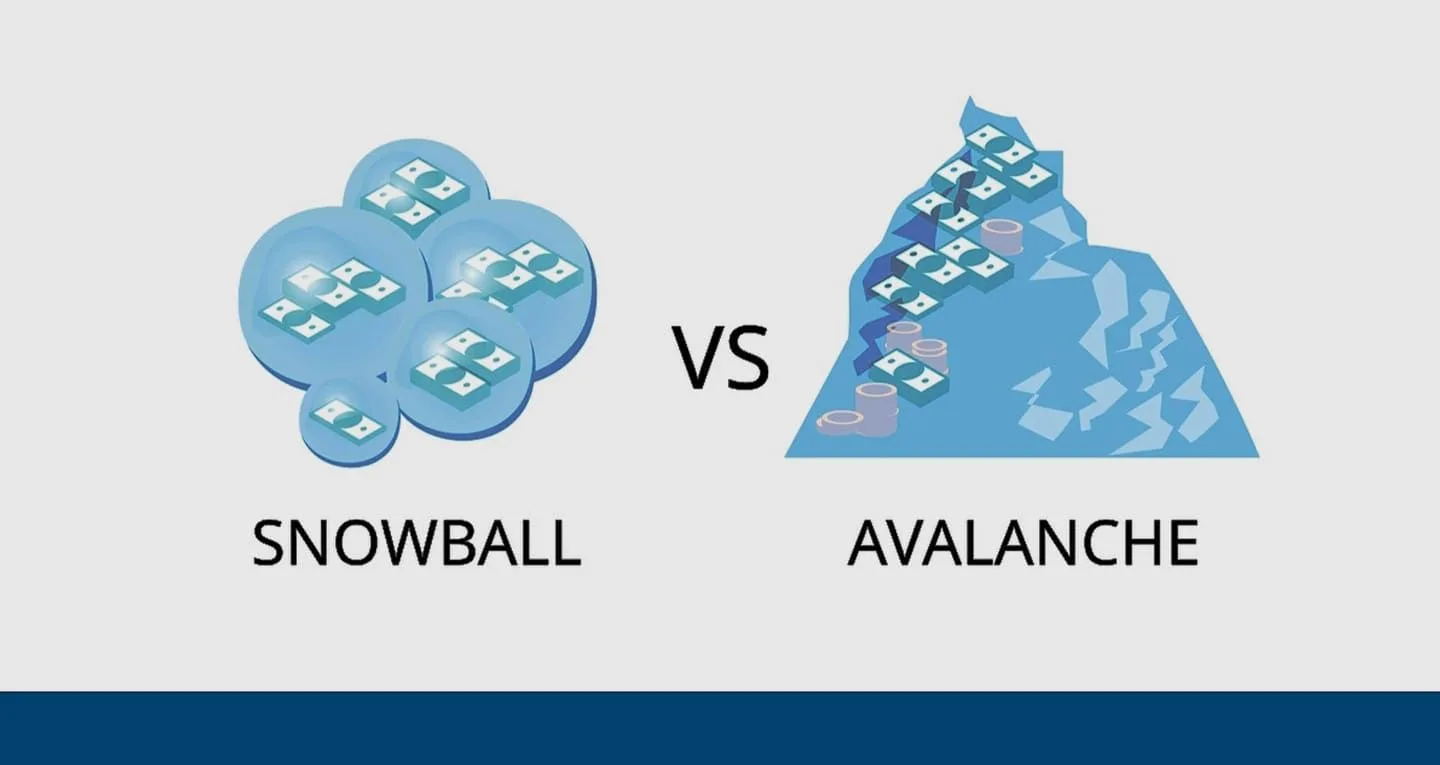
A multiple credit card payoff calculator shows when each of your cards will be cleared, and the total interest and GST you’ll pay, based on one monthly budget split across all of them. It compares paying the highest-rate card first with paying the smallest balance first, so you can pick the cheaper or easier plan.
Mohit Juneja
Reviewed by FREED India, Debt Resolution Specialists
 4.7/5
 ₹3,200Cr+
 20,000+
 20,00,000+4.7/5₹3,200Cr+20,000+20,00,000+
Key Summary

No multiple credit card payoff calculator handy? A simple monthly tracker shows when each card clears.
In our 3-card example, avalanche saves about ₹3,000 over snowball. Both take 17 months.
One 14% loan at the same ₹12,000 a month clears it in 13 months, saving about ₹38,000.
If your budget can’t cover every card’s minimum due, that’s a warning sign.
RBI rules let you change each card’s billing cycle at least once, so due dates can line up.

What Does a Multiple Credit Card Payoff Calculator Show?
A multiple credit card payoff calculator takes every card you owe on and works out one plan for all of them. You give it each card’s balance and interest rate, plus one total amount you can pay every month. In return, it shows:
The month each card is cleared
The total number of months until you’re free of card debt
The total interest and GST you’ll pay along the way
A side-by-side of the two common orders: avalanche (highest rate first) and snowball (smallest balance first)
A good one does one more thing. It shows what a single lower-rate loan would cost at the same monthly budget, because that’s often where the biggest saving hides.
Work It Out Yourself With a Simple Monthly Tracker
You don’t need a special tool. A notebook or a spreadsheet with one row per card does the job. Each month, follow these 5 moves:
Add this month’s interest and GST to each card. Interest = balance × monthly rate. GST = interest × 18%. So a 3.6% card really costs about 4.25% a month.
Work out each card’s minimum due. In our example, that’s 5% of the new balance, with a ₹200 floor. Your statement shows the exact rule for each card.
Pay every minimum first. This keeps every card current and avoids late fees.
Put whatever’s left of your budget on one target card. With avalanche, that’s the highest-rate card. With snowball, it’s the smallest balance.
When a card clears, roll its payment into the next one. The money doesn’t disappear. It moves down the list.
If you’d like a ready-made layout for this, here’s a credit card payoff plan template you can fill in month by month.
This method is illustrative. Rates and ranges shown are indicative. Final terms decided by the bank. FREED is not a Loan Provider. No outcome is guaranteed. Please verify directly with your bank.
Before you set a budget, check what your income can really carry. FREED’s EMI Score reads your income, savings and current loans, and shows exactly where you stand.
Why Is Paying Off Several Credit Cards Harder Than One?
One card is manageable. Three cards feel like a part-time job. Here’s why, and why a multiple credit card payoff calculator makes such a difference:
Minimums add up fast. In the 3-card example below, the minimums come to about ₹7,300 in the very first month. That’s before a single extra rupee goes towards clearing anything.
Interest runs on every card at once. Under RBI’s card rules, each card loses its interest-free period on any amount you leave unpaid. So with balances on three cards, you’re paying interest three times over, every month.
Due dates are scattered. Three cards often means three dates spread across the month. One slip brings a late fee once a payment is more than 3 days past due, and it’s easy to slip when the dates don’t line up with payday.
One maxed card can hurt your score on its own. High use on any single card can pull your credit score down, even if your total use across all cards looks fine. Here’s more on card use and your credit limit.
That’s a lot to hold in your head at once. A clear plan, worked out on paper or in a spreadsheet, turns it into one number to pay each month and one card to focus on.
FREED’s Credit Insights also helps here. It shows how each card is appearing on your Experian report, and which one is pulling your score down most.
Card Balances Pulling Your Score Down?
See which cards are hurting most, with a plan to fix it.
Check My Credit InsightsHow to Use a Multiple Credit Card Payoff Calculator, Step by Step
These 6 steps work with any multiple credit card payoff calculator, or with the monthly tracker above.
List every card with its current balance from the latest statement. Include the card you rarely use too. A forgotten card throws the whole plan off.
Enter each card’s monthly rate. Statements quote the APR (the yearly interest rate). Divide it by 12, because the order you pay in depends on these rates.
Keep GST on. It adds about 18% to every rupee of interest. Leave it off, and every card looks like it’ll clear sooner than it will.
Set one total monthly budget you can keep paying every month. An amount you can stick to beats a bigger one you’ll miss in month three. One missed payment brings late fees and undoes progress.
Compare avalanche and snowball, then check the one-loan line. You’ll often find the biggest saving isn’t the order at all. It’s replacing several card rates with one lower one.
Stop spending on all the cards while you pay them off. New spending adds to the balances and resets the plan. Put the cards somewhere you won’t reach for them.
Once you’ve got your numbers, test the monthly budget against everything else you pay. If it doesn’t fit comfortably, it’s worth knowing that now, before you commit.
FREED’s EMI Score is a quick way to check. It reads your income, savings and current loans, and shows whether your card budget leaves room to breathe.
Not Sure Your Budget Is Realistic?
See where your income, savings and EMIs stand today.
Check My EMI ScoreAvalanche or Snowball: Which Clears Multiple Credit Cards Faster?
Here’s what the two methods mean in a multiple credit card payoff calculator:
Avalanche. Every extra rupee goes to the card with the highest rate. It saves the most interest.
Snowball. Every extra rupee goes to the card with the smallest balance. It gives you the fastest first win.
To see how much the choice really matters, take this example. Say you have three cards:
Card A: ₹80,000 at 3.6% a month
Card B: ₹40,000 at 3.4% a month
Card C: ₹20,000 at 3.0% a month
That’s ₹1,40,000 in total, with 18% GST on interest and a 5% minimum due (₹200 floor).
Table A: Paying ₹12,000 a month in total
Method | Card A clears | Card B clears | Card C clears | Total months | Interest + GST |
|---|---|---|---|---|---|
Avalanche | Month 12 | Month 15 | Month 17 | 17 | about ₹52,700 |
Snowball | Month 17 | Month 10 | Month 4 | 17 | about ₹55,700 |
Table B: Paying ₹15,000 a month in total
Method | Total months | Interest + GST |
|---|---|---|
Avalanche | 12 | about ₹38,900 |
Snowball | 13 | about ₹41,000 |
All figures are illustrative. Rates and ranges shown are indicative. Final terms decided by the bank. FREED is not a Loan Provider. No outcome is guaranteed. Please verify directly with your bank.
Here’s what that means in plain words. At ₹12,000 a month, avalanche saves about ₹3,000 over snowball, and both take 17 months. Snowball clears your first card in month 4 instead of month 12, which can keep you going. The gap between methods is small. So pick the one you’ll actually stick with.
Look at Table B, though. Raising the budget from ₹12,000 to ₹15,000 saves about ₹14,000 and 5 months. A bigger budget matters far more than the method. Here’s a fuller look at the snowball and avalanche methods.
And paying only the minimum on all three? That can take decades. Here’s the credit card minimum payment calculator guide, which shows why.

FREED Expert Tip
Whichever method you choose, pay at least every card’s minimum on time. One missed minimum costs more than the gap between avalanche and snowball.
Check My Credit InsightsWould One Loan Beat Paying Each Credit Card Separately?
Here’s the part most multiple credit card payoff calculators never show. The order you pay in matters far less than the rate you pay. Take the same ₹1,40,000 and the same ₹12,000 a month:
Route | Months | Total cost |
|---|---|---|
Avalanche across 3 cards | 17 | about ₹52,700 |
Snowball across 3 cards | 17 | about ₹55,700 |
One loan at 14% a year (2% fee + GST) | 13 | about ₹14,700 (₹11,384 interest + ₹3,304 fee) |
Personal loan interest typically doesn’t carry GST, while card interest typically does. All figures are illustrative. Rates and ranges shown are indicative. Final terms decided by the bank. FREED is not a Loan Provider. No outcome is guaranteed. Please verify directly with your bank.
That one loan saves about ₹38,000 compared with the best card-by-card method, and finishes 4 months sooner. Choosing avalanche over snowball saved ₹3,000. Replacing three card rates with one lower rate saved more than twelve times that.
It works because each card in the example charges 3% to 3.6% a month, plus GST. That’s roughly 36% to 43% a year before tax. A 14% loan cuts the rate by more than half, and there’s typically no GST on the interest.
There are two other routes worth knowing:
Move the costliest card’s dues to one of the balance transfer cards at a low promotional rate. It works best if you can clear that balance within the low-rate period.
Convert one card’s balance to an EMI. Here’s how credit card EMI conversion works.
For a closer comparison, here’s personal loan vs credit card debt consolidation, and when to use a personal loan to pay off credit cards.
FREED’s Loan Consolidation Plan works the same way as the one-loan row: one new loan pays off all your card dues at once.
Want One EMI Instead of Three Card Bills?
FREED matches you with a lending partner and handles the rest.
Reduce My EMIWhat If Your Budget Doesn’t Cover All the Minimum Dues?
Sometimes the maths gives a hard answer. Your total budget doesn’t even cover every card’s minimum due, or your card payments plus other EMIs take more than 50% of your take-home pay. When that happens, the cards are a sign of a bigger load, not the whole problem.
Take the example above. The three minimums came to about ₹7,300 in month one. If your budget is ₹6,000, one card goes short every month, and the late fees start stacking up.
That’s information, not failure. Here’s what to do, in order:
Still paying, but stretched? Look at consolidation, which turns all the card dues into one EMI. Or convert the biggest card’s balance to an EMI, which lowers that card’s monthly amount.
Talk to your card issuers before a payment is missed. Ask each one about an EMI plan. You have more options while every account is still current.
Genuinely unable to repay? Settlement is not something a borrower chooses out of preference. Banks consider it only when repayment has become genuinely impossible. Here’s whether credit card settlement is good or bad.
Here’s more on how to come out of a credit card debt trap.
If your cards are part of several EMIs and you’re still paying, FREED’s team can look at them and tell you whether the Loan Consolidation Plan suits you.
Can’t Cover Every Card’s Minimum Anymore?
Talk to a FREED expert and see which route fits.
Book My CallHow FREED Helps If You’re Juggling Several Credit Cards
When a multiple credit card payoff calculator shows the one-loan route saving the most, FREED can make that route happen. FREED is India’s trusted loan management platform, and over 20 lakh people trust it. Its founding team brings 50+ years of debt-resolution experience from the US.
Loan Consolidation Plan
If most of your salary goes towards paying multiple EMIs, FREED’s Loan Consolidation Plan helps you combine multiple loans into a single monthly EMI. This can reduce your monthly EMI burden by up to 50%.*
It’s the one-loan row from the table above, handled for you. FREED assesses your profile and matches you to a lending partner from its network. One new loan pays off all your card dues at once, leaving one EMI on one date. Your score doesn’t drop because of consolidation. It tends to improve as your card use falls and you pay one loan on time.
The fee is success-based, charged only when the consolidation is done. Not sure if you qualify? Talk to FREED’s team. They’ll assess your situation and let you know if you’re eligible. FREED has helped consolidate over ₹320 crore in loans so far.
*Rates and ranges shown are indicative. Final terms decided by the bank. FREED is not a Loan Provider. No outcome is guaranteed. Please verify directly with your bank.
EMI Score
Your EMI Score tells you how healthy your finances really are. It reads your income, savings and current loans, and shows exactly where you stand. Use it to check whether your card budget, or a single consolidated EMI, fits your income.
Credit Insights
FREED identifies exactly what is pulling your credit score down and gives you a personalised action plan to improve it. That’s Credit Insights. It’s available to anyone, uses Experian’s report, and refreshes every month, so you can watch your score respond as each card balance falls.
Turn Every Card Bill Into One EMI
One loan, one date, and a monthly burden that can come down.
Reduce My EMIWhat Helps You Stay on Track With Multiple Credit Cards?
A plan from a multiple credit card payoff calculator only works if you keep it running. These 6 habits help:
Line up due dates near salary day. Under RBI’s rules, card issuers must let you change your billing cycle at least once. Ask each issuer, so all your cards fall due just after payday.
Set autopay for at least the minimum on every card. It’s your safety net. Even in a bad month, no card goes unpaid.
Keep one simple tracker, and update it monthly. A notebook or spreadsheet with one row per card is enough. Ten minutes a month shows whether you’re on plan.
Freeze each card once it’s cleared, but keep it open. An old card helps your credit history and adds to your total limit. Just take it out of your wallet.
If you move a balance, stop using the old card. A credit card transfer only saves money if the old card stays at zero. Here’s what to do with your old credit card after a balance transfer.
Build a small emergency fund. Most card debt starts with one surprise bill. A buffer stops the next one landing on a card. Here’s why an emergency fund matters.
If you use FREED’s Credit Insights, its monthly refresh shows each card’s balance falling on your report as you go.
Three cards, one plan, one date each month. Give it 12 to 17 months, and every card can be back at zero.

What the Law Says
Under RBI’s 2024 credit card rules, card issuers must let you change your billing cycle at least once.
Check My EMI Score
Mohit Juneja
Mohit Juneja is FREED’s Content & Communication Lead with 12+ years of experience across content, media, advertising and digital communications. He holds a postgraduate diploma in Communications from Xavier Institute of Communications, Mumbai, and has worked with organisations including NDTV, The Indian Express, McCann Worldgroup and NABARD.
At FREED, he leads content and communication across loan management, debt resolution, debt consolidation and financial well-being. His work combines research, storytelling and consumer-focused communication to make complex financial topics easier to understand and act on. He has also scripted and produced 11 documentaries on rural development and agriculture for NABARD, with film's selected for the Mumbai International Film Festival.
mohit.juneja@freed.care

FREED is India's trusted loan management platform. Founded in 2020 and headquartered in Gurugram, FREED has counselled 20 lakh+ people on personal loans, credit cards, and app loans. FREED charges fees only on successful settlement, not upfront. FREED does not handle secured loans (home loans, car loans, gold loans).
Media Mentions