What Happens to Old Credit Card After Balance Transfer: A Practical Guide for Borrowers
A balance transfer generally moves the outstanding balance without automatically closing the old credit-card account. Check your issuer's terms and confirm the account status before deciding whether to close it. If you moved the full balance, the card shows zero due, though any pending interest or fees may still land on the next statement. The credit limit stays available too, unless you actively close the account.
Mohit Juneja
Reviewed by FREED India, Debt Resolution Specialists
 4.7/5
4.7/5 ₹3,200Cr+
 20,000+
 20,00,000+4.7/5₹3,200Cr+20,000+20,00,000+
KEY TAKEAWAYS

A balance transfer does not normally close the old credit-card account by itself. The account stays open with a zero, or reduced, balance until you decide otherwise.
Any pending interest, fees, or charges from before the transfer can still show up on your old card's next statement. Wait for a confirmed zero-balance statement before closing anything.
Keeping the old card open generally helps your credit utilisation and account history. Closing it can help you avoid temptation and any annual fee.
If your new card's limit couldn't cover the full transfer, your old card will carry a remaining balance you still need to pay off before you can close it.
If you do close it, you'll need to contact the issuer directly. Closure isn't automatic even after the balance hits zero.
What Happens to Your Old Credit Card After a Balance Transfer?
The account stays open by default. Nothing about a balance transfer closes it for you, and this catches a lot of people off guard.
If the full balance moved over, your old card shows zero due. But any pending interest or fees that accrued before the transfer went through can still appear on the next statement, so a card showing zero this week isn't necessarily done. Checking your card's actual details before deciding anything saves you from acting on an assumption instead of the real number.
If your new card's limit wasn't high enough to cover everything, the story is different. Your old card carries whatever's left, and you still need to pay that down before closing it makes sense.
None of this works differently depending on which issuer you're with, the mechanics are consistent across banks. What a balance transfer actually does is move the debt, not the account itself, which is exactly why this question catches people off guard.

Why This Question Comes Up
Since the whole point of a balance transfer is to move the debt away, it's natural to assume the old card just goes away too. It's a reasonable assumption, even though it isn't what happens.
Card issuers have no reason to close an account that's in good standing, zero balance included. It stays open unless you act. From the bank's side, an open account with a live credit limit and no balance isn't a problem, it's just sitting there.
That mismatch is what surprises people who expected a clean break. It can lead to a forgotten annual fee showing up months later, or an unused card with a live credit limit sitting untouched, neither one is dangerous on its own, but both are easy to lose track of.
The decision of what to do with it comes down to a few clear factors.
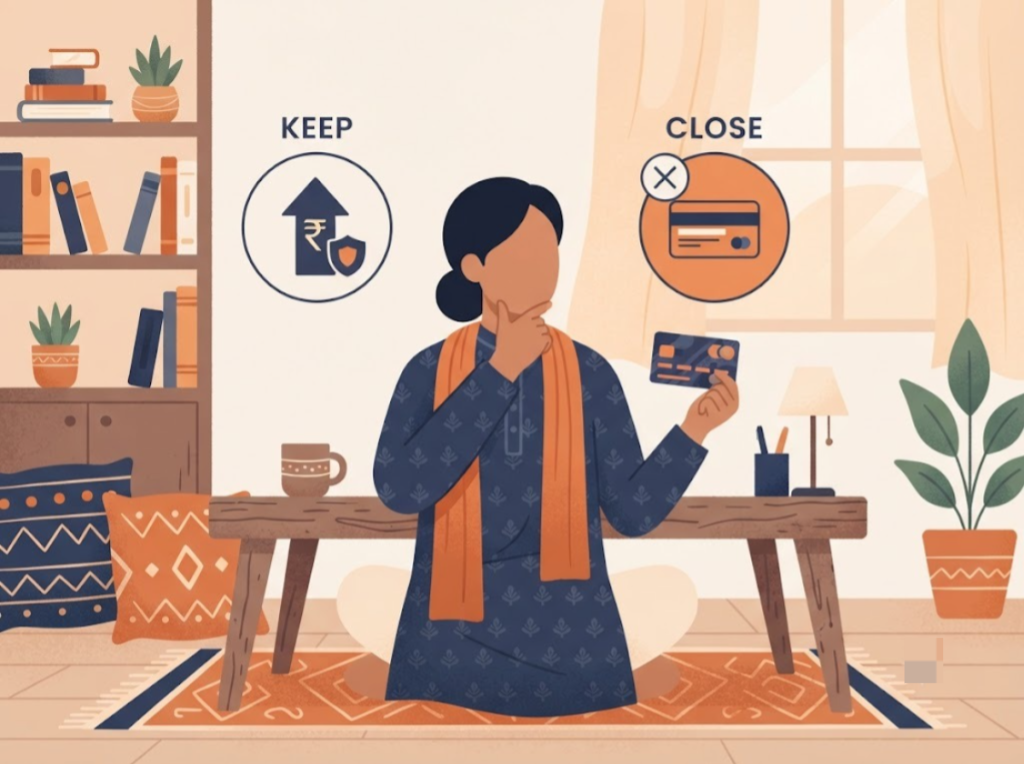
Signs You Should Close It vs Keep It Open
Reasons to keep it open:
You want to preserve a long-standing credit account with a good repayment history. Account age can contribute to your credit profile over time.
You want the extra available credit limit to keep your overall utilisation ratio low, which matters more than most people expect.
It has no annual fee, or a fee you're genuinely comfortable paying for the history benefit.
Reasons to close it:
You're worried about the temptation to spend on it again before the transferred balance is fully cleared.
It carries an annual fee you don't want to keep paying for a card you're not using.
You're actively trying to reduce the number of open accounts you have to track.
Neither list is the "right" one. It depends on which risk actually worries you more, drifting utilisation or drifting spending. Whichever direction fits, here's exactly how to execute it.

What the Law Says
RBI's credit-card directions require issuers to provide customers with key information on charges and terms through the prescribed disclosures, including the Most Important Terms and Conditions (MITC). Check your issuer's current MITC for applicable fees and closure terms. It's worth pulling up your old card's own MITC before deciding what to do with it.
Talk to FREED's TeamWhat to Actually Do With Your Old Card, Step by Step
Before closing the account, confirm the outstanding balance and any pending charges with the issuer. Closing too early can leave a stray charge unpaid and hit your credit file in a way that's harder to untangle than just waiting a cycle.
Confirm the balance is genuinely zero. Wait for at least one statement showing zero due, including any pending interest or fees, before deciding anything.
Decide whether to keep it or close it. Weigh the utilisation and history benefits of keeping it open against the temptation and fee concerns of closing it.
If keeping it open, set a light-use reminder. Use the card for one small purchase every few months. Some issuers close inactive cards automatically after a long enough gap, undoing the reason you kept it open.
If closing it, contact the issuer directly. Reach out the same way you set up the transfer and formally request closure. An account doesn't close itself just because the balance is zero.
Get written confirmation either way. Keep a record showing either the account is active and in good standing, or formally closed with a zero balance.

Freed Expert Tip
Wait for a confirmed zero-balance statement before closing your old card. Closing too early can leave a stray charge unpaid and affect your credit file.
Check My Consolidation OptionsThe Trade-off: Utilisation vs Temptation
Most advice on this stops at "it depends." Here's the actual mechanism behind each side.
The case for keeping it open. Your overall available credit stays higher, which generally lowers your utilisation ratio, the percentage of your total credit limit currently in use. That's a factor that meaningfully affects your score. An older account also adds to your average account age, which factors in too, just more slowly.
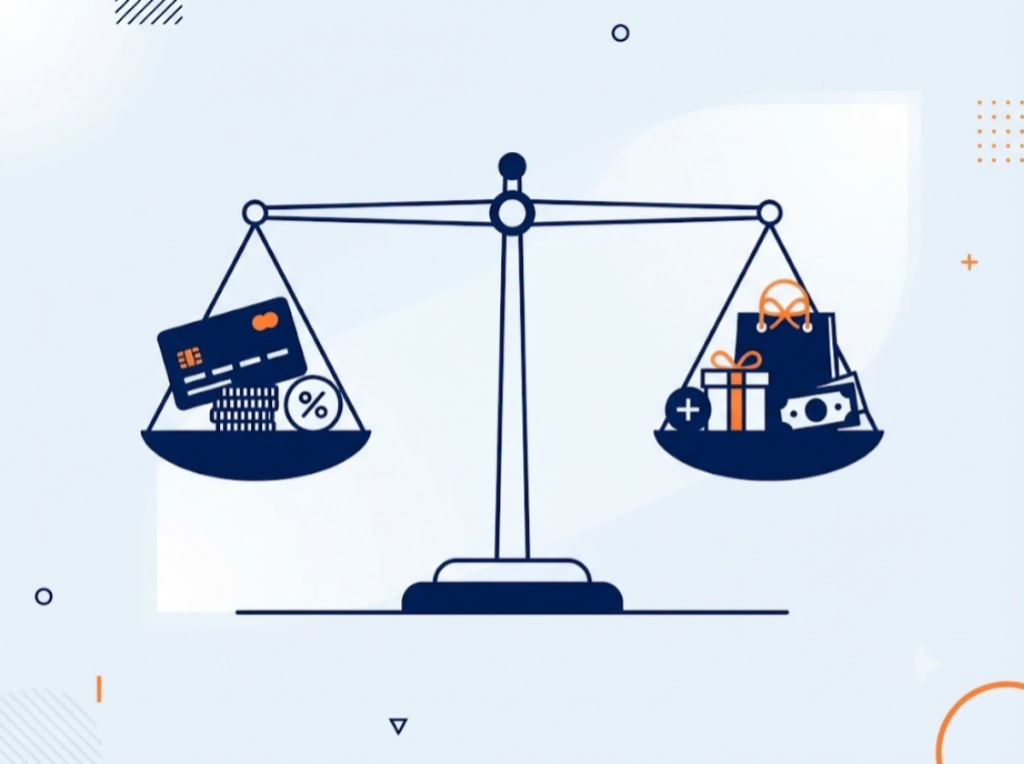
The case for closing it. It removes the temptation to spend on a card that's supposed to be done, ends any ongoing annual fee, and simplifies the number of accounts you're tracking. But closing it also reduces your total available credit, which can raise your utilisation if you're still carrying balances elsewhere.
For someone disciplined about not overspending, keeping it open is usually the stronger move for credit health, since it works quietly in your favour without you having to do anything. For someone worried about falling back into the same pattern, closing it removes the risk entirely, no card, no temptation. That trade-off is personal, not universal.
This is a single-card decision. But if the problem you were solving was juggling several cards, not just one, there's a bigger-picture option worth knowing.
What Are Your Options
If this card was your only outstanding debt, the decision above is the whole story. Handle it, and you're done.
But if you still have other high-interest debt sitting alongside it, other cards, a personal loan, or both, a single balance transfer only solved part of the picture. You've fixed one account while the rest keep running at their own rates and due dates.
In that case, treating this as one piece of a broader consolidation is worth considering. Instead of handling each card or loan one at a time through separate transfers, a matched approach can address all of it together, one new loan, one EMI, instead of a string of individual decisions spread out over months.
Here's how FREED specifically approaches the broader picture.
How FREED Helps
If your debt spans more than just the one card you transferred, FREED reviews your full financial picture, every remaining card and loan, not just the one you already dealt with. Based on that, FREED matches you to a lending partner from its network using your EMI-to-income math.
If approved, the new loan may be used to repay eligible existing debts covered by the programme, subject to lender and programme terms. The result is one loan and one EMI, instead of managing several separate transfer decisions over time.

This is FREED's Loan Consolidation Plan, also called the Debt Consolidation Program or "Reduce My EMI." It's worth being clear about who it's actually for: if your debt really was just the one card you already transferred, you don't need this. It's relevant specifically when more debt remains beyond what you've already handled.
The fee is success-based, charged only once consolidation is completed. Consolidation is reported differently from a default or settlement, but applying for a new consolidation loan may result in a lender enquiry and a new account. Your credit profile afterward depends on several factors, including repayment behaviour and account reporting. What happens to your score afterward depends on your repayment behaviour, not a promise anyone can make in advance.
Across the program, FREED has counselled over 20,00,000 customers and managed more than ₹3,200 crore in debt.
Tips for Managing the Old Card Either Way
Confirm the zero balance in writing or via statement before doing anything. Don't rely on memory of "I transferred everything," pending interest or a small fee can still be sitting there.
If keeping it open, set a calendar reminder to use it for one small purchase every few months. Some issuers close inactive cards automatically after a long enough gap, which quietly undoes the reason you kept it open in the first place.
If closing it, get written confirmation the account is closed and the balance is zero. Don't just stop paying attention to it and assume it's handled.
Either way, avoid applying for several new cards or loans around the same time as the transfer. Clustered credit activity for one clear purpose is easier for scoring models to read than scattered activity spread across months.
Sources
Claim | Source |
Card issuers must disclose all fees and charges through a Most Important Terms and Conditions (MITC) document, given at onboarding and again whenever a term is modified. | RBI/2022-23/92, Master Direction Credit Card and Debit Card Issuance and Conduct Directions, 2022 (April 21, 2022, updated March 7, 2024) Master Direction text |

Mohit Juneja
Mohit Juneja writes educational content at FREED on debt management, credit scores, loan repayment, and borrowing best practices. His content is shaped by expert insights and industry knowledge, helping readers better understand their financial options and make informed decisions.
mohit.juneja@freed.care

FREED is India's trusted loan management platform. Founded in 2020 and headquartered in Gurugram, FREED has counselled 20 lakh+ people on personal loans, credit cards, and app loans. FREED charges fees only on successful settlement, not upfront. FREED does not handle secured loans (home loans, car loans, gold loans).
Media Mentions