Credit Card EMI Conversion: Big Bill to Instalments
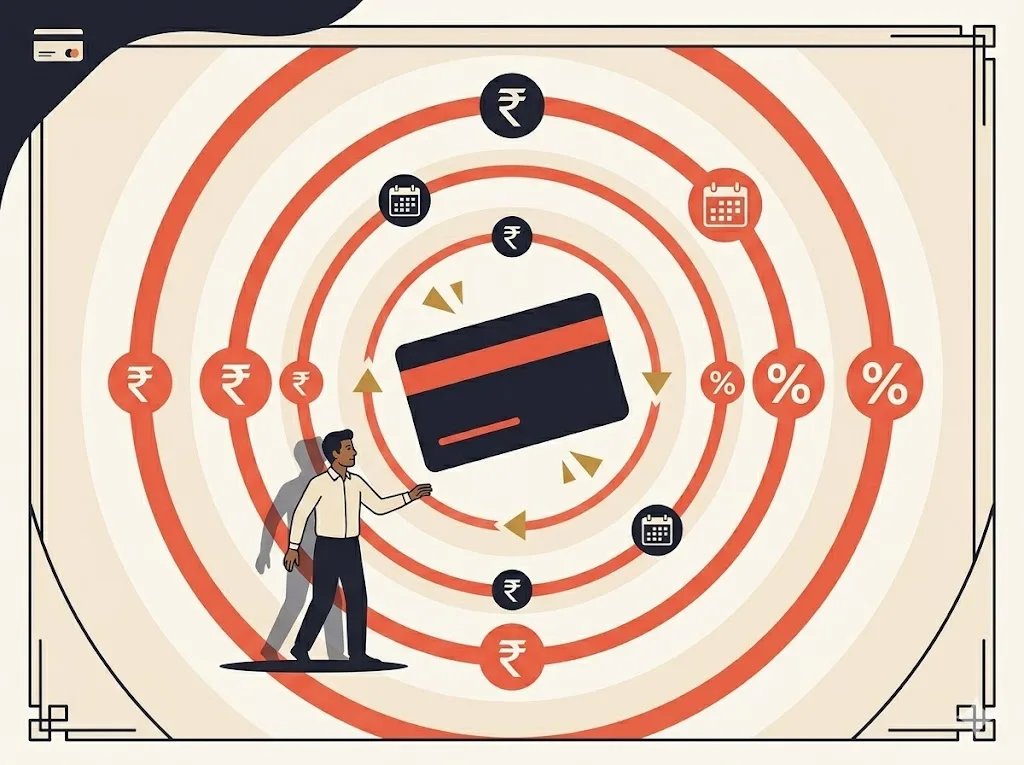
Credit card EMI conversion is when your card issuer turns a large bill or purchase into fixed monthly instalments over a set tenure, usually at 12-18% interest, instead of letting it sit as revolving debt at 36-42%.
Mohit Juneja
Reviewed by FREED India, Debt Resolution Specialists
 4.7/5
4.7/5 ₹3,200Cr+
 20,000+
 20,00,000+4.7/5₹3,200Cr+20,000+20,00,000+
KEY TAKEAWAYS

Credit card EMI conversion turns a lump sum into fixed monthly instalments over 3 months to 2 years.
Conversion interest usually runs 12-18% a year, versus 36-42% on an unpaid revolving card balance.
The card issuer decides eligibility, not the cardholder. Credit score, income, and payment history all factor in.
Missed EMI instalments may be reported to credit bureaus and may attract additional interest or charges according to the issuer’s terms.
Works well for one big bill. Multiple cards or loans usually need a different fix.
What Is Credit Card EMI Conversion?
Credit card EMI conversion is your issuer turning a lump sum, a big purchase or an existing outstanding bill into fixed monthly instalments over a set period, instead of leaving it to sit as open-ended revolving debt that keeps compounding in the background.
There are two distinct paths into this, and it's worth knowing both since they show up at completely different moments in how you use a card. Point-of-sale conversion happens right at the time of a big purchase- a new laptop, a flight booking, a large medical bill you weren't planning for, where the merchant or issuer offers EMI as a payment option before you even complete the transaction at checkout. You choose the tenure upfront, and the purchase never actually hits your card as a lump sum at all; it goes straight onto an instalment schedule from day one. Post-purchase conversion works differently. It happens after the fact, when a bill is already sitting on your statement as revolving debt, already accruing interest month over month, and you go to your issuer specifically to ask that existing outstanding amount be converted into fixed instalments going forward from that point.
Neither path is debt forgiveness, and it's worth being completely direct about that upfront, since the phrase "EMI conversion" sometimes gets mistaken for some kind of discount. You still owe the full amount you converted, restructured with interest into instalments you can actually plan a budget around, not reduced by a single rupee in the process. The tenure on offer typically runs anywhere from 3 months on the short end to 2 years on the long end, depending on the issuer, the size of the bill, and sometimes your existing relationship with that bank. That range is really what makes conversion appealing in the first place: a fixed, visible end date, instead of a revolving balance with no defined finish line and interest that keeps stacking for as long as it sits unpaid.

Have a Big Bill Sitting on Your Card?
See if EMI conversion actually saves you money first.
Check My SavingsWhy Cardholders Convert a Bill Into EMI
Two situations tend to bring people to this decision, and neither one involves anything going wrong on their end; this isn't a distress signal by default.
The first is a single large purchase- electronics, a medical expense that came up without warning, a travel booking for a family event, something that would genuinely strain a month's budget if paid off in full all at once. Converting it into EMI right at the point of purchase spreads that cost out over several months without touching savings, without borrowing from a separate personal loan, and without the purchase ever showing up as a spike in your outstanding balance the way a straight card payment would.
The second, and arguably more common, is an existing balance that's already sitting there accruing revolving interest, typically somewhere in the 36-42% per annum range depending on the issuer, a rate that compounds quietly every single month it isn't fully cleared, often without the cardholder realizing exactly how fast it's growing until the statement shows a number that looks disproportionate to what was actually spent. Converting that balance into EMI locks in a meaningfully lower fixed rate, and just as importantly, gives it a defined end date instead of an open-ended balance with no finish line in sight.
This is a "still paying, wants more structure" situation in almost every case, not a default or distress signal that needs any kind of intervention. The real question worth answering next is when this move actually makes practical sense versus when it's just a patch sitting on top of a bigger problem that conversion alone won't fix.
When Credit Card EMI Conversion Makes Sense
A quick fit-check before you go ahead with it, framed honestly rather than as a pitch either way.
- It's one large purchase or bill, not several smaller ones scattered across different cards. Conversion solves a single concentrated amount well, cleanly, and predictably. It doesn't do much for five smaller balances spread thin across three different cards; that's a structurally different problem.
- You can genuinely commit to a fixed monthly amount for the entire tenure, not just comfortably this month, but every month until the full schedule runs out, including months where money might be tighter than usual for unrelated reasons.
- Your current revolving balance is already growing past what feels comfortable to pay as minimum due. That creeping discomfort is usually the clearest signal that a fixed EMI structure would actually serve you better than continuing to carry an open-ended balance.
- You're not already behind on other EMIs elsewhere. If you are, that changes the entire picture, and it's worth reading the options section further down this page before adding one more fixed monthly commitment on top of ones you're already struggling with.
- You've actually checked the EMI rate on offer against your card's specific revolving rate, and confirmed in writing that it's genuinely lower, rather than assuming conversion is automatically the cheaper path just because it's presented that way.
- You're not planning to keep spending on the same card during the tenure. Fresh purchases layered on top of an active EMI just add new interest running alongside what you're already repaying, which quietly erodes the entire point of converting in the first place.
How Credit Card EMI Conversion Works
The request itself is straightforward, and it doesn't require paperwork beyond what the issuer already has on file. You ask for conversion through your issuer's app, net banking portal, customer care line, or right at checkout if it's tied to a fresh purchase happening in real time. From there, the issuer runs its own eligibility check against your credit score, your income, your available credit limit, and your repayment history on that card specifically, all of which factor into both whether you're approved and what exact terms you're offered. This isn't a decision the cardholder gets to make unilaterally; the issuer sets the terms based on its own risk assessment.
If approved, the tenure, the interest rate, and any processing fee are shown to you upfront, before you confirm anything. This disclosure step is a regulatory requirement, not just good practice on the issuer's part. Once you accept those terms, the EMI shows up as a fixed line item on every monthly statement going forward, the same amount, the same due date, until the tenure runs its full course and the debt is cleared.

What the Law Says
Under RBI's Master Direction on Credit Card and Debit Card Issuance, 2022, issuers must clearly disclose the EMI interest rate and any applicable fees before you confirm conversion, not buried in fine print afterwards where it's easy to miss.
Book My Free Call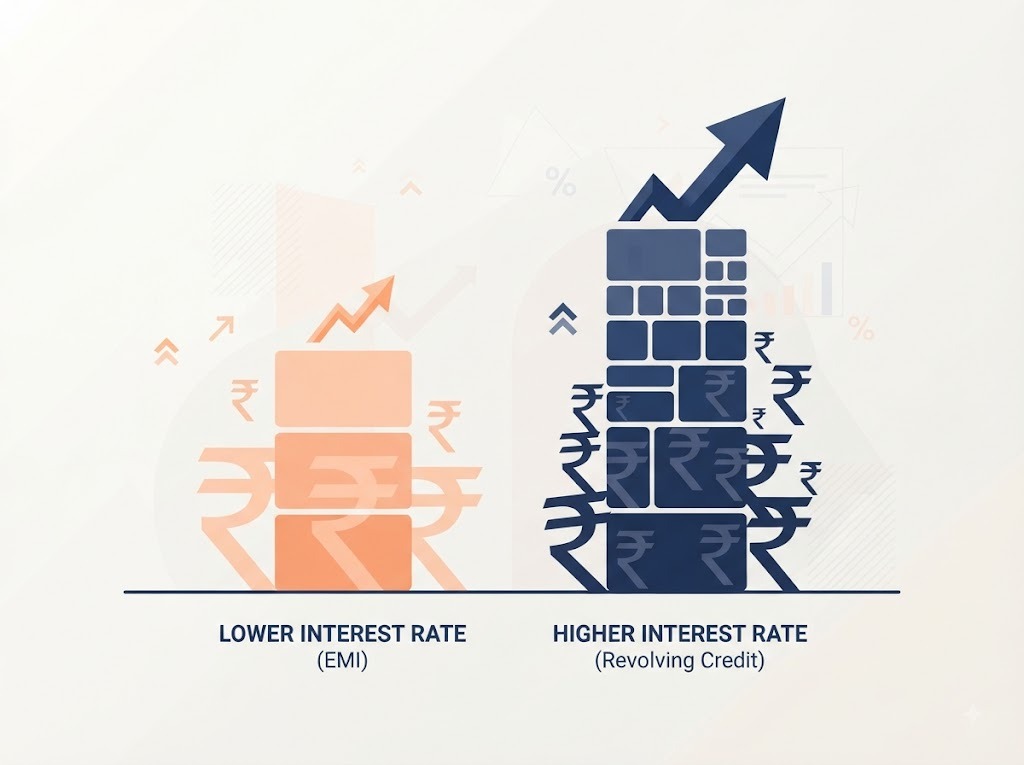
Credit Card EMI Conversion Rates: What You Actually Pay
This is the part worth slowing down on properly, since most explainers skip straight past the real cost math and leave readers comparing headline numbers instead of actual outcomes.
Credit card EMI conversion typically runs 12-18% per annum, depending on your issuer, your credit profile, and the tenure you select; shorter tenures often carry slightly better rates than longer ones. Leave that same balance sitting as revolving debt instead, and you're looking at 36-42% per annum, the same rate that quietly turns a manageable bill into a genuine debt trap if it's left unpaid month after month without any structure around it. That gap between 12-18% and 36-42% is the entire savings case for conversion, and on a meaningful bill amount, it's a real, calculable difference, not a marginal one.
"No-cost EMI" deserves its own specific callout here, since the phrase gets thrown around loosely enough that it's genuinely misleading a lot of shoppers. It isn't literally interest-free, despite what the label suggests at checkout. The cost is usually built into a higher listed price on the product itself upfront, absorbed by the merchant or the issuer through that pricing rather than charged to you separately as a visible interest line, repackaged rather than actually eliminated. Worth knowing clearly before you assume you've stumbled onto a genuinely free financing option, because you likely haven't; you've just paid the interest in a different, less visible place. On top of the interest rate itself, most issuers also charge a separate processing fee for setting up the conversion, and the exact amount varies meaningfully by issuer and sometimes by bill size, so it's worth confirming the real figure directly with your issuer before you commit, rather than assuming it's negligible or standard across banks.
Are You in a Loan Trap? Quick Check
Move the slider to your total EMIs as a % of monthly salary. See your debt stress level instantly.
EMIs as % of Monthly Salary

What Are Your Options Beyond EMI Conversion
Work through this in order, since each option here is actually solving a different version of the underlying problem, not competing variations of the same fix.
First, EMI conversion itself, already covered in full above, fixes one concentrated bill sitting on one specific card. If that genuinely describes your situation- one bill, one card- this is usually as far down this list as you'll ever need to go.
Second, balance transfer: moving an existing balance to a different card offering a lower promotional rate for a limited window, usually a few months. This is also an issuer-offered feature, not a FREED product, and it's the next lightest option worth considering if conversion terms on your current card aren't particularly favourable. The full mechanics, real benefits, and genuine risks of a balance transfer are worth reading before choosing it over conversion, since that promotional rate window is usually a lot shorter than people expect going in, and the rate often reverts to something steep once it ends.
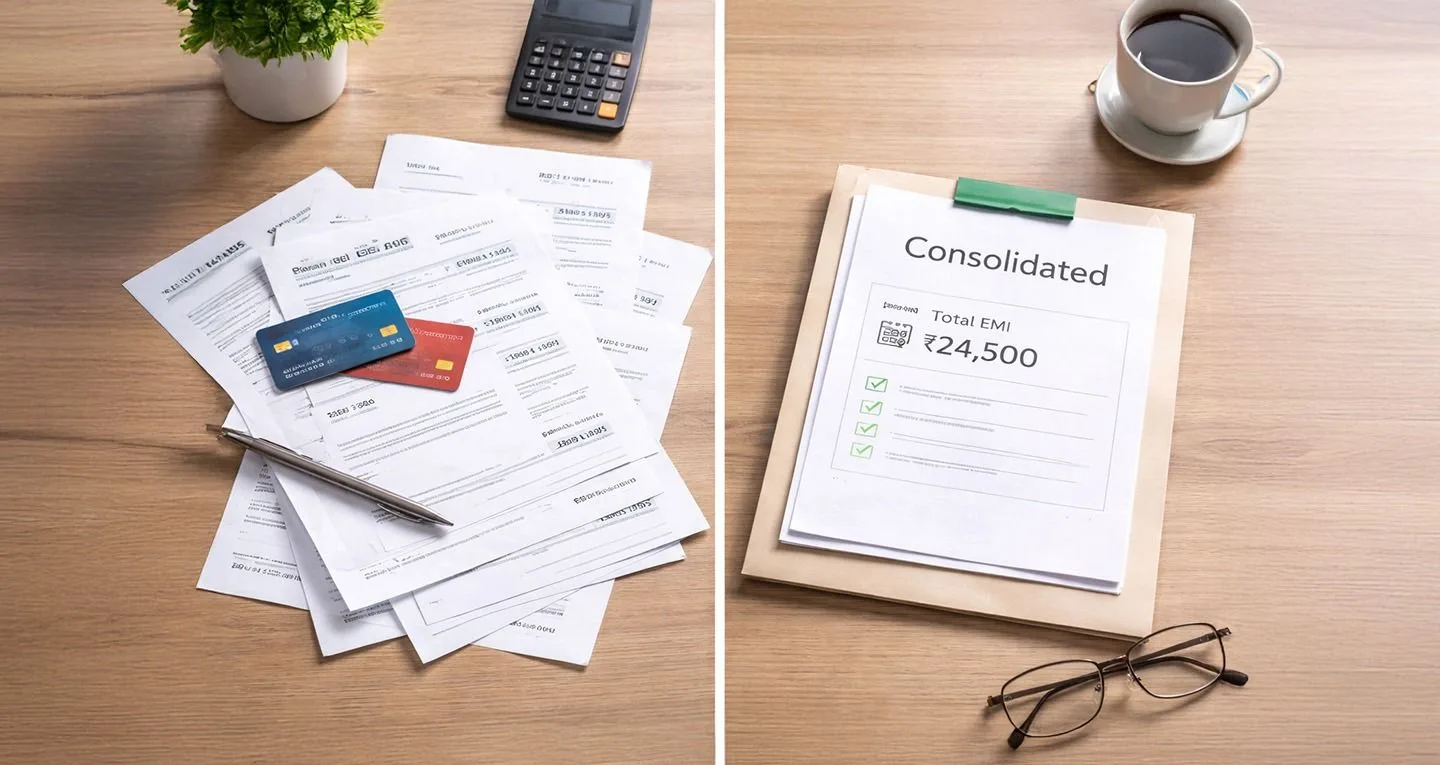
Third, if the real problem underneath everything is multiple cards or loans, not one specific bill, that's a fundamentally different situation than what either EMI conversion or a balance transfer were ever built to solve. Restructuring one bill while three or four others keep accumulating revolving interest separately in the background doesn't actually fix the underlying pressure; it just moves it around. This is where FREED’s Debt Consolidation Program can assess whether you may qualify to combine eligible debts into one loan. Approval, interest rate, EMI, tenure and final terms depend on the lending partner.
Fourth, and only for genuine inability to repay, not simple inconvenience or a preference for smaller numbers, loan settlement exists as the last resort in this ladder. It isn't developed any further here, and it's never presented as an equal alternative to consolidation, because it's solving an entirely different problem for an entirely different reader than the one working through this particular blog.
Managing More Than One Card or Loan?
See if one lower EMI fits your situation.
Start My Debt AssessmentHow FREED Helps
Most readers arriving at this page just want to convert one bill cleanly, and everything covered above is genuinely enough for that specific situation. This section is a bridge for a different reader, not the main point of this blog.
FREED’s Debt Consolidation Program can assess whether you may qualify to combine eligible debts into one loan. FREED may connect eligible applicants with a lending partner, which independently decides the approval, loan amount, interest rate, tenure and EMI. If approved and completed, consolidation may make repayments easier to manage. However, a lower EMI or improvement in your CIBIL score is not guaranteed. For readers facing genuine inability to repay rather than simply juggling several EMIs at once, FREED's Debt Resolution Program remains the option worth exploring separately, not elaborated on any further here.
FREED has counselled over 20,00,000 customers, settled more than 20,000 accounts, and managed over ₹3,200 Cr in debt to date.

Tips for Using Credit Card EMI Conversion Well
A few habits that make conversion actually work the way it's designed to, rather than quietly stacking a new problem on top of the old one it was meant to solve.
- Pick the shortest tenure you can genuinely afford, not the one with the smallest headline EMI. A smaller monthly instalment always costs more in total interest across the full tenure, so shorter is cheaper overall even though it feels heavier on a month-to-month basis, and the two things pull in opposite directions on purpose.
- Stop new spending on the same card during the tenure, deliberately, not just as an afterthought. Fresh purchases add fresh interest right alongside the EMI you're already repaying, and that stacking is exactly what undoes most of the benefit of converting in the first place.
- Set auto-debit so no instalment ever gets missed by accident. A missed EMI reports to CIBIL the same way any other default would, and it can trigger the card's regular revolving interest rate, 36-42%, on whatever's left of the converted amount, effectively erasing the entire rate advantage you converted specifically to get.
- Compare the EMI rate against your card's actual revolving rate before confirming anything, in writing, not from memory or assumption. Don't take it for granted that conversion is automatically cheaper just because it's packaged as a neat fixed instalment; check the real numbers side by side first.
Freed Expert Tip
Pick the shortest EMI tenure you can afford. A lower monthly amount always costs more in total interest over time.
See exactly what your outstanding balance is made up ofEMI Conversion vs Balance Transfer vs Debt Consolidation
Option | Solves | Typical Rate | Best For |
EMI Conversion | One large bill on one card | 12-18% p.a. | Single big purchase or bill |
Balance Transfer | One card's revolving balance | Promotional low rate, 3-6 months | One card, temporary relief |
FREED Debt Consolidation | Multiple cards/loans at once | Decided by the lending partner | Over-leveraged, still paying |
Rates and ranges shown are indicative. Final terms are decided by the bank. FREED is not a Loan Provider. No outcome is guaranteed. Please verify directly with your bank.
Sources
Claim in Blog | Source |
|---|---|
Issuers must disclose the EMI interest rate and any applicable fees before the cardholder confirms conversion | Master Direction RBI (Credit Card and Debit Card – Issuance and Conduct) Directions, 2022, RBI/2022-23/92, DoR.AUT.REC.No.27/24.01.041/2022-23, para 9(b)(iii)–(iv) (upfront disclosure of implications and terms of paying by instalment) rbi.org.in link |

Mohit Juneja
Mohit Juneja writes educational content at FREED on debt management, credit scores, loan repayment, and borrowing best practices. His content is shaped by expert insights and industry knowledge, helping readers better understand their financial options and make informed decisions.
mohit.juneja@freed.care

FREED is India's trusted loan management platform. Founded in 2020 and headquartered in Gurugram, FREED has counselled 20 lakh+ people on personal loans, credit cards, and app loans. FREED charges fees only on successful settlement, not upfront. FREED does not handle secured loans (home loans, car loans, gold loans).
Media Mentions