Bank Loan Settlement vs Closure: What Changes on Your Report
Bank loan settlement means the bank accepts less than you owe as full and final payment, and your credit report shows the account as “Settled”. Loan closure means you repaid everything, and it shows “Closed”. Banks read the two very differently, even though the balance is zero in both cases.
Mohit Juneja
Reviewed by FREED India, Debt Resolution Specialists
 4.7/5
 ₹3,200Cr+
 20,000+
 20,00,000+4.7/5₹3,200Cr+20,000+20,00,000+
KEY TAKEAWAYS

Bank loan settlement means paying less than you owe. Closure means paying everything. Reports show “Settled” and “Closed”.
Both show a zero balance. The status, written-off amount and payment history are what differ.
The “Settled” mark can stay up to 7 years, and the drop is commonly reported at 75 to 100 points.
“Closed” does not erase earlier late payments. It only shows how the account ended.
Banks report to credit bureaus on four set dates a month, and a wrong entry must be fixed within 30 days of your complaint.
What Is the Difference Between Bank Loan Settlement and Loan Closure?
Settlement is not something a borrower chooses out of preference. It happens when paying the full amount is no longer possible, and the bank agrees to take less. Loan closure generally means you have repaid the full amount due under the loan. Settlement generally means the lender has agreed to accept a specified amount that is less than the full amount due, subject to the agreed terms.
Think of two people with the same loan. One kept paying and cleared it. The other lost income, missed EMIs for months, and then agreed a one-time settlement with the bank. Both walk away with a zero balance. Only one walks away with a clean status.
That is the whole point of this article. The balance is the same, but the story the report tells is not. Your income may be back on track next year. The report will still carry the story.
Banks also follow their own written rules for settlements, so the steps and timing can differ. You can read the basics in our guide to bank loan settlement rules.
Loan closure | Bank loan settlement | |
How it ends | You repay the full dues | Bank accepts less as full and final |
What you pay | Everything you owe | Less than you owe |
What the report shows | Closed | Settled |
Who it suits | People who can pay in full | People who genuinely cannot pay in full |

Not sure which one your loan will end in?
Talk to a FREED counsellor about your options.
Book My Free CallWhat Does a Closed Account Look Like on Your Credit Report?
A closed account is the cleanest ending. The report shows four things: the status as Closed, a zero balance, the date it was closed, and your month-by-month repayment history.
That last part matters most. “Closed” tells people the loan is over. It does not tell them the loan was always paid on time. If you were late in 2024, those late months stay in the history grid, even after you pay everything off.
The late months are recorded as DPD (days past due, meaning how many days after the due date you paid). A few 30-day delays on an otherwise closed loan will still be visible. They just sit next to a good ending.
So closure helps, but it is not a reset button. A closed account with clean history is a strong signal. A closed account with many late months is a mixed one. To learn what each column means, read what DPD means in CIBIL and the walkthrough on how to read your CIBIL report.
What Changes on Your Credit Report After Bank Loan Settlement?
Several fields change at once. The table shows the general pattern. Exact field names can look different from one report to another, so treat these as plain-language labels.
Field | Before settlement | After settlement |
Account status | Overdue or Default | Settled |
Current balance | Unpaid amount | Zero |
Amount overdue | Shows what you missed | Zero |
Written-off amount | Often blank | Shows the amount the bank wrote off |
Date closed | Blank | Date the bank closed the account |
Payment history | Late months, maybe 90+ | Same late months stay |
Rates and ranges shown are indicative. Final terms decided by the bank. FREED is not a Loan Provider. No outcome is guaranteed. Please verify directly with your bank.
Credit reports may display an amount written off or other account details, depending on how the lender reports the account. Do not assume that every report will show the waived amount in the same field or that the exact settlement reduction can always be calculated from the report alone.
Two similar words trip people up. “Settled” means you paid an agreed lower amount and the bank accepted it as final. “Written Off” means the bank gave up collecting and booked a loss, but you may still owe the money. ‘Settled’ and ‘Written Off’ describe different account-reporting outcomes. A settled account generally indicates that the lender accepted an agreed amount, while a written-off entry reflects the lender’s accounting and reporting treatment. Check the account details and settlement documents to understand the status. Our page on what written off means in CIBIL goes deeper, and the CIBIL report details guide explains each field. If your account was long overdue, see the delinquent account meaning too.

Freed Expert Tip
Note the settlement amount and the waived amount in writing when the bank agrees. Later, they should match what your report shows.
Talk to a FREED counsellorHow Do Banks Read a Settled Account and a Closed Account?
A bank reading your report asks one simple question. Did this person repay what they borrowed? “Closed” says yes. “Settled” says not fully.
That does not mean every bank reacts the same way. Some will still consider you after a settlement, some will ask you to wait, and some will say no. Policies differ from bank to bank, and no one can promise which way a particular bank will lean.
What most banks do look at is the whole picture. They check how recent the settlement was, what else is on your report, and whether your income can carry a new EMI. A settlement recorded some time ago, followed by consistent repayments on other accounts, may be assessed differently from a recent settlement. However, each lender applies its own credit assessment criteria.
Banks also work under RBI’s 2023 framework for compromise settlements. It expects a cooling period set by the bank’s own policy before fresh credit is considered for someone who settled. The length is the bank’s call, so ask before you apply.
A closed account with a clean history is the easiest to explain. A settled one needs context. The guides on how banks view settled accounts, applying for a loan after settlement and using a credit card after settlement cover the practical side.
How Much Does Settlement Change Your CIBIL Score, and for How Long?
The “Settled” status can stay on your report for up to 7 years. During that time, the score drop is commonly reported at 75 to 100 points. Your own number depends on your starting score and what else is on your report.
Compare that with the alternative. If you keep missing EMIs, the account turns into a long-running default, and that hurts the score every month it continues. Completing a settlement resolves the account according to the agreed terms, but it does not automatically remove previously reported late payments or guarantee an improvement in your credit score.
The score can recover. Pay your other EMIs on time. Keep card use low. Avoid applying for several loans in a short span. These small habits add up over months.
You can track the change yourself. FREED’s Credit Insights tool shows your credit report in one place, so you can see how a settled account sits next to the rest of your history. Our guides on the impact of debt settlement on credit score and how long a CIBIL score takes to update explain the timing.
Are You in a Loan Trap? Quick Check
Move the slider to your total EMIs as a % of monthly salary. See your debt stress level instantly.
EMIs as % of Monthly Salary
How Quickly Does the Bank Update Your Report After Settlement or Closure?
Usually a few weeks. Banks send data to credit bureaus on set reference dates each month. Since 1 July 2026 those dates are the 9th, 16th, 23rd and the last day of the month. The bureau then adds the update to your report.
So if you settle or close a loan today, do not expect to see it tomorrow. Give it a few weeks, then check. If it still shows the old status, act.
RBI’s compensation rules give the bank 21 days to fix a wrong entry after the credit bureau passes on your complaint. The total limit is 30 days. After that, you are owed ₹100 for every day of delay. The bank or the bureau pays, depending on which one caused the delay.
Here is how to raise a complaint:
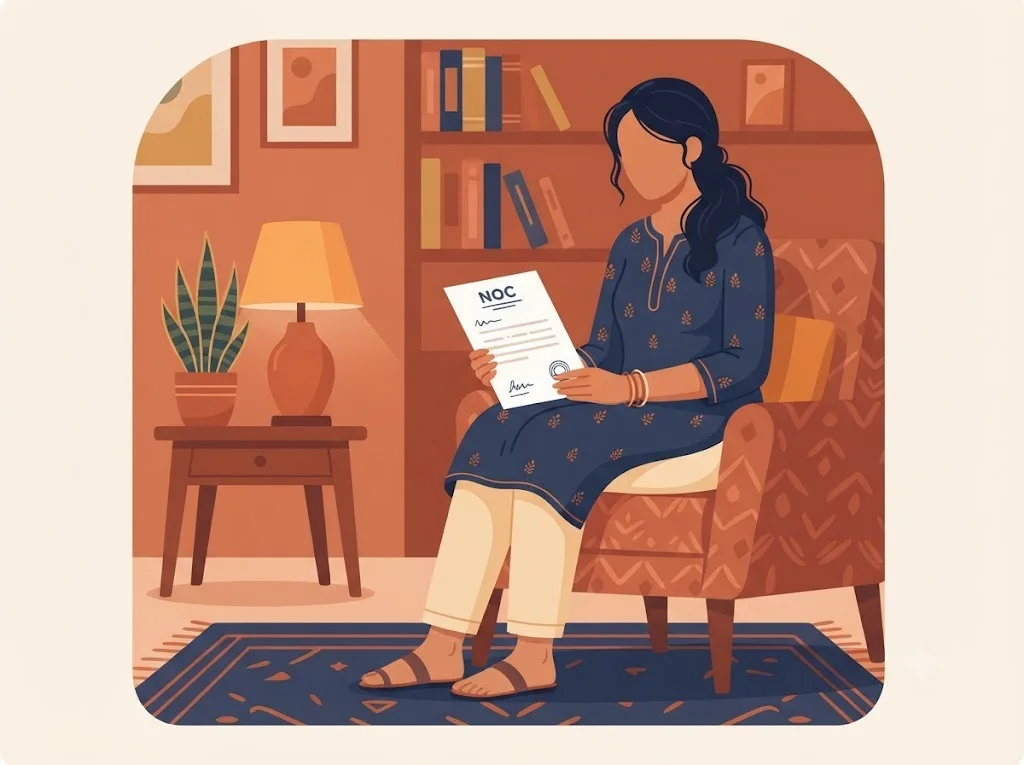
Collect your settlement letter or closure letter and the NOC (no objection certificate, the bank’s proof that nothing more is due).
Download your latest credit report and mark the wrong entry.
Raise a written dispute with the credit bureau and with the bank.
Keep the complaint number safe.
If nothing happens in 30 days, escalate to the RBI’s complaint portal.
Our guide on fixing wrong entries walks through this. If your loan shows up twice, read why a loan shows multiple times. The full dispute steps are in the CIBIL score dispute guide.

What the Law Says
Eligible complaints that remain unresolved beyond the prescribed timeline may qualify for compensation under applicable RBI directions. Check the current rules and complaint conditions to determine whether compensation applies.
Check your optionsWhat Should You Check on Your Report After Settlement or Closure?
Open your report with the letters from the bank beside you. Then run through this list.
Status: It should say Closed if you repaid in full, or Settled if you agreed a settlement. Anything else needs a question.
Balance and overdue amount: Both should be zero.
Written-off amount: For a settlement, it should match your settlement letter.
Date closed: It should match the date on the closure letter or NOC.
No duplicates: The same loan should not appear twice.
Other accounts: Nothing new should appear that you did not open.
Your EMI Score shows how much of your monthly income your remaining EMIs take. Keep it under 50% of take-home pay.
Here is the honest part. If the bank correctly reported “Settled”, you cannot simply ask for it to be changed to “Closed”. The status can change only if the bank reported it wrongly, or if the bank agrees to update it under its own policy. Be wary of anyone who promises to remove a correct entry. Our guide on how to remove settlement from CIBIL after loan closure explains what is possible. For documents, see the CIBIL clearance letter guide.
What Are Your Options Before You Settle a Bank Loan?
Settlement should come last, not first. Try the options below in order.
First, ask your bank for a lower EMI or a short pause. Banks sometimes agree if you explain a real income problem. Second, consider a balance transfer to a bank that offers a lower rate. Third, consider consolidation, where several loans are rolled into one payment. FREED’s Loan Consolidation Plan charges zero fee and needs a CIBIL score of 700 or above.
If recovery calls are adding pressure while you work on a plan, FREED Shield is a protection plan that offers legal support. Only if none of these works does settlement make sense.
Option | Best when | Effect on report |
Lower EMI or pause | Income dip is short | Usually none if the bank agrees in writing |
Balance transfer | You pay on time but the rate is high | Fresh enquiry, account stays active |
Consolidation | Several loans, still paying | New loan replaces old ones |
Settlement | You genuinely cannot pay in full | Shows as Settled |
Rates and ranges shown are indicative. Final terms decided by the bank. FREED is not a Loan Provider. No outcome is guaranteed. Please verify directly with your bank.
Read about loan restructuring under RBI rules and compare a personal loan with debt consolidation before you decide.
How Does FREED Help With Bank Loan Settlement?
If settlement is the only option left, FREED can take the weight off. The FREED Loan Settlement Plan (also called the Debt Resolution Program or “Settle My Loans”) helps borrowers move from financial distress to a structured path toward resolving their debt and rebuilding their financial future.
Here is how it works. You set aside a fixed amount into a Special Purpose Account (SPA), held by an independent trusteeship company. FREED’s counsellors then talk to your bank. You approve each settlement before anything is paid.
The outcome is “Settled”, never “Closed”. We say that upfront. Banks may reduce the dues by up to 50%*, and FREED charges a fee only after a successful settlement. FREED does not follow up on the NOC or the bureau update after settlement, so keep your documents and use the steps above.
Rates and ranges shown are indicative. Final terms decided by the bank. FREED is not a Loan Provider. No outcome is guaranteed. Please verify directly with your bank.
Learn more about the FREED Loan Settlement Plan, and read how to evaluate a loan settlement agency before signing.
20,000+ accounts settled | 20,00,000+ customers counselled | ₹3,200 Cr+ debt managed
Sources
Claim | Source |
₹100 per day compensation, 21-day and 30-day limits | |
Board-approved policy and cooling period for compromise settlements | |
Reporting dates from 1 July 2026 | RBI Credit Information Reporting amendment dated 4 Dec 2025 (primary link to be confirmed) |

Mohit Juneja
Mohit Juneja writes educational content at FREED on debt management, credit scores, loan repayment, and borrowing best practices. His content is shaped by expert insights and industry knowledge, helping readers better understand their financial options and make informed decisions.
mohit.juneja@freed.care

FREED is India's trusted loan management platform. Founded in 2020 and headquartered in Gurugram, FREED has counselled 20 lakh+ people on personal loans, credit cards, and app loans. FREED charges fees only on successful settlement, not upfront. FREED does not handle secured loans (home loans, car loans, gold loans).
Media Mentions