CIBIL Report Details: What Each Section Means
Your CIBIL Report combines your CIBIL Score with personal, contact, employment, account and enquiry information. The Accounts and Enquiries sections contain the credit-behaviour information used to calculate your score, while the other sections help identify and contextualise your credit profile. The report brings together your identity, employment and credit information. Your CIBIL Score is calculated from credit-behaviour information, particularly the Accounts and Enquiries sections.
Mohit Juneja
Reviewed by FREED India, Debt Resolution Specialists
 4.7/5
4.7/5 ₹3,200Cr+
 20,000+
 20,00,000+4.7/5₹3,200Cr+20,000+20,00,000+
KEY TAKEAWAYS

Your CIBIL report includes your score plus five key information sections covering personal, contact, employment, account and enquiry information.
The account information section is the largest, listing every loan and card with 36 months of payment history.
CIBIL scores range 300 to 900, above 700 is generally considered good.
DPD (Days Past Due) shows up in the account section, "000" or "STD" is the best value.
Enquiry information logs every time a lender pulled your report, too many recent enquiries can lower your score.
What Is a CIBIL Report?
A CIBIL report is compiled from credit information provided by banks and other financial institutions. Under current RBI directions, credit information is updated on a fortnightly reporting cycle, subject to the applicable reporting timelines. It's different from your CIBIL score, the report is the complete document, the score is just the 3-digit summary number, pulled specifically from two of its sections, Account Information and Enquiry Information.
The report has six sections: the CIBIL score itself, personal information, contact information, employment information, account information, and enquiry information. Each one covers a different part of your credit identity, and together they build the full picture a lender sees.
The rest of this piece walks through each section, one at a time, starting with the score section since that's usually the first thing you see. For a broader walkthrough that pairs with this one, see FREED's full guide on reading your CIBIL report.
CIBIL Score Section, What It Shows
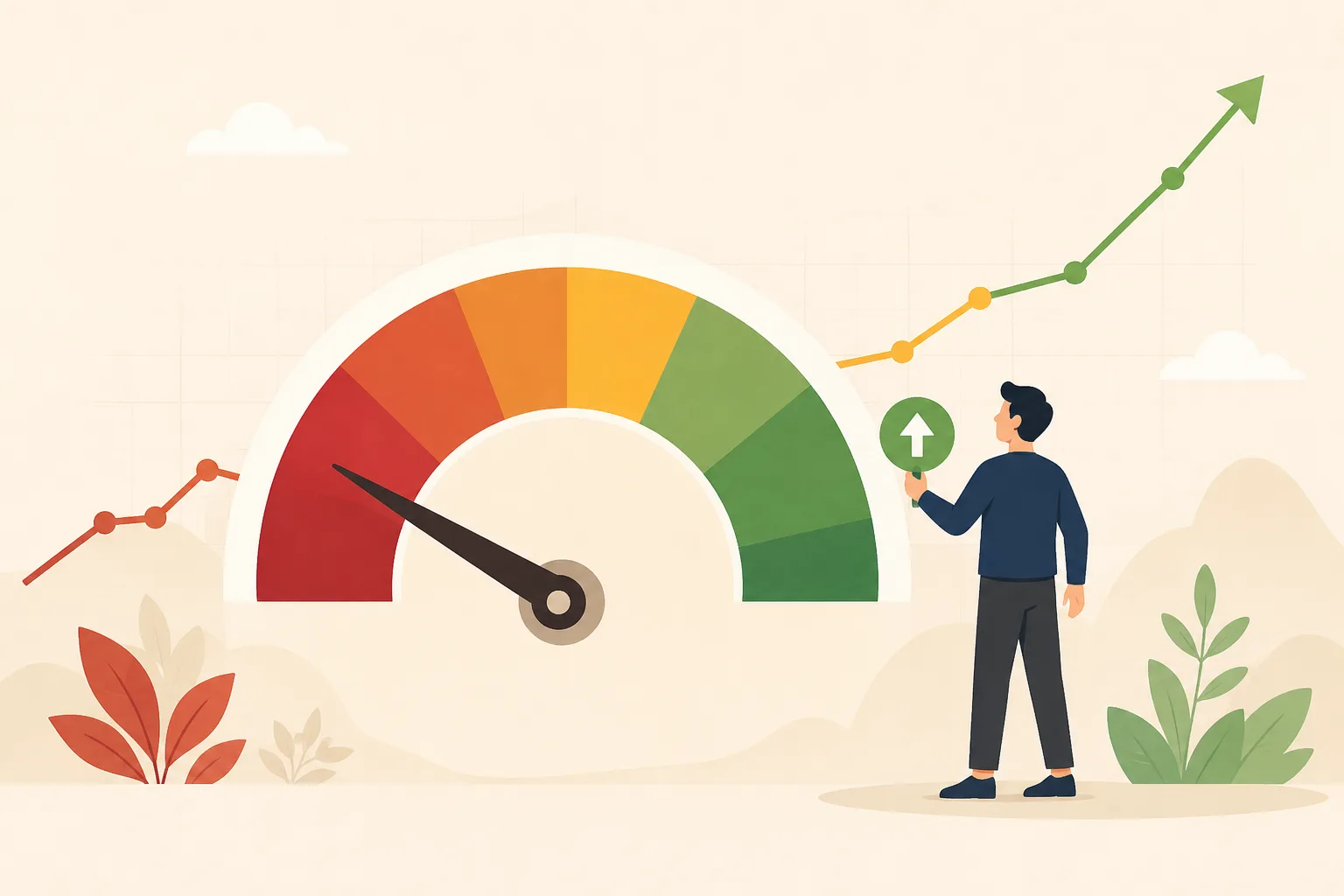
This is the first thing displayed on your report, a 3-digit number between 300 and 900, calculated from your Account Information and Enquiry Information sections.
Above 700 is generally considered good by most lenders. That said, this isn't a single universal cutoff, individual banks and NBFCs can set their own internal thresholds, so a score that clears one lender's bar might not clear another's.
One common myth worth correcting directly: NA or NH (No Activity/No History) is not a bad score. NA or NH can indicate that CIBIL does not have sufficient eligible credit information to generate a regular numerical score. It isn't automatically a negative mark. This is normal for anyone new to credit, it isn't a mark against you.

Personal and Contact Information Sections
These two sections work together, both are identity-verification sections lenders use to confirm you're actually you.
Personal Information covers your name, date of birth, gender and identification details such as PAN, passport or voter ID, where reported. Reported by lenders, PAN, and sometimes passport, voter ID, or driving licence, depending on what was shared when each account was opened.
Contact Information covers your addresses, permanent and current, phone numbers, email, and historical addresses going back multiple entries as lenders have reported them over time.
Accuracy here matters more than it might seem. Incorrect identity or contact information can create problems during verification, so it's worth checking these fields carefully. This is also the fastest section to check for errors, and often the easiest to get corrected, since the fix is usually a straightforward data update rather than a disputed payment record.

Freed Expert Tip
Check the Personal and Contact Information sections first, they're the fastest errors to spot and the easiest to get corrected. If anything looks off, FREED can help you understand what's worth disputing.
Talk to FREED FreeEmployment Information Section
This section contains employment, occupation and income information reported by lenders.
Worth knowing: this section isn't updated in real time. It reflects whatever was shared at account opening, so it can look outdated if your income or job has changed since. If you switched jobs two years ago, this section might still show your old employer, and that's expected, not an error to chase.
Employment information is primarily part of the report that lenders can review; CIBIL identifies payment history, utilisation, age of credit and enquiries as key score factors. It's mostly a snapshot for lender reference, not a driver of your number.
Account Information Section, The Most Detailed Part
This is the largest section on your report, and it deserves the most attention.
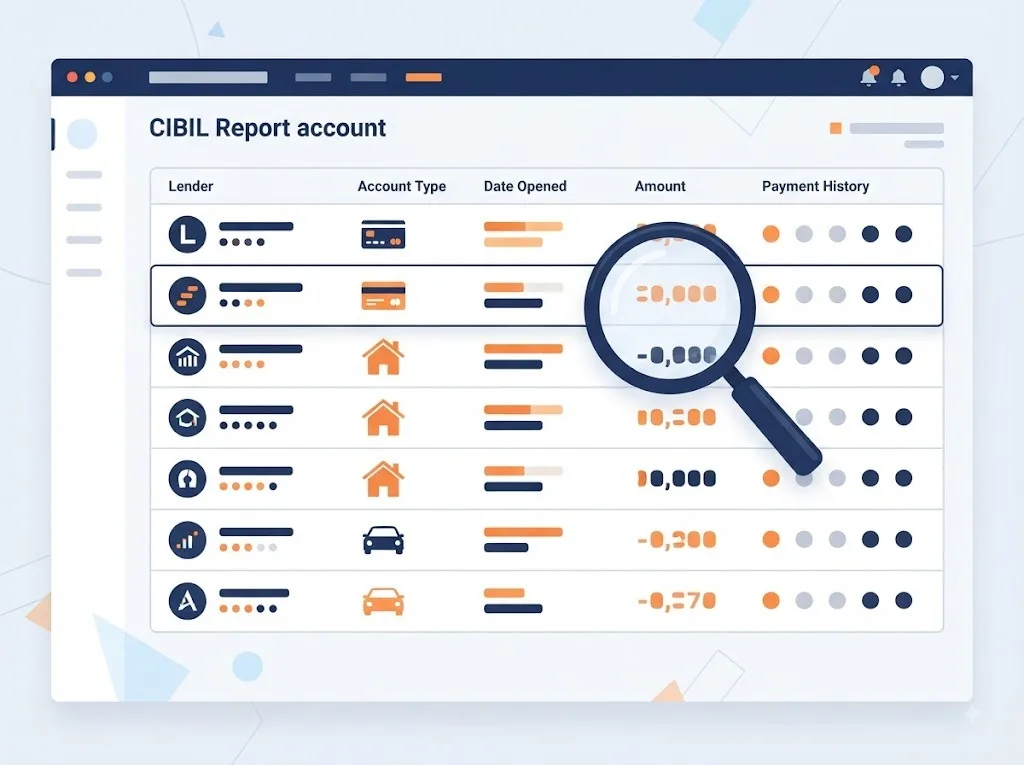
The account section can include both active and closed credit accounts., This section lists the lender name, type of credit facility, account number, ownership type, date opened, date of last payment, loan amount, outstanding balance, and up to 36 months of payment history.
The most important column here is DPD, Days Past Due, how many days a payment was overdue that month. Here's what the values mean:
- 000 or STD - 000 means no days past due for that reporting period. STD means Standard Account Status. Both are generally positive indicators.
- Any other number (30, 60, 90, and so on) - a payment was late by that many days, a negative mark.
- XXX - no payment data was received for that month, not necessarily a problem, just a reporting gap.
One thing worth knowing before this feels alarming: A late payment can negatively affect your credit profile, but its impact should be viewed in the context of your broader repayment history. Recent and historical payment behaviour both form part of your credit history, so it's important to maintain consistent repayments over time. It's the pattern over time that matters more than any single month. For a full breakdown of how DPD is calculated and what each range actually signals, see FREED's dedicated guide on DPD.
Account status codes like STD, SUB, and LSS also show up here, they tell lenders how a loan was ultimately classified, see what a SUB status specifically means if you spot one on your own report.
Enquiry Information Section
This section records credit enquiries made by lenders, including the lender, enquiry date and type of credit for which the report was accessed.
Checking your own CIBIL Score and Report does not lower your CIBIL Score , no matter how often you check. Multiple credit enquiries in a short period can affect your CIBIL Score, particularly when they reflect repeated applications for credit.
This isn't something to be alarmed about if you've applied for one or two things recently, it's a normal, proportionate factor, not a red flag on its own. It becomes more relevant only when enquiries pile up close together.
What to Do if You Spot an Error in Any Section
Most disputes can be raised directly on the CIBIL website against the specific section and entry in question, the same process covered in detail in FREED's guide to downloading your report and checking it section by section.
Errors are more common than most people assume, so it's worth actually reading through each section rather than skimming straight to the score.
FREED helps borrowers understand what's showing on their report and flag what's genuinely worth disputing, without promising a specific outcome or timeline, since that depends on CIBIL's own resolution process.

What the Law Says
RBI's framework provides a 30-calendar-day timeline for resolution of complaints relating to delayed updation or rectification of credit information. Where the prescribed timeline is exceeded, compensation may apply under the RBI framework.
Talk to FREED About What You FoundSources
Claim in Blog | Source |
|---|---|
Credit information is updated on a fortnightly reporting cycle | RBI/2024-25/60, DoR.FIN.REC.No.32/20.16.056/2024-25, Aug 8, 2024, effective Jan 1, 2025 rbi.org.in link |
Bureaus/lenders have a 30-calendar-day combined window to resolve complaints on delayed or incorrect credit information, with compensation for delays beyond that | RBI Notification RBI/2023-24/72, DoR.FIN.REC.48/20.16.003/2023-24, Oct 26, 2023 rbi.org.in link |

Mohit Juneja
Mohit Juneja writes educational content at FREED on debt management, credit scores, loan repayment, and borrowing best practices. His content is shaped by expert insights and industry knowledge, helping readers better understand their financial options and make informed decisions.
mohit.juneja@freed.care

FREED is India's trusted loan management platform. Founded in 2020 and headquartered in Gurugram, FREED has counselled 20 lakh+ people on personal loans, credit cards, and app loans. FREED charges fees only on successful settlement, not upfront. FREED does not handle secured loans (home loans, car loans, gold loans).
Media Mentions