Personal Loan Settlement: Meaning, Eligibility and CIBIL Impact
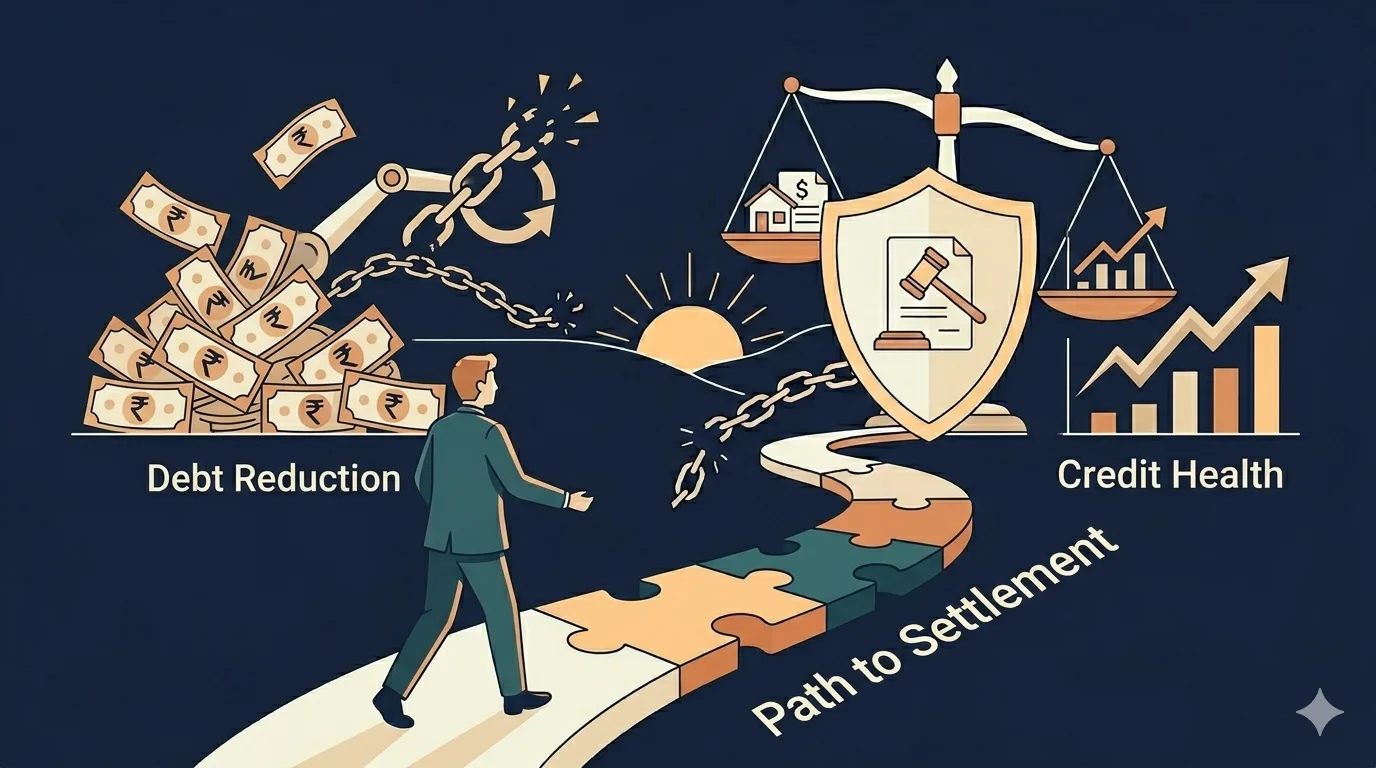
Personal loan settlement is when your bank accepts a lower one-time amount as the final payment on your loan. The loan is unsecured (no property or gold as security). The bank marks the account “Settled”, not “Closed”. Banks and other regulated lenders may consider settlement when a borrower faces serious repayment difficulties. Approval and terms depend on the lender’s policy and assessment of the account.

Mohit Juneja
Reviewed by FREED India, Debt Resolution Specialists
 4.7/5
 ₹3,200Cr+
 20,000+
 20,00,000+4.7/5₹3,200Cr+20,000+20,00,000+
KEY TAKEAWAYS

Personal loan settlement means paying your bank a lower one-time amount as the full and final payment.
It is meant for people who genuinely cannot repay in full, not for those who can still pay EMIs.
The account shows “Settled” on your credit report, not “Closed”, and the mark can stay up to 7 years.
FREED helps eligible people settle unsecured loans at up to 50%* less. Final terms are the bank’s decision.
Still paying EMIs but stretched? Debt consolidation may fit better and does not damage your score.
What Is Personal Loan Settlement?
Settlement is not something a borrower chooses out of preference. Banks and financial companies only consider it when repayment has become genuinely impossible and you cannot pay the full amount.
In a personal loan settlement, you pay less than the full outstanding amount. The bank accepts that smaller amount as full and final. The loan is then marked “Settled” in the bank’s records and on your credit report.
Three things are worth knowing before anything else:
What gets waived first. Banks usually waive penal charges (extra fees added for late payment) first. Then comes part of the unpaid interest. The principal (the amount you actually borrowed) is cut only in severe cases.
It is a negotiated deal, not a right. You can ask for a settlement. The bank decides whether to offer one and on what terms.
Banks look at it only when repayment has become genuinely impossible. If you can still pay your EMIs, the bank will almost always ask you to keep paying.
People also call this a personal loan one time settlement, or OTS (one-time settlement, paying it once and the matter ends). Our guide to one-time settlement explains who qualifies and how the process runs. Every bank also follows its own written policy for these cases, which RBI requires it to have. The bank loan settlement rules guide explains what that means for you.
For illustration only, if a lender agreed to accept ₹2,00,000 against an outstanding balance of ₹4,00,000, the borrower would pay ₹2,00,000 less than the stated balance. This is a hypothetical example, not a typical or guaranteed settlement offer. Actual terms depend on the lender’s decision.
*Rates and ranges shown are indicative. Final terms decided by the bank. FREED is not a Loan Provider. No outcome is guaranteed. Please verify directly with your bank.
The next section looks at how someone who paid on time for years ends up here.

Can’t repay your personal loan in full?
Talk to a FREED counsellor about your options.
Book My Free CallWhy Do Borrowers End Up Needing a Personal Loan Settlement?
Month 4 after the job loss. The salary has stopped, and two EMIs fall due on the same date. You pay one and miss the other. The next month, you miss both.
That is how it usually starts. People who never missed a payment in their lives end up here, and the cause is almost always outside their control:
Job loss. The salary stops for months, but EMIs on two or three loans keep falling due on the same dates.
Medical emergency. A hospital bill eats the money set aside for EMIs, and insurance may pay only part of it.
A salary cut that lasts longer than planned. A cut meant for 3 months turns into 12, and the budget never catches up.
Business income drying up. Self-employed people feel this first, because income stops the same week orders do.
Then the outstanding amount starts to grow. Missed EMIs attract penal charges. Each missed EMI is also reported as DPD (Days Past Due, meaning how many days a payment is late), and your score drops again every month. Our guide on what to do when a loan becomes overdue covers the early steps.
One rule helps here. An RBI circular dated 18 August 2023 says penal charges must be reasonable and cannot be capitalised. That means no further interest is computed on them. Charges differ from bank to bank, so check the penal charge clause in your own loan agreement.
None of this is a character flaw. It is an outside shock landing on a budget that had no room left.
Who Is Personal Loan Settlement For?
Settlement is for people who cannot repay in full and see no realistic recovery in the near term. That is also the plain answer to who is eligible for personal loan settlement. The final call always belongs to the bank.
Settlement may fit if:
You have missed several EMIs in a row. A few months of silence is the usual starting point.
Your account is heading to NPA, or is already there. NPA (a loan the bank marks as bad, usually after 90 days of missed EMI) is explained in our guide to an NPA account.
Recovery calls have started. The bank has moved your account from reminders to collections.
The outstanding is now bigger than the original loan. Penal charges and interest have kept adding up.
You cannot see full EMIs resuming in the next few months. There is no job offer, no income restart and no help from family.
Settlement is probably not your move if:
You pay every EMI on time but feel stretched. Debt consolidation fits you better. The options section below explains it.
You missed only 1 or 2 EMIs because of a short cash gap. Ask the bank for a short payment pause first.
Your loan is secured. Home, car, gold and education loans are outside FREED’s work. The FREED Loan Settlement Plan covers unsecured loans only.
If recovery calls turn abusive or threatening, or an agent visits without following protocol, FREED Shield is open to anyone, enrolled or not, to document and report it.
To see what usually follows a long stretch of missed EMIs, read what happens if you default on a loan. Once you know where you stand, the next question is how settlement actually works.
Not sure settlement is your only option?
A FREED counsellor can look at your loans with you.
Check My OptionsHow Does Personal Loan Settlement Work?
This is the short version. Our full step-by-step guide covers every document and call.
Add up what you owe. Write down the principal, the interest and the penal charges separately. That gives you a clear starting number.
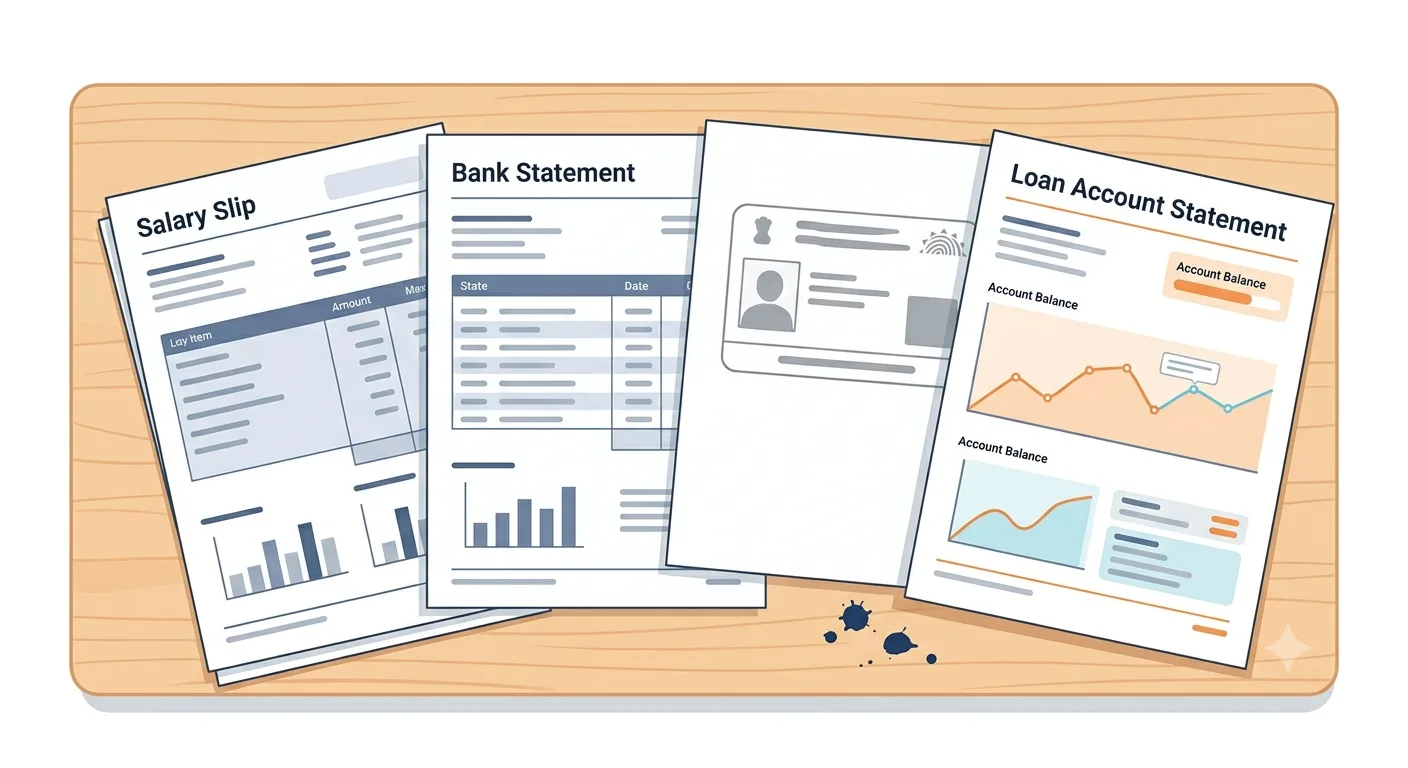
Collect proof of your difficulty. Salary slips, a job-loss letter, medical bills and bank statements. Banks ask for these before they look at any offer.
Write to the bank’s collections team. State your situation and the lump sum you can actually pay. Keep a copy of every message you send.
Negotiate and get terms in writing. Never pay on a verbal promise from a caller. Only the written offer counts. Our guide on how to negotiate a personal loan settlement shows how the conversation usually goes.
Pay, then collect the settlement letter and NOC (clearance letter). Check your credit report a few weeks later for the update. A FREED counsellor can handle these steps with you.
Under RBI’s framework, a compromise settlement where payment of the agreed settlement amount takes more than three months is treated as restructuring. Discuss the repayment schedule with your lender and make sure you can meet the agreed terms.
RBI also asks banks to wait a cooling period after a settlement before giving the same person fresh credit. The length is set by each bank’s policy.
Banks differ in the small details. See the guides for HDFC, ICICI and Axis Bank personal loan settlement.
How Does Personal Loan Settlement Affect Your CIBIL Score?
Yes, it hurts. Here is by how much and for how long.
Start with the words themselves. Closed means you paid the loan in full. Settled means the bank accepted less than you owed. In settled vs closed, that gap is what future banks notice first.
The credit report also carries an “Amount Written Off” field. It shows the waived portion to any bank that checks your report later. Our guide to what “written off” means in CIBIL explains the field in detail.
Banks read these three labels very differently:
Status | What it means | What future banks see | Typical score effect |
Closed (paid in full) | You repaid the full amount | A fully paid account | Commonly reported as the mildest outcome |
Settled (bank accepted less) | The bank took a lower amount as full and final | A “Settled” status and the Amount Written Off | Commonly reported drop of 75 to 100 points |
Written Off (bank removed it from its books as a loss, you still owe it) | The bank gave up the amount in its books, but the debt remains | A “Written Off” status with the balance still shown | Commonly reported as the heaviest effect |
Rates and ranges shown are indicative. Final terms decided by the bank. FREED is not a Loan Provider. No outcome is guaranteed. Please verify directly with your bank.
On personal loan settlement and CIBIL score together: many people report a drop of 75 to 100 points. Treat that as a rough guide, not a rule. Your starting score, your other accounts and your payment history all change the number. The Settled mark can stay on your report for up to 7 years. See how settlement affects your credit score and how banks view settled accounts.
Here is the part many guides skip. If you keep missing EMIs, your score also falls every month through DPD marks. Settlement stops that ongoing damage and gives the loan an end date.
Rebuilding is something you do yourself after settlement. Check your report, keep your other accounts current, and use Credit Insights to see what drives your score and the steps to improve it. Credit Insights runs on Experian, so it shows your Experian report. For what comes next, read about loans after settlement and how to apply for a loan after a settlement.

Freed Expert Tip
If your EMIs take more than 50% of your take-home pay, review your options early. Talk to a FREED counsellor.
Talk to a FREED counsellorWhat Are Your Options Before Choosing Personal Loan Settlement?
Settlement sits at the end of a ladder. Work through the steps in this order:
Ask your bank for a lower EMI or more repayment time. You can also ask for a short payment pause (moratorium, a temporary pause). Our guides on how to reduce personal loan EMI legally and RBI’s rules on loan restructuring show what you can ask for.
Try a balance transfer (moving your loan to another bank). This works for people with a healthy score, because the new bank checks it first. Read more on personal loan balance transfer.
Look at debt consolidation (merging all your loans into one lower EMI). If you qualify and a lending partner approves the application, the consolidation arrangement may help combine eligible unsecured debts into a single repayment structure. The debts covered, disbursement process, EMI and other terms depend on the approved offer.
Settlement comes last. It is only for people who genuinely cannot pay.
Consolidation does not damage your CIBIL score, and the score starts to improve. The FREED Loan Consolidation Plan costs you nothing and needs a CIBIL score of 700 or above. For a deeper comparison, see personal loan vs debt consolidation and credit counselling vs debt settlement.
Option | Best for | Effect on your score |
Lower EMI or payment pause | A short cash gap, still paying | Depends on how your bank reports it |
Balance transfer | A healthy score, one loan | Depends on the new bank’s check |
Debt consolidation | Still paying, many loans | Does not damage the score, and it starts to improve |
Settlement | Cannot repay in full | “Settled” mark for up to 7 years |
Have you already missed EMIs? You are not ruled out of steps 1 to 3. A counsellor can tell you which one fits your case.
How Does FREED Help With Personal Loan Settlement?
The FREED Loan Settlement Plan, also called the Debt Resolution Program or “Settle My Loans” in the app, covers unsecured loans only. FREED describes it this way: “Helps borrowers move from financial distress to a structured path toward resolving their debt and rebuilding their financial future.”
Here is how the Loan Settlement Plan runs in plain steps:
FREED looks at your full financial picture. That means your loans, income, expenses and what you can repay.
You get a personalised plan. It is built around your numbers, not a template.
You save a fixed monthly amount into a Special Purpose Account (SPA). The SPA sits with an independent trusteeship company and is your own savings pool.
FREED negotiates with the bank once enough savings build. The savings come first, and talks start after.
The bank decides the terms, and you accept or decline. Nothing is paid without your say.
On acceptance, the payment is made and the bank issues a settlement letter.
This takes time. The first part is building savings, and that cannot be rushed. The order in which your loans are settled is flexible and follows your priority. FREED charges a fee only on a successful settlement.
Banks may waive up to 50%* of what you owe. Whatever the bank agrees to, the final terms are the bank’s call.
*Rates and ranges shown are indicative. Final terms decided by the bank. FREED is not a Loan Provider. No outcome is guaranteed. Please verify directly with your bank.
Before you sign with any agency, read how to evaluate a loan settlement agency.
33,000+ accounts settled | 20,00,000+ customers counselled | ₹3,500 Cr+ debt managed
What Helps During and After a Personal Loan Settlement?
A few habits make the whole process smoother:
Keep your documents ready. Salary slips, bank statements and every message from the bank should sit in one folder.
Talk to the bank in writing. A written message leaves a record you can show later.
Agree only to an amount you can pay in one go. A promise you cannot keep makes the next conversation harder.
Get the settlement letter before you pay anything. The letter should state the amount and say it is full and final.
Check your credit report a few weeks later. Look for the “Settled” update and the Amount Written Off field. The update usually takes a few weeks.
After a settlement, the calls usually slow down. Our guide on calls after a loan is settled explains what to do if they continue.
Build a small emergency fund too. Even a few thousand rupees a month helps, and our guide on why an emergency fund matters shows how to start.
Before taking any new loan, check what you can afford. The EMI Score rates affordability from 0 to 100 using your income, savings and existing EMIs. For a longer plan, see how to build your credit score.
Your next step: put your last 6 months of bank statements and every bank message into one folder today.
Sources
Claim in the blog | Source |
A negotiated settlement is a valid resolution for a stressed loan (NBFCs) | |
A negotiated settlement is a valid resolution for a stressed loan (banks) | RBI Commercial Banks Resolution of Stressed Assets Directions, 2025 |
Penal charges must be reasonable and cannot be capitalised | |
A term loan becomes NPA when overdue for more than 90 days | |
A settlement paid over more than 3 months is treated as restructuring | |
Banks must observe a cooling period before fresh exposure after a settlement |

Mohit Juneja
Mohit Juneja is FREED’s Content & Communication Lead with 12+ years of experience across content, media, advertising and digital communications. He holds a postgraduate diploma in Communications from Xavier Institute of Communications, Mumbai, and has worked with organisations including NDTV, The Indian Express, McCann Worldgroup and NABARD.
At FREED, he leads content and communication across loan management, debt resolution, debt consolidation and financial well-being. His work combines research, storytelling and consumer-focused communication to make complex financial topics easier to understand and act on. He has also scripted and produced 11 documentaries on rural development and agriculture for NABARD, with film's selected for the Mumbai International Film Festival.
mohit.juneja@freed.care

FREED is India's trusted loan management platform. Founded in 2020 and headquartered in Gurugram, FREED has counselled 20 lakh+ people on personal loans, credit cards, and app loans. FREED charges fees only on successful settlement, not upfront. FREED does not handle secured loans (home loans, car loans, gold loans).
Media Mentions