P2P Loans in India: How They Work and Is It Safe to Borrow?
P2P loans are personal loans where an online platform matches you with individual lenders instead of a bank. In India, only platforms registered with the RBI as NBFC-P2P can run this. The platform arranges the loan and moves money through an escrow account (a neutral holding account). It never lends its own money.
Mohit Juneja
Reviewed by FREED India, Debt Resolution Specialists
 4.7/5
 ₹3,200Cr+
 20,000+
 20,00,000+4.7/5₹3,200Cr+20,000+20,00,000+
Key Summary

P2P loans in India are legal, but only through RBI-registered NBFC-P2P platforms.
You can borrow up to ₹10,00,000 in total across all P2P platforms.
Repayment time is 36 months at most, and only unsecured loans are allowed.
Missed EMIs are reported to credit bureaus like any other loan.
Regulation cuts platform risk. It does not make a P2P loan cheaper or lighter to repay.
What Are P2P Loans and How Do They Work in India?
P2P loans are personal loans where an online platform matches you with individual lenders instead of a bank. In India, only platforms registered with the RBI as NBFC-P2P can run this. The platform arranges the loan and moves money through an escrow account (a neutral holding account). It never lends its own money.
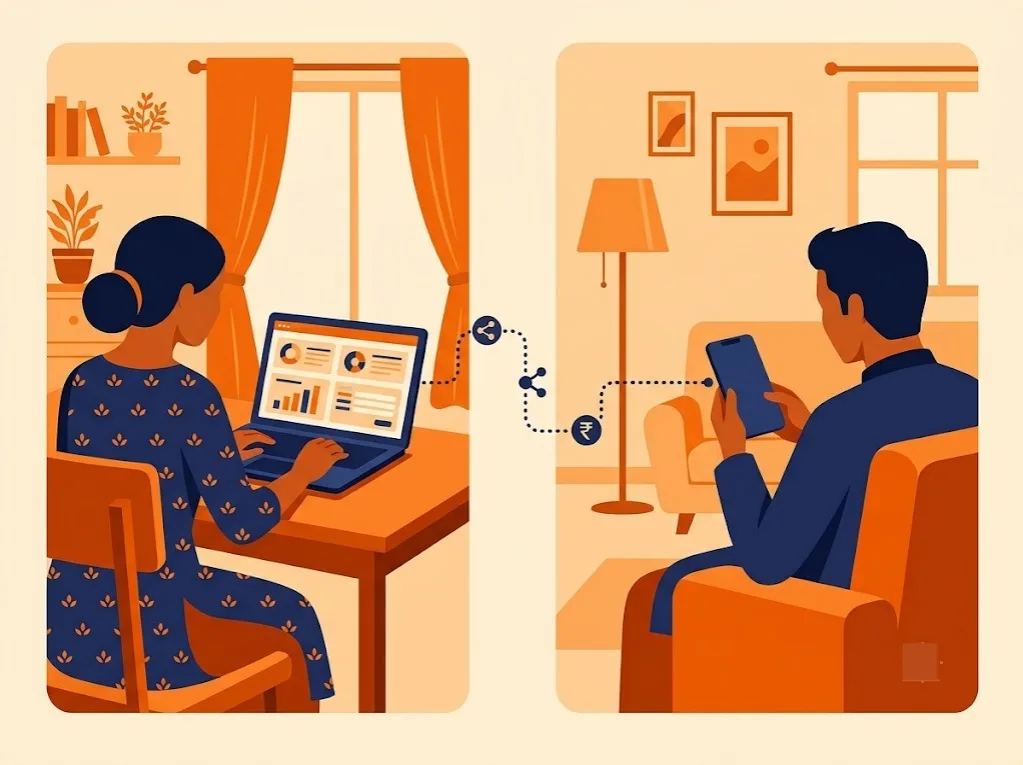
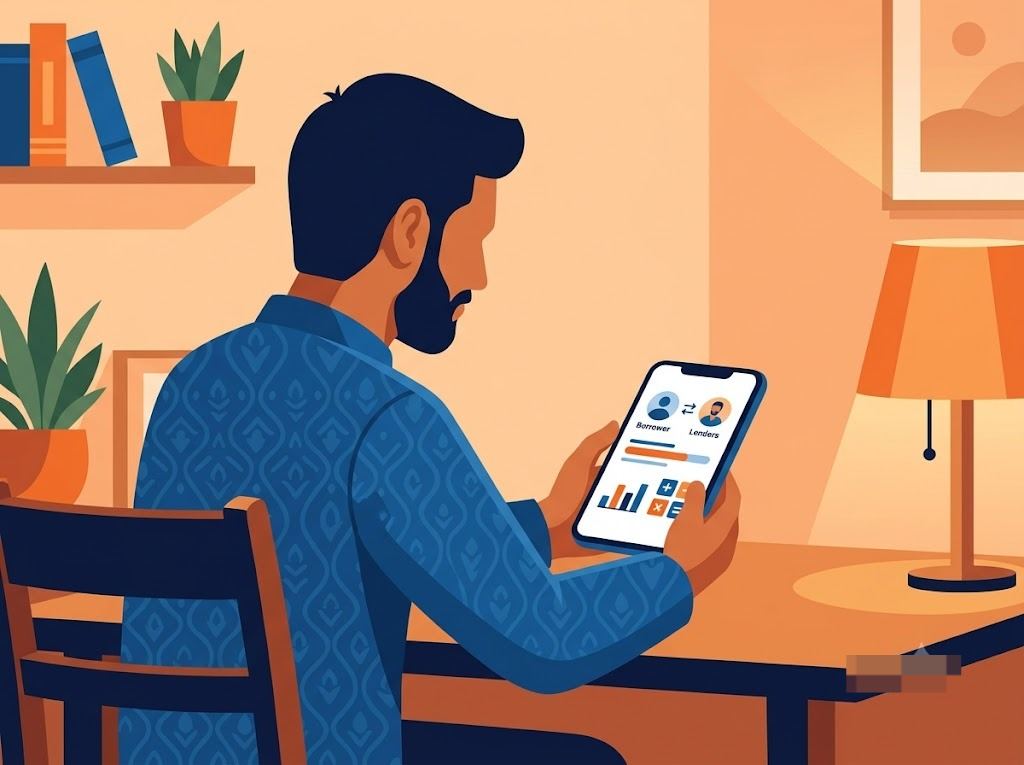
A P2P loan comes from individual lenders, not a bank, and an online platform sits in the middle. Three players are involved:
You, the borrower. You apply and repay.
Individual lenders. They put in their own money and choose whom to fund.
The NBFC-P2P platform. A registered non-bank loan company (NBFC) that connects the two sides.
What does the platform do? It checks the people on both sides, assesses your credit and shares that assessment with the lenders, writes the loan documents, helps with disbursal and repayment, and handles recovery services. What can it not do? It cannot lend its own money, guarantee your loan, or hold your money on its own books.
For you as a borrower, this has two meanings. First, the lenders carry the loss if a loan is not repaid, so they decide whom to fund. NBFC-P2P platforms facilitate lending between borrowers and individual lenders while following applicable disclosure and privacy requirements. Borrowers should receive the relevant loan terms, including the lender-related information required under RBI regulations and the loan agreement. Personal information must be handled according to applicable privacy and data-protection requirements.
Here is how the limits work in practice. Suppose you need ₹1,00,000. One lender can put in at most ₹50,000 to the same borrower across all platforms. So you need at least two lenders. (On the other side, a lender can lend ₹50 lakh in total across platforms, but this guide stays on the borrower’s side.)
The same rules cap your total borrowing at ₹10,00,000 across all P2P platforms, and the repayment time at 36 months. The loan must be unsecured, which means no home, car, or gold is pledged. A platform must also hold at least ₹2 crore as net owned funds to get registered.
So why do people go this route at all? The next section answers that.
Why Do People Turn to P2P Loans When Banks Say No?
A bank said no. The need is still real. And a P2P app showed up in the search.
It happens often. These are the common triggers:
A thin credit file, with few or no past loans
Irregular income, such as freelance or gig work
An urgent need with no time for bank paperwork
None of these makes you careless. They make you someone whose situation does not fit a bank’s form. Banks often decline for reasons that say little about how hard you work.
Here is the honest part. A P2P platform runs its own credit assessment, so its approval rules differ from a bank’s. That does not change what you can afford to repay each month. If your EMIs already take more than 50% of your take-home pay, any new loan adds strain, whoever lends the money. The same goes for loan apps in general.
A platform that approves you quickly has not made the loan lighter. It has only said yes. The monthly amount, the repayment time, and the total you pay back still sit on your side of the table, and they stay there for as long as the loan runs.
So the useful question is not “will they approve me?” It is “can my monthly budget carry this?” The next section looks at that, starting with safety.

Expert Tip
Add up all your EMIs first. If they already take more than 50% of your take-home pay, wait before borrowing again.
Check My EMI ScoreIs a P2P Loan Safe to Borrow in India?
Borrowing through an RBI-registered NBFC-P2P platform offers regulatory safeguards, including identity verification, disclosure requirements and regulated fund transfers. However, registration does not guarantee loan approval, protect borrowers against fraud or ensure affordable interest rates. Borrowers should verify the platform’s registration, understand all charges and assess their repayment capacity before accepting a loan. Those are two different things.
What RBI rules cover
Registration with RBI is mandatory. A platform cannot run without a Certificate of Registration.
Money moves through escrow accounts run by a bank-promoted trustee. Cash is not allowed.
Funds cannot sit in escrow for more than one working day.
Fees must be shown upfront, as a fixed amount or a fixed share of the loan. They cannot depend on whether you repay.
Rates must be shown as APR (annual percentage rate, the yearly cost of the loan).
The platform must show its registered name and the RBI caveat on every screen.
Recovery staff cannot harass you at odd hours or use coercion.
Complaints must be resolved within one month. After that, you can appeal to the RBI.
The platform needs a plan to keep servicing your loan if it shuts down.
What the rules do not cover
The platform and lenders set your price. The rules require APR to be displayed. They do not promise a low rate.
You still repay in full.
Missed EMIs go to credit bureaus, like any other loan.
RBI itself says it gives no assurance of repayment of loans on the platform.
One more honest line. A P2P loan used to pay another EMI usually makes things heavier, not lighter. For the wider problem of unregistered apps, read about illegal loan apps. You can also see our sibling guide on the P2P loan app.

Check Your EMI Load Before Adding Another Loan
See how much of your take-home pay EMIs already take.
Check My EMI ScoreHow to Check If a P2P Platform Is Legitimate
You can run every one of these checks yourself, with the app open.
The company name matches its RBI registration. Search the exact registered company name in RBI’s list of registered NBFCs. If it is not there, stop.
The registered name shows on every screen, with the RBI caveat. A legitimate platform must display both.
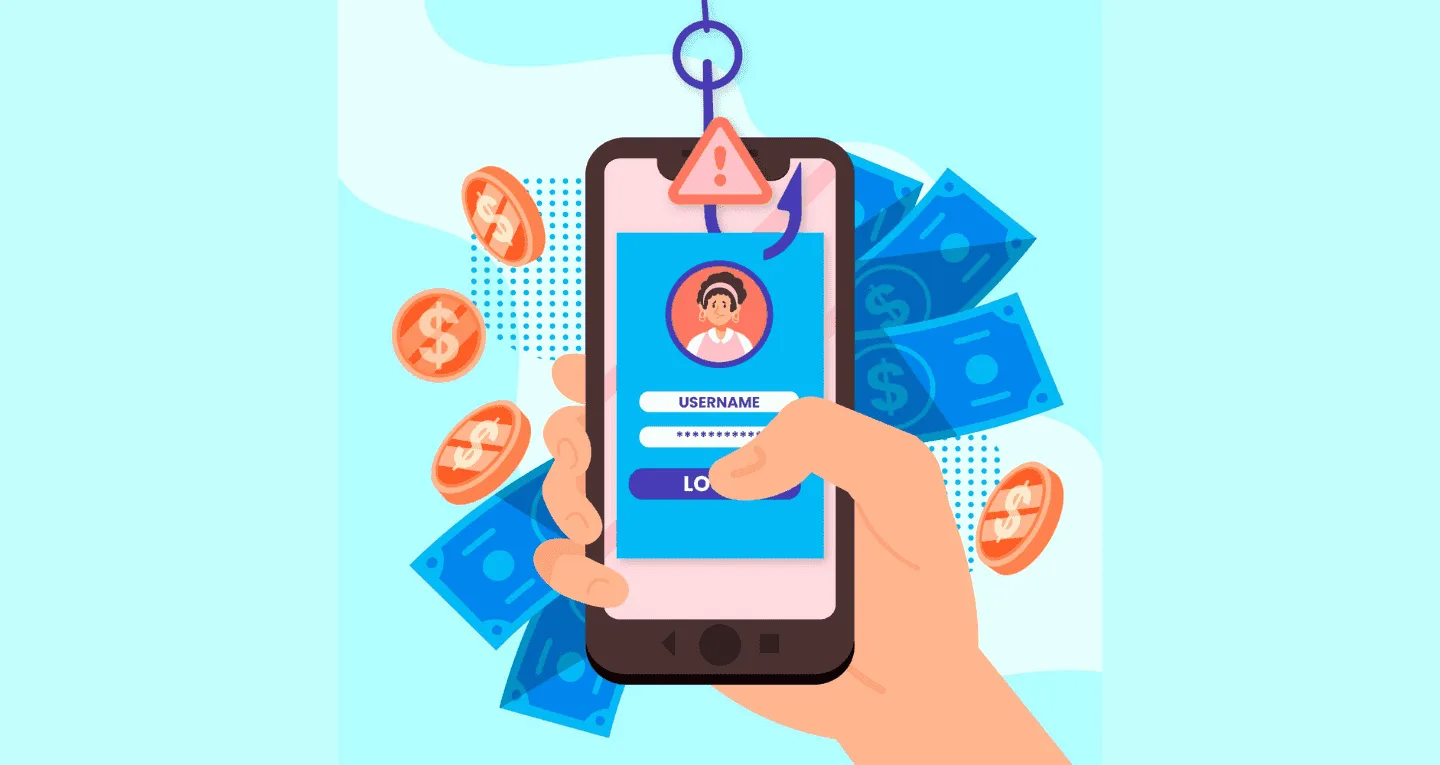
Money moves bank to bank only. If anyone asks you to pay a person’s UPI ID or a wallet, that is a stop sign. The rules require escrow and ban cash.
APR and fees show before you sign. If they appear only after, ask why.
The agreement lists the terms between you, the lender, and the platform. Save a copy.
Why does each check matter? The name check tells you the platform answers to the RBI at all. The caveat check shows the platform is following its display rules. The bank-to-bank check is your best protection against fake apps, because scams usually ask for money to a personal account. The APR and agreement checks stop surprise charges.
RBI’s list is a file you search by the exact registered company name. There is no confirmed P2P-only filter, so the name is your key. Spell it exactly as shown on the app’s legal page.
Stop and walk away if:
the app asks you to pay a fee to a personal account before release
it offers guaranteed approval
it pushes cash or wallet payment
it cannot show an RBI registration
For what to do if an app has already caught you, read the fake loan app complaint guide and how APR is worked out.

What the Law Says
Money between you and lenders must move bank to bank through escrow accounts run by a bank-promoted trustee. Cash is not allowed.
Know What to Do If a Platform Breaks the RulesWhen Should You Think Twice Before Taking a P2P Loan?
Six signs say pause. Each one is about your budget, not about you.
EMIs already above 50% of take-home pay. That is FREED’s own guideline. Past it, one bad month can tip you over.
The loan is meant to cover another EMI or a card minimum. It moves the problem to a new due date.
Your income may not hold steady for the full repayment time. The loan can run up to 36 months.
One or more EMIs are already missed. A new loan on top of a missed one rarely helps.
You are applying on several apps at once. Each application can leave an enquiry on your report. Read about a hard enquiry.
The app is pressing you to decide the same day. Pressure is a reason to wait.
Two quick examples show how the maths works. Take ₹50,000 take-home with ₹20,000 of existing EMIs. That is 40%. A new P2P EMI of ₹6,000 makes it ₹26,000, which is 52% and crosses the 50% line.
Second: ₹60,000 over 36 months is about ₹1,667 of principal a month before interest. Check that number against your budget first. To see where you stand, read how much of your salary goes to EMIs and use the EMI Score. You can pull a free credit report from Experian through FREED and see each factor banks look at.
If you have already missed EMIs, talk to the FREED team before taking any new loan.
How to Get a P2P Loan Step by Step
The order is the same on most platforms.
Add up your monthly EMIs. Divide the total by your take-home pay. If it is above 50%, pause. The EMI Score tool does this maths.
Confirm the platform’s RBI registration. Search its registered company name in RBI’s list, so you know the rules above apply.
Compare the APR and fees. Both must be shown before you sign. The platform cannot tie its fee to whether you repay.
Apply and complete KYC. KYC (Know Your Customer) is identity and address proof. The platform needs your clear consent before it checks your credit information.
Read the agreement and lender match. No loan is released until lenders approve you and everyone signs. Save a copy.
Receive the money in your bank account. It comes through escrow. Cash or wallet transfers are not allowed.
Repay from your bank account. Repayments move through the platform’s escrow accounts to the lender. Keep the payment proof.
A few notes on these steps. Step 1 comes before everything else because it is the only one that protects your own budget. Steps 2 and 3 protect you from the platform. Steps 4 to 6 are the paperwork. Step 7 is where the loan stays healthy or goes wrong.
Missed EMIs are reported to credit bureaus, so the repayment step is the one to protect. If an EMI bounces, check what it costs. You can also check active loans on your name before you add one. If something goes wrong, the platform must resolve your complaint within one month.
How Do P2P Loans Compare With Bank Loans and Loan Apps?
Factor | P2P Loan | Bank or NBFC Personal Loan | Unregistered Loan App |
|---|---|---|---|
Who lends | Individual lenders, through an NBFC-P2P | The bank or NBFC itself | Unclear |
RBI registration | Platform must hold a Certificate of Registration | Bank or NBFC is RBI-regulated | None |
How money moves | Bank-to-bank through escrow. No cash | Directly from the lender’s bank account | Often wallets, UPI IDs, or cash |
Maximum amount and repayment time | ₹10,00,000 total across platforms. 36 months. Unsecured only | Varies by product | No clear limits |
Where to complain | Platform’s grievance officer within one month, then RBI | Bank’s grievance route, then RBI | No clear route |
Recovery conduct | No harassment or coercion allowed | Bound by RBI recovery rules | No oversight |
Rates and ranges shown are indicative. Final terms decided by the platform or lender. FREED is not a Loan Provider. No outcome is guaranteed. Please verify directly with the platform.
What does this mean in practice? Once the money is in your account, a P2P loan weighs on your budget the same way a bank loan does. The difference is in who supervises the platform, not in how the EMI feels. For the basics of both types, read about secured and unsecured loans.
What Are Your Options If You Already Have Other EMIs?
Here is the honest line first. Using a P2P loan to pay another EMI usually adds a new due date and keeps the old pressure.
If you still pay on time but feel stretched, two options are worth knowing.
Option one: a personal loan balance transfer. One existing loan moves to a provider offering a lower rate. Only that loan changes. Read about a balance transfer.
Option two: debt consolidation. One new loan pays off several existing loans, so you carry one EMI and one due date. Think of four loans with four due dates becoming one. Debt consolidation may combine several eligible unsecured debts into a single loan with one EMI and repayment date, subject to lender approval. A lower monthly payment is possible, but it depends on the interest rate, repayment tenure, and applicable charges. Applying for a new loan may temporarily affect your credit score, while consistent on-time repayments may support long-term credit improvement. Read what debt consolidation is and whether you can combine all your loans into one.
What if neither fits? If a loan is already overdue, or your income has dropped and you cannot hold your current EMIs, a new loan of any kind may not be the answer. In that case, it is better to speak to someone before you apply anywhere. A new application on top of missed EMIs can add enquiries to your report without giving you a lower payment.
Neither option fits everyone. A balance transfer suits one expensive loan. Consolidation suits several loans that you can still repay. The next section shows how the consolidation process works.
Too Many EMIs on Different Dates?
See whether one consolidated EMI could fit your situation.
Start My Debt AssessmentHow FREED Helps If a P2P Loan Is Part of Several EMIs
FREED’s Loan Consolidation Plan (also called the Debt Consolidation Program or “Reduce My EMI”) is for people who can still repay but need a smarter way to manage their debt.
Here is how it works.
FREED looks at your profile.
FREED matches you to a lending partner from its network.
That partner gives one new loan, which pays off your existing loans. That can include a P2P loan where eligible, alongside other unsecured debts such as personal loans, cards, and BNPL (buy now, pay later) dues.
You are left with one lower EMI and one due date.
FREED gets the consolidation done for you. Final terms depend on the lending partner, and no outcome is guaranteed. FREED does not arrange P2P loans.
If you are unsure whether you qualify, FREED’s team can talk through your situation on a call and tell you what options are open. And if you have already missed EMIs, a call with the team is the better first step than a consolidation application. Read more about the Debt Consolidation Program.
Rates and ranges shown are indicative. Final terms decided by the platform or lender. FREED is not a Loan Provider. No outcome is guaranteed. Please verify directly with the platform.
Tips Before You Borrow From Any P2P Platform
Save the loan agreement, fee details, and repayment schedule. They are your record if a dispute starts. Keep a copy on your phone and one printed.
Borrow only what the EMI table says you can carry. Check the figure against your 50% line. A smaller loan with a shorter repayment time often feels heavier each month but costs less in total.
Apply on one platform at a time. That way, your report is not hit by a pile of enquiries.
Set your EMI date a few days after salary day. A date that sits before your pay lands is a bounce waiting to happen. Ask the platform whether the date can be changed.
Know your conduct rights. A platform cannot harass you at odd hours or use coercion to recover a loan. If it happens, keep call logs and dates. FREED Shield helps you report and document harassment. Read the recovery agent rules and what happens if you default.
Run through this list once before you apply, and again before you sign. A few minutes with it now is cheaper than months of chasing a problem later.
Sourcing and Verification
Claim | Source |
|---|---|
Platform needs an RBI Certificate of Registration (para 12), ₹2 crore net owned fund (para 13) | RBI P2P Directions 2025 |
Borrower cap ₹10,00,000 (para 27), ₹50,000 per lender (para 28), 36 months (para 29) | RBI P2P Directions 2025 |
Unsecured only, no credit guarantee by platform (para 22(4), 22(5)) | RBI P2P Directions 2025 |
Escrow via bank-promoted trustee, no cash, T+1 (paras 37, 38) | RBI P2P Directions 2025 |
Fees disclosed upfront and not tied to repayment (para 35), APR display (para 43) | RBI P2P Directions 2025 |
No harassment in recovery (para 47), grievance in one month then RBI (paras 51, 52) | RBI P2P Directions 2025 |
Credit information reporting (para 39) | RBI P2P Directions 2025 |
RBI list of registered NBFCs | RBI NBFC list |
RBI Integrated Ombudsman Scheme 2021 | RBI notification, Id=12192 |

Mohit Juneja
Mohit Juneja writes educational content at FREED on debt management, credit scores, loan repayment, and borrowing best practices. His content is shaped by expert insights and industry knowledge, helping readers better understand their financial options and make informed decisions.
mohit.juneja@freed.care

FREED is India's trusted loan management platform. Founded in 2020 and headquartered in Gurugram, FREED has counselled 20 lakh+ people on personal loans, credit cards, and app loans. FREED charges fees only on successful settlement, not upfront. FREED does not handle secured loans (home loans, car loans, gold loans).
Media Mentions