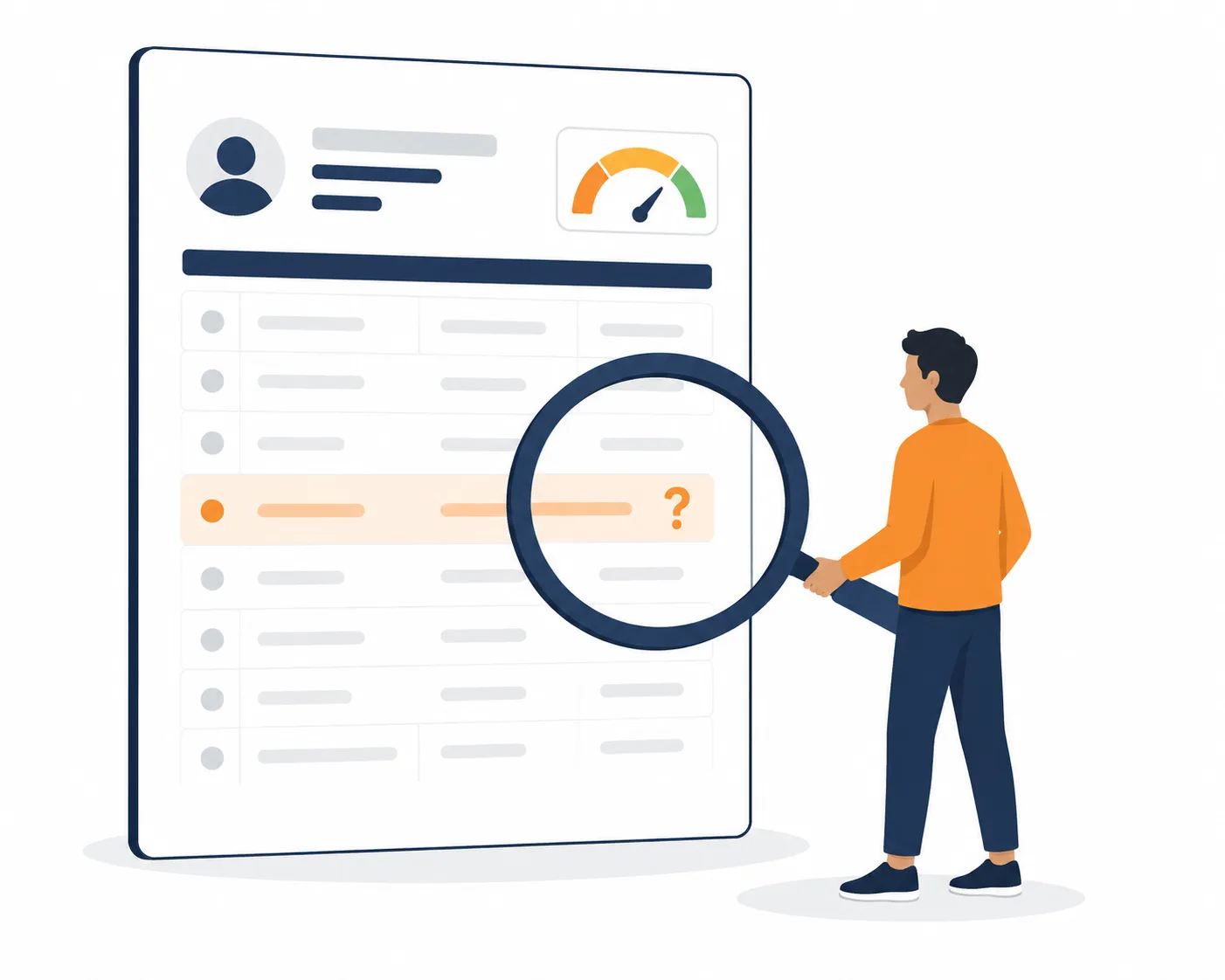
Low CIBIL Score Loan App: What You Must Know Before Applying
A low CIBIL score loan app is a digital lending platform that offers personal loans to borrowers with lower credit scores, depending on the lender's eligibility criteria. While they offer quick access to cash, many carry significantly higher interest rates and serious risks that borrowers must understand before applying.
Mohit Juneja
Reviewed by FREED India, Debt Resolution Specialists
 4.7/5
4.7/5 ₹3,200Cr+
 20,000+
 20,00,000+4.7/5₹3,200Cr+20,000+20,00,000+
Key Takeaways

Lower credit scores may reduce approval chances with many traditional lenders.
These apps typically charge interest rates between 18% and 48% per year, compared to 10–14% for standard bank personal loans.
Each missed EMI on a loan app can drop your CIBIL score by 50–70 points, making your next loan even harder to get.
RBI operationalised a public directory of verified Digital Lending Apps (DLAs) from 1 July 2025, which borrowers can use to check if an app is legitimate.
If you are already struggling to repay existing loans, taking another loan app loan almost always worsens the situation.
What Is a Low CIBIL Score Loan App, and How Does It Work?
CIBIL scores range from 300 to 900. Many lenders may prefer stronger credit profiles, although requirements vary. A score below 650 puts you outside what most scheduled commercial banks and established NBFCs (non-banking financial companies) will consider.
Low CIBIL score loan apps exist to serve this gap. They are usually backed by smaller NBFCs or act as aggregator platforms that connect borrowers to multiple registered lenders. Instead of relying on a CIBIL score as the primary signal, these apps use alternative data: salary credits in your bank account, your employment type and stability, the pattern of transactions in your bank statements, and sometimes your mobile usage data.
This does not mean they skip credit evaluation. It means they do it differently. "No CIBIL check" is a marketing phrase, not a fact. They are still assessing your ability to repay. They are just using different inputs.
These apps serve borrowers in the 300 to 650 score range. The lower your score, the smaller the loan amount they will typically approve and the higher the interest rate. The trade-off is real: fast access to cash in exchange for a significantly higher cost of borrowing and less consumer protection than a standard bank loan would offer.
Why Is Your CIBIL Score Low in the First Place?
A low CIBIL score is not a character flaw. It is the result of circumstances that many Indian borrowers face without much warning.
The most common reasons include:
- Several months of missed EMIs on a personal loan or two-wheeler loan, often because of a job loss or income disruption
- Credit card dues going unpaid for an extended period, causing interest to compound on top of the outstanding amount
- Multiple loan defaults across different financial companies simultaneously
- Being new to credit with no borrowing history, which makes lenders treat you as an unknown risk even if you have never actually defaulted
- A bounced EMI or cheque that went unreported and unresolved, leaving a negative mark that stayed on the report
Each missed EMI can lower a CIBIL score by 50 to 70 points, according to IIFL Capital data. Negative payment history stays visible on a credit report for several years. So a few bad months can create a low score that can continue to affect future lending decisions.
If any of this sounds familiar, you are not alone. And the answer is rarely to take another loan at a higher rate on top of an already difficult situation.

FREED Expert Tip
If a large share of your take-home salary is already committed to EMIs , adding a new loan app loan won't fix the problem. It will extend it. Talk to a debt counsellor before applying for anything new.
Talk to a FREED ExpertWhat Do These Apps Actually Look at If Not CIBIL?
Low CIBIL score loan apps use alternative assessment criteria to decide whether to approve a loan. Understanding what they check helps you know what matters in an application.
Salary credits and bank activity: The most common data point. Apps pull your bank statement (with your permission) and look at whether salary is credited regularly, whether there are gaps, and how much goes out on existing obligations each month.
Employment type and stability: A salaried borrower at a registered company looks different to an app than a daily wage worker or someone with irregular income, even at the same monthly credit amount. Stability signals lower risk.
Existing EMI load: If your bank statement shows multiple outgoing EMI debits, that affects how much more the app will lend, if anything.
Digital transaction history: Some apps use UPI or mobile transaction data. Consistent activity on a single number and account suggests stability.
In some cases, social or device data: This is where things get more concerning. Apps that promise "no CIBIL check, instant approval in 5 minutes" with no documentation and no NBFC registration are typically the highest-risk category. RBI data shows these apps often request unnecessary permissions to access contacts, photos, and location, which have nothing to do with creditworthiness and everything to do with coercive recovery tactics.
The presence of an alternative assessment method is not a problem. The absence of any documentation requirement usually is.

Already Struggling to Repay Your Current Loans?
Talking to a debt counsellor costs nothing. A few minutes can tell you if you're heading toward a debt trap.
Talk to FREED's TeamWhat Are the Real Risks of Using a Low CIBIL Score Loan App?
This is the section most people skip. It is also the most important one.
- 1
High interest rates
Legitimate low CIBIL loan apps charge 18% to 48% per year. Compare that to 10–14% for a standard bank personal loan. On a ₹1,00,000 loan over 12 months, that difference adds thousands to what you repay.
- 2
The debt trap cycle
A borrower who takes a loan app loan to repay another loan is not solving the problem. They are pushing it forward at a higher cost. Each new loan adds a new EMI. Each missed EMI drops the CIBIL score further. The next loan gets more expensive. This cycle is how financial distress compounds.
- 3
Compounding CIBIL damage
Each missed EMI on a loan app can drop your score by 50 to 70 points. If you already have a low score and miss payments on an app loan, future credit access becomes even harder. The short-term cash becomes a long-term credit problem.
- 4
Illegal and unregistered apps
RBI has banned hundreds of illegal lending apps in the past few years. These apps accessed contacts, photos, and location data to harass borrowers when they missed payments. A ₹5,000 loan with a 7-day repayment window on one of these apps can balloon into ₹25,000 or more in obligations across forced rollovers, late fees, and recovery pressure. This is documented
- 5
Multiple app loans on your CIBIL report
Each application shows as a hard enquiry. Multiple applications in a short period may affect how lenders assess future applications. Multiple hard enquiries in a short period lower your score independently of whether loans are approved or repaid. Borrowers who apply to several apps at once can see their score drop before receiving a single rupee.
How to Tell a Legitimate Low CIBIL Score Loan App from a Predatory One
The difference between a regulated loan app and an illegal one is not always obvious on the surface. Here is what to check.
Signs of a legitimate app:
- It is backed by an RBI-registered NBFC. You can verify this on the RBI's official website under the list of registered NBFCs.
- It is listed in the RBI's Digital Lending Apps (DLA) public directory, which was operationalised from 1 July 2025. If the app is not in this directory, it has not been verified as a legitimate lending entity.
- It discloses the full APR (Annual Percentage Rate, which is the actual total yearly cost of borrowing including all fees) clearly before any loan is disbursed.
- It only requests device permissions relevant to its function: camera for KYC, storage for document upload. It does not request access to your contacts or photo gallery.
- It has a working customer care number and a registered grievance officer.
Red flags:
- "No CIBIL check, no documentation, instant approval in 5 minutes" with no NBFC name disclosed
- No customer care contact beyond a WhatsApp number
- The app requests access to your contacts or gallery during installation
- Loans are structured with very short repayment windows (7–15 days) with automatic rollover if you miss the date
- The app is not in the RBI DLA directory
Unauthorised apps reportedly charge interest rates up to 50% while RBI-approved digital lenders are capped differently. The DLA directory is now the fastest way to verify any app before you download it.

What the Law Says
Under RBI's Digital Lending Guidelines (updated 2022 and applied since), all legitimate digital lenders must disclose the full Annual Percentage Rate (APR) and all fees before disbursing any loan. If an app does not show this clearly before approval, it is not following RBI rules.
Get Free Debt AssessmentWhat Should You Do Instead If You Need Money Urgently?
Before reaching for a loan app, work through this list in order.
- Talk to your existing bank or NBFC first. If you have an existing loan relationship, your bank may offer EMI revision (a lower monthly payment by extending the repayment time), tenure extension (more months, lower EMI), or a moratorium (temporary pause on payments) if you can show genuine hardship. Most banks would rather restructure than take legal action. Call them, explain the situation, and put the request in writing.
- Consider a secured loan only if you fully understand the risk. A gold loan or a loan against a fixed deposit gives you access to cash without a CIBIL check, at significantly lower interest rates than app loans. The risk is that the asset is at stake. Only consider this if you are confident you can repay.
- Check your CIBIL report for errors first. CIBIL reports contain errors more often than people realise. A wrong entry, a cleared loan still showing as outstanding, can unfairly suppress your score. Get your free annual report from CIBIL's website and check every entry before assuming your score is accurate.
- Speak to a credit counsellor. Restructuring (changing the loan plan to make repayment possible) is an option that many borrowers do not know about. A counsellor can tell you whether restructuring is possible for your loans before the situation worsens.
If every one of these options has genuinely been exhausted and repayment is truly impossible, that is when settlement comes into the picture. Not before.
How Does Loan Settlement Work If You're Truly Unable to Repay?
Settlement is not something a borrower chooses out of preference. Banks and financial companies only consider it when you are in a genuine financial difficulty and are truly unable to repay the full amount. It is a last resort, not a shortcut.
Loan settlement, formally called OTS (one-time settlement), means you and the bank or NBFC agree on a reduced lump-sum amount as the final payment on your loan. The final settlement amount depends on the lender's assessment of your circumstances. Once you pay the agreed amount and collect your NOC (clearance letter from the bank), the matter is fully resolved.
The CIBIL impact is real and must be understood before deciding. Your loan account will be marked "Settled," not "Closed." This mark stays on your CIBIL report for up to 7 years. New loan applications will be harder during this period.
FREED helps borrowers settle their unpaid/overdue loans at up to 50% less.* The exact figure depends on your financial company, the type of loan, how long the account has been in default, and your documented ability to pay.
FREED's role here is service: reviewing your debt picture, preparing the hardship documentation, handling the back-and-forth with the bank, checking the offer letter before you sign, and following up for the NOC after payment. FREED has worked with 60,000+ customers managing over ₹3,200 crore in debt. FREED covers unsecured loans only: personal loans, credit cards, BNPL, and loan apps. Home loans and car loans are not in scope.
Are You in a Loan Trap? Quick Check
Move the slider to your total EMIs as a % of monthly salary. See your debt stress level instantly.
EMIs as % of Monthly Salary
How Does Loan Settlement Work If You're Truly Unable to Repay?
Settlement is not something a borrower chooses out of preference. Banks and financial companies only consider it when you are in a genuine financial difficulty and are truly unable to repay the full amount. It is a last resort, not a shortcut.
Loan settlement, formally called OTS (one-time settlement), means you and the bank or NBFC agree on a reduced lump-sum amount as the final payment on your loan. The final settlement amount depends on the lender's assessment of your circumstances. Once you pay the agreed amount and collect your NOC (clearance letter from the bank), the matter is fully resolved.
The CIBIL impact is real and must be understood before deciding. Your loan account will be marked "Settled," not "Closed." This mark stays on your CIBIL report for up to 7 years. New loan applications will be harder during this period.
FREED helps borrowers settle their unpaid/overdue loans at up to 50% less.* The exact figure depends on your financial company, the type of loan, how long the account has been in default, and your documented ability to pay.
FREED's role here is service: reviewing your debt picture, preparing the hardship documentation, handling the back-and-forth with the bank, checking the offer letter before you sign, and following up for the NOC after payment. FREED has worked with 60,000+ customers managing over ₹3,200 crore in debt. FREED covers unsecured loans only: personal loans, credit cards, BNPL, and loan apps. Home loans and car loans are not in scope.
How to Apply for a Loan App the Right Way
If, after all of the above, a loan app is still the only option for a short-term genuine emergency, here is the process to follow.
- 1
Check the RBI DLA Directory First.
Before downloading any app, go to the RBI's Digital Lending Apps (DLA) directory (live since 1 July 2025) and verify the app is listed. If it is not there, do not proceed.
- 2
Compare at Least 3 Apps on APR, Not Just EMI.
APR (Annual Percentage Rate, the actual yearly cost of borrowing) matters more than the monthly EMI figure. A low EMI on a short loan can hide a very high total repayment. Always ask for the full cost before accepting.
- 3
Read the Permission Screen Before Downloading.
A legitimate loan app does not need access to your contacts, photos, or gallery. If it asks for these, close the app. There is no valid justification for this.
- 4
Submit Documentation Completely and Accurately.
Have your Aadhaar, PAN, salary slips or bank statements (last 3 months), and an active bank account ready. Incomplete applications delay approval and can trigger re-checks that may affect future lending assessments.
- 5
Borrow Only What You Can Repay in the Given Tenure.
Before accepting, run the numbers: what will this EMI cost as a share of your monthly income? If it pushes your total EMI burden above 50% of your take-home salary, reconsider.
- 6
Set a NACH Mandate Immediately After Approval.
After your loan is approved, set up a NACH mandate (automatic EMI deduction from your bank account, or auto-payment permission) immediately. A missed auto-debit due to insufficient balance is still counted as a late payment on your CIBIL report.
What Actually Helps You Get Out of This Situation?
Practical steps that work, in plain terms.
- Stop taking new loans to cover old ones. Every new loan at a higher rate adds to the total burden. The immediate relief is real; the medium-term damage is worse.
- Talk to your bank or NBFC before things get worse. Contrary to what many borrowers assume, banks would rather restructure a loan than take legal action. A written request for EMI revision or a moratorium (temporary pause on payments), with documented hardship, is taken seriously by most financial companies. Acting before the account becomes an NPA (loan marked as bad by the bank, typically after 90 days of missed payments) gives you more options than acting after.
- Check your CIBIL report for errors. CIBIL reports contain factual errors more often than people expect. A loan you closed that still shows as outstanding, a payment marked late when it was on time, these can unfairly may affect how lenders assess your credit profile. pull your score down. Get your report and check every entry. Errors can be disputed directly with CIBIL.
- If EMIs exceed 50% of your take-home salary, act now. Late payments and defaults typically remain on a credit report for several years. Waiting for the situation to resolve on its own is rarely how it plays out. The earlier you engage, the more options you have.
Not Sure Where You Stand With Your Loans?
FREED's team can assess your situation and tell you what options actually make sense.
Talk to a FREED ExpertApp Loan vs Bank Loan vs Loan Settlement: What Works When
App Loan (Low CIBIL) | Bank Personal Loan | Loan Settlement | |
CIBIL Needed | 300–650 typically accepted | 670–750+ usually required | Not applicable: for people unable to repay |
Interest Rate | 18–48% per year | 10–14% per year | No new interest: waiver up to 50%* |
Approval Time | Hours | 2–7 working days | Weeks to months (negotiation) |
CIBIL Impact | Score drops further if EMIs are missed | Score improves with on-time payments | "Settled" mark stays up to 7 years |
Best For | Genuine short-term emergency only | Stable borrowers with decent score | People genuinely unable to repay |
FREED Handles? | FREED does not provide loans | FREED does not provide loans | Yes, for unsecured loans only |
Rates and ranges shown are indicative. Final terms are decided by the bank. FREED is not a Loan Provider. No outcome is guaranteed.
About FREED
FREED is India's trusted loan management platform, founded in 2020 and headquartered in Gurugram. FREED helps people who are genuinely unable to repay unsecured loans, including personal loans, credit cards, BNPL, and loan apps, manage the settlement process. Fees are charged only on successful settlement. FREED does not handle secured loans.

Mohit Juneja
Mohit Juneja writes educational content at FREED on debt management, credit scores, loan repayment, and borrowing best practices. His content is shaped by expert insights and industry knowledge, helping readers better understand their financial options and make informed decisions.
mohit.juneja@freed.care

FREED is India's trusted loan management platform. Founded in 2020 and headquartered in Gurugram, FREED has counselled 20 lakh+ people on personal loans, credit cards, and app loans. FREED charges fees only on successful settlement, not upfront. FREED does not handle secured loans (home loans, car loans, gold loans).
Media Mentions