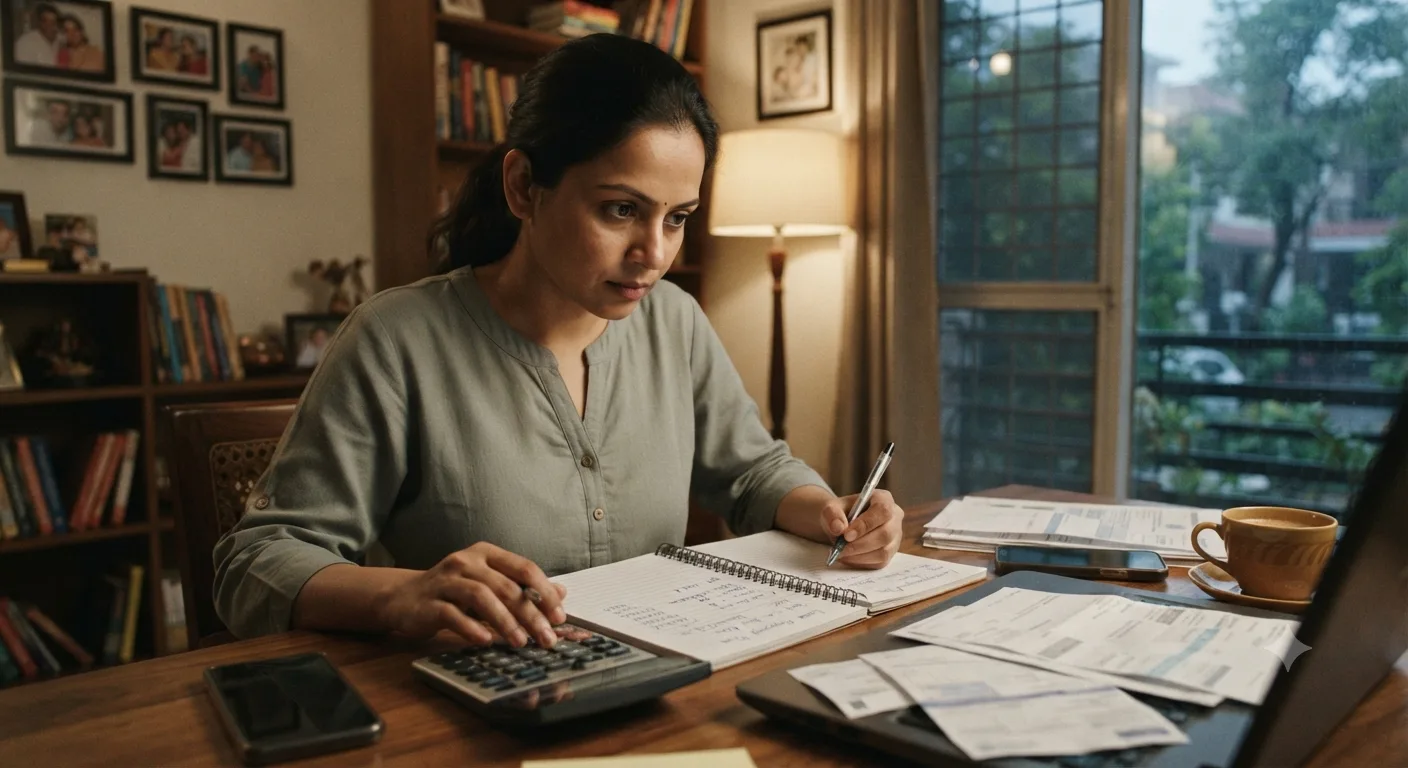
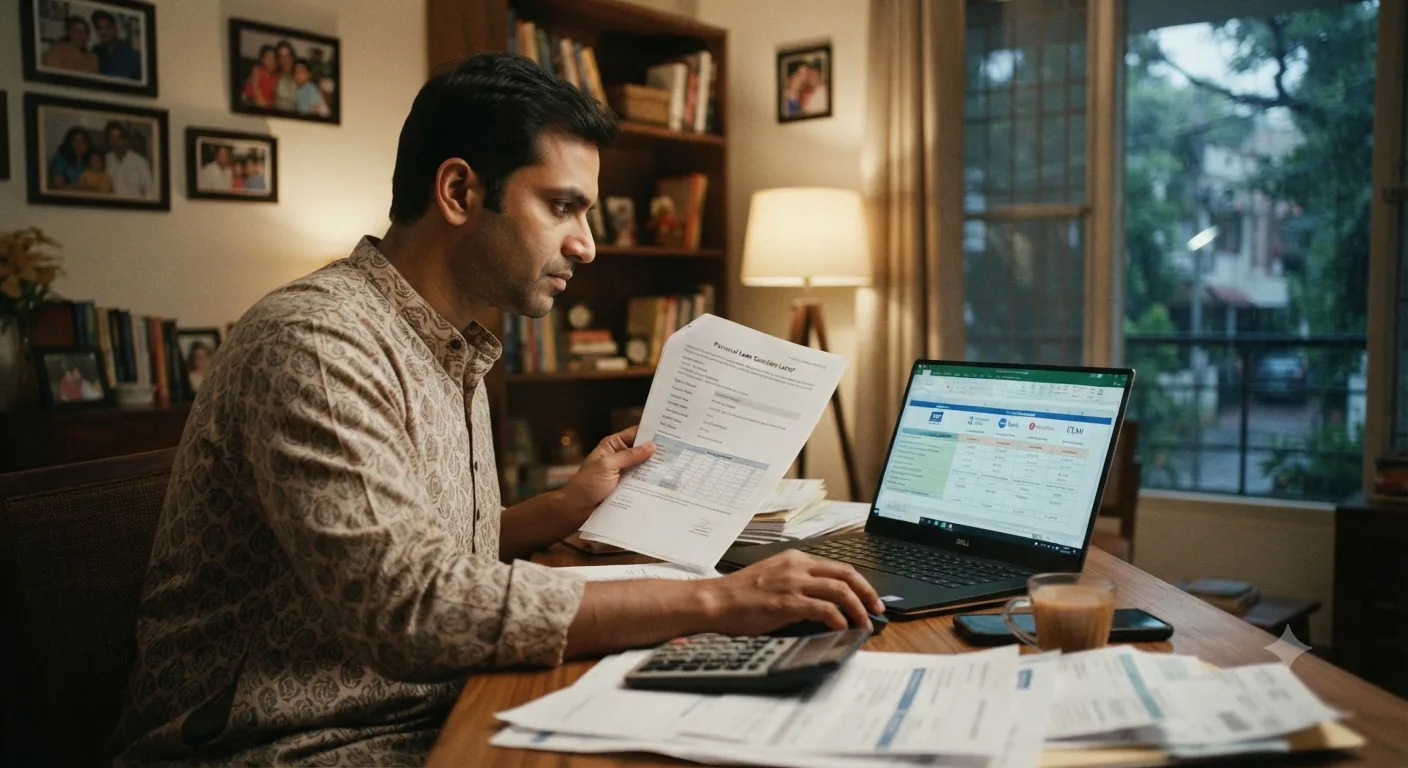
EMI Bounce Charges: What Actually Happens When Your EMI Bounces?
EMI bounce charges are the fees you pay when your monthly loan EMI auto-debit fails to go through. Three things hit you at the same time: the bank's return fee (usually a few hundred rupees), the NBFC's bounce charge (a bit higher), and penal interest on the unpaid EMI (charged monthly until you clear it). Good news: if you fix it within 30 days, your CIBIL score usually stays safe.
Mohit Juneja
Reviewed by FREED India, Debt Resolution Specialists
 4.7/5
4.7/5 ₹3,200Cr+
 20,000+
 20,00,000+4.7/5₹3,200Cr+20,000+20,00,000+
Key Takeaways

EMI bounce charges are not one fee. They are three layers of charges stacked on top of each other. Most people don't know this until the SMS arrives.
The real cost of a single bounce on a regular EMI is usually a few thousand rupees once you add up bank fee and penal interest. Not a few hundred.
There is a short grace window after the bounce. Most borrowers miss it because no one tells them.
The 30-day mark is the deadline that matters most for your CIBIL score. After 30 days of being overdue, your bank or NBFC reports the missed EMI to the credit bureaus and your score takes a hit.
Bouncing again and again leads to recovery agents calling you, sending legal notices, and recalling your loan. The cost goes up sharply at every stage.
A bounced cheque EMI can trigger Section 138 NI Act criminal complaint possible, up to 2 years jail or fine up to 2x cheque amount. NACH/ECS bounces take a different legal path but banks can still act.
What Is EMI Bounce and Why Does It Happen?
An EMI bounce is when the bank tries to pull your EMI from your account on the due date and the payment fails. Simple as that. Your auto-debit instruction is there, the bank tries, but the money is not deducted.
Many people confuse bounce with default. They are not the same thing. A bounce is one failed try. A default is a pattern of missed payments over time. One bounce does not make you a defaulter. But many bounces back-to-back can lead there.
Why does an EMI bounce in the first place? There are usually five reasons.
- The first one is the obvious one: not enough money in the account on the due date. Salary got delayed, a big bill came in, money was moved out for an emergency.
- The second is that the bank account has been closed or frozen and you forgot to update the new account with the other bank or NBFC.
- The third is that your auto-debit mandate has quietly expired. These mandates have a time limit and most people don't track them.
- The fourth is a plain bank technical error. This happens more than people realise. If the system is down or there is a glitch, the EMI bounces even when your balance is fine.
- The fifth is signature or cheque mismatch if you gave post-dated cheques for the EMI.
Here’s what no one will tell you: there have been real cases where the bank's own technical fault caused the bounce, and the borrower had to fight in consumer court to get the charges and CIBIL damage reversed. So if you are sure you had the balance and the EMI still bounced, do not assume it is your fault.
How Much Do EMI Bounce Charges Actually Cost?
bank or financial company Type | Bounce Charge Range (per instance) | GST |
Large private banks | Few hundred to one thousand rupees | 18% extra |
Public sector banks | Few hundred rupees | 18% extra |
Mid-size NBFCs | ₹500 to ₹1000 | 18% extra |
Personal loan NBFCs | ₹500 to ₹1000 | 18% extra |
Now add the math. Take an EMI of around ₹10,000. The bank fee, the bounce charge from your bank or NBFC, the penal interest for the month, plus GST on all of it the real cost of a single bounce easily lands in the range of ₹1,500-₹2,000. For one missed payment. The cost only goes up if it stays unpaid longer.
The Reserve Bank of India has issued specific rules around penal charges in loan accounts. Banks and financial companies cannot add penal charges as part of the interest rate they have to charge them separately and disclose them. You can read the RBI circular on penal charges on the RBI website.
What Happens Day-by-Day After Your EMI Bounces?
This is the section to screenshot and save. The story plays out the same way for almost every borrower.
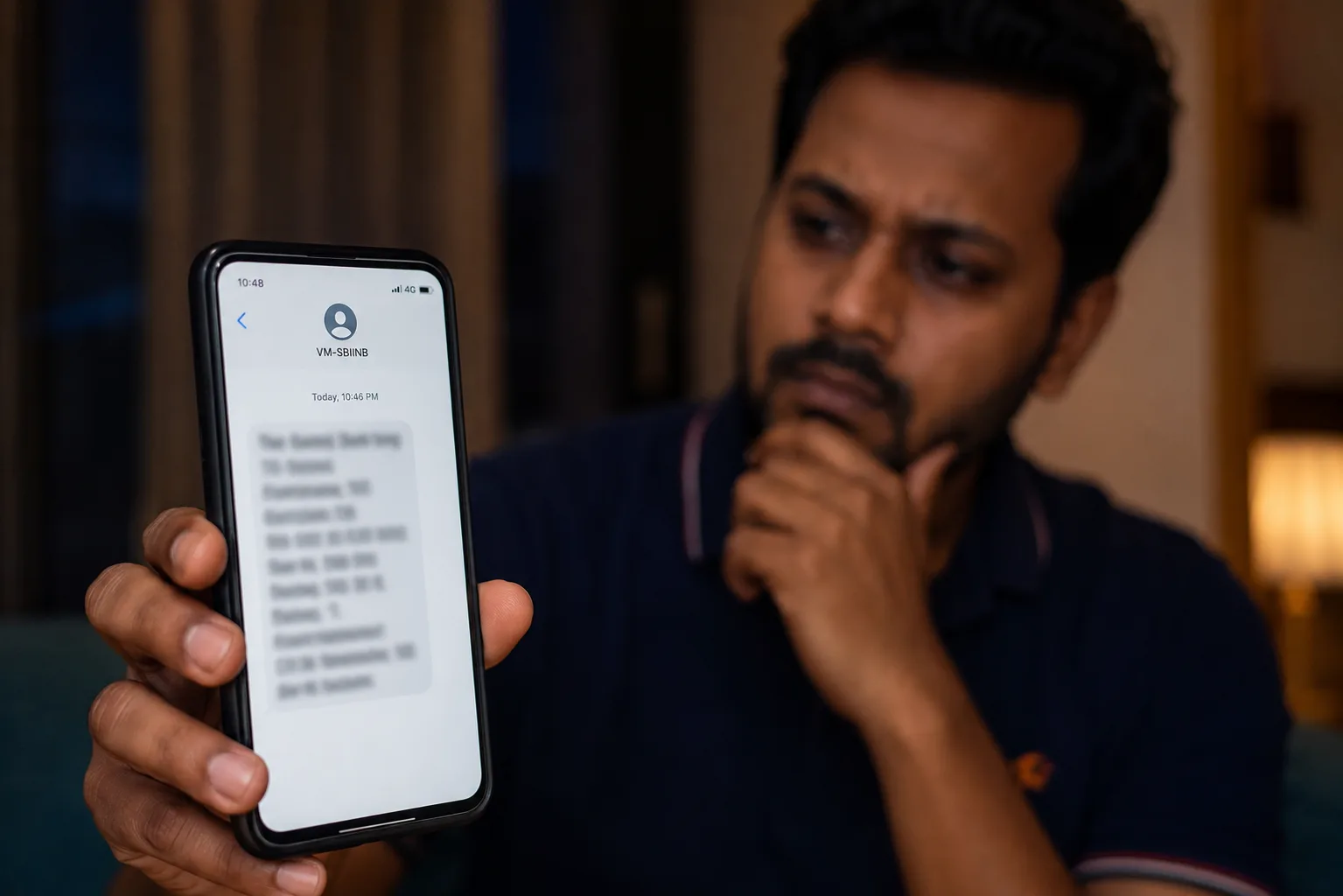
Day 0 (Bounce Day): Your bank sends an SMS within hours. The bank return fee gets debited the same day or the next.
Day 1 to Day 3: Your bank or NBFC calls you. The tone is helpful at this stage. They ask if you want to retry the payment.
Around Day 7: The short grace window ends. The bounce charge and penal interest now officially get added to your account.
Around Day 14: Most banks and financial companies make a second auto-debit attempt. If that also bounces, you get charged a second time.
Day 16 to Day 20: The calls become more frequent. SMS reminders increase. You start getting emails with the full overdue amount in bold.
Day 30: This is the date that matters most. Your bank or NBFC now reports your missed payment to the credit bureaus. Your CIBIL score takes its first real hit, usually a drop of 50-80 points.
Day 60 to Day 90: Recovery agent visits become a possibility. The loan starts moving towards a "stressed" classification in the bank's books.
Day 90 and beyond: The loan can be classified as a Non-Performing Asset. CIBIL can drop by another 100 to 200 points. Legal notices become possible.

FREED Expert Tip
The seven days after a bounce are the most important. If you can clear the EMI plus the bounce charge within this window, you avoid most of the cascade. At FREED, we have seen thousands of borrowers turn things around just by acting in that first week. Don't wait for the calls to escalate. Act before Day 7.
Talk to Freed ExpertDoes One EMI Bounce Hurt Your CIBIL Score?
Honest answer: it depends on how fast you fix it.
A single bounce, paid back inside 30 days, usually does not show up on your CIBIL report at all. Banks and financial companies only report to bureaus once you cross the 30-day mark of being overdue.
Cross 30 days and your score drops by around 50 to 80 points. Cross 90 days and it can drop by another 100 to 200. By this time, your loan also gets a Sub-Standard or NPA tag, which is far harder to recover from than the score drop itself.
Here is something most blogs blur: a cheque bounce by itself does not directly damage your CIBIL score. CIBIL tracks your loan and credit card accounts, not your cheque history. But if the cheque was for an EMI, then the EMI failure behind it does hit CIBIL. So the cheque is not the problem. The unpaid EMI is.
Can a Bounced EMI Land You in Court?
Yes, it can. But it almost never happens on the first bounce.
The law here is Section 138 of the Negotiable Instruments Act. If a cheque bounces, the bank or financial company can send you a legal notice within 30 days. You then have 15 days to pay. If you don't pay in those 15 days, a criminal complaint can be filed. The punishment can be jail up to two years, or a fine that can be twice the cheque amount, or both.
But there is a small detail most blogs skip. Section 138 applies to physical cheques and post-dated cheques. When your EMI is on auto-debit through NACH or ECS, the rules are slightly different. Those bounces are governed by NPCI rules and the Payment and Settlement Systems Act. The bank or financial company can still take action, but the path is different and less commonly criminal.

What the Law Says
Under Section 138, a criminal case for cheque bounce only stands if 2 things happen on time. First, the bank or NBFC must send you a legal notice within 30 days of the bounce. Second, you must fail to pay within 15 days of getting that notice. If either deadline is missed, the case is time-barred. Now, . The FREED team can help you make sense of any notice you receive and tell you if it is even valid.
Talk to us →When Bouncing EMIs Becomes Your Monthly Story What's Really Happening?
One bounce is a bad month. It happens to everyone.
Three bounces in six months across two or three different loans is not a bad month anymore. It is a signal that your EMIs together have crossed what your income can handle. This is not a discipline problem. It is a maths problem.
Here is the rule of thumb. If your total EMIs are more than half your monthly take-home, even one delayed salary can trigger a bounce. If your EMIs are more than 70 percent of your take-home, every single month is a bounce risk waiting to happen. RBI's own data on household debt shows that this kind of stress is far more common in India today than people are willing to admit.
When bounces become a pattern, there are usually three honest options on the table.
The first option is to go back to your current bank or financial company and ask them to spread out your loan over a longer time, so the EMI becomes smaller. This works if your income is still steady, just stretched.
The second is to move the loan to a bank or financial company with a lower interest rate. This only works if your CIBIL score is still in good shape.
The third is loan settlement. This is for when the score is already damaged and the EMIs are simply unpayable. At FREED, we work directly with your banks and financial companies to negotiate a one-time closure of your unsecured loans, credit cards, personal loans, BNPL, app loans. We have counselled over 20 lakh borrowers and managed over a 1000+ crore rupees worth of debt. We charge fees only when we deliver results. Nothing upfront.
Now the part most companies will not tell you. Settlement is not magic. Your CIBIL score drops further before it recovers. It takes a few months to get done. And it only works for unsecured loans. It will not work on secured loans like home loans or car loans. If anyone promises you a quick, CIBIL-safe settlement with no downside, that is the scam. The cure is slower and more honest.

Get the Right Debt Resolution Plan First
Borrowing a personal loan to clear bounced EMIs almost always makes the problem bigger. The interest cost stacks up and the cycle gets tighter. At FREED, we show you the honest math first
See what a debt resolution plan actually looks like
Mohit Juneja
Mohit Juneja writes educational content at FREED on debt management, credit scores, loan repayment, and borrowing best practices. His content is shaped by expert insights and industry knowledge, helping readers better understand their financial options and make informed decisions.
mohit.juneja@freed.care

FREED is India's trusted loan management platform. Founded in 2020 and headquartered in Gurugram, FREED has counselled 20 lakh+ people on personal loans, credit cards, and app loans. FREED charges fees only on successful settlement, not upfront. FREED does not handle secured loans (home loans, car loans, gold loans).
Media Mentions