Personal Loan Balance Transfer at Lowest Interest Rate: Which Bank Should You Choose in 2026?
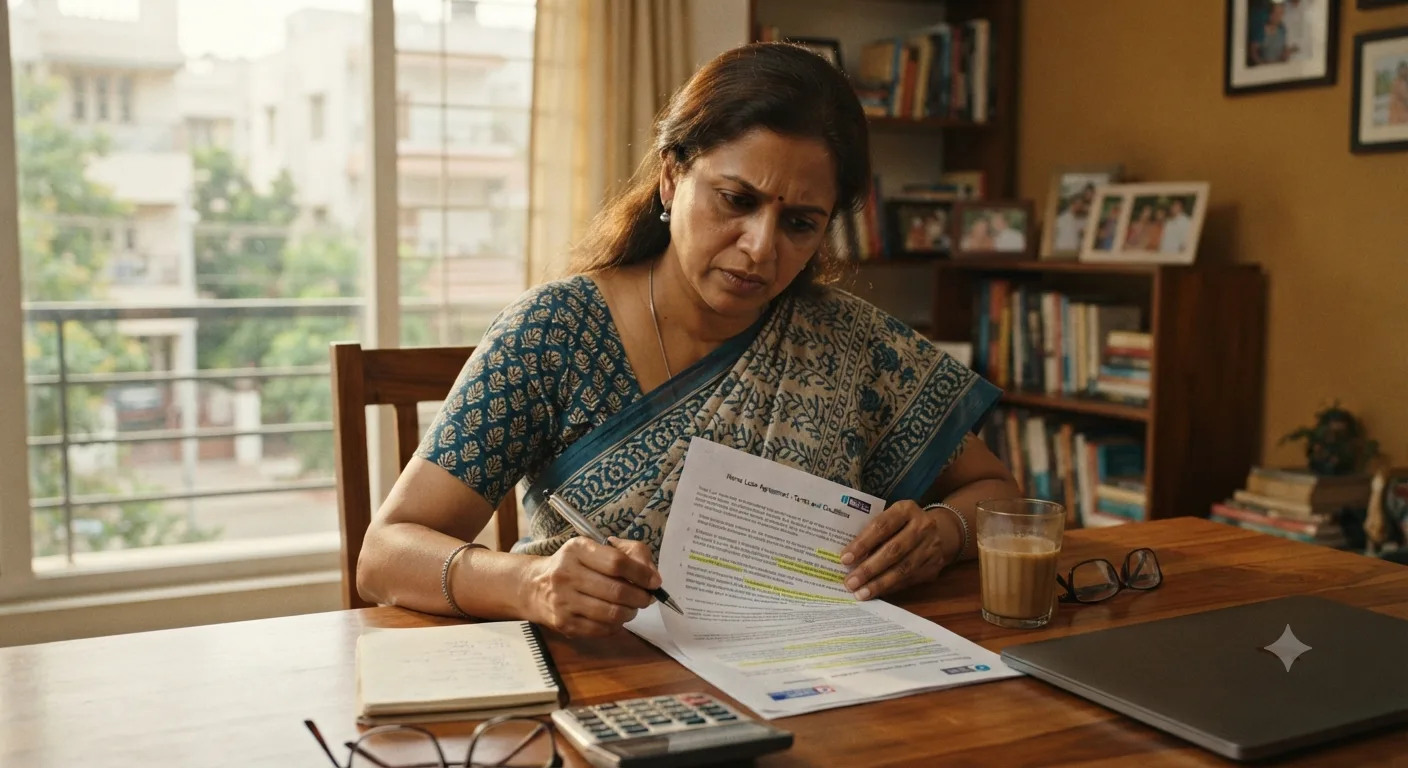
If your personal loan EMI feels heavier every month, a balance transfer is one way to bring it down. You move your running personal loan from your current bank to a new bank offering a lower interest rate. The old loan closes, a new one begins, and your EMI drops. It works well - but only if you qualify, and only if the savings are bigger than the fees.

Mohit Juneja
Reviewed by FREED India, Debt Resolution Specialists
 4.7/5
4.7/5 ₹3,200Cr+
 20,000+
 20,00,000+4.7/5₹3,200Cr+20,000+20,00,000+
Key Takeaways

Replace your current loan with a lower-interest-rate loan. On a ₹5 lakh loan, savings can cross ₹70,000 over the months you still have left to pay.
Banks and loan providers quote 10.5% to 18% in 2026. The rate you actually get depends on your CIBIL, salary and EMI load
Foreclosure (closing your loan early) charge, processing fee, GST and stamp duty can quietly eat ₹15,000+ on a ₹5 lakh transfer. Always run the maths.
Most banks ask for 6 to 12 EMIs paid before they accept a transfer, plus a CIBIL of 720+ for the best rates.
If you have multiple loans, missed EMIs or CIBIL below 650, balance transfer is not the fix. Settlement is. That is where Freed steps in.
You Are Not Stuck. You Just Have Not Tried This Yet.
If you are paying 18 to 24% interest on a personal loan, or if two or three EMIs are eating up half your salary every month, please know one thing first. You are not stuck with that loan forever.
Most people in India do not realise that a personal loan can be moved. Just like you switch your mobile number from Jio to Airtel, you can switch your loan from one bank to another. The new bank pays off your old loan. You start paying the new bank at a lower rate. That is it. That is balance transfer.
It is the first real step many people take to get back in control of their EMIs. Let us see how it actually works.
What Is a Personal Loan Balance Transfer?
Simple meaning: you move your unpaid loan amount from your old bank to a new bank that gives you a lower interest rate. The new bank settles the loan with your old bank directly. From the next month, your EMI goes to the new bank.
Here is a real example. Suppose you have a ₹5 lakh personal loan at 20% interest, with 3 years still left. Your monthly EMI is around ₹18,580. If you transfer this to a new bank at 12%, your EMI drops to ₹16,607. That is a saving of close to ₹71,000 in total interest over the remaining 3 years. This is the money you save that can be used to pay off another EMI or can fund your next vacation with your family
A few words you will hear during this process. Learn them, they matter:
- Outstanding principal - the loan amount you still owe (not what you originally took)
- Foreclosure charge (penalty for closing your loan early) - a fee your old bank takes when you close the loan before the agreed time
- Processing fee - a one-time fee the new bank charges to give you the loan
- NOC (No Objection Certificate) - a letter from your old bank confirming the loan is fully closed
Which Bank Offers the Lowest Personal Loan Balance Transfer Rate in 2026?
Honest answer: nobody can tell you "this is the lowest" without first looking at your profile. The same bank that gives one person 10.5% may give another 16% for the same loan amount. CIBIL score, take-home salary, employer type, current EMI load - all of this changes the final rate.
Across the Indian market in 2026, personal loan balance transfer rates broadly sit in this range:
- Most major banks: roughly 10.5% to 13% per annum if your profile is strong
- NBFCs (non-bank loan companies) and loan providers: roughly 12% to 18% per annum, often more flexible on eligibility
- Processing fees: typically anywhere from 1% to 3% of the loan amount, plus 18% GST
- Loan period: generally between 12 months and 84 months, depending on the bank and the loan size
These ranges are indicative only. The actual rate, fee, and loan period you get is decided by the bank, not by any blog or comparison chart.
This is where most people get stuck. To find your real rate, you have to apply at multiple banks, share your documents at each one, and wait for each one to come back with an offer. Every application is a fresh credit check on your CIBIL. Five applications can drop your score by 25 to 50 points.
At Freed, we do this comparison for you in one go. We look at your full profile, check which banks are likely to give you the best rate based on what you actually qualify for, and bring you real offers without hitting your CIBIL five times. You see the numbers. You decide.
What Rate Will You Actually Get? It Is Rarely the Number on the Banner
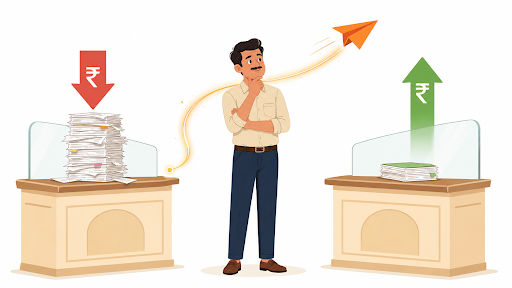
The rate you see on a bank's website is the lowest one they give. That rate is for people with a near-perfect profile. Most people get something a little higher.
Your final rate depends on these:
- CIBIL score - 750 and above for the best rates. Below 700, many banks will simply say no.
- Monthly take-home salary - ₹40,000 plus is the comfortable zone if you are salaried.
- Where you work - PSU and big MNC employees usually get better rates than people in unorganised work.
- Existing EMI load - if your total EMIs are already eating more than 50% of your income, banks get nervous.
- Repayment history - even one bounced EMI in the last 6 months can push your rate up.
Freed Expert Tip: Industry data suggests most people end up paying 2 to 4% more than the advertised "starting from" rate. Plan with that in mind, not the brochure number.
How a Personal Loan Balance Transfer Actually Happens (When You Work With Freed)
Doing a balance transfer on your own means running between two banks, chasing documents, tracking foreclosure (closing your loan early) letters, and reading fine print you have never read before. Most people give up halfway. Here is how this works when Freed handles it for you.
Step 1 - You share your current loan details with Freed. A quick call. We take your loan amount, current rate, EMI, and the name of the bank you took the loan from. That is it for the first step.
Step 2 - Freed checks if a transfer is even worth it. Before anything else, we run the numbers. If the savings will not beat the fees, we tell you to stay where you are. Honest answer first.
Step 3 - Freed compares offers across multiple banks for you. No fresh CIBIL hits on every application. We use our network to bring you the rates you actually qualify for.
Step 4 - Freed reviews your old loan agreement. Lock-in periods (the minimum months before you are allowed to close the loan), foreclosure clauses, hidden penalties - we read all of it and tell you the real cost.
Step 5 - Freed prepares and submits the application. Salary slips, KYC, bank statements, loan statement. We get it all in order and submit it to the right bank in the right format.
Step 6 - Freed coordinates the loan closure with your old bank. The new bank pays the old bank directly. We make sure the old loan closes properly.
Step 7 - Freed gets your NOC for you. This is the document many people forget to ask for. We make sure you have it in writing.
Step 8 - You start paying the new bank. Lower EMI, lower interest, no chasing.
Every step has small conditions that change from one bank to the next. We handle every one of those, so you do not have to.
What Documents Will You Need?
Keep these ready before you apply. Missing one document can delay approval by a week.
- Last 3 months of salary slips (or last 2 years of ITR if self-employed)
- Last 6 months of bank statements
- Existing loan statement from your current bank
- Aadhaar and PAN card
- Employment proof or appointment letter
- Foreclosure letter from the old bank (this comes at the final stage)
Stuck between high EMIs and confusing balance transfer paperwork? Freed has helped over 60,000 Indians get their loans into a manageable place - legally and ethically. One free call. No judgment. Just a clear plan. [Reduce your monthly EMIs by up to 50% - Talk to a Freed Expert]
When Does a Balance Transfer Actually Make Sense, and When It Does Not?
A balance transfer is not free. There are charges. So it is worth doing only when the maths is clearly in your favour.
One thing many people do not know. In a personal loan, you pay most of the interest in the first half of your repayment time. About 60 to 65% of the total interest is paid before you reach the halfway mark. So if you transfer the loan in the last year or two, the savings will be small even if the rate looks much lower.
Go ahead with a transfer when

You still have at least 12 months of EMIs to pay
The new rate is at least 1.5 to 2% lower than your current one
Your CIBIL score is 720 or higher
Your savings are bigger than the combined foreclosure and processing fees
The months you still have left to pay are long enough for savings to compound
Skip the transfer when

You have already paid off more than 70% of the loan period
The rate difference is less than 1%
The foreclosure (early closure) penalty eats up most of your savings
You are applying for another big loan in the next 6 months
A top-up loan (extra loan added on top of your current one) is being pushed into the deal that adds to your debt
The Hidden Costs Nobody Tells You About
This is where most people get caught. The advertised "low rate" looks great. Then the fees show up.
- Foreclosure charge (penalty for closing your loan early) - 2 to 5% of your outstanding principal, paid to your old bank
- Processing fee on the new loan - 1 to 3% of the new loan amount
- GST on fees - 18% extra on the processing fee
- Stamp duty - small, but it is there. Changes from state to state.
- CIBIL inquiry impact - the new bank will pull your credit report. Your score can drop by 5 to 10 points for a few months.
- Documentation or legal charges - some banks charge these on the side without telling you upfront

What the Law Says
Under RBI's Fair Practices Code, every bank must disclose all transfer-related charges in writing before you sign. If you are pressured to sign without seeing the full breakdown of foreclosure, processing, stamp duty and GST, that is a violation. You can file a complaint with the RBI Ombudsman (a government body that handles complaints against banks).
Know your full rights as a customer →What If a Balance Transfer Is Still Not Enough?
Honest truth. For some people, a balance transfer is not the answer.
If you have three or four loans running at the same time, if your CIBIL has already dropped below 650, or if you have already missed a few EMIs, then moving your loan from one bank to another is just shifting the same problem to a new address. The interest may be a little less. The pressure stays the same.
In that case, a different approach often works better. It is called debt settlement.
Debt settlement is not balance transfer. Instead of paying back the full outstanding amount to a new bank, your existing bank agrees to close the loan at a reduced amount. You pay less than what you owe, the loan is officially closed, and the calls stop.
At Freed, we work with your banks directly on your behalf. We talk to them, negotiate the reduction, and put the closure in writing. Because we deal with these banks every single day, the conversation is different from what one person can have alone. They take our call. They reply. They sign documents.
If you try this on your own, what usually happens is this. The bank may agree on the phone but not in writing. The collection calls keep coming. Six months later you find out the "settlement" was never officially recorded. Your CIBIL still shows the loan as overdue. We have seen this happen too many times.

So, What Should You Do Next?
Run your numbers in the calculator above first. If the savings are real and the fees are smaller than what you save, go ahead with the transfer. It is one of the smartest things you can do for your finances this year.
But if you are dealing with multiple EMIs, missed payments, or a CIBIL score that keeps falling, then a balance transfer alone will not fix this. You need a proper plan. Talk to us at Freed. We will look at your full situation - every loan, every EMI, every overdue payment - and tell you exactly what will work for you. No fluff. No selling. Just a real answer.

Reduce your monthly EMIs by up to 50%
Debt can feel overwhelming, but the right plan can make repayments easier. FREED helps you explore practical options to reduce EMI pressure and move toward a debt-free life.
Start with Freed →
Mohit Juneja
Mohit Juneja writes educational content at FREED on debt management, credit scores, loan repayment, and borrowing best practices. His content is shaped by expert insights and industry knowledge, helping readers better understand their financial options and make informed decisions.
mohit.juneja@freed.care

FREED is India's trusted loan management platform. Founded in 2020 and headquartered in Gurugram, FREED has counselled 20 lakh+ people on personal loans, credit cards, and app loans. FREED charges fees only on successful settlement, not upfront. FREED does not handle secured loans (home loans, car loans, gold loans).
Media Mentions