Busting Myths About Personal Loans
Personal loans are one of the most misunderstood financial products in India. Some people fear them too much. Others trust them too easily. Here's what's actually true - and what you need to know before you borrow.
Mohit Juneja
Reviewed by FREED India, Debt Resolution Specialists
 4.7/5
4.7/5 ₹3,200Cr+
 20,000+
 20,00,000+4.7/5₹3,200Cr+20,000+20,00,000+
Key Takeaways

Personal loans are not inherently good or bad - they're a tool. Whether they help or hurt depends entirely on how they're used.
Interest rates vary widely - from 10% to 24%+ annually. The rate you get depends on your CIBIL score, income, and lender.
Taking a personal loan does not automatically hurt your CIBIL score - missing payments does.
Prepayment charges are real and can be significant - always read the loan agreement before assuming you can exit early without cost.
If personal loan debt has become unmanageable, FREED can help reduce or resolve it, legally and without harassment.
Why Personal Loan Myths Are Costly
A personal loan is one of the most flexible financial products available in India, no collateral, quick disbursal, usable for almost any purpose.
But around it have grown a cluster of myths. Some push people to avoid personal loans when they would genuinely help. Others push people toward them without understanding the real cost.
Both kinds of myths are expensive.
A person who avoids a 12% personal loan and instead funds an expense with a credit card at 36% interest pays three times more than necessary. A person who takes a personal loan without reading the prepayment terms discovers too late that exiting early costs more than staying in.
Getting the facts right before borrowing matters. Here they are.
Myth 1: "Personal Loans Are Only for Emergencies"
The myth: Personal loans are a last resort, something you take only when there's a crisis and no other option.
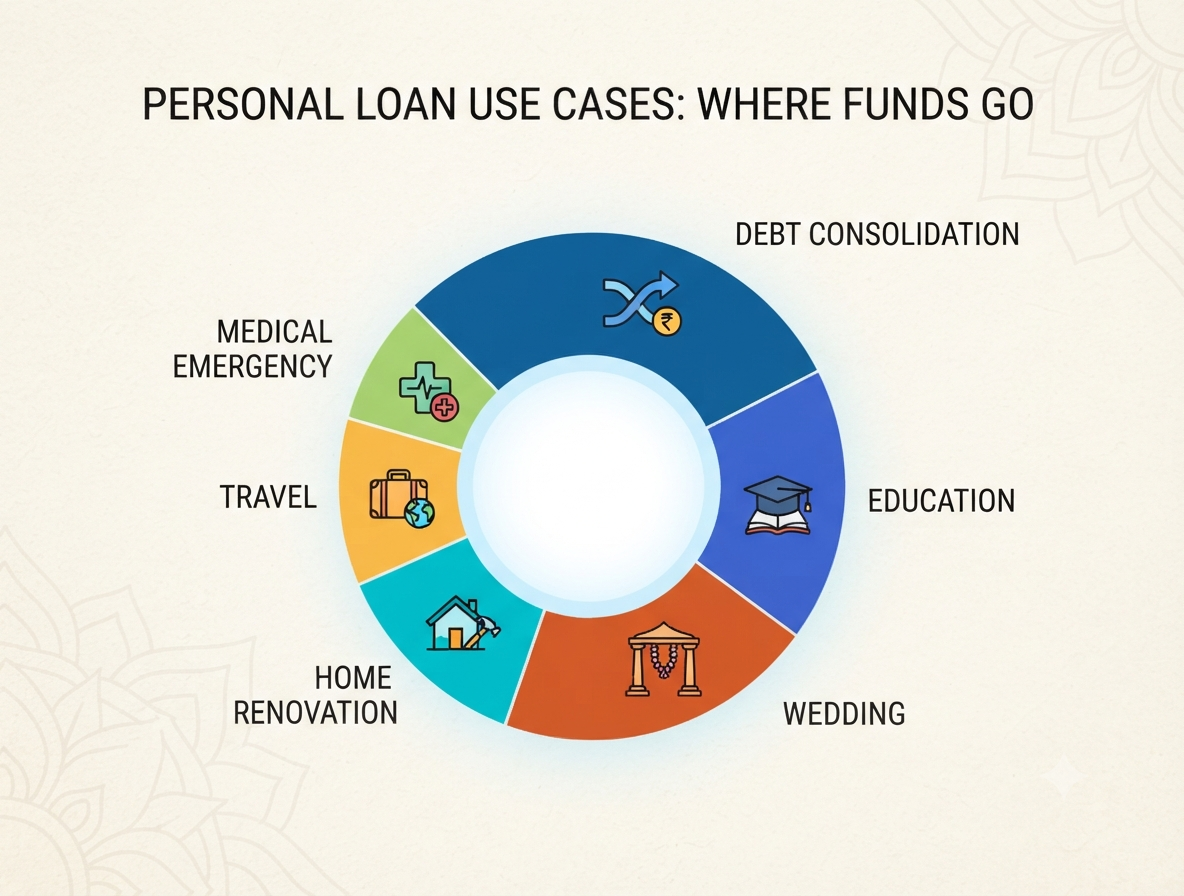
The truth: Personal loans are a general-purpose credit product. In India, they are legally available for almost any personal use medical expenses, yes, but also home renovation, education, travel, wedding costs, or consolidating high-interest debt.
Using a personal loan to consolidate multiple high-interest credit card dues into one lower-rate EMI is not a sign of financial crisis. It's often a financially intelligent move that reduces total interest paid and simplifies repayment.
The rule: A personal loan is a tool. The question is not whether it's "appropriate", it's whether the cost of the loan is lower than the cost of the alternative, and whether you can comfortably service the EMI within your monthly budget.
Myth 2: "Personal Loans Always Have Very High Interest Rates"
The myth: Personal loans are expensive. The interest is always sky-high.
The truth: Personal loan interest rates in India vary significantly - from as low as 10–11% per annum to as high as 24–26% or more, depending on the lender, your CIBIL score, income, and the loan amount.
A borrower with a strong CIBIL score (750+), a stable income, and a good relationship with their bank may get a personal loan at 11–13% per annum. A borrower with a lower score or from a fintech lender with less stringent checks may pay 22–26%.
Compared to credit card interest, which runs at 36–42% per annum even a 20% personal loan is significantly cheaper. Compared to informal borrowing or predatory apps, bank personal loans are far more regulated and transparent.
The rule: Never accept that the rate quoted is the only rate available. Compare across at least 3–4 lenders before accepting. Use online EMI calculators to understand the total interest cost, not just the monthly EMI. And always check the APR (Annual Percentage Rate), not just the headline rate, to account for processing fees and other charges.

FREED Expert Tip
Improving your CIBIL score by even 30–50 points before applying for a personal loan can reduce the interest rate offered to you by 2–4%. On a ₹5 lakh loan over 3 years, that's a difference of ₹20,000–₹40,000 in total interest paid. It's worth the wait.
Talk to FREEDMyth 3: "Taking a Personal Loan Will Ruin My CIBIL Score"
The myth: Borrowing money any money, is bad for your credit score.
The truth: Taking a personal loan does not automatically hurt your CIBIL score. In fact, managed well, it can improve it.
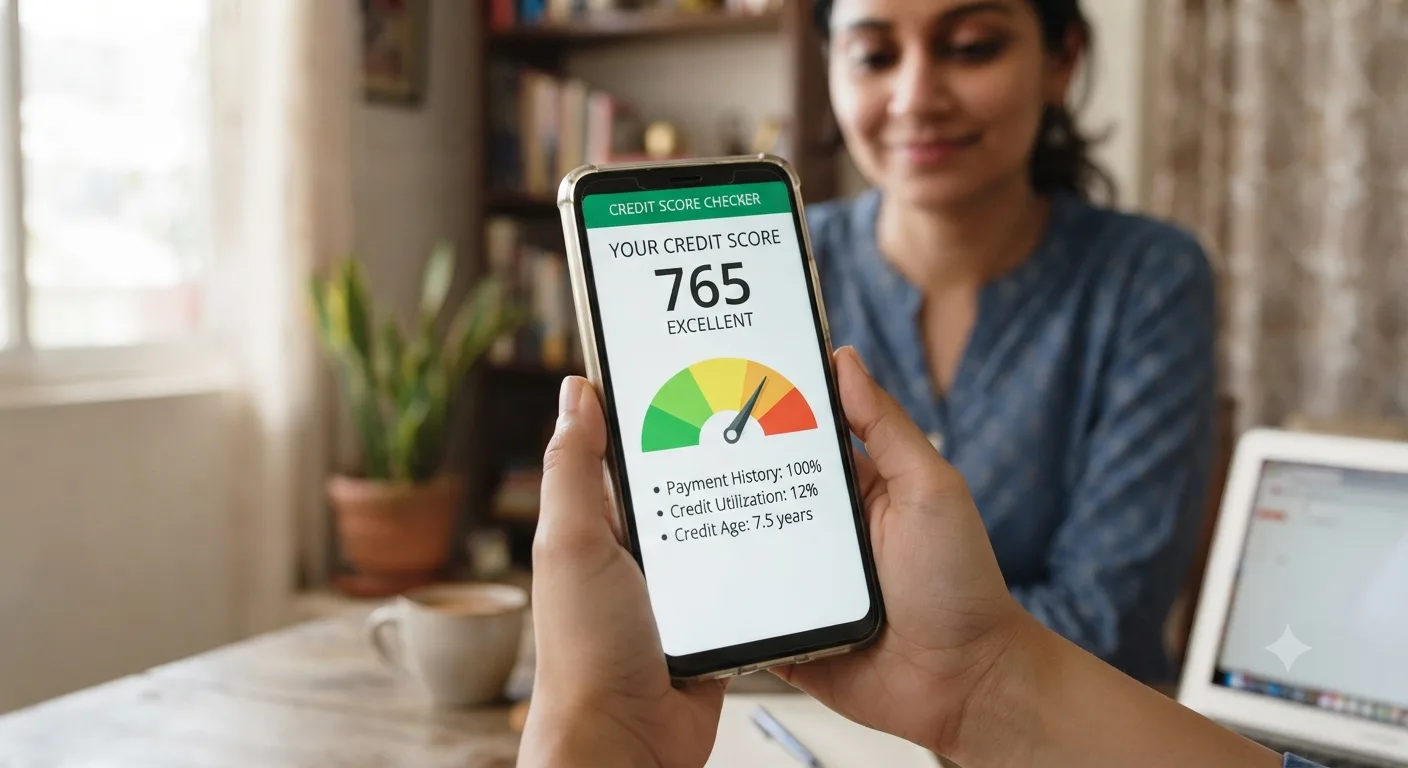
Here's why: a personal loan adds to your credit mix (which can positively influence your score), and every on-time EMI payment adds a positive mark to your payment history (the most important factor in your score).
What hurts your score is not the loan, it's missing payments, defaulting, or carrying too much debt relative to your income.
The initial application does trigger a hard inquiry, which causes a small, temporary dip. But this recovers within a few months of responsible repayment.
The rule: If you take a personal loan and pay every EMI on time, your score will be the same or better in 12 months than before you took the loan. If you miss payments, it will be worse. The loan is neutral. The behaviour is what matters.
Myth 4: "You Need a Perfect Credit Score to Get a Personal Loan"
The myth: Personal loans are only for people with excellent credit histories.
The truth: While a high CIBIL score (750+) gives you access to the best rates and terms, personal loans are available to people with scores as low as 650–700 - though at higher interest rates.
Many NBFCs and fintech lenders have also expanded eligibility to include borrowers with limited or no credit history, self-employed individuals, and gig economy workers - using alternative data (bank statements, transaction patterns, business cash flows) to assess repayment capacity.
That said, "available" and "advisable" are different things. A personal loan at 22–26% interest because of a low score may not be the right solution - especially if improving the score for 6–12 months would unlock a much cheaper loan.
The rule: If you need credit urgently and your score is moderate, a personal loan may still be accessible - but shop carefully for the best rate. If the need is not urgent, spend a few months improving your score first. The cheaper loan is worth the wait.
Myth 5: "Personal Loans Are Only Available from Banks"
The myth: To get a personal loan, you have to go to your bank - and banks are slow, paperwork-heavy, and strict.
The truth: Personal loans in India are available from multiple types of lenders:
Public sector banks - often the cheapest rates for eligible borrowers, but slower processing and stricter documentation requirements.
Private sector banks - faster, often digital, competitive rates for strong-profile borrowers.
NBFCs (Non-Banking Financial Companies) - more flexible on eligibility, often faster disbursal, but typically higher interest rates.
Fintech lenders and apps - instant processing, minimal documentation, available even to borrowers with moderate scores - but rates can be very high (20–36%+), and terms need to be read carefully.
Each type has trade-offs. The right source depends on your CIBIL score, how quickly you need the funds, and what interest rate you can afford.
The rule: Don't limit your comparison to one lender type. Use a loan aggregator or check multiple options before deciding. The difference in interest rates across lenders for the same borrower profile can be 5–10% per annum - which is lakhs of rupees on larger loans.

What the Law Says
Under RBI guidelines, all regulated lenders - banks and NBFCs - must provide you with a Key Fact Statement (KFS) before you sign any loan agreement. The KFS must clearly disclose the annual percentage rate (APR), all fees, prepayment charges, and penalty terms. You have the right to read and understand this document fully before committing. Do not accept verbal assurances about terms - always ask for the KFS and review it.
Know your rights as a loan borrowerMyth 6: "Prepaying a Personal Loan Is Always Free"
The myth: If I have extra money, I can just pay off my personal loan early and save on interest - no problem.
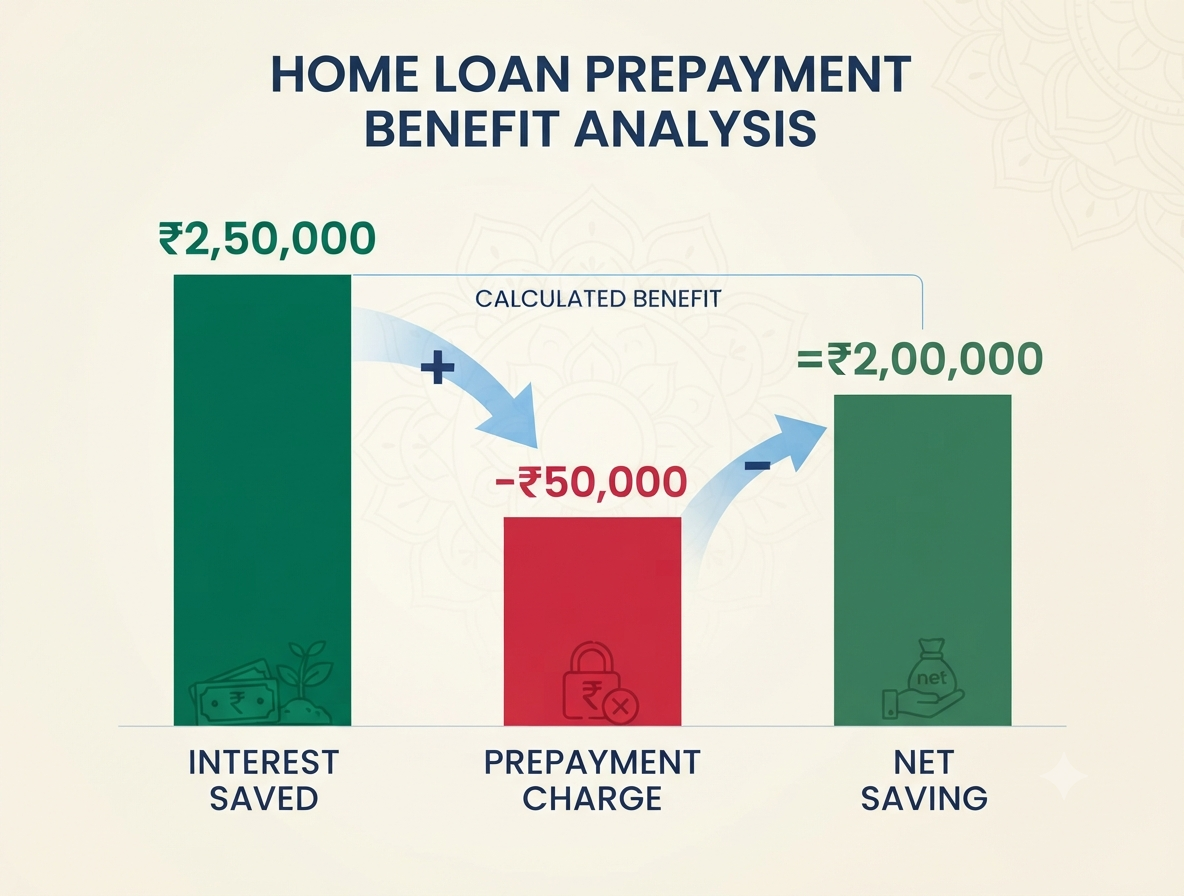
The truth: Many personal loans in India carry prepayment charges - penalties for repaying the loan before the agreed tenure ends. These typically range from 2–5% of the outstanding principal, though the exact amount varies by lender and loan agreement.
For example: if you have ₹3 lakh outstanding and want to prepay, a 3% prepayment charge means you pay an extra ₹9,000 just to exit the loan. Depending on how much interest you'd save by prepaying, this may or may not be worth it.
RBI has restricted prepayment charges for floating-rate loans, but most personal loans in India are on fixed rates - where prepayment charges still apply.
The rule: Before signing any personal loan, ask explicitly: "What are the prepayment and foreclosure charges?" Get this in writing. Factor it into your decision if there's any chance you'll want to repay early. Some lenders offer zero prepayment charges - seek those out if flexibility matters to you.
Myth 7: "A Personal Loan Is Always Safer Than a Credit Card"
The myth: Personal loans have fixed EMIs, so they're always more predictable and safer than credit cards.
The truth: This is partially true but dangerously oversimplified.
A personal loan with a fixed EMI is more structured than a revolving credit card balance - that's true. But "safer" depends entirely on your situation and behaviour.
A personal loan taken to pay off a credit card balance is only safer if you stop using the credit card after paying it off. Many people don't. They pay the card with the loan - and then run the card back up again. Now they have both the loan EMI and a new card balance. The debt has doubled.
Additionally, a personal loan at 20% is not safer than a credit card that you pay in full every month (and thus incur 0% interest on).
The rule: The product is not what determines safety. The behaviour is. A personal loan makes sense for debt consolidation only if you commit to not accumulating new credit card debt after using the loan to clear it. Without that commitment, consolidation just adds a new layer of debt rather than reducing it.
Myth 8: "You Can Ignore a Personal Loan If You Can't Pay"
The myth: If I stop paying, the bank will eventually write it off and I'm free.
The truth: This is one of the most dangerous myths - and the most expensive one to test.
When you stop paying a personal loan:
Your CIBIL score drops immediately. Missed payments are reported to credit bureaus from day one of the due date. After 90 days of non-payment, the account becomes an NPA - Non-Performing Asset - which causes a severe score drop.
Penalties and interest compound. Late payment fees, penalty interest, and compounding charges can grow the outstanding amount significantly within months. A ₹3 lakh default can easily become ₹4.5–5 lakh within 12–18 months.
Recovery action follows. Lenders assign recovery agents. Legal action - including civil suits for recovery and attachment of assets - is possible for defaulted personal loans.
Debt doesn't disappear. Even after write-off, banks can sell the debt to recovery agencies. The obligation does not end when a loan is written off - it just changes hands.
The rule: The moment you anticipate difficulty repaying, act. Contact the lender and ask about hardship programs or restructuring. If the debt load is genuinely unmanageable, talk to FREED before the situation deteriorates further. Early action always produces better options.
Are You in a Loan Trap? Quick Check
Move the slider to your total EMIs as a % of monthly salary. See your debt stress level instantly.
EMIs as % of Monthly Salary
When Personal Loan Debt Becomes Unmanageable
Personal loans are manageable when they fit within your income and repayment capacity. When they don't - when multiple loans, high interest rates, or changed circumstances push EMIs beyond what income can support - the debt becomes a spiral.
FREED helps people in exactly this situation. Through Debt Consolidation, we combine multiple personal loan EMIs into one lower monthly payment. Through Debt Resolution, we negotiate with lenders to settle outstanding personal loan debt for less than the full amount owed - legally and without harassment.
Both approaches create breathing room - and a real path to being debt-free.
Over 60,000 Indians have used FREED to get out of personal loan debt. The first conversation is always free.

Mohit Juneja
Mohit Juneja writes educational content at FREED on debt management, credit scores, loan repayment, and borrowing best practices. His content is shaped by expert insights and industry knowledge, helping readers better understand their financial options and make informed decisions.
mohit.juneja@freed.care

FREED is India's trusted loan management platform. Founded in 2020 and headquartered in Gurugram, FREED has counselled 20 lakh+ people on personal loans, credit cards, and app loans. FREED charges fees only on successful settlement, not upfront. FREED does not handle secured loans (home loans, car loans, gold loans).
Media Mentions