Loan Settlement Agency: How to Check If One Is Genuine
A loan settlement agency is a private firm that negotiates with your bank to settle an unsecured loan for less than you owe. To check if one is genuine, verify its company records, get fees and scope in writing, pay settlement money only to your bank, and confirm every offer directly with the bank.

Mohit Juneja
Reviewed by FREED India, Debt Resolution Specialists
 4.7/5
 ₹3,200Cr+
 20,000+
 20,00,000+4.7/5₹3,200Cr+20,000+20,00,000+
Key Takeaways

A loan settlement agency negotiates with your bank. It cannot approve a settlement or guarantee a result.
Check company records, office, fees in writing and payment route before you sign.
Settlement money goes to your bank, never to an agent’s personal account or UPI ID.
Confirm any settlement offer yourself, using the bank’s own contact details.
If you were cheated online, call 1930 quickly and keep every record.
What Is a Loan Settlement Agency, and Can You Verify One?
Settlement is not something a borrower chooses out of preference. Banks consider it only when you genuinely cannot repay in full. If you have reached that point, you are probably getting calls and messages from firms offering to help. Some are careful. Some are not.
A loan settlement agency is a private firm that advises and negotiates. It is not a bank, not a loan provider and not a regulator. The bank or NBFC (non-bank loan company) alone decides the settlement terms.
So who checks the agency? Mostly, you. RBI regulates banks, NBFCs and ARCs (asset reconstruction companies). We are not aware of any RBI licence or approval for private settlement firms. That means there is no official “genuine” stamp to look up. This is exactly why the checks below are things you do yourself.
For the bigger picture, read our guide to debt settlement companies in India and what a loan settlement agency actually does. You can also see how our own Loan Settlement Plan works, and then run the same checks on us.

Which Checks Can You Do Yourself Before You Sign Up?
Start with the table. Each check is free, and most take a few minutes.
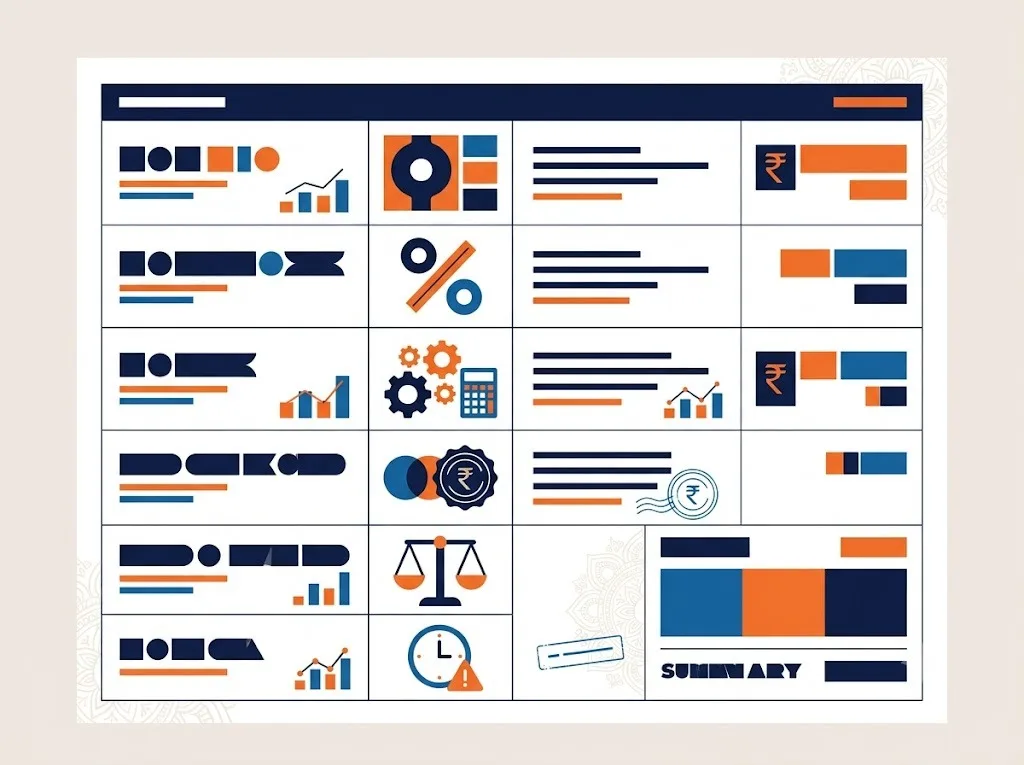
Check | How to do it | What a good result looks like | Warning sign |
Company record | Search the company’s CIN (Corporate Identification Number, a unique company ID) on the Ministry of Corporate Affairs website | Registered name matches the name you were given | No CIN, or a different name |
Tax registration | If the firm gives a GSTIN, check it on the government GST portal | Details match the business | No GSTIN, or details that do not match |
Office | Confirm the registered address exists. Ask for a video call from the office | A real, findable address | A vague address, or only a co-working desk |
People | Look for named leadership you can find independently | Names with a public track record | No names at all |
Contact consistency | Compare the name on the website, agreement, invoices and payment account | Same name everywhere | Names that keep changing |
Reviews | Read reviews across sites and months | Varied and specific, spread over time | Copied text, or posted in one week |
Sample agreement | Ask for it before any payment | Shared without fuss | “We will send it after payment” |
Fee in rupees | Ask for the full fee in writing | A clear total for your loans | Only percentages, or “we will tell you later” |
Rates and ranges shown are indicative. Final terms decided by the bank. FREED is not a Loan Provider. No outcome is guaranteed. Please verify directly with your bank.
One thing to keep straight. These checks show that a firm exists and behaves openly. They do not prove it will get you a good result. A CIN or GSTIN does not make a firm genuine. Existence is the minimum, not a recommendation.
For the full list, use our 9-point checklist. You can also read how to vet a debt solutions firm. The company search is on the Ministry of Corporate Affairs website, and the taxpayer search is on the GST portal.

Expert Tip
Search the company’s CIN before you share any document. If the name on the record does not match the name on the agreement, stop.
Talk to a FREED counsellorNot sure about the terms you were offered?
A FREED counsellor can read them with you.
Check My OptionsWhat Should the Agreement Say Before You Pay?
Screenshot this list. Every item should be in writing before you pay anything.
The company’s full legal name and address.
Which of your loans are covered.
The fee in rupees, not only as a percentage.
How the fee is calculated.
When each part is charged.
What is refunded if the bank refuses.
The cancellation terms.
Whether GST applies. GST may apply on the fee.
Who holds any savings, and how you can see the balance.
That the settlement amount is paid to your bank.
A clear line that no outcome is guaranteed.
Two cautions. Never sign on a promise made only on a call or chat. And if an agency will not write the fee down, treat that as your answer.
Also, do not stop paying your EMIs because an agency told you to. Keep talking to your bank. Our guide to loan settlement charges explains how fees are worked out. To see what the bank’s own paper should contain, read about the loan settlement agreement.
How Should You Pay and Confirm the Offer With Your Bank?
Follow these five rules in order.
Settlement money goes to your bank. Use a traceable channel. Never a personal UPI ID, wallet or cash.
The agency’s own fee is separate. It should go to a company account that matches the name on the agreement.
Confirm the offer yourself. Before paying anything, call or write to your bank on a number or email from the bank’s website or your loan statement. Never use the one the agency gave you.
Check the letter. It should show your name, loan account number, agreed amount, deadline, and a clear statement that the dues are cleared and the account will be reported as “Settled”.
After payment, ask for the settlement letter and the NOC (no objection certificate, the bank’s proof that nothing more is due).
The lender decides whether to accept a settlement proposal and sets the applicable terms under its policies and regulatory requirements. An agency can help you communicate with the lender, but it cannot approve a settlement or guarantee the outcome. Confirm all terms directly with your bank or NBFC.
The approval comes from an authority one level above the one that sanctioned the loan. An agent cannot stand in for that. Nobody outside the bank can tell you what the bank has agreed.
Tracking the credit report and following up on the NOC are your job after settlement, so keep every paper. Learn what a proper final settlement letter looks like, what a one-time settlement letter includes, and why the CIBIL clearance letter matters.

What the Law Says
Under RBI’s framework, a bank or NBFC settles under its own board-approved policy, so only your bank can confirm what it has agreed.
Read the RBI circularWhat Red Flags Mean You Should Walk Away?
The checklist page covers the basics. These are the extra signs that should make you pause.
A large payment demanded before any work. You are paying before you see anything.
A guaranteed waiver percentage. No outsider controls the bank’s decision.
“RBI-approved” or “government-approved” claims. As far as we know, no such approval exists for these firms.
“Sign today” pressure. Real offers survive a night’s sleep.
Payment to a personal account, UPI ID, wallet or crypto. These are hard to trace.
Requests for your OTP, screen-sharing or access to banking or loan apps. No settlement needs these.
Pressure to stop all contact with your bank, with no written plan. Your bank still needs to hear from you.
No written agreement. Then there is nothing to hold anyone to.
Cold calls that already know your loan details. Ask how they got them.
Threats or shaming. A helper does not scare you.
Any single flag is enough to pause. You do not need to collect three. If you are unsure about the wider picture, read whether debt relief is a scam.
What Should You Do If You Think You Have Already Been Cheated?
First, a plain line. No one can promise that you will get your money back. But acting fast gives you the best chance. This is general awareness, not legal advice.
Stop paying more money. That includes any “recovery” or “release” fee.
Save every record. Keep the agreement, chats, call numbers, receipts and bank or UPI references.
Tell your bank or payment provider at once about the payment you want to dispute.
If you paid online or by UPI, call the cyber fraud helpline 1930 or file a report on the National Cyber Crime Reporting Portal. Do it quickly, because speed matters.
Lodge a consumer complaint with the National Consumer Helpline on 1915, or online.
Tell your bank what happened, so it can note it on your loan account.
Do not pay anyone who offers to recover your lost money for a fee. That is a second trap.
If you are considering FREED Shield for help documenting or reporting abusive recovery practices, check the current eligibility criteria, scope of support and applicable terms before relying on the service.
Know what recovery agents are allowed to do by reading the RBI guidelines for recovery agents.
Should You Use a Loan Settlement Agency or Negotiate Directly?
You can negotiate with your bank directly. For one small loan with a cooperative bank, that may be enough. See how to negotiate a personal loan settlement. An agency adds help with paperwork, follow-ups and handling several banks at once. It also costs a fee. Read about settlement costs and DIY risks before deciding.
If you are still paying EMIs, take the ladder in order. First, ask for a lower EMI or a longer repayment time. Next, consider consolidation, where a new loan from a lending partner pays off your existing unsecured loans and leaves you one EMI. Debt consolidation may simplify repayment by replacing multiple eligible debts with a single loan, but approval depends on the lender’s eligibility criteria. Check the applicable fees, interest rate, repayment term and total cost before proceeding. A new credit application and subsequent repayment behaviour may affect your credit profile. Confirm the current eligibility requirements and charges before applying.
Check your report first with Credit Insights. Then test any promised saving against your own figures with the calculator below. And before taking a new loan to repay another, check affordability with the EMI Score. Compare a personal loan with debt consolidation too.
Option | Who it suits | What you pay | Effect on credit report |
Negotiate yourself | One small loan, a cooperative bank | Your time | Shows as Settled if it ends in settlement |
Lower EMI or longer repayment | Still paying, but stretched | Possibly more interest over time | Usually none if agreed in writing |
Consolidation | Several loans, still paying | The new loan’s EMI | Improves with on-time payments |
Settlement through an agency | Genuinely cannot pay in full | Settlement amount plus the agency’s fee | Shows as Settled |
Rates and ranges shown are indicative. Final terms decided by the bank. FREED is not a Loan Provider. No outcome is guaranteed. Please verify directly with your bank.
Are You in a Loan Trap? Quick Check
Move the slider to your total EMIs as a % of monthly salary. See your debt stress level instantly.
EMIs as % of Monthly Salary
How Does FREED Hold Up Against These Checks?
Run these same checks on FREED. We would rather you verify than trust.
What you can look up: FREED India Private Limited, founded in 2020, headquartered in Gurugram. You can search the company record yourself. Before enrolling, review the written agreement, the arrangements for holding and accessing any savings, how settlement offers are confirmed with the lender, and the payment process. Verify each of these details against the current programme documents before making a payment.
FREED does not claim RBI approval or special bank relationships.
The FREED Loan Settlement Plan (also called the Debt Resolution Program or “Settle My Loans”) helps borrowers move from financial distress to a structured path toward resolving their debt and rebuilding their financial future.
Here is how it works. FREED reviews your full financial picture and builds a personalised plan. You save a fixed monthly amount into a Special Purpose Account (SPA), held by an independent trusteeship company in your name. When the corpus is enough, FREED negotiates with your bank and prepares documents and letters. The bank decides the final terms. You approve each settlement before any payout. The lump sum goes to the bank. It takes time, because the savings come first.
On fees: an evaluation fee applies, and it is non-refundable. A separate success-based fee applies only when a settlement is completed. Banks may reduce dues by up to 50%*. After settlement, tracking your credit report and following up on the NOC are your responsibility.
Rates and ranges shown are indicative. Final terms decided by the bank. FREED is not a Loan Provider. No outcome is guaranteed. Please verify directly with your bank.
Read more about the Loan Settlement Plan.
20,000+ accounts settled | 20,00,000+ customers counselled | ₹3,200 Cr+ debt managed
Sourcing and Verification
Claim | Source |
Banks settle under a board-approved policy; approval sits one level above the sanctioning authority | |
No RBI licence for private settlement firms | Negative claim. Worded as “we are not aware”. Check RBI’s lists of regulated entities before publishing. |
National Consumer Helpline 1915 | |
Cyber fraud helpline 1930 and the National Cyber Crime Reporting Portal | MHA statement (to be reopened and confirmed before publishing); cybercrime.gov.in |
Company search and taxpayer search | MCA, GST portal (exact lookup paths to be confirmed) |

Mohit Juneja
Mohit Juneja writes educational content at FREED on debt management, credit scores, loan repayment, and borrowing best practices. His content is shaped by expert insights and industry knowledge, helping readers better understand their financial options and make informed decisions.
mohit.juneja@freed.care

FREED is India's trusted loan management platform. Founded in 2020 and headquartered in Gurugram, FREED has counselled 20 lakh+ people on personal loans, credit cards, and app loans. FREED charges fees only on successful settlement, not upfront. FREED does not handle secured loans (home loans, car loans, gold loans).
Media Mentions