Loan Settlement Charges Explained: What Banks Deduct
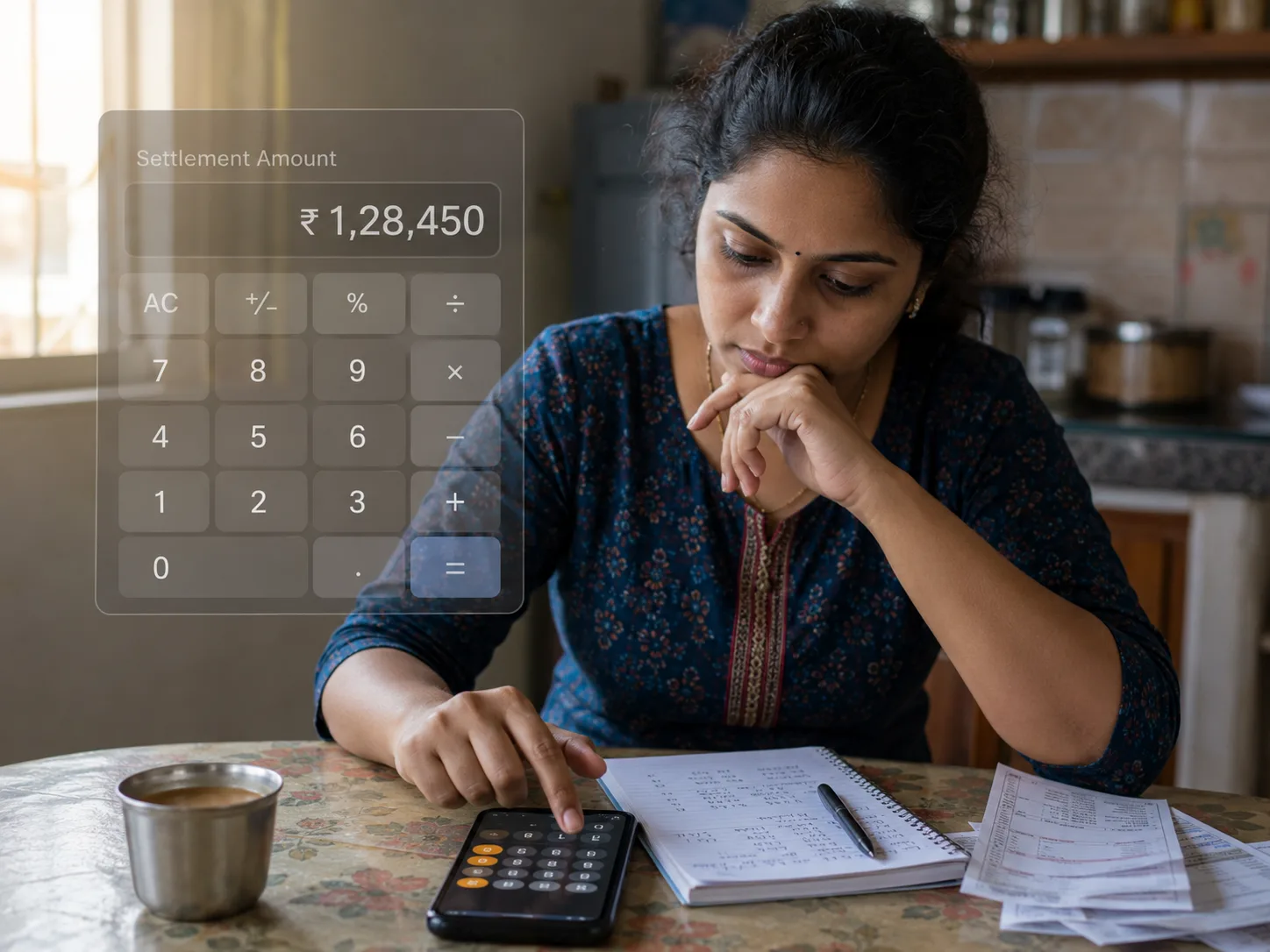
Loan settlement charges are the amounts shown by a lender as part of the outstanding dues or settlement calculation. Depending on the account and lender, these may include outstanding principal, accrued interest and applicable fees or charges. Certain documented legal or recovery costs may also be included where permitted. The exact components vary, so the settlement statement matters more than a generic formula. The final settlement figure reflects all of this, not just the original loan amount you borrowed.

Mohit Juneja
Reviewed by FREED India, Debt Resolution Specialists
 4.7/5
4.7/5 ₹3,200Cr+
 20,000+
 20,00,000+4.7/5₹3,200Cr+20,000+20,00,000+
KEY TAKEAWAYS

Loan settlement charges usually include accrued interest, late fees, and any legal or collection costs the bank has already spent trying to recover the debt.
GST treatment depends on the nature of the charge. Interest on loans and advances is generally treated differently from taxable fees or charges for financial services. Ask the lender to show any GST separately in the settlement statement rather than assuming GST applies to every component.
If a legal notice or recovery agency was already engaged, those costs are commonly added to what you're negotiating down from.
Any service fee you pay to a settlement platform like FREED is separate from what the bank charges, and is charged by FREED, not the bank.
Always ask for an itemised breakdown showing exactly what makes up the total before agreeing to a final figure.
What Are Loan Settlement Charges?
The "outstanding amount" a bank negotiates from isn't just the original principal you borrowed. It's principal plus everything that's accrued since default, interest, late fees, and any costs the bank has already spent trying to recover the debt. This is worth understanding early, because it explains why a settlement figure can look larger than a borrower expects, even before any waiver percentage gets applied. It also connects back to the basics of how loan settlement actually works and what it does to your CIBIL report, if you're still getting oriented on the process itself.
The lender may calculate or negotiate the settlement against the amount it considers outstanding under its applicable policy. Ask for the basis of the settlement figure before assuming a particular waiver percentage applies to the entire outstanding balance. A 40% waiver on a genuinely larger total looks very different from a 40% waiver on just the principal, which is exactly why understanding the components matters before you start negotiating.

What Components Typically Make Up the Total?
A settlement figure is usually built from a handful of distinct pieces, not one lump number pulled out of nowhere:
- Outstanding principal, what's actually still owed on the loan itself.
- Accrued interest, calculated on the outstanding balance since the last payment was made.
- Late payment fees, charged each cycle a payment was missed.
- Depending on the loan agreement, lender policy and applicable law, certain documented legal or recovery costs may be included in the amount the lender asks you to pay.
- GST, applied on the fee and charge components, not typically on the principal itself.
Not every account carries all of these. A recently defaulted account might just show principal, interest, and late fees. A long-overdue account may have additional accrued interest or applicable charges, and an account where formal recovery action has already begun may also have additional documented costs. It helps to see how a settlement calculator actually breaks down these components side by side, rather than trying to estimate the total from memory.
How Do Legal or Recovery Costs End Up in Your Settlement Figure?
This is a genuine point of confusion for a lot of borrowers. Once a bank has engaged a legal notice, a recovery agency, or initiated any formal collection action, those costs are commonly recovered as part of the account balance being negotiated. They may appear as separate line items in the lender's statement but can form part of the total amount the lender asks you to resolve.
What this means in practice: an account that's been in default longer, with more collection activity already behind it, can sometimes show a higher total to settle from, even when the waiver percentage applied still works out favourably in the end. It's worth reading through the real costs and risks of trying to negotiate a settlement yourself if you're weighing whether to handle this directly with the bank, since legal-cost line items are exactly the kind of thing that's easy to miss without help. This is also the part of the total that's most easily confused with something else entirely, a service fee you might separately owe to a settlement platform.

Is a Settlement Service's Fee the Same as a Bank's Settlement Charges?
No, and this distinction matters. The bank's settlement charges, interest, fees, legal costs, GST, are part of what you're negotiating down with the lender itself. A settlement platform's service fee, like FREED's, is a completely separate charge, paid to that platform for handling documentation, negotiation, and paperwork on your behalf. The service fee is separate from the lender's settlement amount and is payable to the service provider under its own terms.
FREED's current service model should be described separately from the lender's settlement charges. The applicable fee, timing and conditions should be stated according to FREED's current terms. If a platform quotes you one combined number without breaking out what's owed to the bank versus what's charged for their own service, that's worth asking about directly before you proceed. The two figures should never be presented as one.
What Goes Into a Settlement Figure vs a Service Fee
Charge | Who Charges It | What It Covers |
Accrued interest | The bank | Interest built up since default |
Late payment fees | The bank | Charges from each missed cycle |
Legal/collection costs | The bank | Costs from notices or recovery action already taken |
GST | The bank | Tax applied on fees and charges |
Service fee | A settlement platform (e.g. FREED) | Documentation, negotiation, and process handling, charged only on success |
Confirm the settlement amount, payment deadline, account number, and the exact consequence of making the agreed payment.
What Should You Ask For Before Agreeing to a Final Settlement Amount?
A short checklist worth going through before you sign anything:
- Request an itemised breakdown showing principal, interest, fees, and any legal or collection costs separately, not just one lump total.
- Confirm whether GST is already included in the quoted figure or added on top separately.
- Ask in writing how any ongoing legal or recovery action will be dealt with after the settlement payment, and obtain confirmation of the relevant next steps.
- Get everything in writing before making any payment. It's worth reviewing how to write a loan settlement letter to a bank so you know what a proper written confirmation should actually contain.
None of this is about distrust by default. It's about making sure the number you're agreeing to is the number that actually closes the account, with nothing left unclear.
Are You in a Loan Trap? Quick Check
Move the slider to your total EMIs as a % of monthly salary. See your debt stress level instantly.
EMIs as % of Monthly Salary

How FREED Handles This for Enrolled Clients
FREED reviews the available breakdown of a settlement offer with enrolled clients so they can understand the principal, interest, applicable charges and other amounts before proceeding. FREED's service fee is disclosed before enrolment and is separate from the lender's settlement amount; under the current service terms, it is charged only upon successful settlement.
That means FREED negotiates on the full picture, not just the headline number a bank might lead with. FREED has worked through 20,000+ accounts settled, counselled over 20,00,000+ customers, and managed ₹3,200 Cr+ in debt, and that same line-by-line review applies to every case, regardless of how complex the underlying charges turn out to be.

Mohit Juneja
Mohit Juneja writes educational content at FREED on debt management, credit scores, loan repayment, and borrowing best practices. His content is shaped by expert insights and industry knowledge, helping readers better understand their financial options and make informed decisions.
mohit.juneja@freed.care

FREED is India's trusted loan management platform. Founded in 2020 and headquartered in Gurugram, FREED has counselled 20 lakh+ people on personal loans, credit cards, and app loans. FREED charges fees only on successful settlement, not upfront. FREED does not handle secured loans (home loans, car loans, gold loans).
Media Mentions