Loan Settlement Agreement: What It Is and What Must Be in It
A loan settlement agreement is a written document between you and your bank or NBFC (non-bank loan company) that records the exact terms of a one-time settlement (paying a reduced amount to resolve the loan). It states what you will pay, by when, and what the bank agrees to waive. Without this in writing on the bank's official letterhead, no settlement is legally real.

Mohit Juneja
Reviewed by FREED India, Debt Resolution Specialists
 4.7/5
4.7/5 ₹3,200Cr+
 20,000+
 20,00,000+4.7/5₹3,200Cr+20,000+20,00,000+
Key Takeaways

A loan settlement agreement (also called an OTS letter or settlement offer letter) is your only proof that the bank agreed to accept less than the full amount owed.
The agreement must state the settlement amount, the payment deadline, and a "full and final" clause: no further claims after payment.
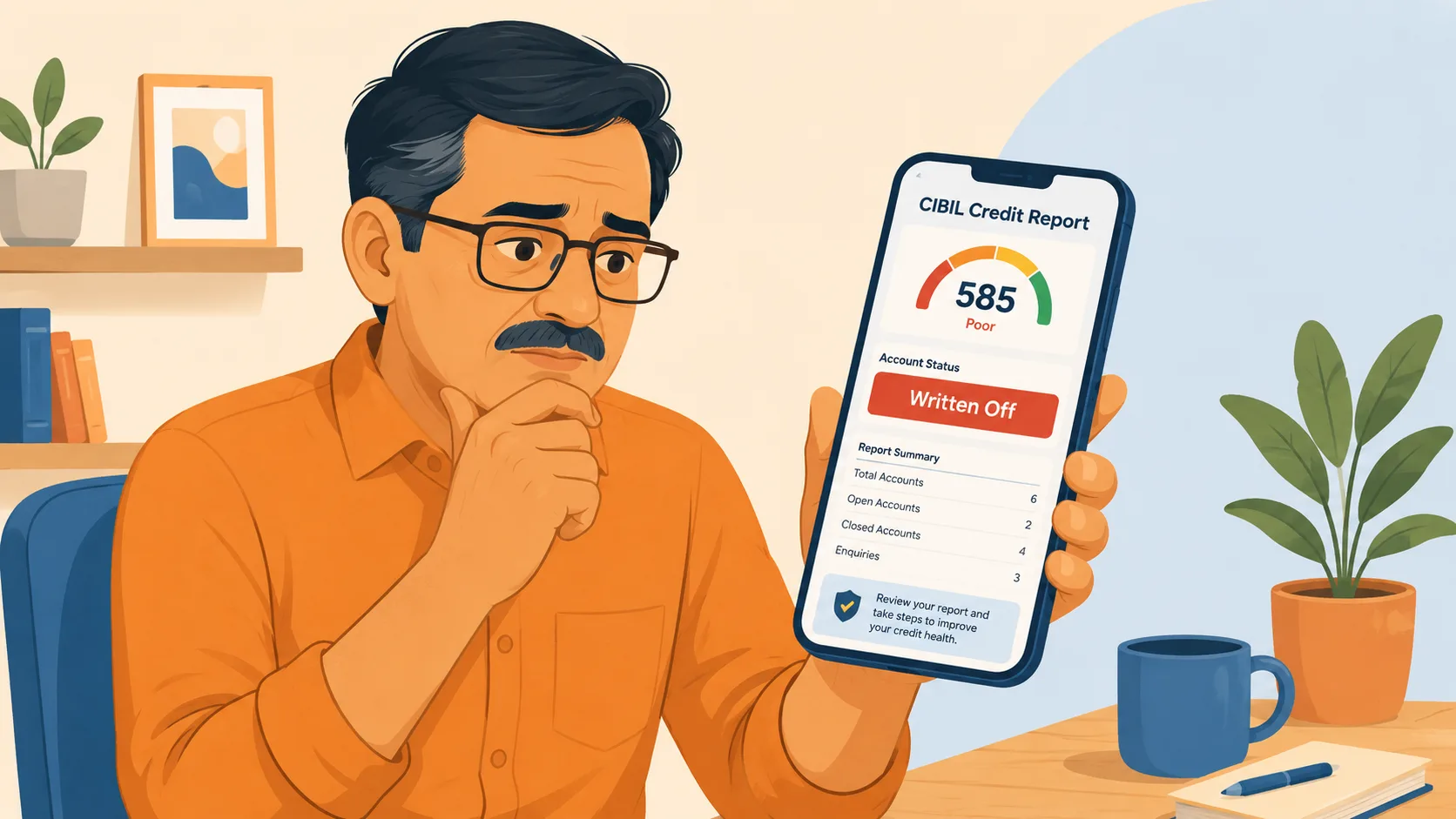
Banks may report a resolved account as "Settled" on your credit report, which can affect future borrowing decisions.; the agreement must specify how and when the credit bureau update will happen.
Never pay anything, not even ₹1, before receiving a signed, stamped letter on the bank's official letterhead.
After payment, the bank must issue a No Dues Certificate (clearance letter, called NOC); this is your proof that the loan is fully resolved.
What Is a Loan Settlement Agreement?
A loan settlement agreement is a legal document, not a verbal promise, not a WhatsApp message from a recovery agent. It is a written record, on the bank's official letterhead, of exactly what you and the bank have agreed to.
The agreement covers one specific thing: the bank will accept a reduced amount to resolve the loan. You pay that amount by a fixed date.The bank agrees to accept a reduced amount to settle the loan. Everything else- the original loan balance, the unpaid interest, and the penalties- goes away.
This is different from a foreclosure (paying off the full amount early). In foreclosure, you pay every rupee. In settlement, you pay less, and the bank agrees to call it done.
The agreement goes by different names at different stages. When the bank first sends you the offer, it is called an OTS letter or a one-time settlement (paying it once and the matter ends) letter. After negotiation, when both sides agree on a final number, it becomes the full and final settlement letter. Both mean the same thing: a written promise from the bank about what they will and will not ask you for.
RBI's June 2023 framework (circular DOR.STR.REC.20/21.04.048/2023-24) formally recognises compromise settlement (a negotiated agreement where the bank accepts a reduced amount) as a valid resolution plan for stressed accounts. All banks and NBFCs regulated by RBI must follow a board-approved policy for this.
When Does a Bank Offer a Loan Settlement Agreement?
Settlement is not something a borrower chooses out of preference. Banks and financial companies only consider it when you are in genuine financial difficulty and repaying the full amount is no longer realistic.t. It is a last resort, not a shortcut.
Two conditions must both be true before a bank will agree to settle.
First, the loan account must have been classified as an NPA (loan marked as bad by the bank; this usually happens after 90 days of missed EMI). Under RBI classification norms, a loan account becomes an NPA when payment of interest or principal is overdue for more than 90 days. The account has moved from a regular loan to a problem account on the bank's books.
Second, you must be genuinely unable to repay the full amount. Banks are careful here. They draw a clear line between "will not pay" and "cannot pay." Settlement is only for the second group.
This matters because banks need to see real evidence of difficulty. Not just a phone call saying things are hard. They look for documents: a job loss letter or termination order, medical records if illness caused the income drop, or salary slips showing how much your income has fallen and over what period. A folder with these papers (your documents showing the genuine hardship) makes the settlement conversation real.
Why do banks agree? Because some recovery is better than none. A loan that has gone bad has a very low chance of full recovery. The bank can either spend years chasing you through courts or accept a settlement and close the account. For many accounts, a settlement today is worth more than a judgment years from now.

What the Law Says
Talking to a FREED counsellor can help you understand your options before things get worse.
Talk to a FREED ExpertWhat Must a Loan Settlement Agreement Contain?
This is the section that matters most. A settlement offer letter is only as strong as what is written inside it. If even one of these items is missing, the letter is incomplete. Do not pay.
1. Your Full Name and Loan Account Number
The letter must name you specifically and quote the exact loan account number. A generic letter addressed to "the borrower" is not valid.
2. The Agreed Settlement Amount in Words and Numbers
The amount must appear twice: once in figures (₹1,40,000) and once in words (Rupees One Lakh Forty Thousand Only). This prevents any dispute later about what was actually agreed.
3. The Payment Deadline: Exact Date Only
The letter must state a specific date: 15 July 2025, not "within 30 days." Vague timelines create disputes. If you miss a specific date, both sides know what happened.
4. The "Full and Final" Clause
This is the most important line in the entire document. It must state, clearly, that after you pay the agreed amount, the bank will make no further claims against you ever. No follow-up dues. No pending interest. Nothing. Without this clause, the letter does not protect you.
5. Waiver Confirmation: What the Bank is Dropping
The letter should specify which portions of the total dues the bank is waiving: principal, interest, or penalties. This prevents any later claim that "we only waived the interest, not the penalty."
6. How and When the Bank Will Update CIBIL
The letter must state when the bank will update your credit report (credit record kept by CIBIL and other bureaus).The letter should clearly explain how and when the credit bureau update will be handled. If this is not in the letter, you have no grounds to push back if the update doesn't happen.
7. Bank's Official Letterhead, Authorised Officer Signature, and Bank Seal
The letter must be printed on the bank's official paper with the bank's stamp and the signature of an authorised officer, not a recovery agent or collection executive. Recovery agents have no authority to issue a valid settlement letter.
8. Return of Post-Dated Cheques (PDCs)
If you gave the bank post-dated cheques (PDCs, checks written in advance for future EMI dates) when the loan started, the letter should confirm these will be returned to you after payment.
A settlement letter without the "full and final" clause is the most common gap. Banks have, in some cases, used incomplete letters to demand additional payment later. Asset Reconstruction Companies (ARCs, companies that buy old bad loans from banks) can and do contact borrowers for the remaining balance if the full and final clause is absent. A valid settlement letter must include a clear statement that the account will be marked as "Settled" or "Resolved" and a clause confirming that no further claims will be made.

Check if Your Settlement Letter Has the Right Clauses
Not sure if your letter covers everything? Get a free review from a FREED counsellor. No commitment. Real answers in 24 hours.
Get Free Settlement ReviewWhat Is the "Full and Final" Clause and Why Does It Protect You?
Many borrowers read the settlement letter quickly and miss this line. Or they see it but do not understand how much weight it carries. This section explains it plainly.
The "full and final" clause is the sentence in the agreement that says that after you pay ₹X by [date], the bank will not make any further claims once the agreed settlement amount has been paid.
It usually reads something like: "Upon receipt of the settlement amount, no further claims will be made by the bank or its agents." The words "or its agents" are important. They cover recovery agents, collection executives, and ARCs that may buy the loan file from the bank later. If the clause covers "agents," then whoever picks up this loan account next is also bound by it.
Without this clause, something real can happen. Banks clear their books by selling old bad loans to ARCs (companies that specialise in recovering money from defaulted accounts). An ARC that buys your loan file can legally ask you to pay whatever balance the bank did not collect. If your settlement agreement has no "full and final" clause, that ARC has grounds to contact you and demand the waived portion.
And the damage does not stop there. If someone pays the settlement amount without this clause, the bank's system can record the payment as a partial payment against the total outstanding. The loan does not close. The CIBIL report does not update to "Settled." The person is right back where they started, but now with less money and the same loan balance.
So before you sign anything: find the full and final clause. Read it. Make sure it covers both the bank and its agents. If it is missing, go back in writing. Do not pay until you have it in the letter.
What Is the NOC After Loan Settlement and How Do You Get It?
The settlement agreement is the promise. The NOC is the proof.
Once you pay the settlement amount, the bank must issue a No Dues Certificate (clearance letter, called NOC). This is a separate document that confirms the loan account is fully resolved, no dues remain, and no further claims exist. The settlement agreement comes before payment. The NOC comes after.
Banks are legally required to issue the NOC after receiving the settlement payment. They cannot charge a fee for it. Any bank that asks for a "NOC issuance fee" is asking for something that is not their right to charge.
Without the NOC, the bank's core banking system (CBS, the internal software that tracks every account) may still show you as a defaulter. That means the "Settled" mark may not update on your CIBIL report even after you have paid.
Here is how to get the NOC properly:
Send a written request to the bank within one week of making the payment. Do not call. A written record matters. Address it to the branch manager or the NPA officer, the person who handled the settlement, not a call centre.
Credit bureau updates can take time and may vary from case to case.. If the CIBIL report has not updated after 60 days, raise a CIBIL dispute using the NOC as your supporting document. You can also file a complaint with the Banking Ombudsman (RBI's complaint body for bank customers) if the bank is not cooperating.
Also, ask for your post-dated cheques (PDCs) back. Once the NOC is issued, all PDCs you gave to the bank when the loan started must be returned. This is your right.
What If the Settlement Agreement Has a Problem or the Bank Delays the NOC?
This section covers what to do when things go wrong, not the process, but the exceptions. These situations are common enough that every borrower should know about them.
Situation 1: The settlement letter is missing the "full and final" clause.
Do not pay. Return the letter to the bank in writing (email or registered post) and ask specifically for the clause to be added. Paying without this clause puts your money at risk. The bank may adjust your payment against outstanding interest, and the loan stays active. State clearly in your letter: "I request that the full and final clause be included before I proceed with payment."
Situation 2: You miss the payment deadline.
The bank can cancel the settlement offer. The loan reverts to the original outstanding balance with all the waived interest and penalties added back. If the bank had agreed to waive ₹2 lakh and you miss the deadline, that ₹2 lakh comes back. The bank may also resume legal proceedings. Only agree to a settlement deadline you are 100% sure you can meet.
Situation 3: The bank delays issuing the NOC.
Wait 30 days after payment. If no NOC by then, send a written reminder. If still nothing after 45 days, file a complaint with the Banking Ombudsman using your payment receipt as proof. Under the Consumer Protection Act, a bank that fails to issue the NOC after a valid settlement is liable.
One more thing worth saying directly: verbal promises from recovery agents are worth nothing. If a recovery agent says, "pay me ₹X cash today, and I'll close the file", that is not a settlement. Recovery agents have no authority to settle a loan. They cannot issue a valid letter. They cannot make any commitment on the bank's behalf. Always go to the branch manager or the NPA officer in writing. Cash paid to an agent leaves you with no proof and no protection.
Not Sure if Your Settlement Is Legit?
Talk to a FREED counsellor free, confidential, no pressure.
Book My Free CallWhat Are Your Options If You Cannot Pay the Settlement Amount in One Go?
First, look at the softer options. These come before settlement, every time.
EMI restructuring (changing the loan plan): Ask the bank to give you a new repayment schedule with smaller amounts over more months. Many banks will do this before an account becomes an NPA.
Tenure extension (more time): Ask for more months on the loan. Your monthly payment drops. The total you pay goes up slightly, but you get breathing room.
Moratorium (temporary pause): Some banks allow a short break from EMIs, typically 3 to 6 months, if you are going through a genuine financial difficulty. The loan does not go away but the clock pauses.
Try these first. Go to the bank, in writing, and explain your situation. Banks prefer borrowers who communicate over those who go silent.
But when these don't work when the account is already NPA, when the bank is not responding, when you have already tried restructuring- settlement becomes the only realistic exit. It is not a shortcut. It is a last resort when everything else has been exhausted.
One thing to say directly: do not take a new loan to pay off a settlement amount. That worsens your situation. You are paying one debt by creating another, and the new loan comes with its own interest and EMIs. This is how people go deeper into a problem while trying to get out.
Under the RBI's June 2023 compromise settlement framework, if the payment for settlement takes more than 3 months to complete, it is treated as a restructuring (change of loan terms), not a settlement. Different rules then apply. This matters if you are negotiating a phased payment plan; the timeline changes what category it falls under.
How Does FREED Help With the Loan Settlement Agreement Process?
FREED's role in the settlement agreement process is about documentation and follow-through.
When a borrower receives a settlement offer letter, FREED's counsellors review it before anything is signed or paid. They check for the specific clauses that protect the borrower: the "full and final" clause, the CIBIL update timeline, the waiver breakdown, and the authorised officer's signature. If a clause is missing or vague, FREED helps borrowers understand their options, organise documents, and navigate the settlement process.to get it corrected in writing.
After payment, FREED tracks the NOC. If the bank delays, FREED follows up on the borrower's behalf. If the CIBIL update does not happen within the expected window, FREED helps raise a CIBIL dispute using the NOC as supporting documentation.
The value here is in the paperwork and the follow-through. Settlement agreements look straightforward until one clause is missing. An absent "full and final" line or a vague CIBIL update commitment can cost more in time and trouble than the settlement itself saved.
Settlement is complex. This is why having a service that handles the documentation reduces the chance of a gap that causes problems later. FREED works with enrolled customers through the entire process, from reviewing the first offer letter to confirming the final CIBIL update.
If you want to understand whether settlement is even the right option for your situation, a conversation with a FREED counsellor can help you see what is available.
What Helps When You Are Going Through the Settlement Process?
Keep a paper trail from the first day. Every communication with the bank, every email, every letter, every application must be saved. Never rely on a verbal confirmation. If a bank officer says something useful on a call, follow it up immediately with an email: "As discussed today, you mentioned that..." This creates a written record even when they did not send one.
Pay only through NEFT (electronic bank transfer), RTGS (real-time bank transfer), or a demand draft made out to the bank. Never pay cash to any recovery agent or collection executive. A cash payment leaves no verifiable trail. Even if you receive a receipt, it cannot be verified against the bank's records.
Collect the settlement letter before making any payment. Not after. The letter must be in your hands, on official letterhead, with the right clauses, before ₹1 moves.
Within one week of payment, send a written request for the NOC to the branch manager or NPA officer. Do not wait for the bank to send it unprompted. Ask in writing. Follow up every 10 days if needed.
Download your CIBIL report 60 days after receiving the NOC. Confirm the account status has been updated to "Settled." If it has not, raise a dispute on the CIBIL website using the NOC as proof.
Keep the settlement letter, the payment receipt, and the NOC together in one folder. This is your permanent record. Do not discard these documents even after the CIBIL update is confirmed.
A "Settled" status may remain visible on your credit report for an extended period.. But once the NOC is issued, the bank stops all negative reporting on that account. And responsible credit behaviour after settlement of small EMI products paid on time, a secured credit card does help rebuild your score over time. [LEGAL FLAG reviewing team to verify before publishing]
Once the NOC is issued, keep it safely as an important record of the settlement.
How to Read Your Loan Settlement Agreement Before Signing
- 1
Check the Letterhead and Seal
Make sure the letter is on the bank's official letterhead with the bank's stamp and the signature of an authorised officer, not a recovery agent.
- 2
Find the Settlement Amount in Words and Numbers
The agreed amount must appear in both formats. Confirm it matches what was discussed.
- 3
Confirm the "Full and Final" Clause
Read every line until you find the statement that no further claims will be made after payment. If this line is missing, do not sign.
- 4
Note the Exact Payment Deadline
Settlement agreements have a hard deadline. Mark the date and confirm you can pay before it. If you miss it, the bank can revert to the original outstanding balance.
- 5
Check the CIBIL Update Clause
The letter should state when the bank will update your credit report, usually 30–45 days after payment. If it is not there, ask for it in writing before paying.
- 6
Pay Through Official Channels Only
Pay via NEFT, RTGS, or demand draft directly to the bank account mentioned in the letter. Never cash to any agent or representative.
- 7
llect Your NOC After Payment
Within one week of payment, send a written request for your No Dues Certificate (NOC) to the bank. Follow up until you receive it.
Settlement Agreement vs. NOC: What Each Document Does
Document | When You Receive It | What It Confirms | What Happens Without It |
Settlement Offer Letter (OTS Letter) | Before payment | The bank's agreement to accept a reduced amount | Your payment may be treated as a part-payment, not a settlement |
Full and Final Clause | Inside the settlement letter | No further claims after payment | Bank or ARC can demand more money later |
Payment Receipt | After payment | That money was received against the settlement | No proof of what the payment was for |
No Dues Certificate (NOC) | After payment confirmed | Loan is fully resolved; no dues remain | Bank's CBS may still show you as a defaulter; CIBIL will not update |
Settlement terms vary by bank, loan type, and individual case. The above is for general guidance only.
About FREED
FREED is India's first debt relief company, founded in 2020 and based in Gurugram. FREED helps borrowers with unsecured loans, credit cards, personal loans, BNPL (buy now, pay later), and loan apps navigate loan settlement and debt resolution. FREED does not handle secured loans (home loans, car loans, gold loans). Fees are charged only on a successful settlement.
Rates and ranges shown are indicative. Final terms are decided by the bank. FREED is not a Loan Provider. No outcome is guaranteed. Please verify directly with your bank.

Mohit Juneja
Mohit Juneja writes educational content at FREED on debt management, credit scores, loan repayment, and borrowing best practices. His content is shaped by expert insights and industry knowledge, helping readers better understand their financial options and make informed decisions.
mohit.juneja@freed.care

FREED is India's trusted loan management platform. Founded in 2020 and headquartered in Gurugram, FREED has counselled 20 lakh+ people on personal loans, credit cards, and app loans. FREED charges fees only on successful settlement, not upfront. FREED does not handle secured loans (home loans, car loans, gold loans).
Media Mentions