Debt Consolidation Requirements: Documents, Score and Income
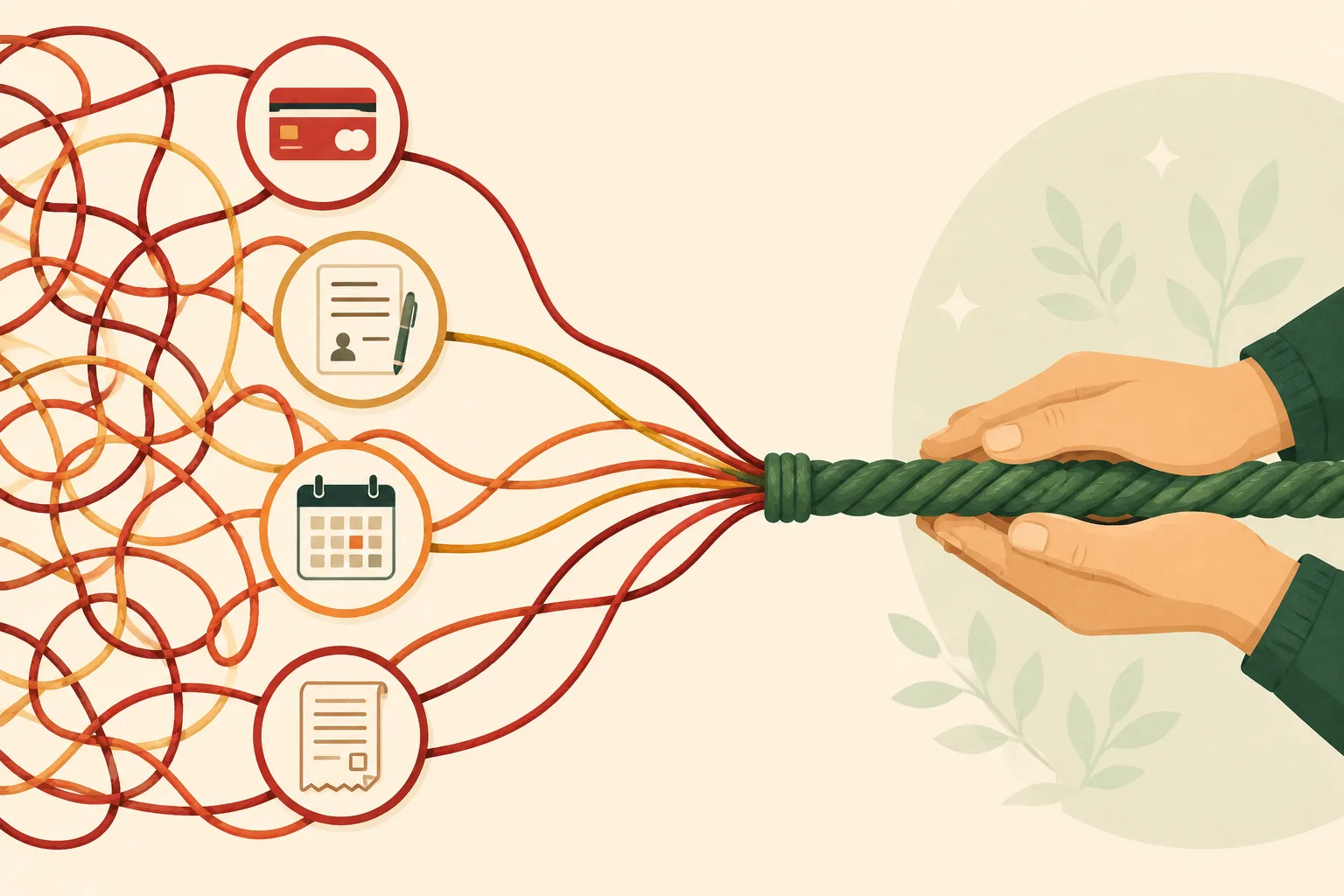
Debt consolidation requirements are the papers, credit score and income a bank or loan provider checks before it gives you one loan to pay off several. Each provider sets its own limits. The list in this guide shows what they usually look at, so you can get ready before you apply.

Mohit Juneja
Reviewed by FREED India, Debt Resolution Specialists
 4.7/5
 ₹3,200Cr+
 20,000+
 20,00,000+4.7/5₹3,200Cr+20,000+20,00,000+
Key Summary

Debt consolidation requirements come down to five checks: documents, credit score, income, EMI share and the dues being closed.
We found no RBI-set credit score for consolidation. Each lender decides.
One lender’s page says a score of 700 or more helps with quicker approval and better terms. It does not call it a minimum.
In our example, EMIs of ₹33,000 on ₹60,000 take-home pay (55%) fall to about 36% after consolidation.
You should receive a Key Facts Statement, and a cooling-off period applies to digital loans (RBI).
What Are the Debt Consolidation Requirements in India?
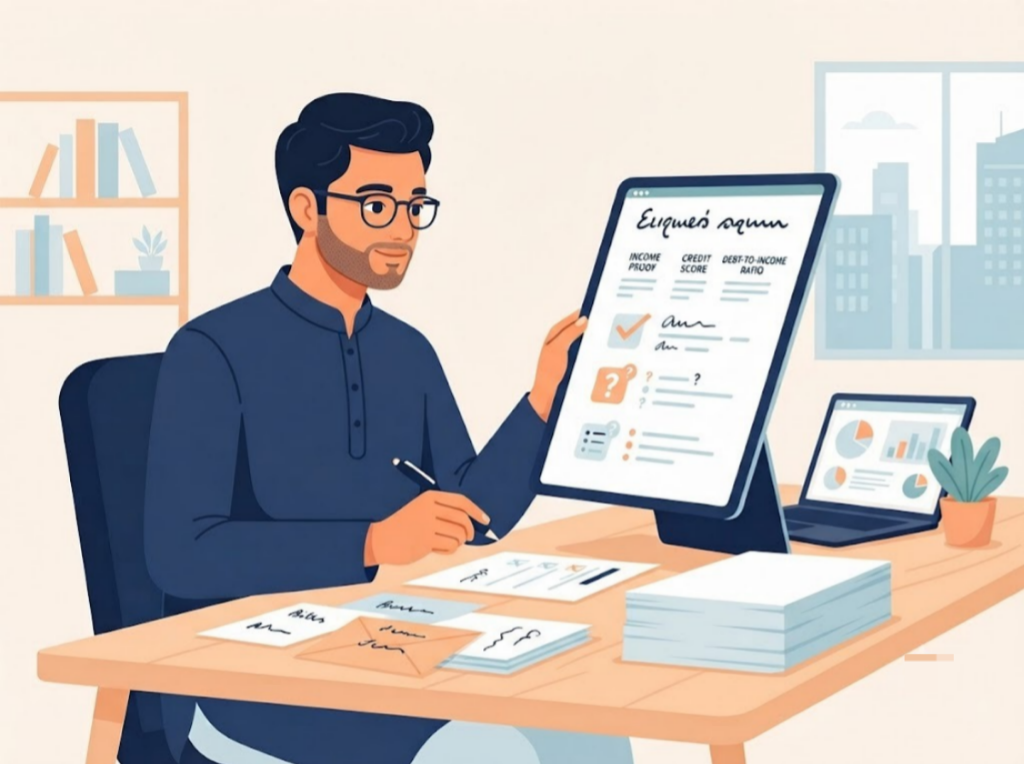
Banks and loan providers usually check five things before they approve a consolidation loan. Each one sets its own limits. So the debt consolidation requirements below show what is common, not what is fixed for everyone.
Here are the five checks in one table.
| Requirement | What the lender checks | Where this guide covers it |
|---|---|---|
| Documents | ID, address, income proof, statements | Section 2 |
| Credit score | Your credit report and score | Section 3 |
| Income and job | Steady income, time in the job | Section 4 |
| EMI share | Your existing EMIs against your income | Section 5 |
| The dues to close | Which loans, and how much | Section 6 |
There’s no single rule from RBI that sets one credit score or one income for every consolidation loan. Providers decide that themselves. So treat any page that gives you one “magic number” with care, ours included.
What does that mean for you? You can’t control each provider’s limits. But you can control your papers, your report and your numbers. That’s what the rest of this guide helps you get ready.
A quick note on scope. This guide is about unsecured dues, such as credit cards, personal loans, buy now, pay later (BNPL) dues and loan app dues. Secured loans, such as home loans, follow different rules.
If you’re new to the idea, start with our pillar guide on how loan consolidation works in India. It explains the loan itself. This page covers what you need before you apply.
So where do you start? With the papers, because that’s where most delays happen.

Want Every Loan and Card on One Page?
See your accounts in plain words before you apply anywhere.
Check My Credit InsightsWhich Documents Do You Need for Debt Consolidation?
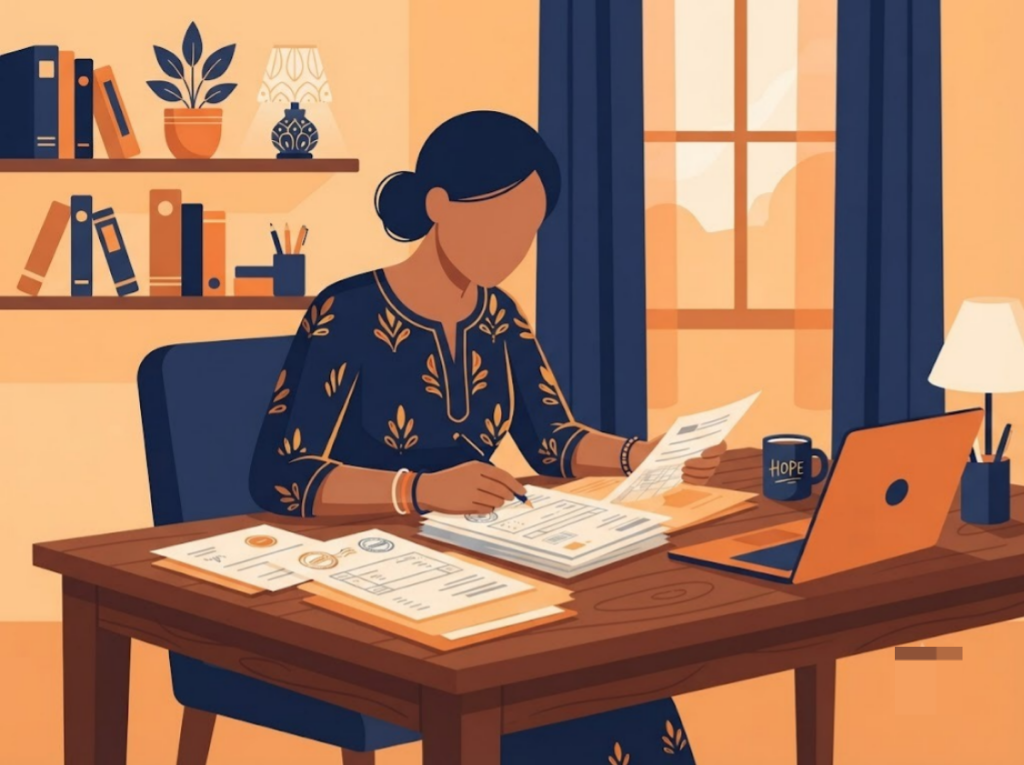
Most delays come from missing papers, not from the credit score. A form sits unfinished because one statement is old, or one name is spelled differently. That’s an easy problem to fix before you apply.
Here are the documents most lenders ask for.
| Document | Why it’s asked | Tip |
|---|---|---|
| ID proof | Identity check (KYC) | Use the same name spelling everywhere |
| Address proof | Address check | Match the address on your bank account |
| Income proof (salary slips) | Shows your income | Recent months, from one employer |
| Bank statements | Shows salary credits and EMIs | Keep to the months asked for |
| Statement of every loan and card you want to close | Lets the lender see what to pay off | Dated this week, showing the outstanding amount |
| Photograph and signature | Application form | A recent photo |
Lists differ by lender, so here is one example, and only an example. One lender’s page asks for ID proof (Aadhaar, PAN, passport or voter ID), address proof, the latest 3 months of salary slips, 6 months of bank statements showing salary credits, and a photograph. Another lender may ask for more or less.
The row most people miss is the statement for each loan or card you want to close. Without it, the lender can’t see what the new loan must pay off. Each statement should show the outstanding amount, the account number and the EMI date. A statement from last month may show a different amount, so download them all on the same day.
A word on KYC (Know Your Customer). RBI’s KYC rules define which documents count as officially valid proof. The exact list can change, so ask the lender for its current list instead of relying on a blog. If you’re self-employed, your income papers will look different, and our guide on debt consolidation for the self-employed covers that.
Keep digital copies on your phone, and send them only through the lender’s official site or app. Never share papers or an OTP with someone who calls you.
FREED’s team confirms what’s needed for the Loan Consolidation Plan during the assessment.

FREED Expert Tip
Download a statement for every loan and card on the same day, so the outstanding amounts match. A lender can only plan one payoff if the numbers agree.
Check My Credit InsightsWhat Credit Score Do You Need for Debt Consolidation?
Here’s the honest answer. We found no RBI-set credit score for consolidation. Each bank or loan provider decides for itself, and most don’t publish a hard cut-off.
One lender’s page gives a useful example. It says a score of 700 or more “helps in quicker approval and better terms”. Notice the wording. It says “helps”. It doesn’t call 700 a minimum. Other providers may look at your score differently, so don’t treat that number as a rule.
The score is also not the only thing a lender looks at. These matter too:
- Recent missed payments. A late EMI in the last few months can weigh more than an older one.
- How much of your card limit you use. A card that’s always near its limit can look like a strain.
- Recent loan enquiries. Many applications in a short time can look like a rush for credit.
- Mistakes on your report. A wrong entry can hurt you for no reason.
You have a right to see your own report. Under RBI’s rules, each credit bureau must give you one free full credit report a year, from January to December. Read it before you apply and fix any errors. Our guide on the annual credit report shows how.
For scores by type of lender, read our post on the minimum CIBIL score for a personal loan.
A quick point on tools. FREED’s EMI Score isn’t a credit score. It shows how much of your salary your EMIs take.
What does FREED check? FREED assesses your profile, including your credit report, before it matches you to a lending partner. Its team can tell you where you stand.
If you’re below where you’d like to be, work on what you can control. Pay every due on time. Keep card use low. Don’t apply to many lenders at once. Our guide on consolidating debt without hurting your credit score has more.
What if you’ve already missed payments? Recent defaults can make approval more difficult, but they do not automatically rule out every option. Review your repayment position, speak to your existing lenders and understand the available alternatives before submitting another application.
How Much Income Do You Need for Debt Consolidation?
There’s no fixed income that works for everyone. A lender isn’t only asking “how much do you earn?” It’s asking two other things. Is your income steady? And does the new EMI fit inside it?
One lender’s page gives an example. It says “a stable monthly income is essential” and names no minimum amount. It asks for six months in your current job. And it says the loan amount depends on your income and your debt-to-income ratio. Other providers will differ, and this is only one example.
Notice what that means. Steadiness counts as much as size. Someone who earns less but earns steadily, with few EMIs, can look safer than someone who earns more but has a very full month.
So how do you check yourself? Use this short method.
- Add your monthly take-home pay. This is what reaches your bank, after tax and deductions.
- Add every EMI you pay each month. Include cards, loan apps and BNPL.
- Divide the EMIs by your take-home pay. The result is your EMI share. Section 5 shows a worked case.
If your EMIs take half your pay or more, a lender may see that as heavy. That doesn’t mean a no. It’s a sign to look closely at the new EMI.
You can also see how this looks for you with FREED’s EMI Score. It compares your EMIs with your take-home pay.
If your income is on the lower side, our guide on debt consolidation with a low income covers that case. For what FOIR means in detail, read our post on FOIR and loan eligibility.
No provider can promise approval at any income, and neither can we. FREED’s team confirms what’s needed during the assessment.
See What Share of Your Salary Goes to EMIs
Check how much of your pay your EMIs take.
Check My EMI ScoreHow Is Your EMI Share Worked Out, and How Does Consolidation Change It?
Your EMI share shows how much of your monthly income goes towards existing EMIs. Lenders often assess this through FOIR (Fixed Obligation to Income Ratio), although their calculation methods can differ. Some lenders use gross monthly income and may include other fixed obligations, not just loan EMIs. The calculation using take-home pay in this guide is a personal budgeting illustration, not a universal lender formula.
Let’s see it in a made-up case. It’s an illustration, not a real customer.
Say your take-home pay is ₹60,000 a month. You pay four EMIs:
| EMI | Amount |
|---|---|
| Personal loan | ₹14,000 |
| Credit card | ₹7,500 |
| Loan app | ₹6,500 |
| BNPL | ₹5,000 |
| Total | ₹33,000 |
Your EMI share is ₹33,000 ÷ ₹60,000 = 55%. More than half your pay goes out before rent or food.
Now say your dues add up to ₹6,00,000. A new loan of ₹6,00,000 at 17% a year over 36 months has an EMI of about ₹21,392. That’s about 35.7% of ₹60,000. It’s about ₹11,608 less each month than the ₹33,000 you pay now.
That looks like good news. But look at the cost too.
- The loan runs longer. Over 36 months, you’d repay about ₹7,70,099 in total (₹21,391.64 × 36).
- Your old loans may have ended sooner. Some of them may have had only a few months left. So compare the total cost, not just the EMI.
- The 17% rate is an illustration, not an offer. Your rate depends on your profile and the lender.
Use the Key Facts Statement to compare total cost. It shows the rate, the fees and the repayment schedule in one place.
One question is worth asking every lender: “How do you treat my existing EMIs while you assess the new loan?” Some lenders may count them until they’re closed. That can change the result.
For another worked case, see our debt consolidation example.
Rates and ranges shown are indicative. Final terms decided by the bank/lender. FREED is not a Loan Provider. No outcome is guaranteed. Please verify directly with your bank.

Combine Your Loans Into One Lower EMI
Depending on your outstanding dues, eligibility and the terms offered by the lending partner, FREED’s Loan Consolidation Plan may help reduce your monthly EMI burden.
Reduce My EMIWhich Debts Can You Consolidate, and Which Can’t You?
Not every debt can go into one new loan. Providers have their own lists, so check each one before you plan.
| Type of debt | Usually eligible? | Note |
|---|---|---|
| Credit card dues | Yes, usually | Use the outstanding amount, not the limit |
| Personal loans | Yes, usually | Ask about foreclosure charges on each |
| Loan app and BNPL dues | Depends on the provider | Ask whether each can be closed |
| Overdrafts | Often yes | Check the provider’s list |
| Home loan, mortgage and other secured loans | Typically not | They follow different rules |
One lender’s page gives an example. It says you can consolidate credit card dues, personal loans, overdrafts and other unsecured debts. It says home loans and mortgages aren’t eligible. And it says the new loan is capped at ₹25 lakh or the total outstanding debt, whichever is lower. Other providers will set their own limits.
There’s a practical point here. The new loan has to cover the total outstanding amount if you want to close everything. So add up the amounts on your statements, and check them against the loan you’re offered. If the loan is smaller, some dues will stay open.
Also note how the money moves. In some cases, a lender can pay your existing creditors directly. In other cases, the money comes to your account, and you pay the old dues yourself. Ask which one applies, and keep the payoff proof either way.
For a bank-by-bank view, read our guide on bank debt consolidation loan eligibility and fees.
Do the Requirements Differ for Salaried and Self-Employed Borrowers?
The checks are the same in spirit. A lender wants to know that your income is steady and that you can pay the new EMI. But the papers that prove it can look different.
If you’re salaried, the proof is usually simple. Salary slips show what you earn. Bank statements show the salary reaching your account each month. A lender can see a clear pattern, and that makes the check quicker.
If you’re self-employed, the proof is often a little wider. Lenders may ask for tax returns, business bank statements and other papers that show your income over time. Lists vary by provider, so ask for the exact list.
Two other things matter for both.
- Time in the job or business. One lender’s page asks for six months in the current employment. Others may ask for more.
- A clean match between papers. Your name, address and income should look the same across documents.
If you’re self-employed, plan a bit more time. It takes longer to collect tax papers and business statements than it does to download salary slips. Start early, and keep everything in one folder.
A short tip for the self-employed: show your income as it really is. Some people hold back papers they think will look weak. But a lender usually sees the whole picture from bank statements anyway, and a mismatch can slow things down more than a modest number.
Our guide on debt consolidation for the self-employed goes through that case. And if your income is on the lower side, read about debt consolidation with a low income.
What If You Don’t Meet the Debt Consolidation Requirements?
Maybe you were declined, or you think you will be. That isn’t the end. It tells you what to work on.
Try these steps first:
- Fix the paper gap. Missing statements and mismatched names are the easiest problems to solve.
- Lower your EMI share before you apply. If a small due is almost done, finish it first.
- Apply for a smaller loan. Clearing only your costliest dues can be easier to get.
- Ask your bank for a repayment change. Our guide on how to get approved for a debt consolidation loan lists the options.
- Get guidance. A talk with someone who sees your numbers can show what’s open.
Don’t apply to many providers in a rush. Each loan application may result in a hard enquiry on your credit report. A rejection does not automatically create a separate negative entry, but multiple applications within a short period may affect how lenders assess your credit profile.
Be honest about one limit. If you’ve missed payments, consolidation isn’t the right first step. A new loan is built for people who can still repay. This is covered in our pillar guide on who should avoid loan consolidation.
What should you do then? Talk to FREED’s team. They can look at your whole situation on a call and explain the options that fit, without any pressure. You don’t have to work it out alone.
Our post on whether you can consolidate your debt can help you think it through.
What Mistakes Delay a Consolidation Application?
Most delays aren’t about the score or the income. They come from small mistakes that are easy to avoid. Check yourself against this list.
Old statements. A statement from last month can show a different outstanding amount. Download all of them on the same day.
Amounts that don’t match. If one statement says one amount and the lender’s records say another, the payoff plan stalls. Ask each old provider for a payoff letter that shows the exact amount on a given date.
Names and addresses that don’t match. A different spelling on your ID and your bank record can hold up the check. Fix it before you apply.
A loan that’s too small. If the new loan doesn’t cover everything, some dues stay open, and you still track several dates. Add up the real payoff amounts first.
Many applications at once. Each one leaves an enquiry, and a stack of them can look like a rush for credit. Apply once.
Not asking about fees. A processing fee, or a foreclosure charge on an old loan, can eat much of the benefit. Ask for each in rupees.
Skipping the question about old EMIs. Ask how your current EMIs count while the new loan is assessed. The answer can change the result.
Handing papers to the wrong person. Share documents only through a lender’s official site or app. Never share an OTP.
If you spot one of these in your own file, fix it first. A tidy file can save days. And if you’re not sure what’s wrong, our guide on how hard it is to get a debt consolidation loan shows what to expect.
What Should You Receive Before You Accept a Consolidation Loan?
Approval isn’t the end. Before you accept, read what you’re given. For loans arranged digitally by banks, co-operative banks and NBFCs, RBI’s Digital Lending Directions, 2025 set clear rules.
- A Key Facts Statement. The lender must provide a KFS as per RBI’s April 2024 instructions, which means before you sign. Once you’ve signed, the signed documents, including the KFS and the sanction letter, should reach your registered email or SMS (para 8).
- A cooling-off option. You must be given an explicit option to exit a digital loan by paying the principal and the proportionate APR, without penalty. The lender’s Board sets the period, and it can’t be less than one day (para 10).
- A processing fee that’s shown upfront. If the lender keeps a one-time processing fee when you exit, it must be disclosed in the KFS (para 10).
- Money into your own account. The loan is paid into your own bank account, with limited exceptions such as payments made straight to the end beneficiary for a specific purpose. Repayment goes directly to the lender (para 9).
Use the KFS to check the total cost, the fees and the repayment time, not only the EMI. It lists the APR, which is the all-in yearly cost.
These rules cover digital lending by banks, co-operative banks and NBFCs. They don’t cover offers from sources outside RBI’s regulation. And they aren’t a promise about any one lender. So read your own papers.
If anyone asks for money before approval, asks you to pay an agent’s account, or avoids showing a KFS, stop and check.
For help in choosing a provider, read our guide on debt consolidation companies.

What the Law Says
Under RBI’s Digital Lending Directions, 2025, you must receive a Key Facts Statement and a cooling-off period to exit a digital loan without penalty, though a disclosed one-time processing fee may apply.
Reduce My EMIHow Do You Get Your Debt Consolidation Papers Ready in 7 Days?
Use this seven-day plan as a practical guide to organise your documents and assess your financial position before applying. The time needed may vary depending on how quickly you can obtain statements and resolve discrepancies.
Day 1: Get your credit report. Ask a bureau for your free annual report. Read it for errors and old accounts.
Day 2: List every due. Write the lender, the balance, the EMI and the due date for each loan and card.
Day 3: Download a statement for each. Do it on the same day, so the amounts match.
Day 4: Work out your EMI share. Divide your total EMIs by your take-home pay, as in section 5.
Day 5: Gather ID, address and income papers. Check that names and addresses match.
Day 6: Write your questions. Use the list below.
Day 7: Compare at least two offers. Look at each Key Facts Statement. Check the rate, the fees, the repayment time and the total cost.
Here are questions to ask any lender:
- How do you treat my existing EMIs while you assess the new loan?
- Will you pay my old loans directly?
- What are the processing fees and foreclosure fees?
- What is the total amount I’ll repay?
- What happens if I miss a payment?
Write the answers down. If a provider won’t answer in writing, that tells you something.
Then keep a folder. Save the Key Facts Statement, the sanction letter, the payoff letters and the receipts. If a question comes up later, the answer is in the folder.
If you’re short of time, do days 1 to 4 first. They matter most. Your report, your list and your EMI share tell you whether it’s worth going further.
Want to See What Your EMIs Take Today?
Check your EMIs as a share of your salary before you apply.
Check My Credit InsightsHow FREED Helps With Debt Consolidation Requirements
You can prepare everything above yourself. FREED helps with the matching and the process.
If most of your salary goes towards paying multiple EMIs, FREED’s Loan Consolidation Plan helps you combine multiple loans into a single monthly EMI. This can reduce your monthly EMI burden by up to 50%.* FREED is India’s trusted loan management platform, and over 20 lakh people trust it. It’s for people who can still repay but need a smarter way to manage their debt.
Here’s how it works:
- FREED assesses your financial profile. It looks at your loans, income and repayment record.
- FREED matches you to a lending partner from its network.
- The partner disburses one new loan. It pays off your existing eligible unsecured loans and card dues.
- FREED handles the process end to end, 100% online.
- You’re left with one loan, one EMI and one due date.
Your credit score isn’t hurt by consolidation, and it tends to improve as you pay on time. The new loan can only be used to pay off your existing eligible debt. FREED’s service fee is charged on a success-based model after the consolidation is completed, subject to the applicable programme terms. The lending partner may separately charge processing or other applicable fees. Review all charges before proceeding. The lending partner’s own processing or foreclosure fees may apply, so check the Key Facts Statement.
The plan covers unsecured debt, such as personal loans, credit card dues, BNPL and app loans. It doesn’t cover home loans, car loans or other secured loans.
What about documents, score and income? FREED’s team confirms what’s needed during the assessment. Not sure if you qualify? The team can look at your situation and tell you what options are available. You can also read the Loan Consolidation Plan page, or go back to our pillar guide on what loan consolidation is.
Rates and ranges shown are indicative. Final terms decided by the bank/lender. FREED is not a Loan Provider. No outcome is guaranteed. Please verify directly with your bank.
Combine Your Loans Into One EMI With FREED
One monthly EMI instead of several, with the process handled for you.
Reduce My EMI
Mohit Juneja
Mohit Juneja is FREED’s Content & Communication Lead with 12+ years of experience across content, media, advertising and digital communications. He holds a postgraduate diploma in Communications from Xavier Institute of Communications, Mumbai, and has worked with organisations including NDTV, The Indian Express, McCann Worldgroup and NABARD.
At FREED, he leads content and communication across loan management, debt resolution, debt consolidation and financial well-being. His work combines research, storytelling and consumer-focused communication to make complex financial topics easier to understand and act on. He has also scripted and produced 11 documentaries on rural development and agriculture for NABARD, with film's selected for the Mumbai International Film Festival.
mohit.juneja@freed.care

FREED is India's trusted loan management platform. We help India settle their loans, consolidate their EMIs, improve their credit score, and manage their loans better. Over 20 lakh people trust FREED. We have managed more than ₹3,500 crore in loans and saved our users over ₹450 crore.
Media Mentions