Bazaar Credit Score in India: What You Should Know
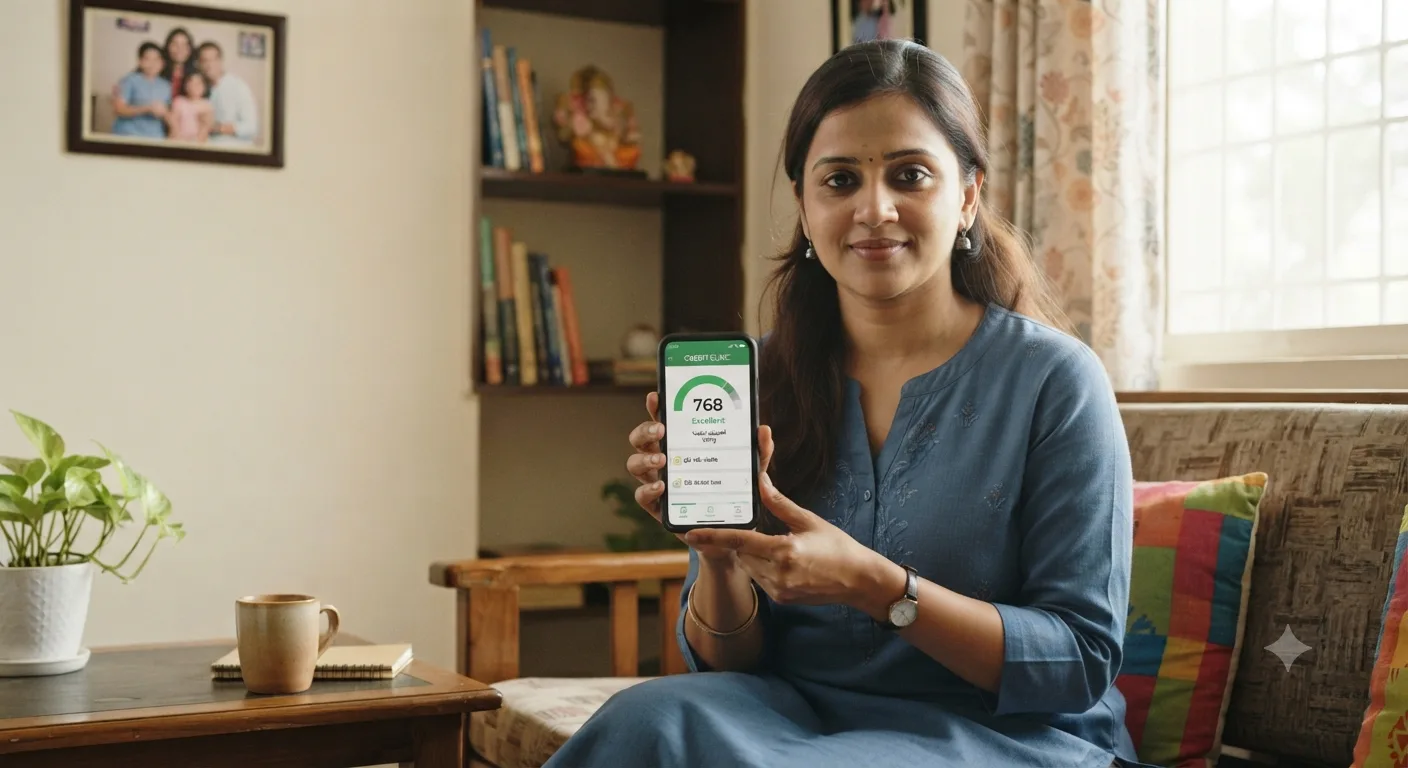
“Bazaar credit score” is an informal term people may use for a credit score displayed through marketplace platforms such as BankBazaar or Paisabazaar. It is not a separate type of credit score. The score comes from a credit bureau and is displayed through the platform. It is not a separate score. It is a credit bureau (a company that keeps your credit history) score, such as Experian or CIBIL, shown through a partner platform after you give consent.

Mohit Juneja
Reviewed by FREED India, Debt Resolution Specialists
 4.7/5
 ₹3,200Cr+
 20,000+
 20,00,000+4.7/5₹3,200Cr+20,000+20,00,000+
Key Summary

Bazaar credit score is a bureau score shown through a marketplace app, not a separate score.
The keyword fits both BankBazaar and Paisabazaar, and each describes its score source differently.
RBI sets one 300 to 900 scale for all four credit bureaus.
Scores differ across apps because bureaus use different models and update on different dates.
You also get one free full report from each bureau every calendar year.
What Is a Bazaar Credit Score?
A bazaar credit score is a credit bureau score shown inside a marketplace app. The app does not make the number. It fetches the number from a bureau and shows it to you.
People use the word "bazaar" for two apps, BankBazaar and Paisabazaar. Both offer a free score check. This guide covers both and does not pick one over the other.
Here is how it works:
You enter your details and give consent.
The app fetches your data from a credit bureau.
It shows you a score and a short summary.
A credit bureau (a company that keeps a record of your loans and card payments) is where the number comes from. India has four of them: Experian, TransUnion CIBIL, CRIF High Mark and Equifax. Think of each bureau as a separate notebook. Your bank writes your loans into these notebooks, and each notebook is kept by a different company.
BankBazaar's page says its free score is powered by Experian. Paisabazaar's pages describe free scores from more than one bureau, including CIBIL. Both statements come from the platforms themselves, so check the label inside the app you use.
This matters because a score from one bureau is not "the" score. It is one bureau's view of your record. The difference between a credit score and CIBIL score is worth knowing before you compare numbers.
RBI licenses all four credit bureaus in India. It also puts every bureau on one common scale of 300 to 900. So the number means the same kind of thing at each bureau, even when the values differ.
That raises the next question. If the scale is common, why do two apps show two different numbers?

Want Your Report Explained in Plain Language?
See your score and what drives it.
Check My Credit InsightsWhy Does My Bazaar Credit Score Look Different From My CIBIL Score?
A software tester in Pune checks his score three times in one week. One app shows 742. Another shows 768. His bank's loan page shows 751. He wonders which one is lying. (These numbers are made up, as an example.)
None of them is lying. Three simple reasons explain the gap:
Different bureaus, different models. Each bureau keeps its own record and runs its own scoring model. Two bureaus can read the same loan history and still give different numbers.
Different update dates. Credit information is updated periodically by lenders, and RBI rules require reporting at specified intervals. Because lenders and bureaus may process updates at different times, the same account information may not appear simultaneously across different reports.
A different bureau or a simpler view. An app may show one bureau while your bank checks another. Some apps also show a short summary instead of the full picture.
Back to the example. The 742 may come from one bureau on an older date. The 768 may come from another bureau after a fresh update. The 751 may be a third view. Each number can be right for its own bureau and its own date.
A gap of a few points is normal. A gap of 100 points or more is worth a look, because a wrong entry in one report could be the reason. That is a rule of thumb, not a rule. Nobody can name the cause of your own gap without seeing your reports.
No bureau is the "real" one. If you want the full story, read how scores vary between bureaus. You can also compare Experian and CIBIL side by side.
What matters is knowing which score you are looking at. That is the next step.
Two Scores, One Question About Your Report?
Talk it through with a FREED counsellor. No pressure.
Book My Free CallHow Do I Know Which Credit Score I Am Looking At?
Run through this checklist on any score screen. It takes under a minute and saves a lot of confusion later.
Look for the bureau name. The screen should say Experian, CIBIL, CRIF High Mark or Equifax. If it does not, you cannot tell whose record you are reading.
Check the date of the score. Scores change as banks send new data. A number from last month and a number from today are two different readings.
Check the range shown. RBI sets a common 300 to 900 scale for every bureau. Some pages show other ranges, so rely on 300 to 900 when you judge a number.
See if it is a score only or a full report. A score is one number. A full report lists each loan, card and enquiry behind it.
Read what "free" covers. A marketplace app may say "free" for the score only. That is not the same as a full report.
Do not compare a score with no bureau name or date. Without those two details, it cannot be matched with another score.
Know your separate right to a free full report. Each bureau gives you one free full report every calendar year (January to December). That right is separate from any app. It covers only that one bureau, so you can ask all four.
If you want to know what each band means, read about score ranges. The Experian score range page covers that bureau on its own.
Once you know what to look for, the actual check is simple. The steps come next.

Expert Tip
Note the bureau name and date beside every score you see. A score with no bureau or date can't be compared with another.
Check My Credit InsightsHow to Check Your Bazaar Credit Score, Step by Step?
Both apps ask for a few personal details before they show a score. BankBazaar asks for name, mobile number, email, an OTP and an age check. Paisabazaar's pages mention name, date of birth and PAN. Details differ by app and may change, so go by what your app asks.
Pick the app and read the consent line. Apps ask you to authorise them to fetch your data. Read what you are agreeing to before you tap.
Enter your details carefully. A wrong name, date of birth or PAN can pull the wrong file. Mismatched details are a common reason for a missing or strange score. If you only have your PAN handy, see how to check your score with PAN.
Verify with the OTP. The OTP proves the number is yours. Never share it with anyone else.
Note the bureau, date and score. Write all three down. A score without them is hard to compare later.
Look at the account summary. Check that each loan and card is yours and that the status looks right. Errors show up here first.
Compare with a free full report from the bureau. Each bureau gives one per calendar year. The full report shows detail that a summary may leave out. Here is how to get a free CIBIL report or a free Experian report.
Dispute anything wrong. Write to the bank that reported it and also raise it with the bureau. Banks and bureaus have 30 days to fix a wrong entry. This guide explains how to raise a dispute.
Here is what that 30-day limit looks like in rupees. Say you file a dispute on 3 November. The 30 days end on 3 December. The entry gets fixed on 13 December. That is 10 days of delay. At ₹100 for each calendar day, the compensation is ₹1,000. It is paid within 5 working days. (These dates are an example.)
If you identify inaccurate information in your credit report, you can raise a dispute with the relevant lender and credit bureau.
Is It Safe to Check Your Bazaar Credit Score?
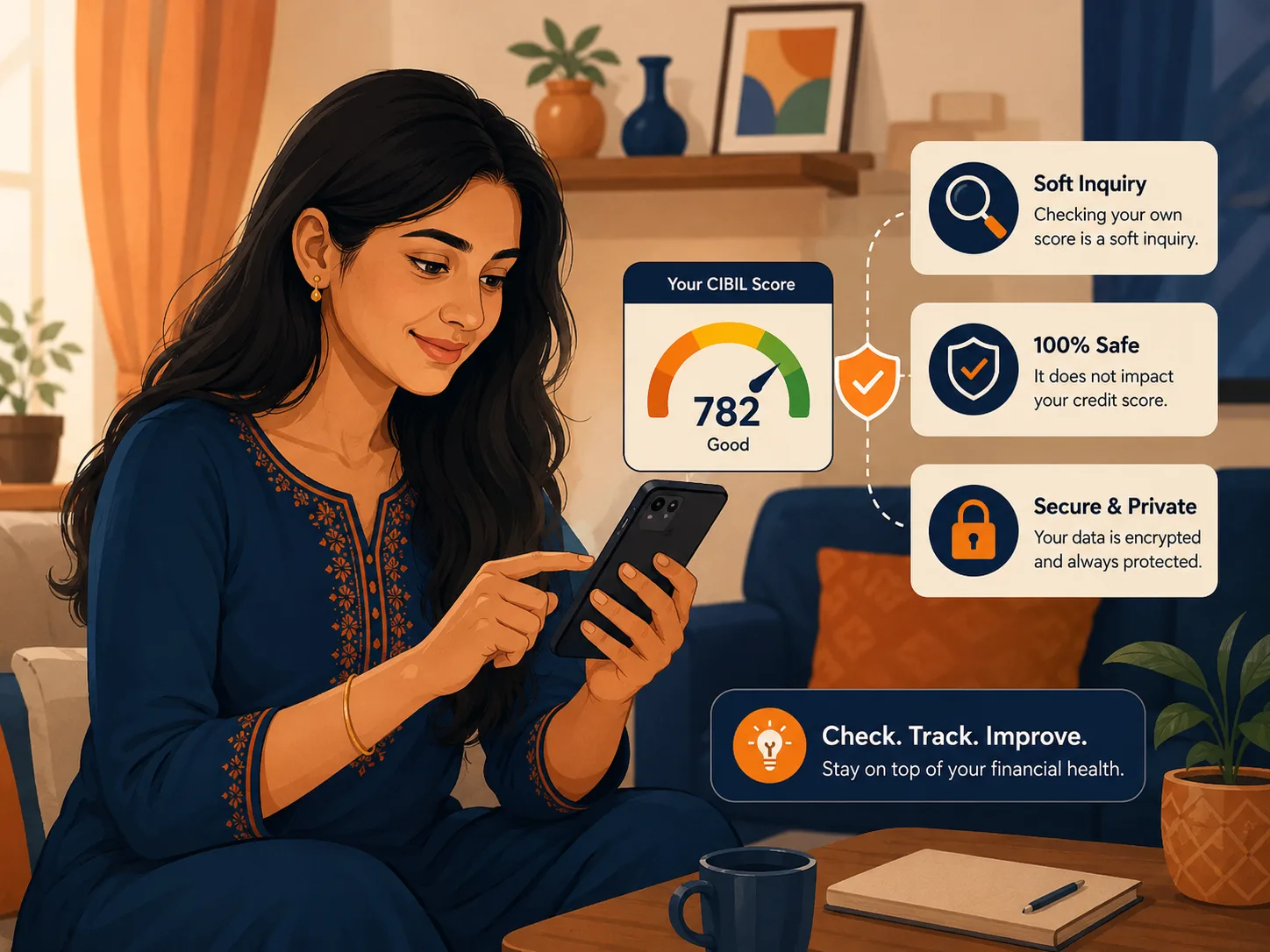
Checking your own credit score through an authorised platform or directly through a credit bureau is a common way to access your credit information. The platforms say it is a soft enquiry (a check that does not touch your score), so it has no effect on your score. That statement comes from the platforms, not from RBI.
So how does an app get your data? You give consent, and the app fetches your report from a bureau. RBI rules also limit what a non-bank entity can do with that report:
It can use the report only for the purpose you agreed to.
It cannot sell the report or pass it on.
It can keep the report for at most six months, or less if the purpose is met or you withdraw consent.
It must store the data in India.
You stay in control. Read the consent text, withdraw consent if the app lets you, and never share an OTP or password.
A hard enquiry (a check made when a lender looks at your file for a loan) is different. A hard enquiry can lower your score a little, and too many in a short time can add up. A soft enquiry cannot. Here is a full explainer on a soft inquiry. You can also read whether checking reduces your score.
None of this means any app is unsafe. It also does not promise how any app handles its own data. It only tells you what the rules ask of apps that fetch your report with consent.

What the Law Says
Apps that fetch your credit report with your consent must use it only for that purpose and keep it no longer than six months. The six months also end if the purpose is met earlier or you withdraw consent.
Talk to a FREED CounsellorWhat Can You Do With Your Bazaar Credit Score?
Your score is a snapshot of one day. It is not a verdict on you. Use it to decide what to do next, then do those things in order.
First, fix wrong entries. A loan you never took or a payment marked late by mistake can hold your score down. Learn how to fix wrong entries before you do anything else.
Second, pay on time. Payment history is an important factor in credit scoring, so making repayments on time can help support a healthy credit profile. Even one late payment shows on your report.
Third, keep card use low. A card with a ₹1,00,000 limit and ₹60,000 used is at 60% use. Paying it down to ₹30,000 brings it to 30%. Keeping use around 30% is commonly advised, though lenders set their own views.
Fourth, space out loan and card applications. Each application can lead to a hard enquiry. Too many close together can look like you are short of money. You can read how to read your Experian report, and learn about soft and hard enquiries, to see these in your own file.
The table below shows four ways to see your score and report. Read it row by row. Each row tells you what you get, what it costs, how often you can use it, and what to watch.
Ways to See Your Credit Score and Report
Source | What You Get | Cost | How Often | What to Watch |
Marketplace app (e.g., BankBazaar, Paisabazaar) | A bureau score and a summary | Free, as the platforms describe it | Varies by app | Check the bureau name and date |
A bureau's own free full report | Full report and score from that one bureau | Free | Once per calendar year per bureau | Covers only that bureau |
A bureau's paid report | Full detail and updates | Paid | As offered | Compare what is included before paying |
FREED Credit Insights | Your Experian score, plain-language factors, practical recommendations | Subscription | While subscribed | No score outcome is promised |
Rates and ranges shown are indicative. Final terms decided by the bank. FREED is not a Loan Provider. No outcome is guaranteed. Please verify directly with your bank.
If missed EMIs are the reason, FREED's team can talk through your options on a free call.
How FREED Helps If You Want to Understand Your Credit Report?
A score tells you where you stand. It does not tell you why. Many people see 700 or 650 on an app and still have no idea what pulled it there.
FREED Credit Insights ("Check My Credit") is open to anyone, whether you are enrolled with FREED or not. It pulls your Experian report and gives you three things: your score, a plain-language explanation of the factors behind it, and practical recommendations you can act on.
Here is what it does not do. It does not promise a score. It does not promise a timeline. It does not remove accurate entries from your report.
Free options exist, and they are good starting points. A marketplace score gives you a quick number. A bureau's free yearly report gives you the full record. Credit Insights is for readers who want that report explained in plain words, with next steps attached.
FREED was founded in 2020 and is based in Gurugram. More than 20,00,000 people have spoken to FREED counsellors so far. That experience is why the explanations here stay in simple language.
If your report shows trouble, such as missed payments or accounts you do not recognise, FREED's counsellors are available on a free call. There is no pressure to take any step.
See Your Experian Report Explained
Score, factors and next steps in plain language.
Check My Credit InsightsHow Much Could One Missed EMI Change Your Credit Score?
One late payment can affect your report. How much depends on your starting score and your history, so two people can see very different results from the same slip.
Rates and ranges shown are indicative. Final terms decided by the bank. FREED is not a Loan Provider. No outcome is guaranteed.
A single slip is not a crash. If you want to improve your score, steady habits over the next few months matter more than any one date.
Are You in a Loan Trap? Quick Check
Move the slider to your total EMIs as a % of monthly salary. See your debt stress level instantly.
EMIs as % of Monthly Salary
What Helps Keep Your Credit Score Healthy?
Tip 1: Check your score on a regular schedule. Pick a day each month and look at your score. Note the bureau name and the date each time, so your numbers stay comparable.
Tip 2: Keep card use low. Try to stay near 30% of your card limit. Pay the bill in full when you can, and your usage will stay low without much effort.
Tip 3: Keep total EMIs under half of your take-home pay. Test a new loan with FREED's EMI Score before you take it. If your EMIs already eat more than 50% of your take-home salary, you are heading into trouble.
Tip 4: Space out loan and card applications. Apply when you truly need the credit, and leave gaps between applications. Each one can add a hard enquiry to your report.
Tip 5: Check your report after you finish a loan. Make sure the loan shows as paid and the details are right. That also helps you see what a good score looks like for the next time you apply.
Credit-score changes can take time because they depend on reported account information, repayment behaviour and the scoring model used.
Sourcing and Verification
Claim | Source |
All bureaus use a common 300 to 900 scale | RBI Master Direction (Credit Information Reporting) Directions, 2025, Section 9(1)(h). https://www.rbi.org.in/Scripts/BS_ViewMasDirections.aspx?id=12764 |
One free full report per bureau per calendar year | Same, Section 9(1)(i) |
Banks update bureaus fortnightly, within 7 days | Same, Section 6(1)(b) |
Third-party apps: consented use only, six-month cap, India-only | Same, Section 9(2) |
Wrong data is corrected at source by the bank | Same, Section 10(2) |
30-day limit; ₹100 per day of delay | Same, Section 17 |

Mohit Juneja
Mohit Juneja is FREED’s Content & Communication Lead with 12+ years of experience across content, media, advertising and digital communications. He holds a postgraduate diploma in Communications from Xavier Institute of Communications, Mumbai, and has worked with organisations including NDTV, The Indian Express, McCann Worldgroup and NABARD.
At FREED, he leads content and communication across loan management, debt resolution, debt consolidation and financial well-being. His work combines research, storytelling and consumer-focused communication to make complex financial topics easier to understand and act on. He has also scripted and produced 11 documentaries on rural development and agriculture for NABARD, with film's selected for the Mumbai International Film Festival.
mohit.juneja@freed.care

FREED is India's trusted loan management platform. Founded in 2020 and headquartered in Gurugram, FREED has counselled 20 lakh+ people on personal loans, credit cards, and app loans. FREED charges fees only on successful settlement, not upfront. FREED does not handle secured loans (home loans, car loans, gold loans).
Media Mentions