How to Improve Credit Score Fast: What Works, What Takes Time, and What to Ignore
Improving your credit score fast means taking the highest-impact actions first, in the right order. Some actions may begin reflecting in your credit profile sooner than others, depending on the lender's reporting cycle and your individual circumstances. Other changes require consistent repayment behaviour over time. A few things, like reversing a default or removing a genuine "Settled" tag, cannot be rushed at all. This guide explains which actions may have a quicker effect and which generally take longer.
Mohit Juneja
Reviewed by FREED India, Debt Resolution Specialists
 4.7/5
4.7/5 ₹3,200Cr+
 20,000+
 20,00,000+4.7/5₹3,200Cr+20,000+20,00,000+
KEY TAKEAWAYS

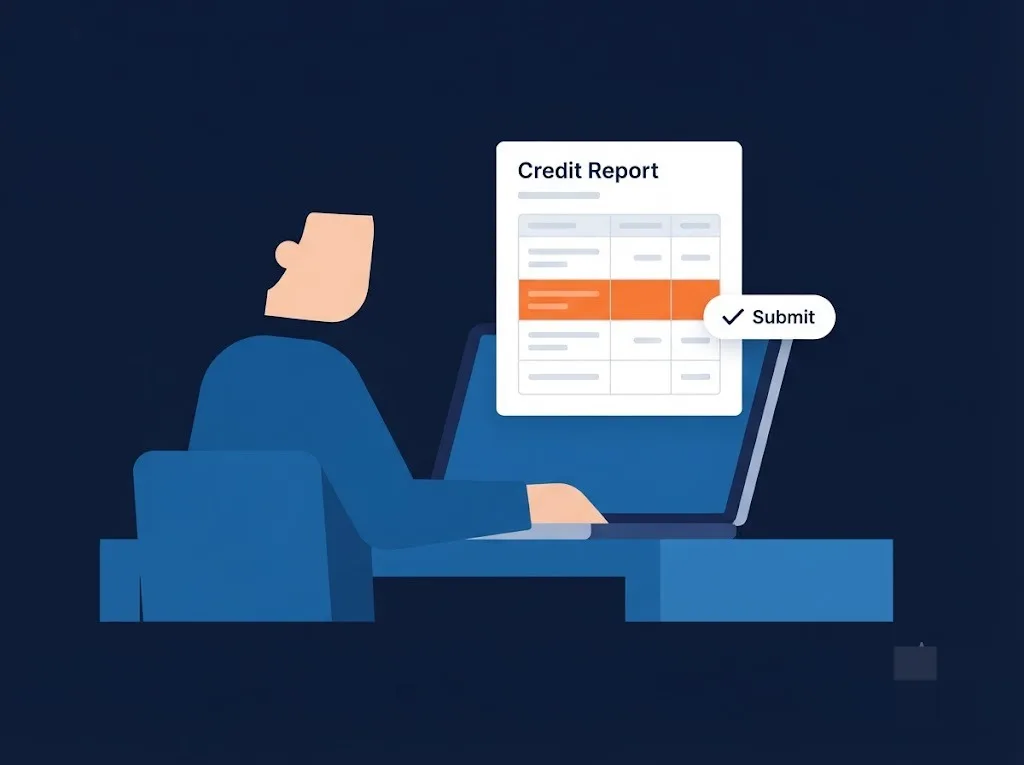
Correcting a reporting error may help ensure your credit report accurately reflects your financial history. The time taken for any changes to appear depends on the reporting process. Disputes are resolved within 30 days under RBI rules, and scores update within 5 to 7 days after the correction.
Reducing your credit utilisation may strengthen your credit profile over time.
Payment history is one of the important factors considered in credit scoring models. Consistent on-time payments for 3 to 6 months produce noticeable improvement.
Missing repayments may negatively affect your credit profile.
Credit reports are updated periodically based on information reported by lenders.
No one can legally boost your score for a fee. Anyone claiming to do this is running a scam.
Why Do Most "Improve Credit Score Fast" Tips Not Actually Work Fast?
Most content on this topic promises "improve in 30 days" or "100 points in a month." That's misleading, and it's worth understanding why before you spend effort chasing it.
The bureau is tracking your repayment behaviour over months, not days. Your score updates every 30 to 45 days, based on when your lenders actually report to the bureau. Even if you do everything right today, the first update only happens when your lender next sends its data across.
There's really only one genuinely fast move available, fixing a report error. That one bypasses the behavioural track entirely, because it's correcting wrong data rather than waiting for new good behaviour to accumulate. Everything else is a function of consistency over time, not a single action you take once.
The average CIBIL score in India currently sits around 682, while most mainstream lenders reserve their best terms for a score of 750 and above. That gap is exactly what this guide is here to help you close, honestly.
Here's what moves in 30 days, what moves in 3 to 6 months, and what simply cannot be rushed, no matter what anyone tells you.

Not sure what's holding your score back?
FREED's Credit Insights pulls your Experian report and helps you understand the factors affecting your credit profile.
Check your Credit InsightsWhy Do Most "Improve Credit Score Fast" Tips Not Actually Work Fast?
Most content on this topic promises "improve in 30 days" or "100 points in a month." That's misleading, and it's worth understanding why before you spend effort chasing it.
The bureau is tracking your repayment behaviour over months, not days. Your score updates every 30 to 45 days, based on when your lenders actually report to the bureau. Even if you do everything right today, the first update only happens when your lender next sends its data across.
There's really only one genuinely fast move available, fixing a report error. That one bypasses the behavioural track entirely, because it's correcting wrong data rather than waiting for new good behaviour to accumulate. Everything else is a function of consistency over time, not a single action you take once.
The average CIBIL score in India currently sits around 682, while most mainstream lenders reserve their best terms for a score of 750 and above. That gap is exactly what this guide is here to help you close, honestly.
Here's what moves in 30 days, what moves in 3 to 6 months, and what simply cannot be rushed, no matter what anyone tells you.
What Actions May Affect Your Credit Profile Sooner Than Others?
Some actions may begin reflecting sooner than others, depending on your circumstances.
First, fixing a report error. Under RBI rules, the bank and CIBIL have a combined 30 days to resolve a dispute, and your score reflects the correction within 5 to 7 days after the corrected report is issued. Errors can cause drops of 50 to 100 points on their own, so fixing one removes an artificial drag on your score almost immediately. FREED finds at least one error in roughly 4 out of 10 reports it reviews, so this is worth checking even if you're not sure anything's wrong.
Second, reducing your credit card utilisation below 30%. If your credit report shows a "Settled" status after a loan settlement, it may affect future borrowing decisions. Consistently managing your remaining credit obligations responsibly can help strengthen your overall credit profile over time. The detail that trips people up: what gets reported is your balance on the statement date, not the due date. Pay before the statement closes, not just before the payment is due, if you want this to count in the next reporting cycle.
Worth being clear about what's not in this category: a single on-time EMI payment, on its own, does not move your score in 30 days. That needs 3 or more months of consistency before it shows up meaningfully.
Are You in a Loan Trap? Quick Check
Move the slider to your total EMIs as a % of monthly salary. See your debt stress level instantly.
EMIs as % of Monthly Salary
What Takes 3 to 6 Months to Show in Your Credit Score?
Payment history carries the biggest weight in your score, at 35%, and it's also the slowest factor to move, because the bureau needs to see a genuine pattern, not a single good month.
Consistently making repayments on time contributes to a healthier credit profile over time.
If your score has DPD (Days Past Due) entries dragging it down, those entries don't vanish, but they stop compounding once payments resume, and recent clean months gradually reduce how much weight the older entries carry.
Hard enquiry recovery also lives in this window. Each hard inquiry from a loan application knocks your score down by 5 to 10 points, and its impact may reduce over time. from prominence. Pausing new applications for 3 to 6 months lets your existing enquiries age out while your score stabilises.
Closing old loan accounts cleanly, with a proper NOC (clearance letter), takes 30 to 45 days to reflect, so any score improvement from this typically shows up within the 2 to 3 month window, not immediately.
Data from banks like Kotak and payment platforms like Paytm suggest that initial improvements from consistent behaviour become visible within 3 to 6 months for most borrowers. This is a genuinely reasonable timeline to expect, not a slow one.

FREED Expert Tip
Pull your Experian report via FREED's Credit Insights before doing anything else. Understanding the factors affecting your credit profile tells you whether the fastest fix for you is an error dispute, a utilisation reduction, or something else entirely.
Check your Credit InsightsWhat Usually Takes Longer to Reflect in Your Credit Profile?
Realistic expectations matter here, and they depend on where your score is starting from.
If your score is in the lower range because of high credit utilisation or missed payments, improving your repayment behaviour and reducing outstanding balances may gradually strengthen your credit profile over time. The pace of improvement depends on your individual circumstances and lender reporting.
If your score is below 600 because of repeated late payments or a default, rebuilding your credit profile generally requires consistent repayment behaviour over a longer period. The time taken varies based on your financial situation and credit history. Default entries stay visible for up to 7 years, but their weight in your score reduces every year as new positive data builds up alongside them.
If you're carrying a "Settled" tag from a past loan settlement, it stays on your report for up to 7 years, but its impact weakens year by year. Most borrowers who maintain consistent behaviour after settlement find lenders willing to engage with them again within 2 to 4 years, well before the tag actually falls off.
Building a stronger credit profile takes consistent financial behaviour over time. While some actions may be reflected sooner than others, the overall impact depends on factors such as repayment behaviour, lender reporting, and your individual credit history.

What the Law Says
Under RBI's compensation framework, if a CIBIL dispute isn't resolved within 30 days, you're entitled to compensation of ₹100 per calendar day, credited directly to your bank account. Always provide accurate bank account details when you file a dispute, so you can actually receive this if it applies.
Read more about filing a CIBIL complaintWhat Are the Fastest Legitimate Steps to Improve a Credit Score?
Here's the order that gets you the most impact for the least wasted effort.
Step 1: Pull your report and check for errors. This can show results in 30 days if an error exists, and there's no cost to checking, only upside.
Step 2: Pay down credit card balances below 30% of your limit, before the statement date. Results show in 30 to 60 days.
Step 3: Set up auto-pay for every existing EMI and credit card minimum due. Results start showing within 3 months, and this removes the single most common cause of accidental score damage, forgetting.
Step 4: Stop all new loan or credit card applications for at least 3 months. This lets existing hard enquiries begin to fade and gives your score room to stabilise instead of taking fresh hits.
Step 5: Don't close old credit card accounts with clean histories. Credit history length contributes 15% to your score. Closing an old account removes that history and works against you.
Step 6: If a large share of your monthly income is already going towards EMIf and your score keeps dropping despite paying on time, the issue is structural, not behavioural. This is where debt consolidation belongs in the conversation, not more score-repair tactics on their own.
Step 7: Request a credit limit increase on existing cards, without increasing your spending. This drops your utilisation ratio instantly, since the same balance now represents a smaller share of a bigger limit.
Not sure what's actually pulling your score down?
FREED's Credit Insights gives you your Experian report with a step-by-step improvement plan
Check Your ScoreWhat Should You Absolutely Avoid When Trying to Improve Your Score?
A few common habits actively work against recovery, even when the intention behind them feels reasonable.
Applying to multiple lenders at once while your score is low. Each application is a hard inquiry, and applying to five lenders in one week can drop your score by 25 to 50 points.
Paying only the minimum due on credit cards. The remaining balance compounds at 30% to 42% per year, your utilisation stays high, your score stays suppressed, and the debt itself keeps growing underneath it all.
Closing old credit cards to "start fresh". This is one of the most common mistakes people make with good intentions. It shortens your credit history and spikes your utilisation ratio, both of which pull the score down, not up.
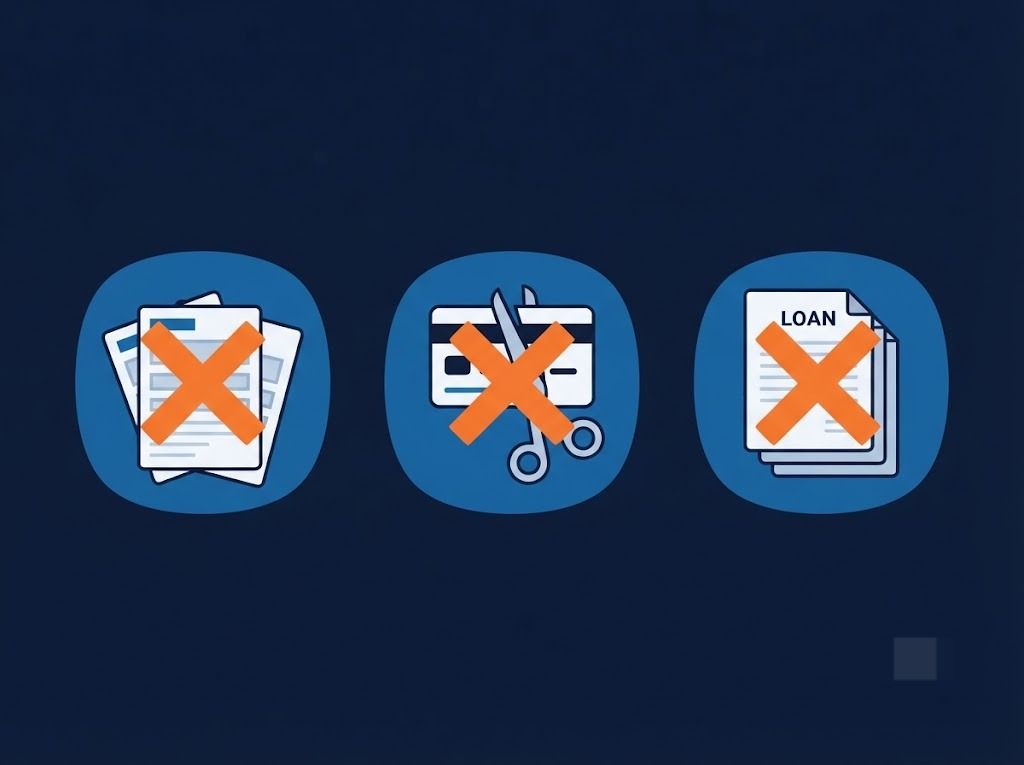
Trusting paid CIBIL score improvement services that claim to manually boost your score or erase genuine entries. This isn't legally possible. No one can remove a genuine default, settlement, or DPD entry before its 7-year window closes. Paying for these services is money lost to fraud, not a shortcut.
Taking a new loan to cover existing missed payments. This raises your FOIR, adds a fresh hard enquiry that lowers your score further, and tightens the debt cycle rather than loosening it.
When Is the Score Low Because of a Debt Problem, Not a Behaviour Problem?
A lot of borrowers try to fix their score through tactical behaviour, paying on time, trimming utilisation, when the real issue underneath is structural: too much debt, too many EMIs, a burden that's already crossed 50% of take-home salary.
In that situation, score-repair tactics alone genuinely aren't enough. The debt load itself keeps compressing your score every single month, no matter how disciplined your payment behaviour becomes on top of it. Fixing the score here means addressing the debt directly, not layering more good habits onto an unsustainable load.
If you're still current on your payments but overleveraged, this is exactly what FREED's Debt Consolidation Program is built for. It combines all your eligible loans into one lower EMI, which brings down your FOIR and lets your score actually start recovering, since the structural pressure causing the drop gets addressed rather than managed around. Consolidation doesn't damage your CIBIL score; it typically improves it.
If you're genuinely unable to repay your full outstanding amount, this isn't a score-repair situation anymore; it's a debt resolution one. Settlement is not something a borrower chooses out of preference; banks only consider it when full repayment has become genuinely impossible. FREED helps eligible borrowers settle unpaid or overdue loans at up to 50% less through a structured process, subject to the lender's willingness to negotiate.
Knowing which of these two situations actually describes you changes everything about what "improving your score" should even mean for you right now.
*Rates and ranges shown are indicative. Final terms decided by the bank. FREED is not a Loan Provider. No outcome is guaranteed. Please verify directly with your bank.
Score dropping despite paying on time every month?
Talk to FREED's team. One call, no pressure, honest answers.
Book My Free CallHow Can FREED Help You Improve Your Credit Score?
FREED's part in this depends entirely on which stage you're actually at, and it's worth being precise about that rather than assuming one tool fits every situation.
If you don't yet know what's actually causing your score to sit where it is, start with FREED's Credit Insights. It pulls your Experian report and shows you, account by account, whether you're dealing with a report error, high utilisation, a missed payment pattern, or something else. This single step decides everything downstream, whether your fastest path is a 30-day error dispute or a longer behavioural rebuild.
If your situation is purely behavioural, a few missed payments, high utilisation, or some hard enquiries, FREED doesn't need to be involved beyond that credit insights check. The steps in this guide, paying down balances before the statement date, setting up auto-pay, and pausing new applications, will do the work over the following months.
If the real problem is that you're juggling too many EMIs and your total obligations have crossed 50% of your take-home salary, even though you're still managing to pay everything on time, that's the point where FREED's Debt Consolidation Program may help eligible borrowers combine eligible loans into a single repayment plan through a lending partner. The final EMI and loan terms depend on the lender's assessment. The impact on your credit profile depends on your repayment behaviour and individual circumstances.
If you've reached a point where full repayment genuinely isn't possible anymore, FREED's Debt Resolution Program is the more honest option, not a score-repair tool, but a structured way through genuine hardship. It comes with a real cost to your credit report, but for someone who's already past the point where behavioural fixes can help, it's a controlled path forward rather than an unmanaged slide into default.
FREED is most useful once you've figured out whether your score is a behaviour problem or a debt problem. Get that diagnosis right first, and the rest of this guide, or FREED's programs, will actually point you in the right direction.
How to Improve Your Credit Score Fast: Action Plan by Timeline
- 1
Pull your full credit report immediately.
Go to cibil.com or use FREED's Credit Insights for your Experian report. Read every account, every DPD entry, and every enquiry. Knowing exactly what's pulling your score down determines everything that comes next.
- 2
Dispute every error you find.
File disputes at cibil.com for wrong tags, incorrect balances, accounts you didn't open, or paid loans still showing as active. Resolved errors reflect in your score within 5 to 7 days of the correction going through.
- 3
. Pay down credit card balances before the statement date.
Bring utilisation below 30% of your total limit on every card. Your lender reports your statement-date balance, not your due-date balance, so paying before the statement closes is what actually gives you a lower reported number.
- 4
Set auto-pay for every EMI and credit card minimum due.
One missed payment can undo months of careful improvement. Auto-pay removes human error from the equation entirely, which matters more than it sounds like it should.
- 5
Stop all new loan and credit card applications for 3 months.
Every application is a hard inquiry that drops your score. Give existing enquiries time to age, and give your score time to stabilise, before applying for anything new.
- 6
Keep old credit card accounts open.
Old accounts with clean histories add to your credit history length, worth 15% of your score. Don't close them to "simplify" your finances; the score cost is real and avoidable.
- 7
Request a credit limit increase on existing cards.
A higher limit with the same spending means lower utilisation. Call your bank and ask, this doesn't require a new application and doesn't trigger a hard enquiry in most cases.
Credit Score Improvement: What Moves When
Action | When to See Impact | Score Gain Possible | Works For |
Fix a report error | 30 days after dispute resolution | 50 to 100 points | Anyone with an inaccurate entry on the report |
Reduce credit card utilisation below 30% | 30 to 60 days (next billing cycle) | 30 to 60 points | Borrowers with high card balances |
Stop all new credit applications | 3 to 6 months | 10 to 30 points (by preventing further drops) | Anyone whose score is still falling |
Consistent on-time EMI payments | 3 to 6 months | 50 to 100 points over the period | Borrowers with recent late payments |
Close old loan accounts with NOC | 30 to 45 days | 10 to 30 points | Borrowers with open loans that are already fully repaid |
Debt consolidation (DCP) | 3 to 6 months | Improvement through reduced FOIR | Over-leveraged borrowers are still current on payments |
Recovery from default | 12 to 24 months | Up to 150 points over the full period | Borrowers with NPA or defaulted accounts |
Looking down this table, the pattern is worth noticing: the fastest wins are all about correcting or trimming something that already exists, an error, a high balance, or an old application. Everything slower is about building a new, positive history, which simply can't be rushed past what the calendar allows.
Sources
Claim | Source |
CIBIL disputes must be resolved within 30 calendar days, with compensation of ₹100/day for delays beyond that | RBI compensation framework circular, RBI/2023-24/72, October 26, 2023 (rbi.org.in / cibil.com framework page) |
Credit bureaus and lenders now update records fortnightly (15th and last day of each month) | RBI Master Direction – Credit Information Reporting Directions, 2025 (rbidocs.rbi.org.in) |
Note: Point-drop figures for hard enquiries and utilisation, the average CIBIL score of 682, the ₹100/day per-day compensation detail specifics beyond the base circular, and the "Settled" impact fade timeline are industry data points and bureau-behaviour observations, not standalone RBI mandates, and are left out of the table above where no direct regulatory citation exists. These are phrased as "typically" or "can" in the body rather than as guaranteed figures.

Mohit Juneja
Mohit Juneja writes educational content at FREED on debt management, credit scores, loan repayment, and borrowing best practices. His content is shaped by expert insights and industry knowledge, helping readers better understand their financial options and make informed decisions.
mohit.juneja@freed.care

FREED is India's trusted loan management platform. Founded in 2020 and headquartered in Gurugram, FREED has counselled 20 lakh+ people on personal loans, credit cards, and app loans. FREED charges fees only on successful settlement, not upfront. FREED does not handle secured loans (home loans, car loans, gold loans).
Media Mentions