CIBIL Score Range Explained: 300 to 900 Meaning | FREED
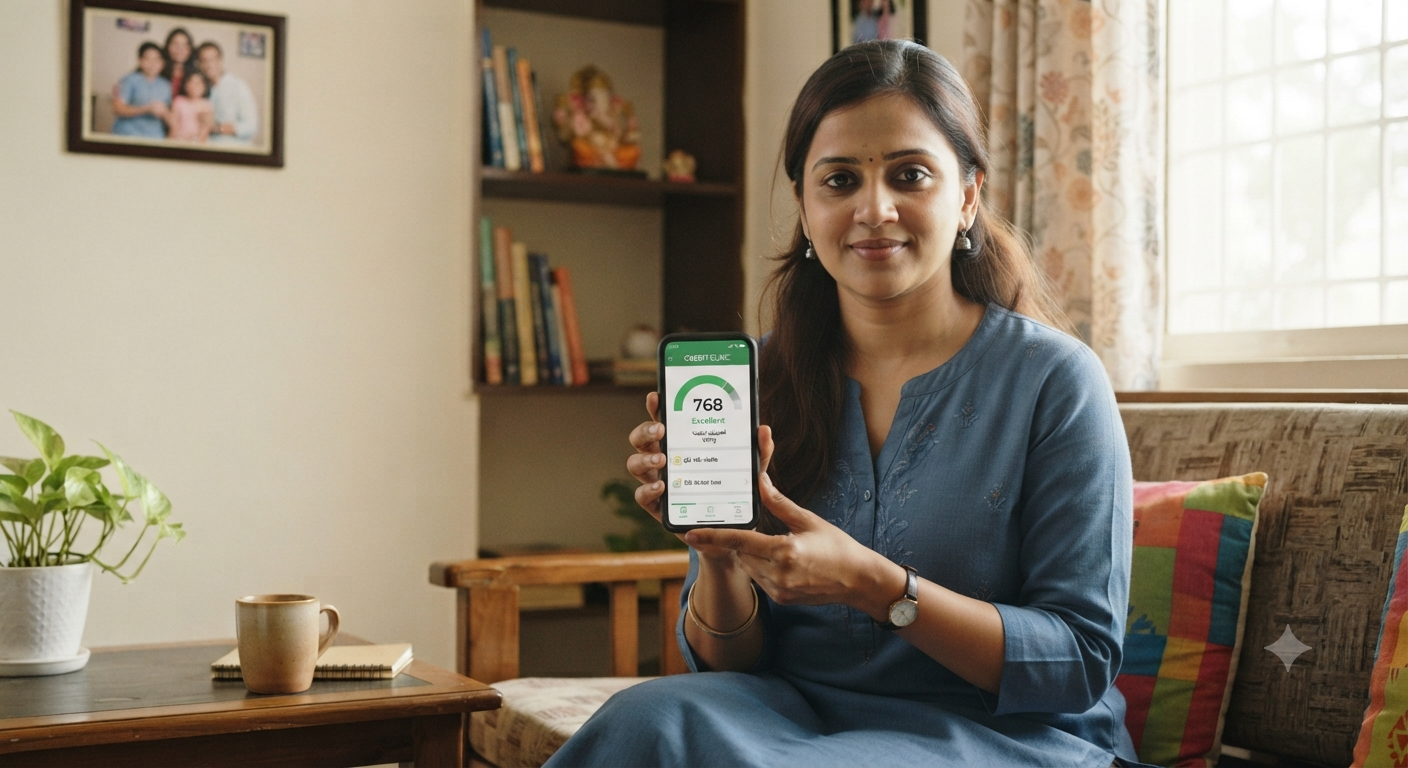
Your CIBIL score is a number between 300 and 900. It tells banks how well you handle loan and credit card payments. Higher number = more trust from banks = easier loan approval and lower interest. Score below 650 makes approval hard. Score above 750 gets best rates.
Mohit Juneja
Reviewed by FREED India, Debt Resolution Specialists

 4.7/5
4.7/5 ₹3,200Cr+
 20,000+
 20,00,000+4.7/5₹3,200Cr+20,000+20,00,000+
KEY TAKEAWAYS

CIBIL score range spans 300 (highest risk) to 900 (lowest risk). Most lenders treat 750+ as excellent.
A -1, NH or other non-numeric result can indicate that the bureau does not have enough information to generate a conventional score. It is not automatically a sign of bad credit.
Moving from 550 to 650 changes loan access far more than moving from 800 to 850. Thresholds matter more than the raw number.
Payment history is one of the most important factors affecting your credit score. It's the single biggest lever a reader controls.
RBI mandates one free full credit report per bureau, per year (RBI/2016-17/58, effective Jan 1, 2017).
What Is a CIBIL Score Range?
Your CIBIL score is a 3-digit number. It runs from 300 to 900. The closer you are to 900, the lower your risk to a lender. The closer to 300, the higher your risk or the thinner your credit history.
CIBIL stands for Credit Information Bureau (India) Limited. It's one of four credit bureaus in India that tracks your payment history and generates your score. Most people use "CIBIL score" as a shorthand for "credit score" in general, even though technically there are four bureaus doing this work.
The model is adapted from the US FICO scale, but here's the key difference. FICO in the US runs 300 to 850. CIBIL in India runs 300 to 900. Don't mix up the two scales or compare them directly.
The 300-900 scale breaks into specific bands. Each band signals something different to a lender. A bank looks at your number and thinks: "Where does this person sit? How likely are they to miss a payment?" That band decides whether a bank approves your loan, what interest rate they charge, and how much credit they offer. And if multiple loans stacked together are what's actually pulling your number down, reducing your EMI through consolidation is usually the faster fix than chasing the score directly.
CIBIL Score Range, Band by Band
Score Range | Category | What It Typically Means |
300–549 | Poor | High risk to lenders. Approval is difficult. If approved, interest rates are high. |
550–649 | Fair | Below average. Some lenders will approve, but expect higher interest rates and smaller limits. |
650–749 | Good | Positive credit behaviour. Most standard credit products are accessible at reasonable rates. |
750–900 | Excellent | Best rates and fastest approvals. Top of the scale. Lenders compete for your business. |
These are broad indicators, not universal lender cut-offs. Approval, interest rates and credit limits also depend on income, repayment history, existing debt, loan type and the lender's internal criteria. A PSU bank might set 700 as the personal loan threshold while an NBFC approves at 650 with a higher rate. The exact number that matters depends on the lender, the loan type, and that bank's internal policy.
What matters more than the raw number is the band you're in. The gap between 550 and 650 is bigger than the gap between 800 and 850. Moving from Fair to Good opens up loan options. Moving from Excellent to just below Excellent doesn't change much. Banks have internal cutoffs, and jumping above them matters. Jumping within a band doesn't.
What Does a -1 or 0 CIBIL Score Mean?
If your credit report shows -1, 0, or "NH" (No History), this is not a bad score. It means CIBIL has zero or insufficient data to calculate a real score. This is different from an actual low score like 350, which reflects real missed-payment history.
A -1 happens when you're new to credit. You've never had a credit card or loan, or you've had one for less than six months and the lender hasn't yet reported to CIBIL. It's also common if you've been very quiet financially, no loans, no credit cards for years.
This is not "bad." It's "unproven." Lenders still treat -1 cautiously because they have no track record to assess. You might get smaller starting limits or offered a secured card instead of a standard one. But it's not a rejection. It's just "we don't know you yet, so we're being careful."
Once sufficient credit information has been reported, the bureau may be able to generate a conventional score. The timing depends on the account and reporting history. Pay on time, keep the limit under 30%, and within 3 to 6 months, you'll see a positive number on your report. If you're starting completely from zero, our guide on building your credit score from scratch walks through the exact first steps.
Why Your CIBIL Score Range Might Differ From Your Experian or Equifax Score
India has four RBI-licensed credit bureaus. They are CIBIL (TransUnion), Experian, Equifax, and CRIF High Mark. All four use the 300-900 scale. But each one calculates independently using its own formula.
Banks don't report to all four bureaus on the same day. So your score can differ by a few points across bureaus in the same month. One bureau might show 720, another 685, and that's normal. Neither number is "wrong."
Think of it like this. Four doctors examine the same patient on the same day. They all use the same diagnostic tools. But each one has their own experience, their own way of weighing evidence, and their own reading of the results. The diagnosis might be slightly different across the four. That doesn't make three of them liars.
FREED has tie-ups with Equifax and Experian specifically. FREED's Credit Insights product pulls your Experian report. But your Equifax score is just as real, just calculated a different way. If you want to see exactly what's sitting inside your report, not just the headline number, here's how to read your CIBIL report and dispute errors.
The RBI licenses all four bureaus equally. No single bureau is more "official" than the others. They're all trustworthy. The variation is just how the maths works.

What the Law Says
RBI mandates every credit bureau give you one free full credit report, including your score, once per calendar year at no cost.
Check My CreditWhat Factors Decide Your CIBIL Score Range?
Your score isn't random. It's built on four main factors. These are industry estimates, not bureau-published exact percentages.
1. Payment history (roughly 30-35%, biggest lever)
This is how you've paid your EMIs, credit card bills, and other debts in the past. Every on-time payment builds your score. Every missed payment drags it down. A single miss hurts, but a pattern of late payments compounds the damage.
Example: On a ₹50,000 personal loan, if you miss one EMI, you drop 50 to 80 points. If you miss three in a row, you drop 150 to 200 points. Recovery takes months of on-time payments. For the full picture, see our breakdown of how payment history affects your CIBIL score.
2. Credit utilisation (roughly 25-30%)
This is how much of your credit card limit you're actually using. Try to keep credit-card utilisation relatively low, rather than consistently using a large share of your available limit. If your card limit is ₹100,000 and you're carrying a balance of ₹50,000, that's 50% utilisation. That drags your score. Drop it to ₹20,000 (20%) and your score improves.
Even if you pay the full bill on time, high utilisation signals to lenders that you might be stretched. You can afford the minimum payment, but are you stable?
3. Credit age and mix (roughly 15-25%)
How long you've had credit matters. An account open for 5 years is "older" than one that's 1 year old. The age of your credit accounts can be one factor considered in your credit profile. Closing an old account can also change aspects of your credit history and utilisation. A healthy mix of different credit types also helps. One credit card is good. A mix of credit types can form part of a healthy credit profile, but you should not take on new debt simply to diversify your credit mix.
One caution: closing your oldest card to "clean up" your wallet can hurt your score, because you're removing your oldest credit age. Keep old cards open, even if you don't use them.
4. Recent hard enquiries (smaller but real impact)
Every time you apply for a loan or credit card, the lender does a hard enquiry on your file. Too many in a short window signals to lenders that you're credit-hungry, possibly in financial distress. Multiple hard enquiries over a short period can signal increased demand for credit and may affect how lenders assess an application.
Soft enquiries (checking your own score, a pre-approved offer check) have zero impact.

Freed Expert Tip
If you're planning to apply for credit, check the lender's eligibility criteria rather than targeting a universal score threshold. That's what actually changes what's on offer.
Check My Credit NowWhich CIBIL Score Range Do You Need for a Loan or Credit Card?
Loan/Credit Type | Typical Score Needed | Why |
Personal loan (unsecured) | 700+ | No collateral. Lender relies fully on score. |
Credit card (standard) | 650+ | Revolving credit, moderate risk tolerance. |
Home loan (secured) | 650+ (sometimes lower with strong income) | Asset backs the loan, offsets score risk. |
Secured card / FD-backed card | 300+ (any score) | Your deposit is collateral. Approval is almost guaranteed. |
Secured loans tolerate slightly lower scores than unsecured loans because the asset (house, land) backs the loan. If you default, the bank takes the asset. Unsecured loans (personal loans, credit cards) have no collateral, so the bank relies entirely on your score and income.
Treat these ranges as guidance, not law. Different banks have different thresholds. One bank might need 750+ for a personal loan, another might approve at 700. A strong income can sometimes offset a lower score. Prior default history can sink you even with a 700+ score.
Before applying, know where you stand. Use FREED's Credit Insights to pull your actual number and the recommendation for your next move. Then apply only to lenders whose thresholds match your score, since applying to too many at once drops your score further. If you're also weighing which credit product actually fits your situation, personal loan vs credit card vs balance transfer breaks down what suits different needs.
What Are Your Options If You're in a Poor or Fair Range?
If your score is stuck in the Poor (300-549) or Fair (550-649) band, the real issue usually isn't the score itself. It's the debt load behind the score.
When someone has multiple EMIs, credit card dues, and loan apps all stacked, the score drops because they're financially stretched. Fixing the score means fixing the load.
You have two paths. Which path you take depends on whether you can still pay your EMIs. If you're unsure which side you're on, how to know if you should consolidate or settle walks through the decision before you commit to either.
Path 1: Consolidation (if you're still managing payments)
If you're current on all your EMIs but drowning in the number of them, consolidation is the answer. You merge multiple loans into one. That lower single EMI frees up breathing room. Consistent, on-time repayment on the new facility can help strengthen your credit profile over time.
Path 2: Settlement (if repayment has genuinely become impossible)
Settlement is not something a borrower chooses out of preference. It's for genuine financial crises. If you've missed EMIs, banks are calling, and you honestly cannot repay the full amount, settlement is the structured last-resort path. A bank accepts a reduced lump sum as final payment. You save a fixed monthly amount, the bank negotiates once you have enough corpus, and the loan closes.
Settlement impacts your CIBIL score negatively. A ‘Settled’ status can remain visible on your credit report and may affect how lenders assess future credit applications. This is the honest trade-off.
These two paths aren't interchangeable for the same person. Know which situation you're in.
How FREED Helps You Move to a Better CIBIL Score Range
FREED has two separate programs for two different situations. Never conflate them.
If you're still repaying but over-leveraged:
FREED's Debt Consolidation Program merges multiple loans into one. Here's how it works:
- You talk to a FREED counsellor. They assess your loans, your income, and your financial picture.
- FREED matches you with a lending partner from its network based on your profile.
- That lending partner disburses a new consolidated loan that instantly pays off all your existing credit card dues and personal loans.
- You now have one loan, one lender, one EMI, one due date.
- Your EMI amount is reduced from what you were paying collectively before.
- Your CIBIL score improves as you pay the new loan on time.
- FREED charges a success-based fee only after consolidation is completed.
If you genuinely cannot repay:
FREED's Debt Resolution Program is for people in genuine financial hardship. Here's how it works:
- You enroll in the program and meet with a counsellor about your financial situation.
- You agree to save a fixed monthly amount into a Special Purpose Account (SPA), a dedicated savings pool held by an independent trustee, not FREED.
- Once the SPA builds enough corpus, FREED begins negotiating with your lenders.
- In some cases, FREED may negotiate a settlement for less than the outstanding amount. Actual outcomes vary by lender, account and borrower circumstances, and no specific reduction is guaranteed.
- You authorise every settlement before any money is released.
- The loan is marked as "Settled" on your credit report. The loan may be reported as ‘Settled’ rather than ‘Closed’, which can affect future credit applications.
- FREED charges a success-based fee only after a settlement is completed.
How to Move to a Better CIBIL Score Range, Step by Step
Improving your score isn't about chasing 900. It's about crossing the next lender cutoff above your current number, usually 650 or 700. That cutoff is what actually changes loan options.
If your score is 580 and you want a personal loan, your real goal is 700+, not 900. If your score is 620 and you want a credit card, your goal is 650+. Once you cross that threshold, most banks will approve you.
Here are the steps to get there.
Steps to Improve Your CIBIL Score Range
- 1
Step 1: Check Your Current Score
Pull your free credit report. You're entitled to one free report per calendar year from each of the four bureaus. Or use FREED's Credit Insights for a faster read that includes actionable recommendations.
- 2
Step 2: Find Your Band
Match your number to the ranges above (Poor, Fair, Good, Excellent). This tells you your real approval odds today, not just a label.
- 3
Step 3: Identify the Nearest Cutoff
Find the threshold just above your score, usually 650 or 700. That's the number that actually matters, not your starting point, your next waypoint.
- 4
Step 4: Fix the Biggest Drag First
Check payment history and utilisation before anything else. These move the needle fastest. If you have one missed payment on your report, get current and stay current for the next 3 to 6 months. A utilisation level below 30% is commonly used as a rule of thumb, but it is not a universal CIBIL cutoff.
- 5
Step 5: Address the Root Cause, Not Just the Number
If multiple EMIs are the real issue, fix the load, whether that's consolidating (if still paying) or settling (if genuinely can't pay). The score follows once the load is fixed.
Sources
Claim | Source |
CIBIL score range is 300-900 | TransUnion CIBIL official methodology |
Four RBI-licensed credit bureaus in India (CIBIL, Experian, Equifax, CRIF High Mark) | RBI Master Direction on Credit Information (https://www.rbi.org.in/commonman/english/scripts/Notification.aspx?Id=1884) |
Payment history is roughly 30-35% of score | Industry consensus, major credit bureaus publish this range |
Utilisation should be kept under 30% | Credit bureau best practices (CIBIL, Experian, Equifax guidance) |
One free credit report per bureau, per calendar year, mandated by RBI | RBI/2016-17/58, effective January 1, 2017 (https://www.rbi.org.in/commonman/english/scripts/Notification.aspx?Id=1884) |
Settlement waiver "up to 50%*" | FREED's product standard, bank-negotiated outcomes vary |
"Settled" mark visible for up to 7 years | Credit bureau standard, defined in Credit Information Reporting Directions |
Consolidation does not damage CIBIL score; score improves | FREED's documented consolidation outcomes |

Mohit Juneja
Mohit Juneja writes educational content at FREED on debt management, credit scores, loan repayment, and borrowing best practices. His content is shaped by expert insights and industry knowledge, helping readers better understand their financial options and make informed decisions.
mohit.juneja@freed.care

FREED is India's trusted loan management platform. Founded in 2020 and headquartered in Gurugram, FREED has counselled 20 lakh+ people on personal loans, credit cards, and app loans. FREED charges fees only on successful settlement, not upfront. FREED does not handle secured loans (home loans, car loans, gold loans).
Media Mentions