Credit Score Companies in India: What They Do
Credit Score Companies in India: What They Do Credit score companies in India, officially called Credit Information Companies (CICs), are RBI-licensed organisations that collect your loan and repayment data from banks and NBFCs to generate your credit report and score. Four operate in India: TransUnion CIBIL, Experian, Equifax, and CRIF High Mark, and each can show a slightly different number for the same person.

Mohit Juneja
Reviewed by FREED India, Debt Resolution Specialists
 4.7/5
4.7/5 ₹3,200Cr+
 20,000+
 20,00,000+4.7/5₹3,200Cr+20,000+20,00,000+
KEY TAKEAWAYS

India has four RBI-licensed credit score companies: TransUnion CIBIL, Experian, Equifax, and CRIF High Mark.
All four collect largely the same lender-reported data, but calculate your score using their own separate algorithm, so the numbers can differ.
CIBIL is the most widely referenced bureau for personal loans, home loans, and credit cards; Experian is favoured by many fintechs and NBFCs; Equifax and CRIF High Mark have a deeper reach into microfinance, rural, and small-business lending.
You're entitled to one free full credit report from each of the four bureaus every year.
Under the RBI's current reporting framework, lenders report credit data regularly, helping recent credit activity reflect more quickly than under the earlier monthly reporting cycle.
What Are Credit Score Companies and What Do They Actually Do?
A credit score company, officially called a Credit Information Company (CIC), is an RBI-licensed organisation that collects data reported by its member lenders, banks, NBFCs, and housing finance companies, and turns it into two things: a credit report, the full detailed history, and a credit score, the 3-digit summary between 300 and 900.
The bureau itself doesn't decide whether your loan gets approved. That decision sits entirely with the lender. The bureau's job is simply to supply the data the lender uses to make that call.
Four such companies operate in India: TransUnion CIBIL, Experian, Equifax, and CRIF High Mark. All four are licensed under the Credit Information Companies (Regulation) Act, 2005 (CICRA), and all four calculate scores on the same 300 to 900 scale, though you may come across older references citing a different range for Equifax; that figure usually describes Equifax's international scoring model, not its Indian consumer score.
Here's where the confusion usually starts. Most people assume there's a single, national "credit score" the way there's a single PAN number. There isn't. You actually have four separate scores, one from each bureau, and they don't always match. Understanding why that is starts with understanding why India built four of these companies instead of just one.
Why Does India Have Four Separate Credit Score Companies?
TransUnion CIBIL was first. It launched in 2000 and became the default reference point for most Indian banks simply because it had been in the market the longest and had the widest lender membership.
RBI later licensed three more companies, Experian and Equifax in 2010, and CRIF High Mark, established in 2007, licensed around the same time. This wasn't redundancy. It was a deliberate regulatory choice. A single bureau holding all of India's credit data would have created a monopoly with no competitive pressure to improve accuracy or service. Multiple bureaus also gave lenders, and especially underserved segments like rural borrowers and microfinance customers, more than one source of credit data to draw from.
So the four-bureau structure isn't an accident or a technical quirk. It's how RBI chose to build the system. What that means for you day to day is that your credit history gets reported to potentially more than one company, and each one can calculate a slightly different number from largely the same facts, which is exactly what the next section explains.
Why Do Your Scores Differ Across These Bureaus?
This is usually the actual question behind the confusion: why does your "CIBIL score" not match the number an app shows you from Experian? A few real reasons explain it:
- Not every lender reports to all four bureaus. Some smaller NBFCs or regional lenders may only report to one or two of the four, so your history isn't always complete everywhere.
- Each bureau uses its own proprietary scoring algorithm. Even working from similar underlying data, the exact formula each company uses to weigh payment history, utilisation, and other factors differs.
- Update timing varies slightly between bureaus. A recent payment might get reflected in one bureau's records before it shows up in another's.
- Equifax and CRIF High Mark both use the same 300 to 900 scale as CIBIL and Experian in India, but scores may differ because of reporting timelines and proprietary scoring models, purely because of algorithm and reporting differences, not because one number is more "correct."
None of the four scores is wrong. They're different lenses looking at largely the same history. The more useful question isn't which one is "real," it's which one actually matters for what you're applying for right now.
Which Credit Bureau Do Banks in India Actually Use?
This is the part most explainers skip. TransUnion CIBIL remains the most widely referenced bureau for major mainstream products, home loans, personal loans, and most credit cards, largely because it has the longest operating history and the widest lender membership base in the country.
Experian tends to be favoured by fintechs and NBFCs offering instant personal loans or digital credit lines, partly because of its faster, more dynamic data processing. Equifax has built a strong footprint in microfinance and small-business portfolio reviews. CRIF High Mark goes deeper into rural, semi-urban, and cooperative-bank lending than the other three.
Here's the practical point worth taking away from this: you genuinely can't know in advance which bureau a specific lender will pull when you apply. So instead of obsessing over just one score, building a clean profile across all four is the more reliable long-term approach. That naturally raises the next question: how do these companies actually build the number in the first place?
The Four Credit Score Companies in India
Bureau | Established / Licensed | Known For |
TransUnion CIBIL | Est. 2000 | Most widely referenced by banks for personal loans, home loans, and credit cards |
Experian | Licensed 2010 | Favoured by many fintechs and NBFCs, faster dynamic data processing |
Equifax | Licensed 2010 | Strong in microfinance and small-business portfolio reviews |
CRIF High Mark | Est. 2007, licensed 2010 | Deep reach into rural, semi-urban, and cooperative-bank lending |
This overview is for general awareness. Actual bureau usage varies by lender and product. FREED is not a credit bureau and does not guarantee specific score outcomes. Please verify directly with the relevant bureau or your lender.
How Do These Companies Actually Build Your Credit Score?
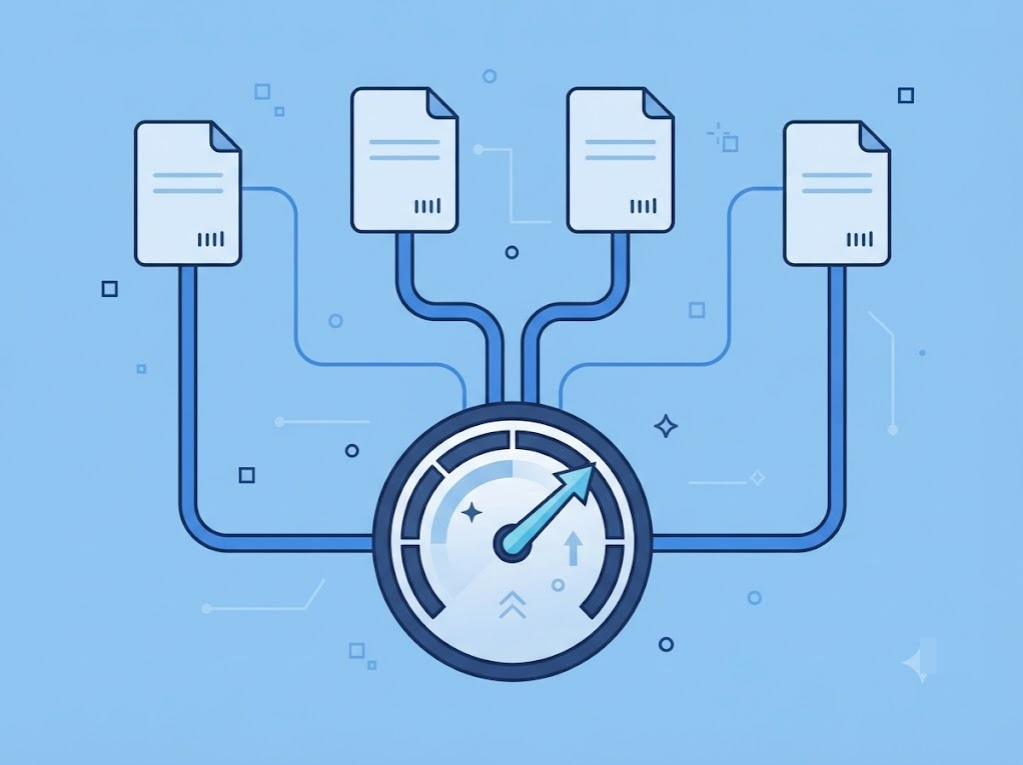
The mechanism is the same across all four bureaus, even though the exact formula each one uses is proprietary and not published.
- Member lenders report your activity. Banks, NBFCs, and housing finance companies send your loan and credit card data to the bureaus on a regular reporting cycle.
- The bureau compiles your Credit Information Report (CIR). This covers your active and closed accounts, your payment history, and any recent enquiries against your name.
- A proprietary algorithm converts that report into your 3-digit score, weighing factors like payment history, credit utilisation, credit age, credit mix, and recent hard enquiries.
- The bureau updates its records regularly based on information reported by lenders under the RBI's reporting framework. This helps recent credit activity appear on your credit report more quickly than under the earlier monthly reporting cycle.
None of the bureaus publishes their exact weighting formula, so treat any specific percentage breakdown you see online as an industry estimate, not an official figure.
What Rights Do You Have With These Credit Score Companies?
Knowing your rights here is genuinely useful, not just background trivia.
You're entitled to one full, free credit report from each of the four bureaus every year. This is a regulatory right under RBI's directions, not a courtesy extended by the bureau.
If you spot an error on your report, you can raise a dispute directly with the bureau. RBI's compensation framework requires a valid dispute to be resolved within 30 calendar days of you raising it. If the credit institution or the bureau fails to resolve it within that window, they're liable to pay compensation, generally cited at around ₹100 for every day of delay beyond the 30-day mark, split between whichever party caused the delay.
Bureaus also cannot share your data with third-party marketers without your explicit consent. Taken together, these rights mean you're not simply handing over your financial history and hoping it's handled correctly; you have a real, regulatory-backed say in how it's used and corrected.
How to Keep a Clean Profile Across All Four Bureaus
- Pull your free annual report from all four bureaus, not just the one you're familiar with. An error on one bureau doesn't automatically get fixed on the others, so checking only your usual one leaves blind spots.
- Pay every EMI and credit card bill on time. This is the single biggest factor across every bureau's model, not just one, so it does more for your overall profile than anything else on this list.
- Keep credit utilisation below roughly 30% of your combined limit. This applies across whichever cards and loans get reported, not just to one bureau's view of your accounts.
- Space out new credit applications. A hard inquiry affects every bureau that the lender reports to, so applying for several loans or cards close together compounds across the board.
- Dispute errors directly and separately with each bureau where they appear. A correction on CIBIL doesn't carry over to Experian, Equifax, or CRIF High Mark automatically; you need to raise it wherever the error actually shows up.
None of this requires obsessively tracking four separate systems. Checking in periodically, rather than only at the moment you need a loan, is really all it takes.

Freed Expert Tip
Pull your free annual report from each of the four bureaus, not just the one you're familiar with. An error on one doesn't automatically get fixed on the others.
Learn How to Check and Correct Your CIBIL Score-
How FREED Helps You Make Sense of Where You Stand
If everything above left you thinking "okay, but which score actually matters for me right now," Credit Insights is built for exactly that question.
It's available to everyone, not just people enrolled in any other FREED program. It pulls your report specifically from Experian and gives you your current score along with personalised insights to help you understand the factors affecting your credit profile.
Get flat 50% off on subscriptions.
Know Your Real Number Before You Apply Anywhere.
Get your score, what's shaping it, and what to fix.
Check My Credit InsightsSee Where Your Score Actually Stands
After four bureaus and a fair amount of explanation, the more useful next step isn't reasoning about which bureau to trust in the abstract; it's checking an actual, current number.
Sources
Confirmed. Claim to source table, no em dashes:
Claim in Article | Source |
|---|---|
CICs are RBI-licensed, collect data from banks/NBFCs, generate credit reports and scores | Standard regulatory fact, consistent across all bureau sources reviewed in this project |
Four CICs operate in India: TransUnion CIBIL, Experian, Equifax, CRIF High Mark | poonawallafincorp.com/blogs/credit-score/credit-information-companies-in-india |
All four licensed under Credit Information Companies (Regulation) Act, 2005 (CICRA) | resources.probe42.in/regulatory-updates/rbi-circulars/compensation-for-credit-information-delay; tallysolutions.com/business-guides/credit-bureaus-india-business-guide |
All four score on the same 300 to 900 scale in India | creditmantri.com/credit-bureaus-in-india |
TransUnion CIBIL launched in 2000 | indialends.com/blogs/cibil-vs-experian-vs-equifax-vs-crif; paisabazaar.com/credit-score/credit-information-companies-india |
Experian and Equifax licensed in 2010 | poonawallafincorp.com/blogs/credit-score/credit-information-companies-in-india; creditmantri.com/credit-bureaus-in-india |
CRIF High Mark established 2007, licensed around the same period as Equifax | tallysolutions.com/business-guides/credit-bureaus-india-business-guide |
CIBIL is most widely referenced for mainstream lending (home loans, personal loans, cards) | onepaisa.in/articles/credit-score-bureaus-cibil-experian-equifax-india |
Experian favoured by many fintechs and NBFCs for faster data processing | finnable.com/finn-advice/cibil-transunion-score |
Equifax used more for microfinance and commercial/small-business reviews | indialends.com/blogs/cibil-vs-experian-vs-equifax-vs-crif |
CRIF High Mark has deeper reach into microfinance, rural lending, cooperative banking | indialends.com/blogs/cibil-vs-experian-vs-equifax-vs-crif |
Not every lender reports to all four bureaus | onepaisa.in/articles/credit-score-bureaus-cibil-experian-equifax-india |
One free full credit report per year from each of the four bureaus, RBI mandated | RBI official notification RBI/2016-17/58, DBR.CID.BC.No.11/20.16.042/2016-17, rbi.org.in/commonman/english/scripts/Notification.aspx?Id=1884 |
Lenders now report credit data more frequently than the old monthly cycle | business-standard.com/amp/finance/news/rbi-extends-credit-information-reporting-norms-july-1-2026 |
Valid dispute must be resolved within 30 calendar days | RBI circular RBI/2023-24/72, DoR.FIN.REC.48/20.16.003/2023-24, dated October 26, 2023, effective April 26, 2024, cibil.com/framework-for-compensation |
Compensation of roughly Rs 100 per day of delay beyond 30 days, split between the responsible parties | Same RBI circular RBI/2023-24/72, confirmed directly on cibil.com/framework-for-compensation and taxmann.com/post/blog/rbi-mandates-cis-cics-to-compensate-complainants-with-rs-100-per-day-if-complaints-remain-unresolved-beyond-30-days |
Bureaus cannot share data with third-party marketers without consent | General regulatory principle under CICRA, not independently sourced this session, worth verifying against the Act's exact text before publishing |
Soft enquiry (self-check) has zero impact on score | Standard bureau-wide fact, consistent across all prior sourcing in this project |
Correction on one bureau does not automatically carry over to the others | righttoinformation.wiki/cibil-score-dispute-correction-2026 |
Payment history is the single biggest factor across every bureau's model | Consistent across all bureau methodology sources reviewed earlier in this project |
Keep utilisation below roughly 30 percent of combined limit | General financial-planning guidance, widely repeated, not a hard regulatory figure |

Mohit Juneja
Mohit Juneja writes educational content at FREED on debt management, credit scores, loan repayment, and borrowing best practices. His content is shaped by expert insights and industry knowledge, helping readers better understand their financial options and make informed decisions.
mohit.juneja@freed.care

FREED is India's trusted loan management platform. Founded in 2020 and headquartered in Gurugram, FREED has counselled 20 lakh+ people on personal loans, credit cards, and app loans. FREED charges fees only on successful settlement, not upfront. FREED does not handle secured loans (home loans, car loans, gold loans).
Media Mentions