Let’s talk
about Loans
















75,000+
Customers served

₹450 Cr+
Total savings

4.8/5
Google rating
Browse Topics
5 CategoriesLatest Articles

What Is the Highest Credit Score You Can Have?
The highest credit score in India is 900. CIBIL, Equifax, and CRIF High Mark all use a 300 to 900 scale, with 900 marking a flawless repayment history and near zero credit risk. A score above 750 already qualifies most people for the best loan and credit card offers, so 900 is not required to get good deals.

Bazaar Credit Score in India: What You Should Know
“Bazaar credit score” is an informal term people may use for a credit score displayed through marketplace platforms such as BankBazaar or Paisabazaar. It is not a separate type of credit score. The score comes from a credit bureau and is displayed through the platform. It is not a separate score. It is a credit bureau (a company that keeps your credit history) score, such as Experian or CIBIL, shown through a partner platform after you give consent.
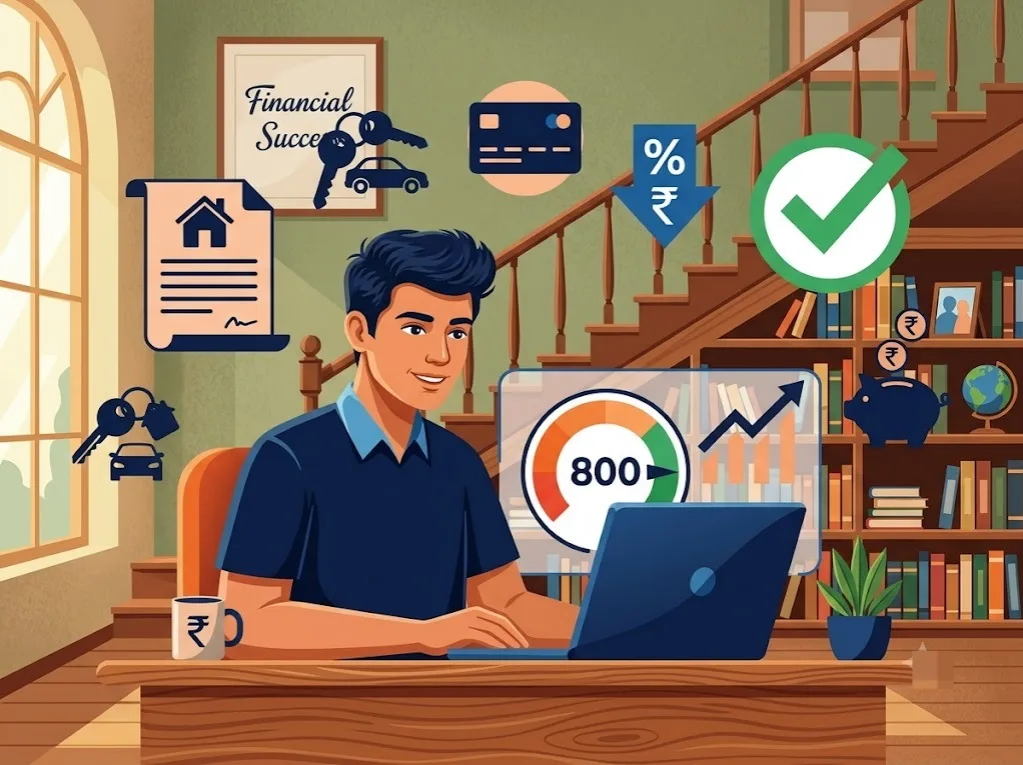
CIBIL Score 800: What It Unlocks and How to Get There
CIBIL score 800 sits in the top band of India's 300 to 900 credit scoring system. Lenders see it as one of the strongest signals of repayment reliability, which usually means faster loan approvals, lower interest rates, and higher credit limits compared to a score in the 700s.

Best Company to Consolidate Credit Card Debt: How to Choose the Right One for You
There's no single "best company" for consolidating credit card debt; the right one depends on your credit profile, how many cards you're consolidating, and what you actually need: a lower rate, faster approval, or help negotiating. These are the criteria that actually separate a genuinely good provider from a mediocre one, so you can evaluate any option against it yourself.

Can I Combine All My Loans Into One? Here's the Answer
Can you combine all your loans into one? Not quite. Many unsecured debts, including credit-card dues and some personal loans, may be eligible for consolidation, depending on the lender and product. Secured debts such as home loans, car loans, gold loans and loans against property are generally handled through different refinancing or top-up products rather than standard unsecured consolidation. The honest answer is "most of it," not "all of it."
Debt Management in Hindi: कर्ज प्रबंधन कैसे करें
कर्ज प्रबंधन (debt management) का मतलब है अपने सभी कर्ज की सूची बनाना, कमाई के हिसाब से बजट बनाना, कर्ज को सही क्रम में चुकाना ताकि ब्याज कम लगे, और हाथ तंग होने पर समय रहते मदद लेना। यह योजना से चलने वाला तरीका है, कोई जादुई उपाय नहीं।

How to Get Approved for Debt Consolidation Loan: A Step-by-Step Guide
When assessing a debt consolidation loan application, lenders may consider your credit history, income, existing obligations, FOIR, employment or business profile, documentation and other eligibility criteria. Strengthening these before you apply, not just having a decent credit score, is what actually moves the needle on approval.

EMI Moratorium Extension News: Everything You Need to Know
There is no extension of the 2020 COVID EMI moratorium; that was a one-time, six-month measure that ended in August 2020 and was never revived. What's genuinely new is a different, permanent RBI rule, effective July 1, 2026, requiring banks to automatically offer EMI relief to borrowers in areas officially declared disaster-affected, without the borrower needing to apply first.


Make smarter financial decisions.
Loan Settlement | Loan Consolidation | Credit Insights | FREED Shield
Get Started