Let’s talk
about Loans
















75,000+
Customers served

₹450 Cr+
Total savings

4.8/5
Google rating
Browse Topics
5 CategoriesLoan Consolidation

Bank Debt Consolidation Loans in India: How They Work
Many Indian banks offer personal loans that borrowers may use to consolidate multiple debts into one repayment. These are generally standard unsecured personal loans, while interest rates, loan amounts, tenure and approval criteria vary by lender.
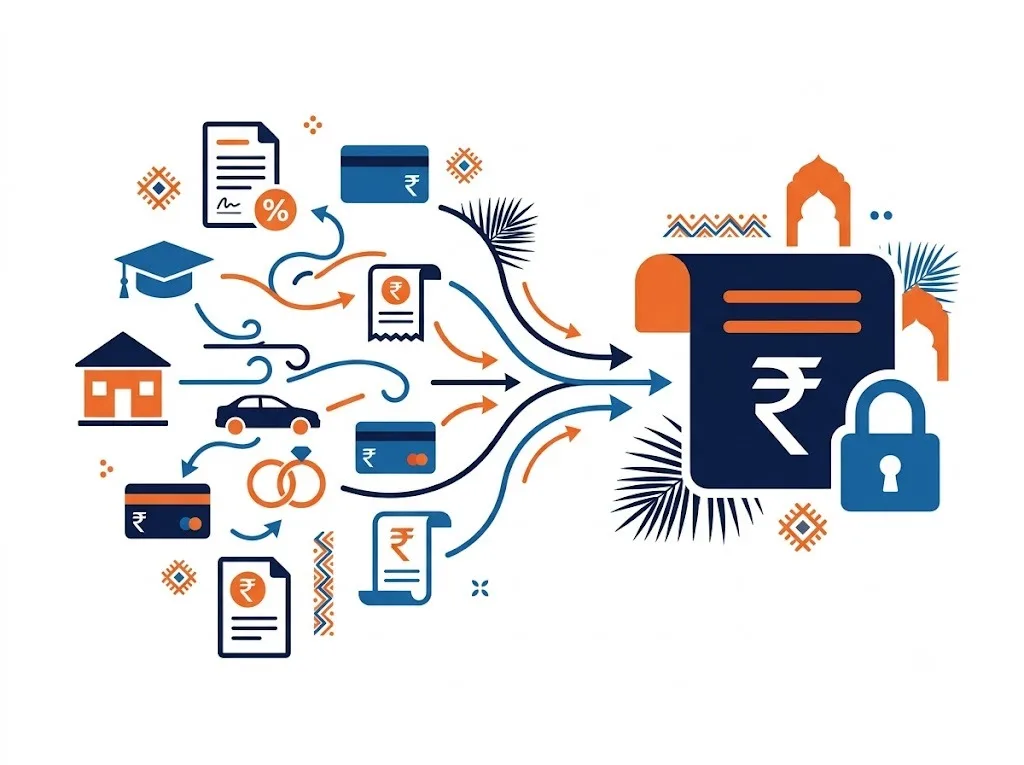
What Consolidating Debt Means: One EMI Instead of Many
Debt consolidation means taking one new loan to pay off several existing loans and credit card dues at once, so several EMIs to different lenders become a single, usually lower, EMI to one lender. It restructures how debt is repaid; it doesn't erase what's owed.

Consolidation Lenders in India: What to Check Before You Sign
A debt consolidation company helps you replace several loans and card dues with one new loan and one EMI. In India it's either a bank or NBFC that lends to you directly, or a platform that matches you to one. Where RBI-regulated lending is involved, verify the actual lender and confirm that the arrangement complies with the applicable rules.
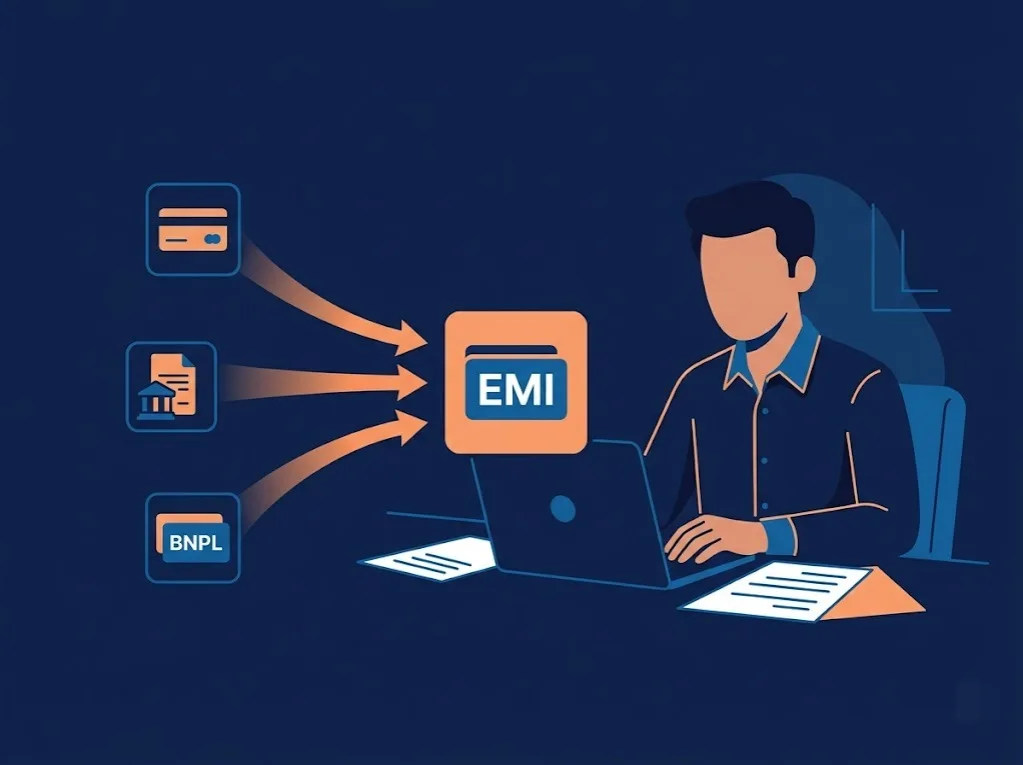
Consolidating Your Loans in India: How It Actually Works
A debt consolidation loan in India is a new loan, usually a personal loan, that pays off several existing loans and credit card dues at once. You're left with one EMI to one lender instead of several separate payments, although the new EMI may not always be lower. It doesn't reduce what you owe. It changes how you pay it back.

Eligibility to Consolidate Your Loans: Who Actually Qualifies
Debt consolidation loan eligibility means passing a lender's checks on your income, credit score, job stability, and existing EMI load before one new loan replaces your old debts. Lenders look at your monthly income, CIBIL score, job type, and how much salary already goes to EMIs (FOIR) before they approve. Your age and where you live matter too.

Consolidating Your Loans Online: Applying Without a Branch Visit
An online debt consolidation loan is a single new loan, applied for and signed digitally, that pays off your existing loans and card dues so you repay one EMI. In India, identity is verified by video KYC (V-CIP), which RBI treats on par with an in-person check.
Debt Consolidation vs Bankruptcy: Key Differences Explained
Debt consolidation combines multiple debts into one new loan for people who can still repay; it's available today through banks, NBFCs, and matching platforms. India’s Insolvency and Bankruptcy Code contains provisions for individual insolvency, but the Part III framework currently in force primarily applies to personal guarantors to corporate debtors. Ordinary individual borrowers remain subject to a different and more limited legal framework.

Should You Consolidate Debt If Your CIBIL Score Is Good?
Debt consolidation loans for good credit are for people who pay every EMI on time but carry many loans or cards. A good score can help you get a lower rate. You replace several EMIs with one. It is worth it only when the new rate is lower than what you pay now.


Make smarter financial decisions.
Loan Settlement | Loan Consolidation | Credit Insights | FREED Shield
Get Started