CIBIL Score 800: What It Unlocks and How to Get There
CIBIL score 800 sits in the top band of India's 300 to 900 credit scoring system. Lenders see it as one of the strongest signals of repayment reliability, which usually means faster loan approvals, lower interest rates, and higher credit limits compared to a score in the 700s.

Mohit Juneja
Reviewed by FREED India, Debt Resolution Specialists
 4.7/5
4.7/5 ₹3,200Cr+
 20,000+
 20,00,000+4.7/5₹3,200Cr+20,000+20,00,000+
KEY TAKEAWAYS

A CIBIL score of 800 or above puts you in the top tier of India's 300 to 900 scoring range.
Score bands above 750 are usually where banks offer their lowest advertised interest rates.
Only a small share of Indian borrowers cross 800, according to periodic bureau industry data.
A missed EMI or high card usage can pull an 800 score down within a few reporting cycles.
Checking your own score does not lower it. Only lender-initiated hard enquiries do.
What Is a CIBIL Score of 800?
A CIBIL score of 800 sits in the highest working band of the 300 to 900 range that TransUnion CIBIL uses across India. The number summarises your creditworthiness based on factors such as repayment history, credit utilisation, age of credit, and enquiries.
Lenders typically group scores into rough bands, something like poor, fair, good, very good, and excellent. An 800 lands firmly in that top excellent tier. But here's the thing worth knowing upfront: most lenders already treat anything above roughly 750 as low risk. Crossing into the 800s extends that advantage rather than opening a completely new door.
Put a 700 next to an 800, and the practical gap is real but not dramatic. A 700 usually still clears approval, often with a bit more paperwork or a slightly higher rate. An 800 tends to skip that friction entirely, moving straight into the lender's best pricing and fastest processing.
Where 800 sits on the scale matters less than why lenders actually treat it differently, and that's worth unpacking properly before deciding whether chasing it makes sense for you.
Why a CIBIL Score of 800 Matters
Cross into the 800 range, and three things shift on the lender's side, not just a vague "better chances" but actual changes in how your file gets processed.
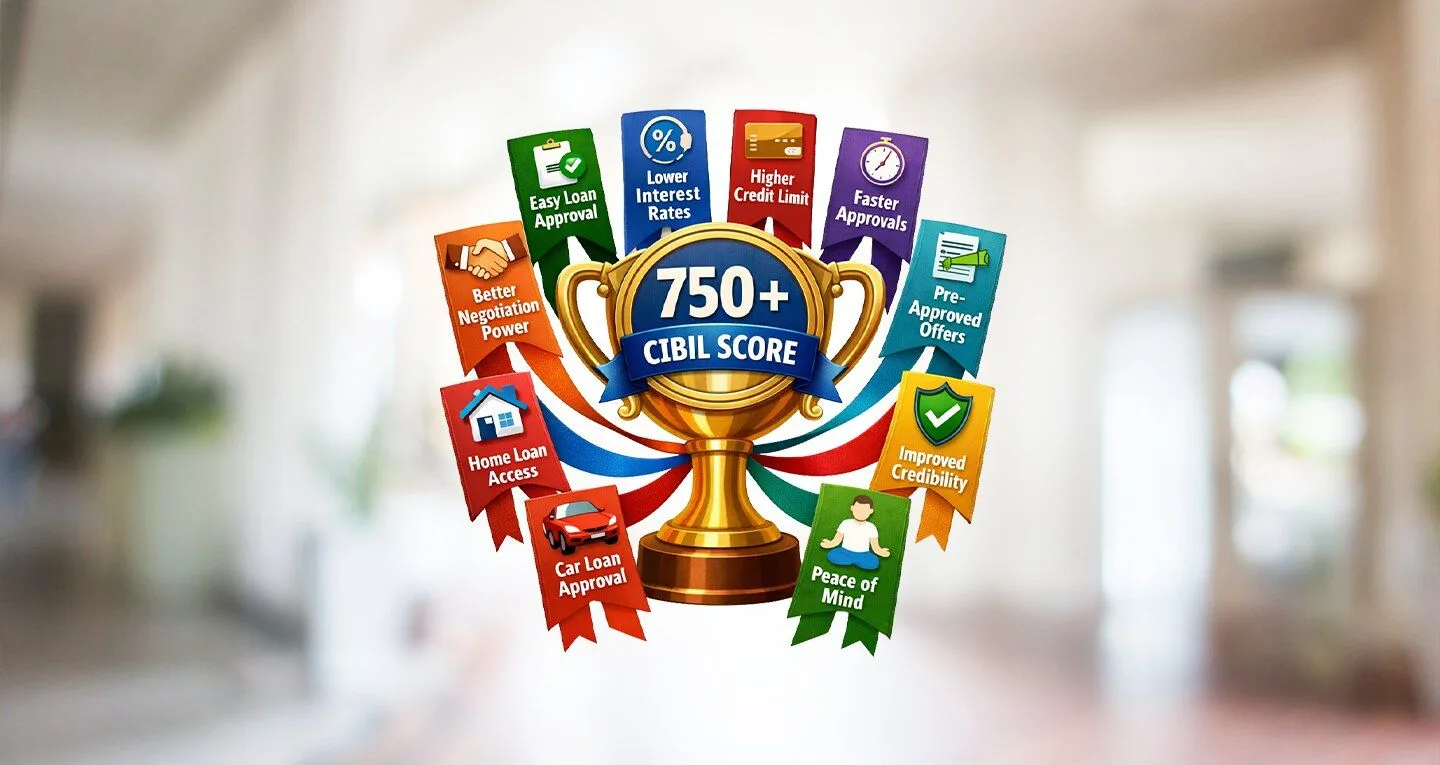
The first is speed. Applications from this band are far more likely to clear automated approval systems instead of getting routed to manual underwriting. That's the difference between a decision in minutes and one that takes days of back-and-forth over documents.
The second is pricing. The interest rate you're offered usually lands at or very near the lender's lowest advertised rate for that product. Loan eligibility and pricing both tend to track the same underlying risk assessment, so a stronger score works in both directions at once.
The third is access. Higher credit limits, pre-approved offers, and premium card eligibility all become more common, simply because the lender's own risk model has already flagged the file as safer than most. These offers often show up unprompted rather than needing to be requested.
None of this means an 800 unlocks some secret category lenders don't talk about. Understanding how these score bands actually work makes it clear that 800 is really the top of a curve that starts flattening out well before 900; gains keep coming, they just get smaller past a certain point.
Knowing these advantages exist is one thing. Knowing whether your own file is anywhere close to this band is a different question, and a more useful one to answer next.


FREED Expert Tip
Pull your free annual full credit report from each bureau instead of guessing. Errors are more common than most people expect.
Check My ReportSigns You're Close to a CIBIL Score of 800
A quick self-check. This isn't a diagnostic quiz with a score at the end, just five factual markers. Run through them and see how many already describe your file.
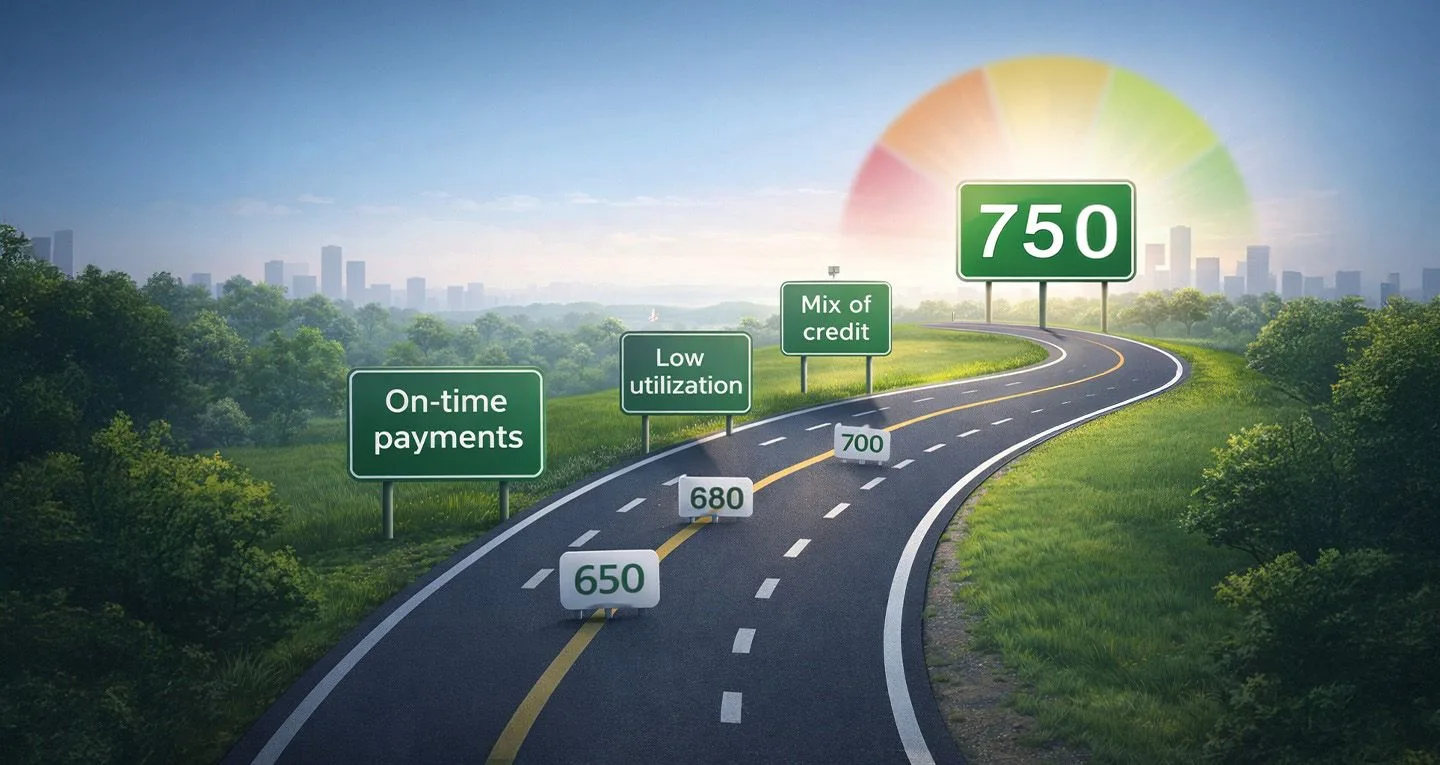
- No missed EMI or card payment in the last 12 to 24 months. Payment history carries the most weight in how your score actually gets calculated, so a clean stretch this long matters more than almost anything else on this list.
- Utilization consistently under 30% of your total limit. Lenders read high utilization as a sign of financial pressure, even when every bill gets paid.
- A mix of loan types on your report, not just cards. A personal loan or an auto loan alongside a credit card shows you can manage different kinds of credit, not just one.
- No new loan or card application in the last 3 to 6 months. Recent enquiries signal you might be actively seeking credit, which reads as slightly riskier to a model scanning for that pattern.
- An older file, accounts open for several years rather than mostly new ones. Age adds stability to a credit history the same way a longer track record adds credibility anywhere else.
If most of this already sounds like your situation, you're closer than you might think. What's left from here is mostly about consistency, not some big change to how you handle credit.

How to Get a CIBIL Score of 800, Step by Step
Reaching 800 doesn't need a special program or a paid tool. It's a general method anyone can follow with a bit of consistency, and none of these steps require FREED or any specific product to work. What actually moves a score is remarkably unglamorous: pay on time, keep balances low, and don't disturb what's already working.
Here's the full sequence, in the order that tends to matter most.
- Pay Every Bill On Time. Set up auto-pay for every EMI and credit card bill. A single late payment can undo months of good history.
- Bring Utilization Under 30%. Pay down card balances before the statement date, not just the due date. Utilization is measured on the statement, not the payment.
- Space Out New Credit Applications. Avoid applying for more than one loan or card in a short window. Each hard enquiry has a small, temporary effect.
- Keep Old Credit Card Accounts Open Where Sensible. Avoid closing your oldest credit card unnecessarily, since the age of your credit history can affect your score.
- Check Your Report for Errors. Review your report from each bureau every few months. This supporting resource on raising your score is worth a look if you want the fuller picture. A wrongly reported late payment can hold the score down for no real reason.
- Let the Credit Mix Happen Naturally. Do not take a new loan just to diversify credit type. A healthy mix should follow real need, not a score hack. None of this moves the score overnight, and it's worth being honest about that upfront. Meaningful movement typically takes several months of consistent behaviour, not weeks, and how fast depends on where you're starting from and how clean the rest of your file already is. There's no reliable points-per-month figure to quote here, since CIBIL's scoring model is proprietary and the exact formula is not publicly disclosed.
What matters more than speed is that none of these six steps work in isolation. Paying on time while running high utilization barely moves the needle. Keeping old accounts open while applying for three new cards in a month cancels out much of the benefit. The steps compound together, which is also why they're worth sticking with even after the score starts looking good.
That said, building toward 800 is one thing. Knowing what a single slip, a missed payment, a maxed-out card, could cost you once you're there is a different and arguably more useful question, which is exactly what the tool below is built to show.
Are You in a Loan Trap? Quick Check
Move the slider to your total EMIs as a % of monthly salary. See your debt stress level instantly.
EMIs as % of Monthly Salary
What a CIBIL Score of 800 Unlocks
Score Band | Lender's View | Typical Interest Rate Impact | Approval Speed |
700-749 (Good) | Acceptable risk, may need more documents | Standard advertised rate | Manual review common |
750-799 (Very Good) | Low risk | Often near the lender's lowest advertised rate | Usually fast, sometimes automated |
800-900 (Excellent) | Lowest risk tier | At or near the best rate the lender offers | Fastest, most likely pre-approved |
Rates and ranges shown are indicative. Final terms decided by the bank. FREED is not a Loan Provider. No outcome is guaranteed. Please verify directly with your bank.
Put a number to it, and the gap gets easier to feel. A full percentage point of difference on a large loan, say, the kind of amount tied to what's needed for personal loan approval, adds up to a meaningful sum over a multi-year term, not life-changing, but real money you'd otherwise hand over in interest.
Unlocking all of this assumes reaching 800 is actually worth it for you specifically, and that's genuinely not automatic for everyone.
One practical note while we're on the topic of your report: you can request a free full credit report from each bureau once a year, worth doing regardless of where your score currently sits.

Is Reaching a CIBIL Score of 800 Worth the Effort?
Not always, and that's a genuinely fine answer for a lot of people.
It's clearly worth it if a large loan, a home, a car, or a business expansion is coming in the next 12 to 24 months. A small rate difference compounds meaningfully over a loan that size, and the effort to get there pays for itself many times over.
It matters a lot less if there's no borrowing on the horizon. If you're already comfortable in the high 700s, the marginal benefit of chasing the last 30 to 50 points is genuinely small next to the consistency it takes to get there. 750 already unlocks most of the practical benefits discussed above. 800 is mostly margin on top of that.
Worth saying plainly: you're not behind for not having an 800. How common an 800 score actually is matters less than whether pushing for it serves your own actual plans. Good enough is a legitimate answer if there's nothing specific it's buying you right now.
The honest test is simple: would a lower rate or a bigger sanctioned amount actually change a decision you're about to make? If yes, the work is worth it. If the answer is a shrug, the time might be better spent elsewhere.
For anyone who does decide to pursue it, or who just wants an easy way to keep an eye on progress without overthinking it, here's where FREED actually fits into this picture.
How FREED Helps You Track and Improve Your Score
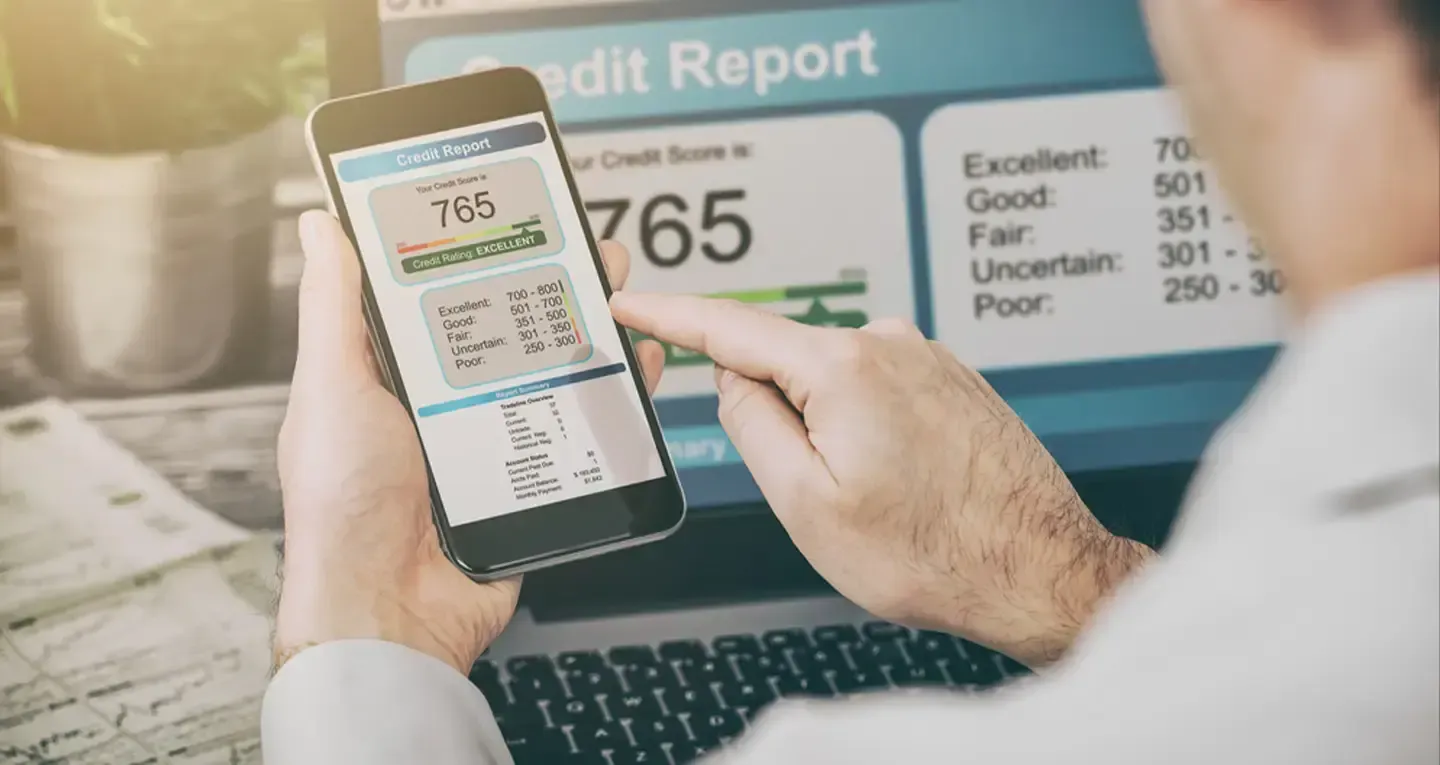
FREED's Credit Insight tool pulls your Experian credit report, not CIBIL's own report specifically, and shows your score alongside exactly what's currently helping or hurting it. Beyond just the number, it gives step-by-step recommendations for improving it further, tailored to whatever's actually showing up on your file.
It's open to everyone. No enrollment in any FREED program is required, and there's no minimum income or score threshold to subscribe. The subscription costs ₹249 for three months, which is directly relevant here since checking your own report periodically is exactly the kind of low-effort habit that supports everything covered in the steps above.
Worth being clear about what this tool actually does and doesn't do. It doesn't rebuild your score for you; there's no product that does that honestly. What it does is show you precisely what's happening on your file, the utilization, the recent enquiries, the account age, all the factors that actually move the number, so you're working from real information instead of guessing.
For someone optimizing an already healthy score rather than fixing a broken one, that clarity is often the entire value. You already know the habits that matter. Seeing exactly where you stand against them is what turns a general checklist into something specific to your own file. Checking every few months, rather than only when applying for something new, is usually enough to catch problems early and confirm the good habits are actually paying off.

Track and Improve Your Real Credit Score
One report. What's helping, what's hurting, and what to do next.
Check My Credit InsightsTips to Reach a CIBIL Score of 800 Faster
Keep a small amount of active credit rather than closing every card once it's paid off. An unused card sitting open with a small or zero balance still contributes to your overall limit and account age, both of which work in your favour.
Request a credit limit increase periodically, even without needing to spend more. A higher limit against the same spending automatically lowers your utilization percentage without changing a single habit.
Avoid co-signing or guaranteeing someone else's loan unless you're genuinely comfortable with the risk. Their repayment history shows up on your report too, and their missed payment becomes your problem on paper.
Set reminders a few days before each due date rather than relying on memory. A payment that clears two days early carries zero risk; one that's a day late because you forgot can cost months of progress.
Review your credit report every few months, not only when you're applying for something new. A healthy credit mix and clean payment history are easiest to maintain when you're checking in regularly instead of discovering a problem right when you need the score most.
That's really the whole strategy, less about finding a shortcut and more about not undoing the good habits you've already built. Consistency over a year or two moves this number more reliably than any single trick.

Mohit Juneja
Mohit Juneja writes educational content at FREED on debt management, credit scores, loan repayment, and borrowing best practices. His content is shaped by expert insights and industry knowledge, helping readers better understand their financial options and make informed decisions.
mohit.juneja@freed.care

FREED is India's trusted loan management platform. Founded in 2020 and headquartered in Gurugram, FREED has counselled 20 lakh+ people on personal loans, credit cards, and app loans. FREED charges fees only on successful settlement, not upfront. FREED does not handle secured loans (home loans, car loans, gold loans).
Media Mentions