How Much CIBIL Score Is Required for a Personal Loan?
Most banks prefer a CIBIL score of 750 or above for a personal loan, but there is no universal minimum score. Eligibility depends on the lender's assessment, along with factors such as your income, employment stability, existing financial obligations, and overall credit profile.
Mohit Juneja
Reviewed by FREED India, Debt Resolution Specialists
 4.7/5
4.7/5 ₹3,200Cr+
 20,000+
 20,00,000+4.7/5₹3,200Cr+20,000+20,00,000+
Key Takeaways

Government and public sector banks generally require the highest CIBIL scores, typically 700 to 720 and above.
Private banks are more flexible, often approving personal loans from a score of 680 to 700 onward.
NBFCs and fintech lenders work with lower scores, sometimes from 600 to 650, but at noticeably higher interest rates.
Score is not the only factor, income, employment stability, and your existing EMI burden relative to income all matter.
A score below 650 makes approval difficult through traditional lenders, though secured loans and co-applicants remain realistic options.
What CIBIL Score Do You Need for a Personal Loan?
No single number answers this for everyone, and it's worth saying that plainly upfront, because a lot of content online implies otherwise. The real answer depends entirely on which lender you're asking, since each one sets its own internal risk appetite based on how it raises money, how it recovers losses, and who it's trying to attract as a customer.
That said, there's a fairly consistent pattern once you look across the market as a whole. At the top end, banks generally want a score of 750 and above to offer their best terms, the fastest approvals, the lowest interest rates, and the least documentation friction. This is the tier where you're negotiating from a position of strength rather than hoping to clear a bar.
Private banks flex a little more than public sector ones, often starting from 680 to 700 as a working baseline, sometimes stretching further if your income and employment history are strong even at a slightly lower score. NBFCs open things up further still, commonly working with applicants from around 650 upward. Digital lending apps go the furthest of any category, sometimes approving scores as low as 600, usually leaning on additional signals beyond the score itself, your bank statement patterns, how regularly your salary lands, and your UPI transaction frequency, to build a fuller risk picture than the number alone provides.
One pattern holds steady across this entire spectrum, and it's worth internalising: the more flexible a lender is willing to be on score, the higher the interest rate tends to run in exchange. This isn't a coincidence; it's the lender pricing in the added risk they're taking on by looking past a lower number. Knowing roughly where you sit against these bands, rather than assuming you need to hit some mythical universal 750 before applying anywhere at all, is a genuinely more useful starting point for figuring out where to actually apply

Know Where You Stand Before You Apply
See your credit score and what's holding it back free breakdown in minutes.
Check Your Credit scoreHow Do Requirements Differ Between Banks, NBFCs, and Fintech Lenders?
Each category of lender approaches risk fundamentally differently, and understanding why helps explain the gap in their score requirements rather than just memorising the numbers.
- 1
Public sector banks
Think SBI, Bank of Baroda, Punjab National Bank, and similar institutions, sit at the strictest end of the spectrum, typically wanting 700 to 720 and above before seriously considering an application. The reasoning here isn't arbitrary caution; these banks are lending out depositors' money, which comes with a different regulatory and reputational weight than lending out capital they've raised themselves.
- 2
Private banks
HDFC, ICICI, Axis, Kotak, and others in this tier, work in a noticeably wider band, generally somewhere between 680 and 750, depending on the specific bank and how strong the rest of your profile looks. The best rates within this tier are still reserved for applicants comfortably above 750, but actual approval itself doesn't necessarily require hitting that number, particularly
- 3
NBFCs
Bajaj Finance, Tata Capital, and comparable non-banking lenders, open things up meaningfully further, generally accepting applicants from around 650. The structural reason is straightforward: NBFCs raise their own capital through borrowing rather than depending on customer deposits, which gives them considerably more latitude to underwrite a broader range of risk profiles. The trade-off for that flexibility shows up directly in
- 4
Digital lending apps
sit at the most flexible end of the entire spectrum, often working with scores as low as 600 to 650. Rather than relying on the score in isolation, many of these platforms layer in alternative data, income regularity, spending patterns, and transaction frequency to construct a more complete risk assessment than a three-digit number alone can offer. This is precisely
Does Loan Amount Change the Score You Need?
Yes, genuinely, and this is a detail that gets overlooked more often than it should be in most discussions of this topic. How much you're actually asking to borrow changes how much risk the lender is taking on with your specific application, entirely separate from whatever your score happens to say.
Smaller loans, generally anything under ₹50,000, come with noticeably more flexibility on the score front. The logic here is simple: a modest amount is far easier for a lender to absorb as a loss if something genuinely goes wrong with repayment, so the bar for approval sits lower. It's not unusual to see digital lenders approve applicants sitting at 600 to 650 specifically for loans in this smaller bracket, precisely because the downside risk to the lender is limited.
As the requested amount climbs, the expected score climbs right alongside it. Loans in the ₹1 lakh to ₹5 lakh range typically want something in the 650 to 680 territory at minimum. Push further, into the ₹5 lakh to ₹10 lakh range and beyond, and most lenders, banks especially, start expecting scores of 700 to 750 or higher before they'll seriously entertain the application.
This creates a scenario that surprises a fair number of borrowers: the same score, at the same lender, can result in approval for a smaller amount and a decline for a larger one. Nothing about the borrower's creditworthiness has changed between those two applications, only the size of what's being asked for, and therefore the size of the bet the lender is being asked to make.
Already Juggling Multiple EMIs?
That could be what's pulling your score down. One consolidated loan, one lower EMI.
Check If I QualifyIs Score the Only Thing Lenders Look At?
No, and this is arguably one of the more important things to understand before applying anywhere, since clearing the score threshold alone doesn't guarantee approval the way a lot of people assume it does. Several other factors sit alongside the score, and any one of them can tip a decision in either direction.
- 1
FOIR
FOIR, your Fixed Obligations to Income Ratio, is one of the heaviest-weighted factors lenders consider outside the score itself. This measures precisely how much of your monthly income is already committed to EMIs, rent, and other recurring financial obligations before a new loan payment even enters the picture. Most lenders start getting genuinely uncomfortable once this ratio crosses roughly 50%.
- 2
Employment type and stability
Employment type and stability carry real weight too. A borrower with five steady years at the same employer generally reads as meaningfully lower risk than someone who's changed jobs three times in the past two years, even if both applicants show an identical score on paper. Lenders are, in a sense, trying to predict the future here, and a longer,
- 3
Income consistency relative to the loan amount
Income consistency relative to the loan amount gets weighed directly against what's being requested. A high score combined with a modest or irregular income, freelance work with fluctuating monthly earnings, for instance, can still result in either a decline or a significantly scaled-down approved amount compared to what was originally applied for.
- 4
Your existing relationship with the specific lender
Your existing relationship with the specific lender can genuinely tip things in your favour. An account already in good standing, say a salary account with a clean transaction history at the bank you're now applying to, sometimes buys meaningfully more flexibility than walking in as a completely unknown applicant elsewhere.

What the Law Says
Banks must give you a reason if your loan application is rejected based on your credit report, on request.
Check Your OptionsCan You Get a Personal Loan With a Score Below 650?
Harder through traditional banks, certainly, but genuinely not impossible. A handful of realistic paths remain worth exploring properly, rather than assuming a low score simply closes every door available to you.
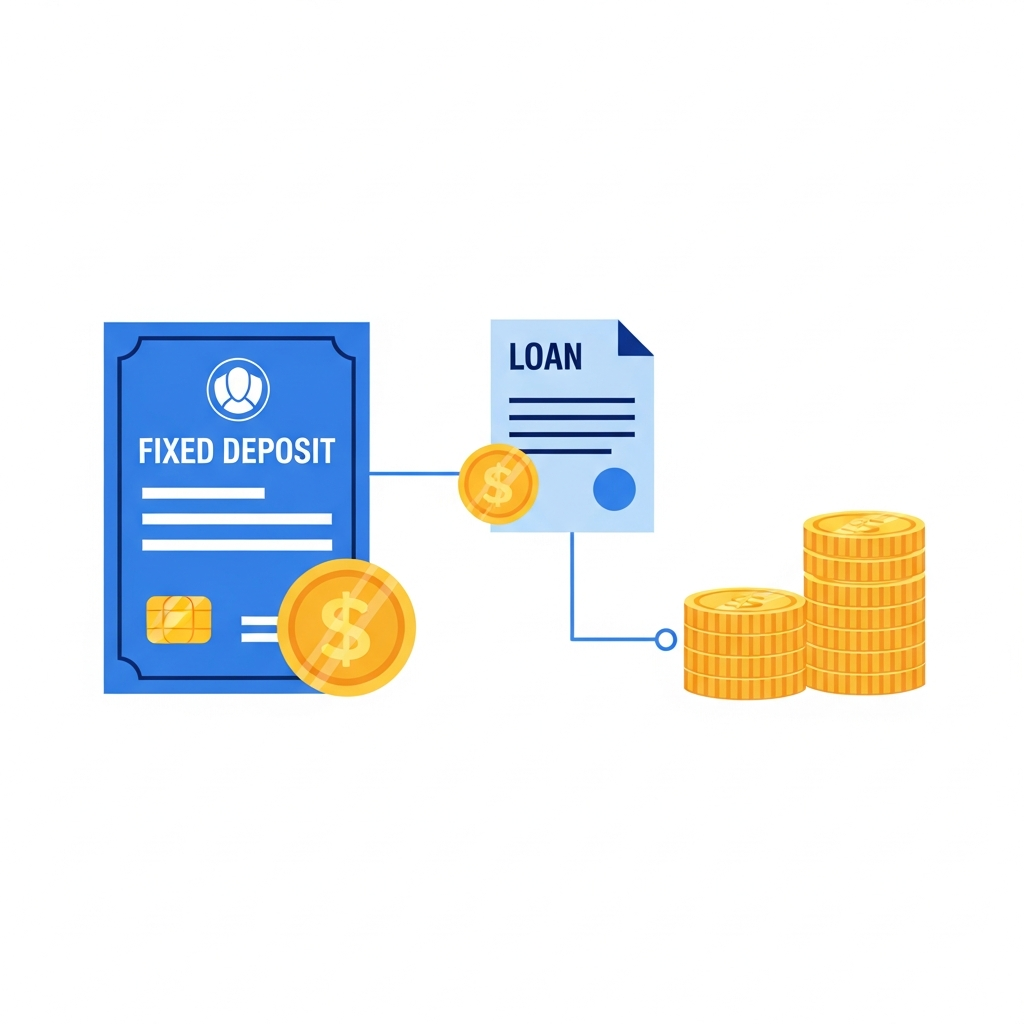
- Secured loan options are one of the more straightforward routes. Borrowing against a fixed deposit, gold jewellery, or the surrender value of an insurance policy gives the lender collateral to fall back on if repayment stops, which meaningfully lowers their risk exposure. Because of that collateral backing, lenders can afford to work with a considerably lower score than they would for an unsecured personal loan, where nothing stands behind your promise to repay except your income and history.
- A co-applicant with a stronger credit profile is a second genuinely useful path. Adding someone with a solid score and stable, verifiable income to your application strengthens the overall picture meaningfully, sometimes enough to shift what would have been an outright decline into a genuine approval. Lenders assess the combined profile here, not just yours in isolation.
- NBFCs and fintech lenders using alternative data models round out the third realistic option. Rather than leaning purely on the three-digit score, a number of these lenders dig into your actual bank statements, income patterns, and day-to-day transaction history to build a considerably fuller picture of your real repayment capacity. This approach can genuinely work in your favour even at a lower score, particularly if your income, while perhaps not reflected perfectly in your credit history, is demonstrably stable and sufficient.
None of these three paths come with guarantees attached, and it would be misleading to suggest otherwise. But they represent genuinely realistic options rather than long shots, and they're worth exploring properly and patiently before concluding that a low score has closed off every avenue available to you.
What Happens If You Apply and Get Rejected?
A rejection stings; there's no getting around that, and the instinct that follows almost immediately, to apply somewhere else right away and see if a different lender says yes, is worth resisting for a moment before acting on it.
Here's why that instinct can actually work against you. Every single application you submit, regardless of whether it ultimately gets approved or rejected, leaves behind a hard inquiry on your credit report. Apply to three or four different lenders in quick succession following an initial rejection, and each of those applications adds its own hard enquiry, which can pull your score down further at precisely the moment you need it working in your favour rather than against you. Beyond the direct score impact, a visible cluster of recent enquiries close together can also read as a red flag to the next lender evaluating your application, signalling something that looks like financial stress or credit-hungry behaviour, regardless of what the actual underlying reason happened to be.
The more useful move after a rejection is pausing to genuinely understand why it happened in the first place, whether it came down to the score itself, a strained FOIR, an inconsistency in your documented income, or something else entirely specific to that lender's internal criteria, before deciding where and how to try again.

FREED Expert Tip
Check your eligibility on a lender's calculator before formally applying, as it avoids an avoidable rejection and hard enquiry.
Check Your Credit InsightHow Can You Improve Your Score Before Applying?
A handful of deliberate, achievable steps can meaningfully close the gap between where your score sits today and where a specific lender wants it, particularly if you have some time before you actually need the loan.
1. Pay every EMI and bill on time, without a single exception. This deserves to sit at the very top of the list because payment history carries more weight in your score calculation than any other single factor by a meaningful margin. Consistency here compounds over time in a way that little else on this list can match.
2. Bring your credit utilisation below 30% of your available limit. If you're regularly using a large share of what's available to you across your credit cards, bringing that percentage down is genuinely one of the faster levers available for moving your score, often showing measurable improvement within a single reporting cycle or two.
3. Check your credit report carefully for errors before you apply anywhere. A mislabeled late payment that was actually made on time, or an account that was never even yours listed against your name, can be quietly suppressing your score without your knowledge, sometimes by a genuinely significant margin. This is worth ruling out before assuming the score reflects your actual behaviour accurately.
4. Reduce your existing EMI burden first, if that's realistically achievable. If your FOIR is already running high, addressing that underlying pressure before submitting a new application often matters considerably more to your approval odds than chasing a few extra points on the score itself would.
Improving your credit profile usually takes consistent financial discipline over time. Rather than expecting quick changes, focus on making timely payments, managing your credit responsibly, and regularly reviewing your credit report for accuracy.

Are You in a Loan Trap? Quick Check
Move the slider to your total EMIs as a % of monthly salary. See your debt stress level instantly.
EMIs as % of Monthly Salary
How FREED Helps You Understand Your Loan Readiness
Before applying anywhere at all, it genuinely helps to know exactly where you stand today rather than guessing which lender bracket you might realistically fit into based on assumption alone. FREED's Credit Insights tool, sometimes referred to simply as "Check My Credit," is built specifically for this purpose, and it's available to absolutely anyone, whether or not you're already enrolled in any other FREED program.
Credit Insights pulls your credit report directly from Experian and gives you your current score along with a personalised breakdown of the factors affecting your credit profile, helping you better understand your report before you apply. Get flat 50% off on subscription or you avail the subscription at flat 50% off, a modest cost against the value of not applying blind.
Rather than submitting an application and risking an entirely avoidable rejection, plus the fresh hard enquiry that comes attached to it, this gives you a genuinely honest read on where you stand before you commit to anything, and lets you target the right tier of lender from the start rather than working backwards from a decline.
Know Your Score Before You Apply
Get your score, the reasons behind it, and next steps.
check your scoreAlready Juggling Multiple Loans and Worried About Your Score?
If your score is dropping not because of any lack of financial discipline on your part, but because you're genuinely juggling several existing loans and EMIs spread thin across different lenders, that's a fundamentally different situation than simply needing to build better credit habits from scratch, and it deserves a different kind of solution entirely.
For borrowers who are managing multiple repayments, FREED may be able to support eligible borrowers with debt consolidation solutions through a lending partner. If eligible, a consolidation loan may help combine eligible debts into a single repayment plan. Final loan terms, including the EMI, depend on the lending partner's assessment.
Personal Loan CIBIL Score Requirements by Lender Type
Lender Type | Typical Minimum Score | What to Expect |
Public sector banks | 700 to 720+ | Strictest documentation, lowest interest rates |
Private banks | 680 to 750 | Moderate flexibility, competitive rates above 750 |
NBFCs | 650+ | More flexible, higher interest rates than banks |
Digital lending apps | 600 to 650 | Most flexible, highest interest rates, and alternative data used |
These are general industry patterns, not fixed rules, exact criteria vary by lender and change periodically. Figures shown are indicative and based on publicly available industry information. Final eligibility and terms are decided by the individual lender. FREED is not a Loan Provider. Please verify directly with the lender.

Mohit Juneja
Mohit Juneja writes educational content at FREED on debt management, credit scores, loan repayment, and borrowing best practices. His content is shaped by expert insights and industry knowledge, helping readers better understand their financial options and make informed decisions.
mohit.juneja@freed.care

FREED is India's trusted loan management platform. Founded in 2020 and headquartered in Gurugram, FREED has counselled 20 lakh+ people on personal loans, credit cards, and app loans. FREED charges fees only on successful settlement, not upfront. FREED does not handle secured loans (home loans, car loans, gold loans).
Media Mentions