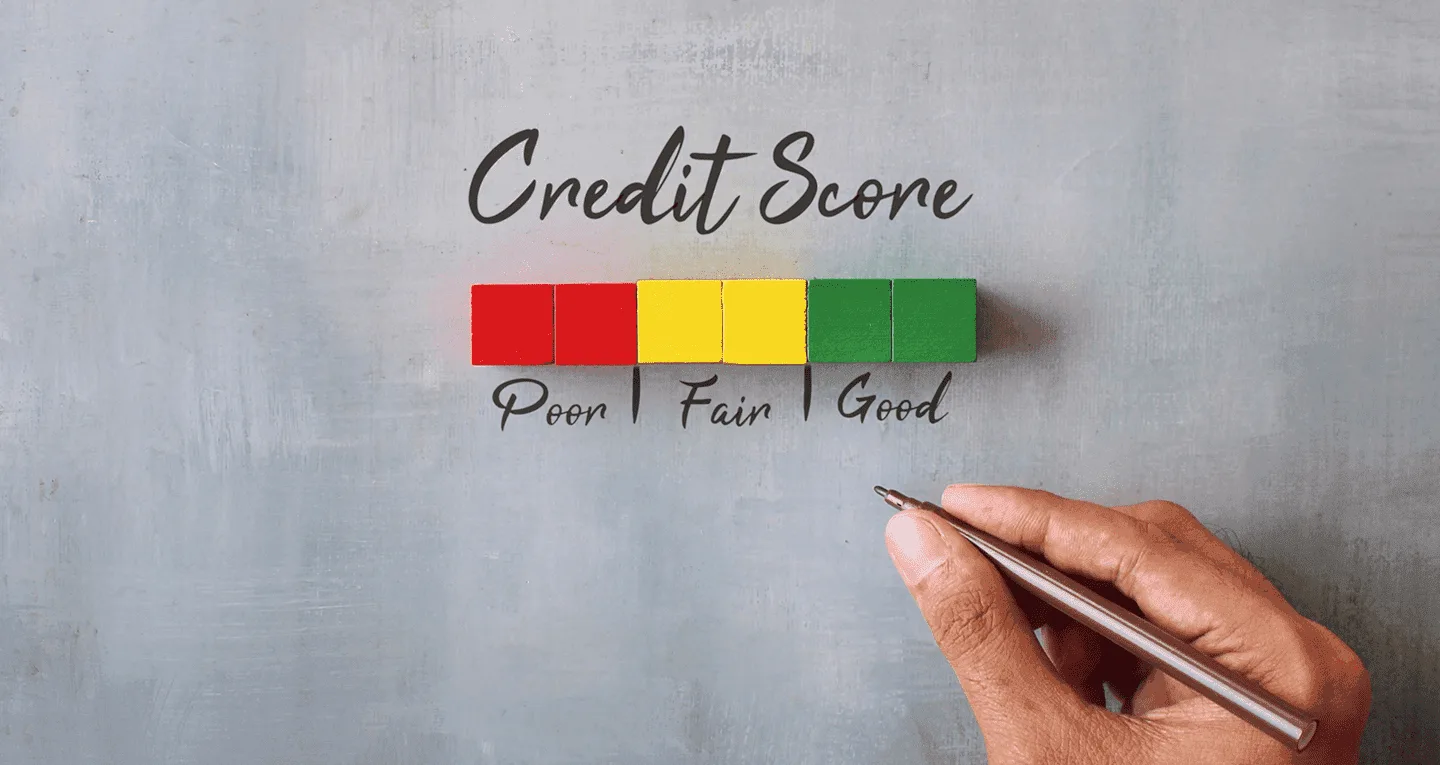
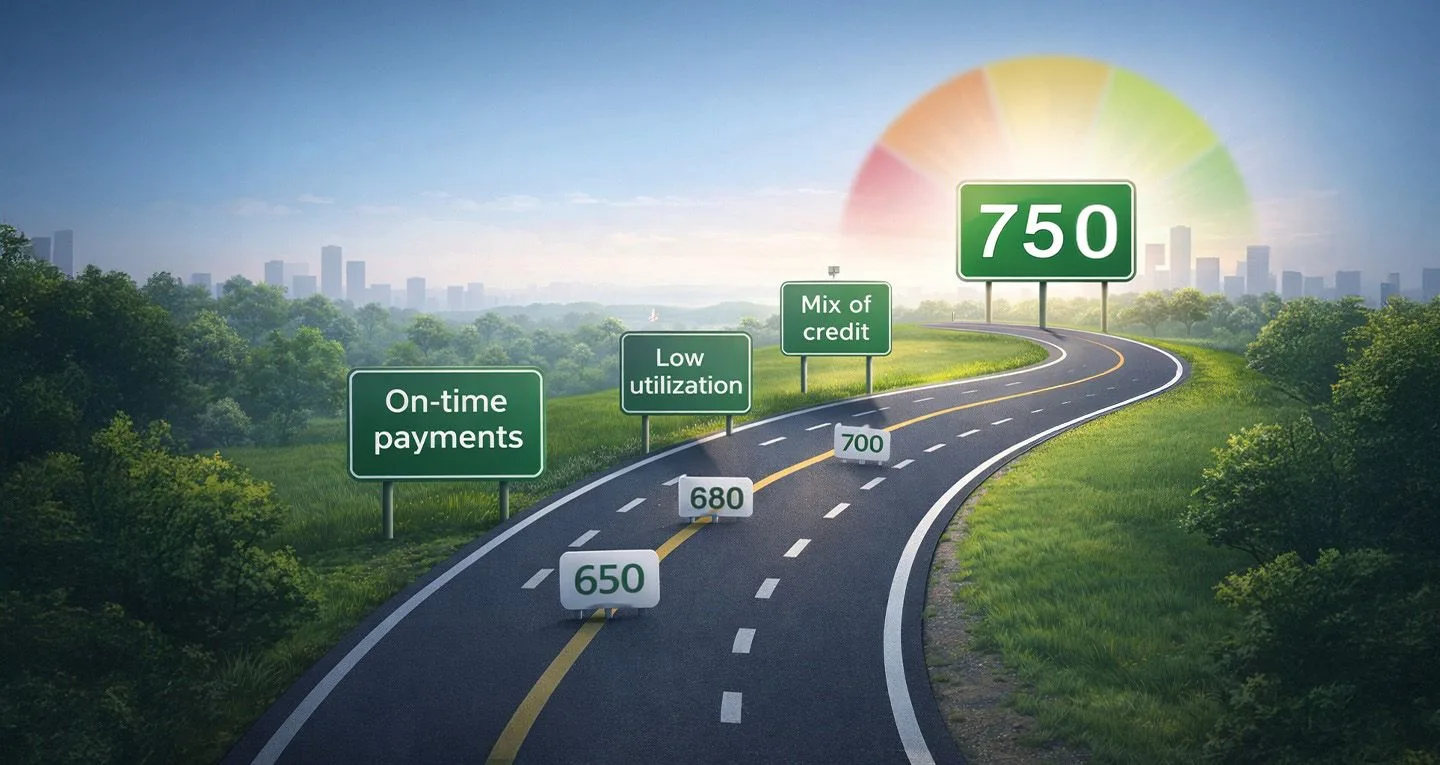
Unlock the secret to a good credit mix
Credit mix is one of the five official factors in a credit score, and also one of the most commonly overcorrected. Here is what it actually means, how much it genuinely contributes, and why taking on a loan purely to "improve" it is usually the wrong move.

Mohit Juneja
Reviewed by FREED India, Debt Resolution Specialists
 4.7/5
4.7/5 ₹3,200Cr+
 20,000+
 20,00,000+4.7/5₹3,200Cr+20,000+20,00,000+
Key Takeaways

Credit mix refers to the variety of credit types you manage, revolving credit like credit cards, and instalment credit like personal, vehicle, or home loans, and it typically accounts for only around 10% of your overall credit score calculation.
A genuinely healthy credit mix develops naturally over a normal financial life, a credit card here, a vehicle loan there, rather than being deliberately engineered through unnecessary borrowing.
Taking on a loan specifically to "improve" your credit mix is a common, costly overcorrection, since the interest cost and repayment obligation of an unneeded loan almost always outweighs the very small score benefit it might provide.
A thin or narrow credit mix is only worth actively addressing if you are also building credit history from a very limited starting point, and even then, the priority should remain payment history and utilisation, which matter considerably more.
If a low credit score is being driven by high interest debt or missed payments rather than credit mix at all, FREED can help address that underlying issue directly, which will do far more for your score than any mix related adjustment.
What Credit Mix Actually Means
Credit mix refers to the variety of different types of credit accounts you hold and manage, rather than the total number of accounts or the total amount of credit available to you.
Credit bureaus assess this specifically because managing different types of credit, a revolving credit card and a fixed instalment loan, for example, involves genuinely different repayment structures and disciplines, and demonstrating the ability to handle more than one type responsibly is treated as a modest, positive signal within the overall credit score calculation.
This is distinct from, and considerably smaller in weight than, whether you pay on time or how much of your available credit you are using, the two factors that dominate the score calculation by a wide margin.

Want an honest read on what is actually holding your score back?
Talk to a FREED Expert for free.
Connect with FREED ExpertWhy Credit Mix Gets More Attention Than Its Actual Weight Deserves
Credit mix generates disproportionate attention and anxiety, relative to its actual contribution to the score, partly because it is one of the more actionable sounding factors, "get a different type of loan" feels like a specific, doable task, in a way that "wait for your account history to get older" does not.
This is precisely why credit mix is worth addressing directly and honestly in this blog, not because it deserves more weight in your actual planning, but because the gap between its real influence, roughly 10% of the total calculation, and the attention it receives, often disproportionate to that weight, leads people to make decisions, taking on an unneeded loan specifically to "diversify," that cost more than the marginal score benefit could ever justify.
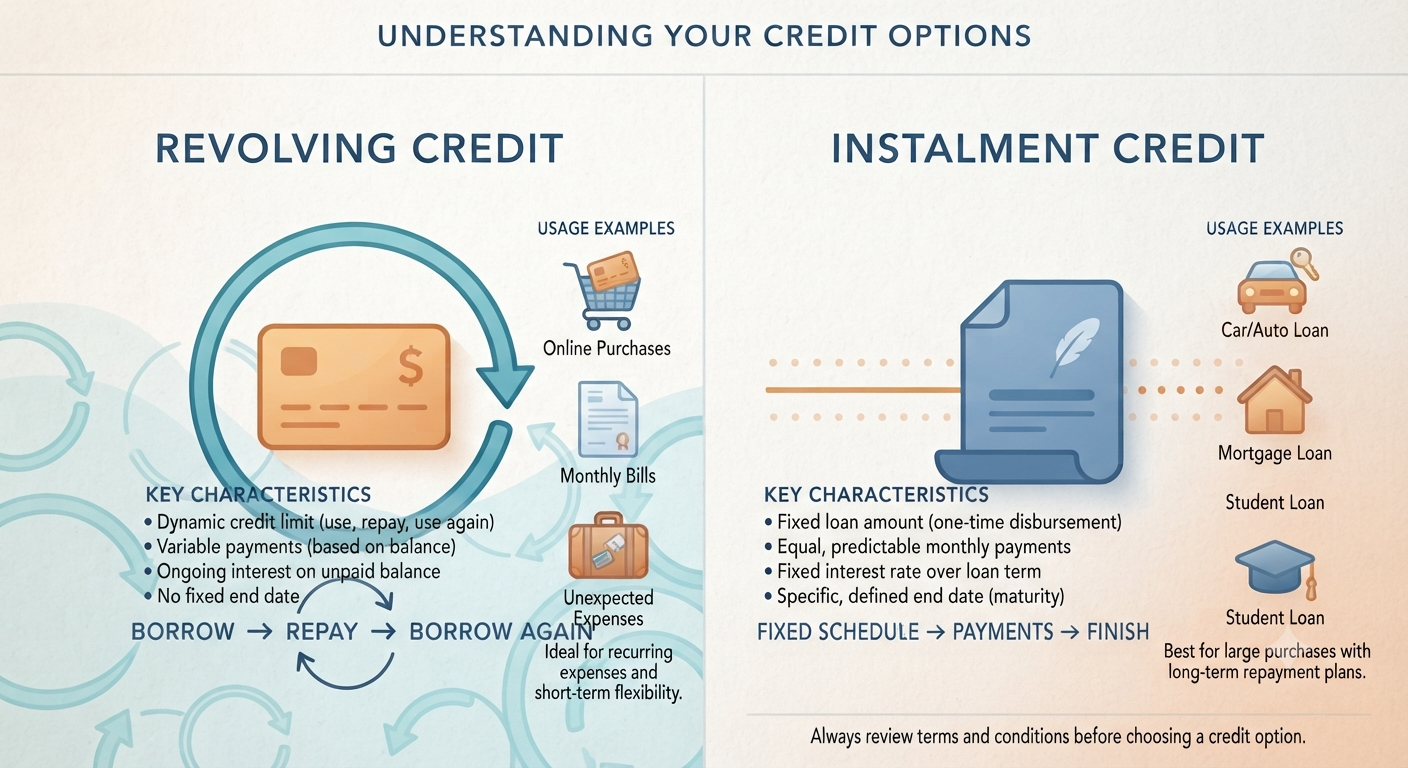
The Two Broad Categories: Revolving Credit and Instalment Credit
Credit accounts generally fall into two broad categories that together make up the concept of credit mix. Revolving credit, primarily credit cards, where you have an available limit you can borrow against repeatedly, repay, and borrow against again, with no fixed end date to the credit relationship itself.
Instalment credit, personal loans, vehicle loans, home loans, and education loans, where you borrow a fixed amount upfront and repay it through a defined schedule of instalments over a set tenure, with the credit relationship ending once the loan is fully repaid.
Holding and managing both types responsibly over time, rather than relying exclusively on one category, is what a "good" credit mix specifically refers to, though, as covered below, this does not mean every person needs an example of every possible credit type to be considered to have a healthy mix.
What a "Good" Credit Mix Actually Looks Like
A genuinely good credit mix does not require holding every possible type of credit account. It simply reflects having managed more than one type responsibly, typically at least one revolving account, a credit card, alongside at least one instalment account, if and when a genuine need for one has arisen, a vehicle loan, a home loan, an education loan.
Someone with a single, well managed credit card and no loans at all is not automatically penalised heavily for this, particularly if their payment history and utilisation on that single account are strong. The absence of a second credit type is a modest, minor gap in an otherwise healthy profile, not a significant weakness that demands correction through deliberate new borrowing.
Are You in a Loan Trap? Quick Check
Move the slider to your total EMIs as a % of monthly salary. See your debt stress level instantly.
EMIs as % of Monthly Salary
The Mistake of Taking a Loan Just to "Improve" Your Mix
A specific, recurring mistake, often driven by exactly the kind of disproportionate attention described earlier, is taking on a personal loan you do not actually need, purely with the stated goal of "improving credit mix" or "building credit."
This is almost always a poor trade. The loan carries real interest cost and a real monthly repayment obligation, while the score benefit from improved credit mix, given its roughly 10% weight in the overall calculation, spread further across an already reasonable profile, is typically marginal at best, and can be entirely offset or reversed if the new loan adds a hard enquiry, increases your overall debt burden, or is ever paid late.
The specific rule worth applying directly: only take on a new form of credit when there is a genuine, standalone reason to do so, a car you actually need to purchase, a home loan for a home you are actually buying, never purely as a credit mix improvement exercise on its own.

FREED Expert Tip
If you are ever advised, by an agent, an app notification, or general online advice, to "take a small personal loan just to build your credit mix," treat this specific advice with real scepticism. A responsible lender or advisor recommending credit should be doing so because you have a genuine financial need, not because your credit profile has a theoretical gap in one factor that contributes only a small fraction of your overall score.
Check My Credit Score FreeHow Credit Mix Naturally Develops Over a Normal Financial Life
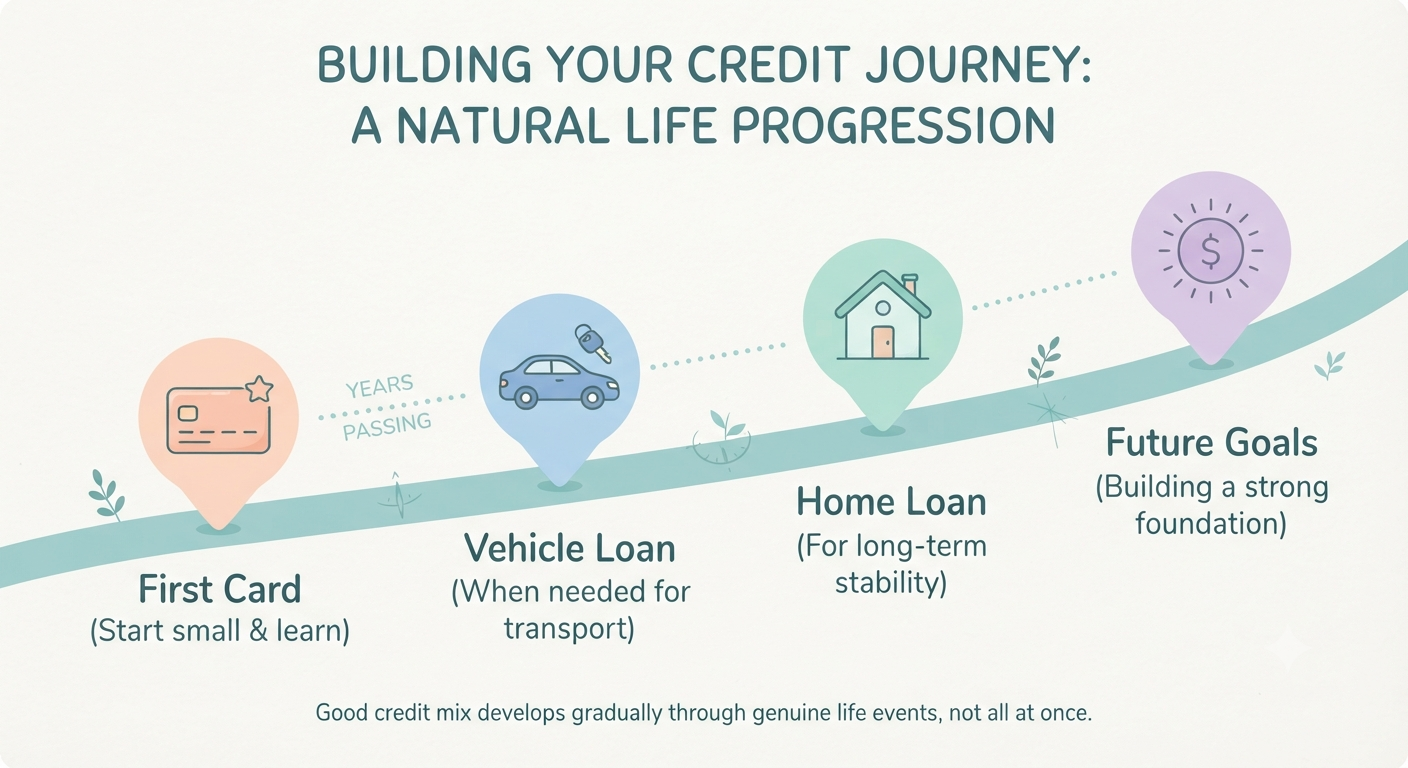
For most people, a reasonably healthy credit mix develops naturally over time, without any deliberate engineering, simply as a byproduct of ordinary financial milestones. A first credit card in early adulthood. A vehicle loan when a car is genuinely needed. Perhaps a home loan later, when buying a house becomes a genuine, considered goal.
This natural progression, driven by genuine needs arising at different life stages, produces a credit mix that develops organically alongside your actual financial life, rather than one that has been artificially assembled to satisfy a scoring factor. This is, in fact, the healthiest and most sustainable way for a good credit mix to actually form, as a natural consequence of genuine financial decisions, not as a standalone goal pursued in isolation.
Not sure whether a loan you're considering makes sense for your actual situation?
Talk to a FREED Expert for free.
Talk to a FREED ExpertWhen a Thin or Narrow Credit Mix Is Genuinely Worth Addressing
There is one specific situation where credit mix deserves slightly more deliberate attention, when someone is building credit history from a very limited starting point, no credit history at all, or only a single, very new account, and is trying to establish a stronger overall profile ahead of a significant future borrowing need, such as a home loan application in the coming years.
Even in this situation, the priority remains the same two dominant factors covered elsewhere, consistent on time payments and healthy utilisation, on whatever accounts already exist, rather than immediately seeking out a second credit type. Only once these fundamentals are solidly in place does adding a second, genuinely needed credit type become a reasonable, secondary consideration, and even then, it should be tied to an actual need, not pursued purely as a mix building exercise.
How to Build a Healthy Credit Mix the Right Way
If you are genuinely early in your credit journey and want to build a healthy profile deliberately, the right sequence is to start with one revolving account, a starter credit card, and manage it well, full payments, low utilisation, for at least 12 months before considering anything else.
If and when a genuine need for instalment credit arises, a car purchase, a home purchase, an education loan for further study, take it on at that point, evaluated on its own financial merits, interest rate, tenure, true cost, exactly as you would evaluate any loan decision on its own terms. The credit mix benefit that results is a welcome secondary effect of a decision made for genuine reasons, not the primary reason the loan was taken in the first place.

What the Law Says
Under RBI regulations, credit bureaus are required to calculate and disclose the specific factors contributing to your score in general terms when you access your free annual credit report, which allows you to see, in broad terms, how much weight elements like credit mix are actually contributing to your specific score, rather than relying on generic assumptions about how significant this factor might be for your particular profile.
Check My Credit Score FreeCredit Mix Alongside the Other Factors: Keeping Perspective
It is worth stating directly, in the context of an entire blog about credit mix, that this factor should occupy a correspondingly small amount of your actual attention and effort. Payment history and credit utilisation together typically account for roughly 55 to 65% of your score, considerably more than credit mix's roughly 10%.
If you are looking for the highest impact actions to improve your score, setting up auto-debit for every payment and keeping utilisation below 30% will do considerably more than any credit mix adjustment ever could. Credit mix is worth understanding, precisely so you do not overweight it, rather than as a factor demanding significant, active management on its own.
Want to know which factors are actually worth focusing on for your specific score?
Talk to a FREED Expert for free.
Talk to a FREED ExpertWhen Debt, Not Mix, Is the Real Issue Behind a Low Score
For many people whose score feels lower than expected, credit mix is rarely the actual explanation, even though it is sometimes the factor people fixate on, since it feels like a specific, actionable gap to fill.
More often, a genuinely low score reflects one of the two dominant factors, inconsistent payment history or high utilisation, frequently connected to an underlying debt situation, high interest balances that are difficult to pay down, or accounts that have gone overdue, that a credit mix adjustment could never meaningfully offset regardless of how it was addressed.
If this describes your situation, existing debt is very likely the actual factor worth addressing directly, not your credit mix. FREED's Debt Consolidation Program combines multiple high interest debts into one lower interest loan with a single, manageable EMI, directly supporting the payment history and utilisation factors that matter far more than mix.
FREED's Debt Resolution Program negotiates a reduced settlement for debt that cannot realistically be repaid in full, on average 56% less than the original outstanding, addressing the actual, dominant driver of a low score directly.
A free consultation can assess your specific credit profile honestly and confirm whether credit mix is genuinely relevant to your situation, or whether the real opportunity lies elsewhere.

Mohit Juneja
Mohit Juneja writes educational content at FREED on debt management, credit scores, loan repayment, and borrowing best practices. His content is shaped by expert insights and industry knowledge, helping readers better understand their financial options and make informed decisions.
mohit.juneja@freed.care

FREED is India's trusted loan management platform. Founded in 2020 and headquartered in Gurugram, FREED has counselled 20 lakh+ people on personal loans, credit cards, and app loans. FREED charges fees only on successful settlement, not upfront. FREED does not handle secured loans (home loans, car loans, gold loans).
Media Mentions