HDFC CIBIL Score: What It Means for Loan Eligibility
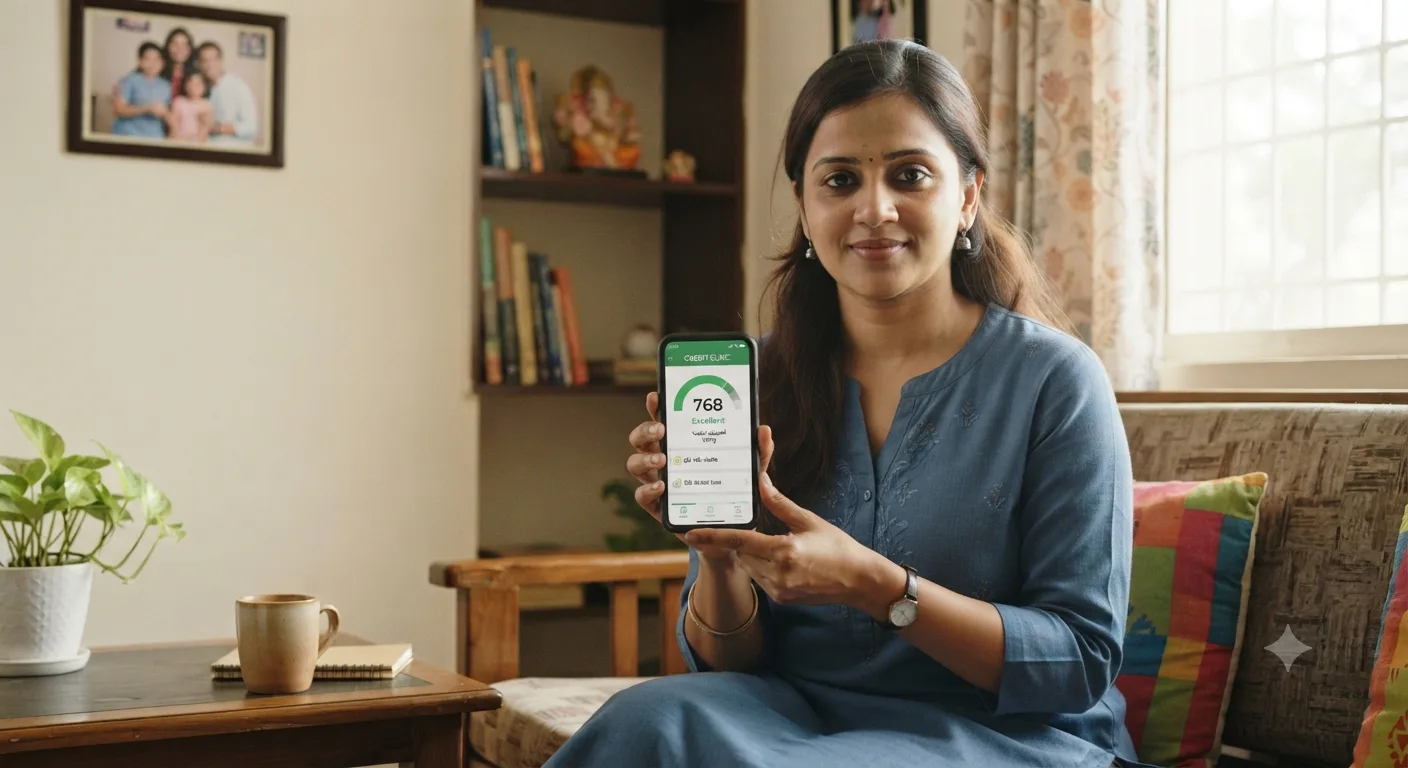
HDFC CIBIL score requirements aren't fixed by law, but HDFC Bank generally prefers 750 and above for personal loans and credit cards, with 700 to 720 as the practical floor most applicants need to clear for approval.
Mohit Juneja
Reviewed by FREED India, Debt Resolution Specialists
 4.7/5
4.7/5 ₹3,200Cr+
 20,000+
 20,00,000+4.7/5₹3,200Cr+20,000+20,00,000+
Key Takeaways

HDFC CIBIL score preference is 750 and above, though there's no single official minimum published by the bank.
For personal loans, 700 to 720 is commonly cited as the practical floor. Below that, expect case-by-case underwriting with higher rates.
HDFC's own score bands: 300–499 poor, 500–649 fair, 650–749 good, 750–900 excellent.
FOIR (how much of your salary goes to EMIs) matters as much as the score itself. HDFC generally caps this around 55 to 60% of net income.
A "Settled" or "Written-off" tag on your CIBIL report stays for up to 7 years and affects approval regardless of your numeric score.
What Is HDFC CIBIL Score and Why It Matters
The HDFC CIBIL score is simply the score HDFC Bank checks when it evaluates your personal loan or credit card application. It's the same 300 to 900 scale used across every bank in India, generated by TransUnion CIBIL based on your repayment history.
HDFC has not published one single fixed minimum score that applies across every product. What it does publish is a set of broad bands (covered next) that give a reasonable idea of where approval gets easier or harder. Where your specific application lands within that depends on more than the number alone.
Income, employment stability, and your existing debt load all factor in, too. HDFC looks at your full financial picture, not the score in isolation. A high score helps, but it does not by itself guarantee approval if your income and existing obligations don't support the loan you're asking for.

What the Law Says
Checking your own CIBIL score is a soft enquiry and has zero impact on your score. Only lender-initiated hard enquiries after an actual application affect it.
Check your report without worry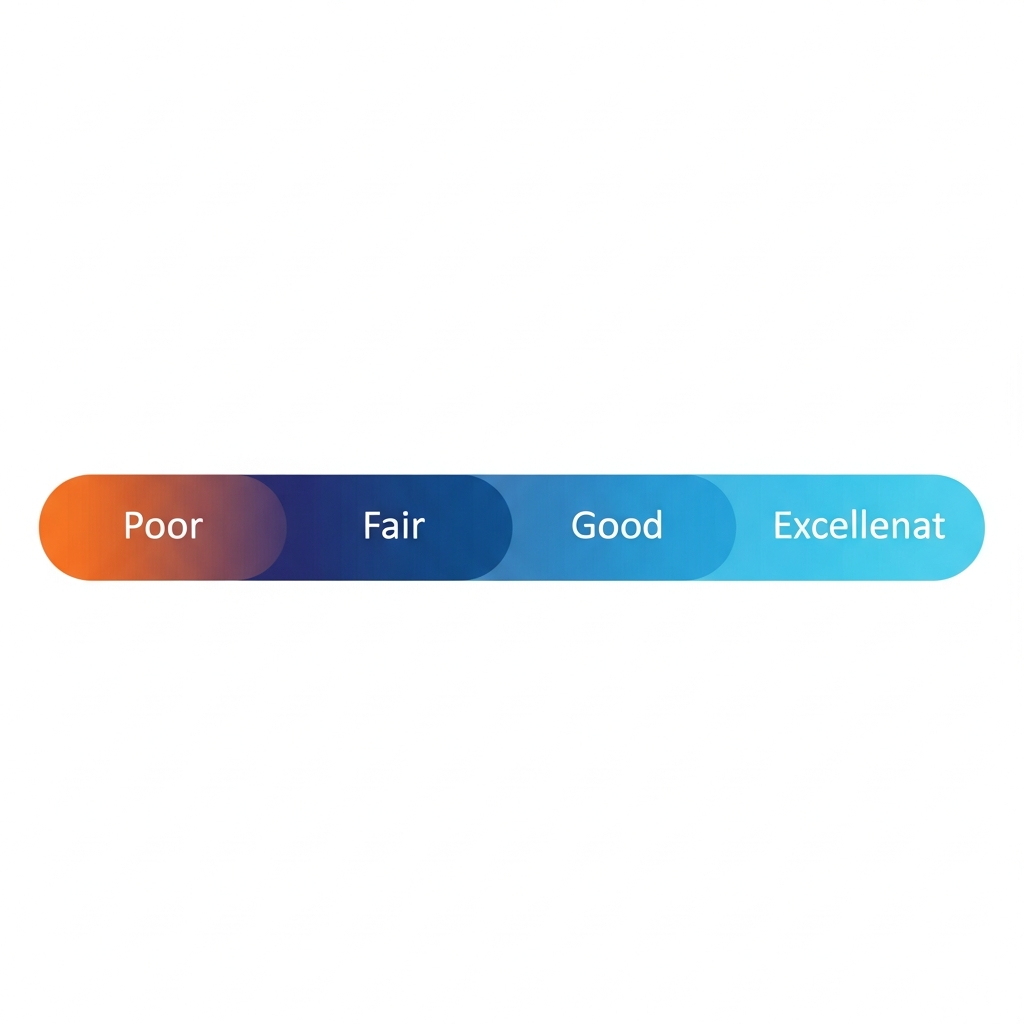
HDFC's CIBIL Score Bands Explained
Band | Score Range | What It Generally Means |
Poor | 300–499 | High default risk, approval unlikely |
Fair | 500–649 | Approval possible, higher interest, less favourable terms |
Good | 650–749 | Approval likely, reasonable terms |
Excellent | 750–900 | Best rates, fastest approval, highest limits |
This classification reflects HDFC's own general guidance specifically. Other banks and NBFCs draw these lines a little differently, so a score that lands you in the "good" band at HDFC might sit right on the edge somewhere else. If you're comparing offers across banks, treat each bank's bands as its own scale rather than assuming one universal cutoff applies everywhere.
HDFC CIBIL Score for Personal Loans
There's no single official minimum HDFC publishes for personal loans, but a few numbers come up consistently in practice. 700 is commonly cited as the practical floor, the point below which approval gets noticeably harder. 720 is a safer threshold that clears most standard underwriting checks. 750 and above is where HDFC's best published starting rates typically become available.
A score below 700 doesn't mean automatic rejection. It usually means case-by-case underwriting, and the trade-off is a steeper interest rate loading to offset the risk HDFC is taking on.
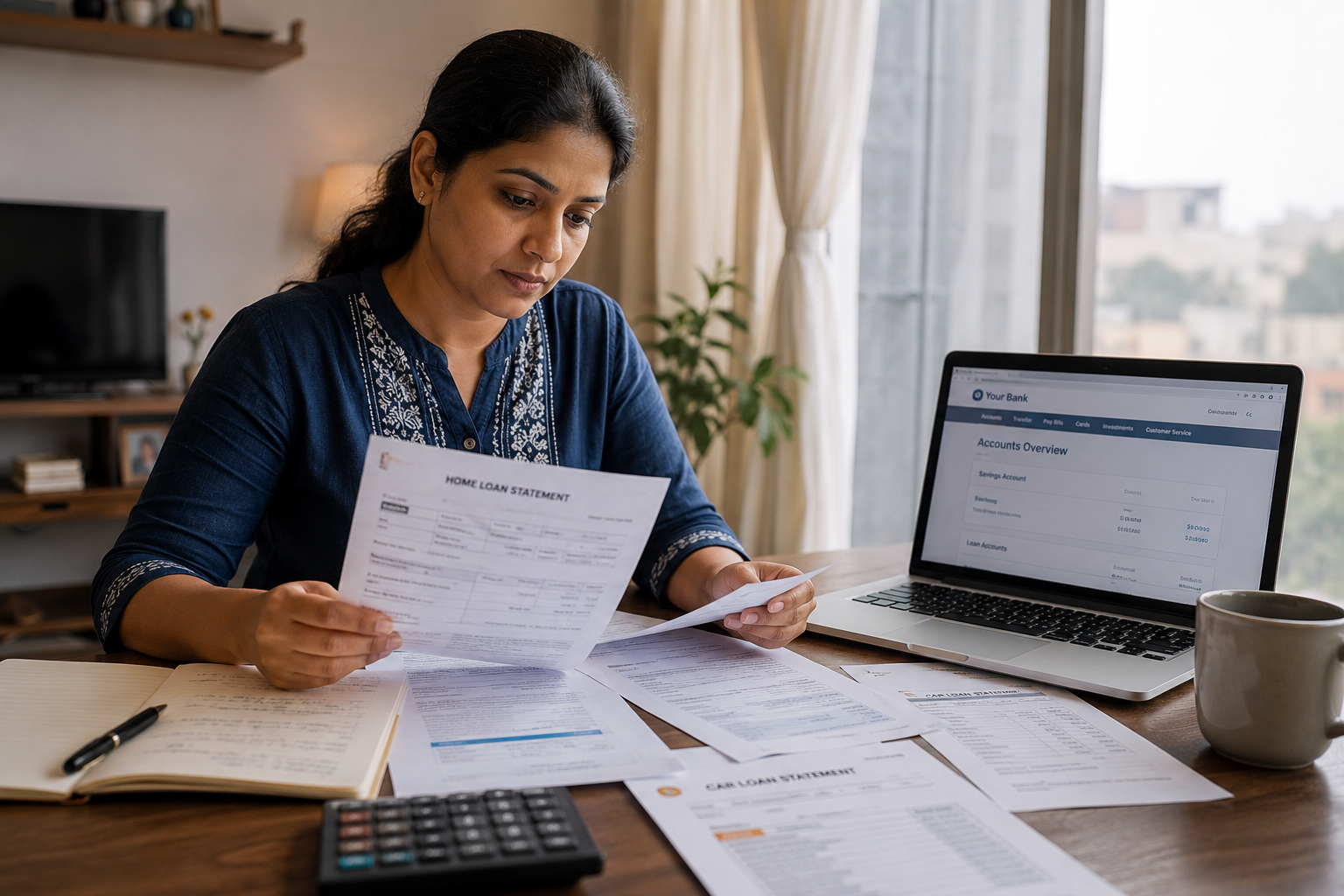
FOIR matters just as much here, and it's often the part applicants overlook. FOIR (how much of your salary goes to EMIs) needs to generally stay under roughly 55 to 60% of your net monthly income, including the new EMI you're applying for. This is frequently the actual binding constraint, even when the score itself qualifies comfortably. Someone with a 760 score but three existing EMIs already eating 50% of their salary can still get turned down, purely on FOIR grounds.
HDFC CIBIL Score for Credit Cards
HDFC's own guidance points to 750 and above as the level that meaningfully improves your approval chances for a credit card. Scores in the 650 to 749 "good" band can still get approved, though usually with a lower credit limit and a higher interest rate on any revolving balance.
Below 500, rejection risk climbs sharply. One factor worth knowing: an existing relationship with HDFC, a salary account or a savings account held with the bank for some time, can improve your approval odds even at a moderate score, since the bank already has visibility into your account behaviour beyond just the bureau report.

Score Held Down by Existing EMIs?
See whether loan consolidation may be an option for your financial situation.
Start My Consolidation AssessmentWhat If Your HDFC CIBIL Score Doesn't Qualify
Falling short of the practical floor isn't a dead end. A few concrete steps genuinely help before you reapply.
- Correct any report errors first. A wrongly reported DPD (Days Past Due) can push your score below the threshold unfairly, and it's free to dispute once you spot it.
- Reduce existing utilisation before reapplying. Bringing your credit card balances down, even by a meaningful chunk, can move your score in a matter of weeks rather than months.
- Wait and rebuild with 3 to 6 months of consistent on-time payments. This is the single most reliable lever, even if it's the slowest one.
- Consider a co-applicant with a stronger score. This can offset a borderline score on your own application without requiring you to wait out a full rebuild.
One thing to avoid: applying to multiple banks at the same time to improve your odds. Each application triggers a hard inquiry, and multiple hard inquiries in a short window actively pull your score down further, working against the exact thing you're trying to fix.

FREED Expert Tip
Check your CIBIL report for errors before applying to HDFC. A single wrongly reported DPD can push you below the approval threshold.
Check your report
When a Low HDFC CIBIL Score Points to a Bigger Problem
Are You in a Loan Trap? Quick Check
Move the slider to your total EMIs as a % of monthly salary. See your debt stress level instantly.
EMIs as % of Monthly Salary
How FREED Helps
Which of FREED's two programs fits you depends entirely on whether you're still paying or genuinely cannot.
If you're still paying but stretched thin, and existing unsecured debt is holding your score down, FREED's Loan Consolidation Plan, also called "Reduce My EMI," is built for people who can still repay but need a smarter way to manage their debt. FREED assesses your financial profile and, where eligible, connects you with a lending partner. If approved by the lending partner, a consolidation loan may help combine eligible unsecured debts into a single repayment plan. Final loan terms, including the EMI, depend on the lending partner's assessment.
If you're already in genuine default, with a Settled or Written-off tag affecting your credit profile: FREED's Loan Settlement Plan, also called "Settle My Loans," may support eligible borrowers through a structured loan settlement process, subject to the lender's willingness to negotiate. Settlement is generally considered only when repaying the full amount has become genuinely difficult. Any settlement outcome depends on the lender's decision, and the account may be reported as "Settled" in accordance with the credit bureau's reporting practices.
FREED handles unsecured debt only, personal loans, credit cards, and similar products, not HDFC home loans or car loans.
Rates and ranges shown are indicative. Final terms are decided by the bank. FREED is not a Loan Provider. No outcome is guaranteed. Please verify directly with your bank.
Steps: How to Check Where You Stand Before Applying to HDFC
- 1
Check your current score.
Pull your free CIBIL report once a year, directly from cibil.com. Knowing the exact number, not a guess from an app, is what actually matters here.
- 2
Compare against HDFC's bands.
Locate your score in the poor, fair, good, or excellent range above, so you know roughly what terms to expect before you apply.
- 3
Check your FOIR.
Add up every existing EMI and minimum due as a share of your net monthly income. This number can disqualify you even when your score looks fine.
- 4
Fix errors first.
Dispute any incorrect DPD or account entries before applying, since a wrongly reported line can cost you an approval you'd otherwise get.
- 5
Address the root cause.
If the score is low because of multiple EMIs stacking up, work on the debt load itself, not just the number sitting on top of it.
Sources
Claim | Source |
|---|---|
HDFC's own published bands: 300 to 499 poor, 500 to 649 fair, 650 to 749 good, 750 to 900 excellent | HDFC Bank's own blog |
HDFC prefers 750+ for credit cards, no single fixed legal minimum | HDFC Bank's own blog, CreditMantri, Wishfin |
HDFC personal loan practical floor is 700, with 750+ preferred for best terms | CreditMantri, MyMoneyMantra, BankBazaar |
HDFC may approve below the stated floor or reject above it depending on other factors like income and existing debt | Paisabazaar, MyMoneyMantra |
Age eligibility 21 to 60 years for HDFC personal loans | BankBazaar |
Checking your own CIBIL score is a soft enquiry, no score impact | Consistent with sourcing already verified in earlier articles this session |
A Settled or Written off tag stays on the report for up to 7 years | FREED internal brand facts |
RBI mandates one free full report per bureau per year, RBI/2016-17/58, effective Jan 1, 2017 | RBI official notification, verified in earlier articles this session |

Mohit Juneja
Mohit Juneja writes educational content at FREED on debt management, credit scores, loan repayment, and borrowing best practices. His content is shaped by expert insights and industry knowledge, helping readers better understand their financial options and make informed decisions.
mohit.juneja@freed.care

FREED is India's trusted loan management platform. Founded in 2020 and headquartered in Gurugram, FREED has counselled 20 lakh+ people on personal loans, credit cards, and app loans. FREED charges fees only on successful settlement, not upfront. FREED does not handle secured loans (home loans, car loans, gold loans).
Media Mentions