Top Debt Consolidation Programs in India Compared
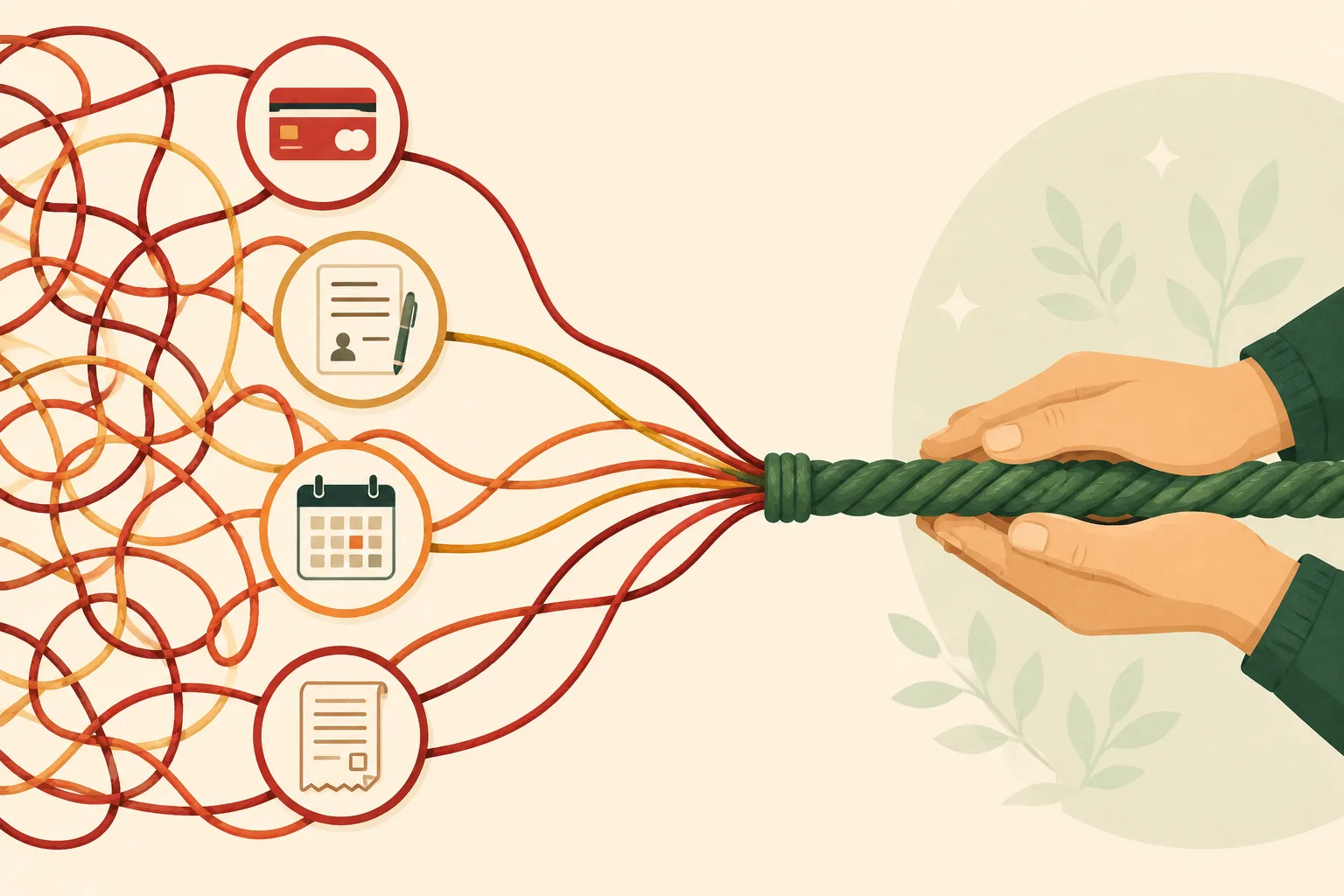
Top debt consolidation programs are the main ways in India to turn several dues into one payment, such as a bank loan, an app-based loan, a card transfer or a loan-matching service. No official ranking exists, so you compare them on cost, risk and fit.

Mohit Juneja
Reviewed by FREED India, Debt Resolution Specialists
 4.7/5
 ₹3,200Cr+
 20,000+
 20,00,000+4.7/5₹3,200Cr+20,000+20,00,000+
Key Summary

Top debt consolidation programs fall into five types, and we found no official ranking of them.
The lowest rate isn’t always the lowest cost once fees are counted.
In our example, the lowest-rate offer costs the most in total.
RBI requires a Key Facts Statement for digital loans. Read the total cost before you accept.
Secured programs can lower the rate, but you can lose the asset if you miss payments.
What Are the Top Debt Consolidation Programs in India?
There are five main types of programs, and “top” depends on your dues, your income and how much risk you can take. We found no official ranking of consolidation programs, and we won’t invent one. A list of brand names with rates goes stale fast anyway.
So this guide compares the types, then shows you how to check any name you come across. Here are the five, side by side. For a closer look at how each route works, read our guide on consolidation programs worth comparing and our overview of types of debt consolidation.
| Program type | What it is | Takes which dues | Main risk |
|---|---|---|---|
| Bank personal loan | A bank loan used to pay off other dues | Cards, loans, overdrafts | Fees and a longer time can raise total cost |
| NBFC or app-based loan | A non-bank finance company’s (NBFC) or digital lender’s loan | Usually the same | Check the lender and the fees carefully |
| Balance transfer or card EMI | Moves a card balance to a new card, or turns it into fixed EMIs | Card dues only | The offer ends, and fees apply |
| Loan-matching service | A partner checks your profile and matches a lender | Cards, loans, apps | Fees and offers vary |
| Secured loan | A loan backed by property or gold | Large amounts | You can lose the asset |
Notice that the table doesn’t rank anything. One type isn’t “above” another. A balance transfer suits a card-only borrower and does nothing for someone with a loan-app due. A bank loan can suit a long-standing customer with a clean record. Each has its place.
A word on scope. This guide mainly discusses consolidation of unsecured dues, such as credit card balances, personal loans, BNPL dues and eligible app-based loans. Secured loans are included as a separate option because they involve collateral and a different level of risk.
The next section gives you a way to compare them fairly.

Want Every Loan and Card on One Page?
See your accounts and balances in plain words before you compare.
Check My Credit InsightsHow Should You Compare Debt Consolidation Programs?
Compare on seven checks, not on the headline rate. A low rate can hide a heavy fee, and a low EMI can hide a very long time. The seven checks below keep you honest. Use the same list for every offer.
| Check | What to ask | What a good answer looks like |
|---|---|---|
| Who can apply | Salaried, self-employed, a minimum income? | A clear, written list you meet |
| Which dues it takes | Cards, loans, apps, BNPL? | Every due you want to close |
| How the money flows | Does it come to you, or go straight to old loans? | A clear route, with proof of payoff |
| Costs | Rate, processing fee, foreclosure on old loans | Every fee listed upfront |
| Amount and time | How much, and over how many months? | Enough to close your dues, over a time you can afford |
| Credit report effect | Will it add an enquiry? | A plain answer; one enquiry may appear |
| Risk if you miss | What happens after a late payment? | Late charges stated, no surprise asset risk |
A few notes on how to use it.
Fill it in for every offer. A provider’s headline won’t answer all seven. If a row stays blank, ask. If you still don’t get an answer, treat that as an answer.
Rule one: ask for the total you’ll repay. Don’t stop at the EMI. Multiply the EMI by the months, then add the fees. That’s the number to compare. Our guide on debt consolidation interest rates explains what moves the rate.
Don’t score or star the offers. You aren’t looking for a winner on a chart. You’re looking for the one that fits your dues, your income and the risk you can carry. The top debt consolidation programs for one person can be wrong for another.

How Do Bank and NBFC Consolidation Loans Compare?
A bank or NBFC consolidation loan is usually a standard personal loan used for this purpose. You apply, the loan is approved, and the money pays off your old dues. The product is the same. The terms around it differ.
Here’s what’s alike and what differs.
- Rates and fees depend on your profile. Your income, your repayment record and your existing debts all count. Two people can get very different offers from the same provider.
- Banks may offer more to existing customers. If you’ve held a salary account for years, a bank may already know your record and may price you better.
- App-based lenders may approve faster. Speed is useful. But check that the lender is regulated before you share documents.
- Both can charge fees. Processing fees, foreclosure charges on your old loans and late charges can all apply.
To make this real, here’s one example. It comes from a single large lender’s published page and is for illustration only.
One lender’s published terms (example only)
- A stable monthly income and six months in your current job.
- ID and address proof, the latest 3 months’ salary slips and 6 months’ bank statements.
- A limit of ₹25 lakh or your total outstanding debt, whichever is lower.
- A score of 700 or more “helps in quicker approval and better terms”. The page doesn’t call it a minimum.
Terms vary by provider. This page also has small inconsistencies, so always confirm on the lender’s own site.
Don’t read these as typical figures. Another bank or NBFC can ask for more, or less. Use the example to learn what to ask for, not what to expect.
For more on bank terms, read our guides on bank debt consolidation loans in India and eligibility and fees. For non-bank options, see personal loan consolidation companies.

FREED Expert Tip
Ask every provider whether your processing fee is deducted from the loan amount. If it is, you receive less than the loan, and the old dues may not all be cleared.
Check My Credit InsightsIs a Balance Transfer or Card EMI Plan a Consolidation Program?
Partly. A balance transfer moves one card’s balance to another card. A card EMI plan turns a balance into fixed monthly EMIs. Both can make card dues easier to manage. Neither combines a personal loan or a loan-app due.
Here are the three limits to know.
- They take card dues only. If you also owe on a personal loan or an app, those stay outside. You’d still have several payments afterwards.
- The new limit must cover the amount. If your new card’s limit is smaller than your balance, only part can move.
- Read what applies after any offer period ends. A short offer can be followed by a higher rate. Check both, not only the start.
Fees can apply too. Ask what a transfer or an EMI conversion costs, and add it to your sheet from the scorecard.
When does this type fit? When your dues sit mostly on cards, you can clear them within the offer period, and you won’t use the old cards again. Say you owe ₹1,00,000 on cards and ₹3,00,000 on personal loans. A transfer helps with the first amount only. The loans keep their own EMIs and dates.
Watch the habit, too. A transfer doesn’t change what you spend. If the old cards fill up again, you’ll carry the moved balance and the new dues together.
For card-only borrowers, read our guides on the balance transfer credit card in India, credit card EMI conversion and the best company to consolidate credit card debt.
How Do Loan-Matching Services Work, and What Should You Ask Them?
A loan-matching service checks your profile and connects you to a lender. A loan-matching service may assess your profile before connecting you with a lender. This can reduce the need to approach multiple lenders independently, but it does not guarantee fewer credit enquiries. Ask whether your details will be shared with multiple lenders and whether each lender may conduct a separate credit check. For people who are short on time, it’s a real benefit. It’s also where you need to ask the most questions.
Ask these before you agree to anything.
- Who is the lender, and is it regulated? You should be able to see the name.
- What fee applies, and who pays it? Get the amount in writing.
- Will the new loan pay off my old loans directly? Or will the money come to you first?
- What happens to my application if I’m turned down? Does it go to another lender, and does that add enquiries?
Applying to several lenders at once can add several enquiries (notes that a lender checked your report) in a short time. That’s one reason a service that assesses your profile first can help. It can also hurt, if it sends your details to many places. Ask how it works.
Be wary of answers that dodge. If a service can’t name the lender, can’t explain its fee, or can’t say who pays your old loans, that tells you something. Walk away until you get clear answers.
We don’t call any service “best”, and we don’t name any. A name tells you little. The answers to the four questions tell you a lot.
Read more in our guides on debt consolidation companies and online debt consolidation loans. Compare what you hear with the seven checks from earlier.
Know Where You Stand Before You Apply
Check how your EMIs compare with your salary.
Check My EMI ScoreIs a Secured Consolidation Program Worth the Risk?
Let’s start with the risk, in plain words. With a secured loan, your property or gold serves as collateral. If you default, the lender may enforce its security interest in accordance with the applicable law and loan agreement. The process is subject to the required legal procedures; the asset is not automatically taken after a missed payment. That’s the whole deal, and it’s the first thing to weigh.
Why do people still choose it? A lower rate and a larger amount are often possible, because the bank carries less risk when it holds an asset. For someone with a big balance, that can look very attractive on paper.
But the loss isn’t only a credit mark. It can be your home, your gold or your savings. You’ve turned debt that had nothing behind it into debt backed by something you own.
Ask yourself these questions first.
- Could I repay this if my income dropped? Think about a job loss or a medical bill, not only your best month.
- Is the saving worth the asset? Put a rupee figure on the saving, and compare it with what you could lose.
- Would I have to sell the asset anyway if things go wrong? If yes, the saving may not be a saving.
Also check the extras. Valuation, legal checks and a longer process can add cost and time. A longer loan can raise total interest, even at a lower rate.
We don’t recommend this type. If you’re thinking about it, talk it through with someone you trust first. Our unsecured debt consolidation decision guide covers the choice in full.
For clarity, FREED’s Loan Consolidation Plan is for unsecured dues only.
How Does the Money Flow, and Why Does It Decide Whether Your Old Loans Close?
How the money moves decides whether your old loans really close. It’s the check people skip most. A new loan clears nothing by itself if the cash sits in your account and the old dues keep running.
There are three common patterns.
The money comes to you, and you pay the old dues. This is the usual path for digital loans. RBI’s Digital Lending Directions, 2025 say a digital loan should generally be paid into your own bank account, with listed exceptions. The risk is simple: the money is in your hands, so the old dues stay open until you clear them. Do it the same week, and keep proof for each one.
The lender pays some old dues directly. Some lenders do this in some cases. One large lender’s page says it can pay existing creditors directly “in some cases”, without saying which. So ask which dues, and in which cases, in writing.
A provider collects the money first. Treat this as a red flag. RBI’s Directions say a digital loan isn’t to be paid into a third-party account, including an account of a lending service provider, except as the Directions allow. If anyone asks you to pay a provider’s account before approval, stop.
Whichever pattern you meet, keep a simple routine.
- Get the payoff amount for each old account, dated the same day.
- Pay each one off and ask for a closure letter.
- A month or two later, check that each old account shows as closed on your report.
An open balance keeps charging interest. A “closed” account that isn’t closed is the most expensive mistake in this whole process.
This is also why a program that handles the payoff for you is easier to follow. Ask who closes each account, and how you’ll see the proof.
Want to See Every Account You’d Be Closing?
Your loans, cards and balances in plain words.
Check My Credit InsightsWhich Program Costs Less on the Same ₹6 Lakh?
The lowest rate isn’t always the lowest cost. Let’s see it on one debt. These offers are made up for the example. They aren’t real offers.
Say you owe ₹6,00,000 and compare three offers over 36 months. Each has a different rate and a different processing fee.
| Offer X | Offer Y | Offer Z | |
|---|---|---|---|
| Rate a year | 14% | 12.5% | 15.5% |
| Processing fee | 3% (₹18,000) | 6% (₹36,000) | 0.5% (₹3,000) |
| EMI | ₹20,507 | ₹20,072 | ₹20,946 |
| Interest paid | About ₹1,38,237 | About ₹1,22,598 | About ₹1,54,071 |
| Total cost (interest plus fee) | About ₹1,56,237 | About ₹1,58,598 | About ₹1,57,071 |
Rates and ranges shown are indicative. Final terms decided by the bank/lender. FREED is not a Loan Provider. No outcome is guaranteed. Please verify directly with your bank.
Three things stand out.
- Offer Y has the lowest rate and the lowest EMI, but it costs the most. Its total is about ₹2,361 more than X’s, because the ₹36,000 fee outweighs the lower interest.
- Offer X is cheapest overall. It beats Z by about ₹834. Z’s low fee isn’t enough to cancel its higher rate.
- A fee taken out of the loan changes what you receive. If the fee is deducted, X pays out ₹5,82,000, Y pays out ₹5,64,000, and Z pays out ₹5,97,000. You’d have to find the gap to clear your old dues.
These are illustrations. Real offers can also carry tax on the fee. So use the Key Facts Statement for the real figures. Never rely on a rate alone.
Now try it with your own offers. Copy the table below, and fill it in for each provider.
| Provider | Rate | Fee | EMI | Months | Total repaid |
|---|---|---|---|---|---|
To fill the last column, multiply the EMI by the months, then add the fee. Compare the totals, not the headlines. If you’ve missed payments, don’t use this table to apply in a rush. Talk to your bank first.
Combine Your Loans Into One Lower EMI
FREED’s Loan Consolidation Plan can reduce your monthly EMI burden by up to 50%.* Rates and ranges shown are indicative. Final terms decided by the bank/lender. FREED is not a Loan Provider. No outcome is guaranteed.
Reduce My EMIWhat Should You Check Before Signing Up for Any Consolidation Program?
Read what you’re given before you accept. RBI’s Digital Lending Directions, 2025 apply to digital lending activities of regulated entities within the Directions’ scope, including applicable arrangements involving lending service providers. Check the lender and lending arrangement before assuming that every digital loan or intermediary is covered.
- A Key Facts Statement (KFS). The lender provides it before you sign, as per RBI’s April 2024 instructions. Once you’ve signed, the signed documents, including the KFS, should reach your registered email or SMS (para 8).
- Money into your own account. The loan is generally paid to your own bank account, with limited exceptions. Repayment goes straight to the lender, and no third party should control the flow (para 9).
- A cooling-off option. You get an explicit option to exit a digital loan by repaying the principal and the proportionate APR (the all-in yearly cost). The lender’s Board sets the period, and it can’t be less than one day. Any one-time processing fee must be shown upfront in the KFS (para 10).
- A directory of digital lending apps. RBI publishes a directory of apps reported by regulated lenders. The lenders supply the data, and RBI doesn’t verify it. A listing isn’t an endorsement by RBI (para 17).
These rules cover digital lending by regulated lenders. They aren’t a promise about any one provider. So read your own papers, and use the directory as a first check, not a guarantee.
Now add three red flags, framed as “check this”.
- A provider that won’t show the lender’s name. You can’t check what you can’t see.
- A provider that asks you to pay it separately before you’ve seen the Key Facts Statement. Ask why. A real lender’s fees appear in the KFS.
- A provider that takes your money into its own account. This is the money-flow red flag from earlier.
If you meet any of these, slow down. Ask for the answer in writing. A clear provider won’t mind.
For more on choosing a provider, read our guides on debt consolidation companies and how to choose a debt relief company.

What the Law Says
Under RBI’s Pre-payment Charges on Loans Directions, 2025, regulated lenders cannot levy prepayment charges on floating-rate loans to individuals for non-business purposes when sanctioned or renewed on or after 1 January 2026. Other loan categories are governed by the applicable provisions and lender policy, with charges subject to the required disclosures. Check your old loans before you close them.
Reduce My EMIWhich Debt Consolidation Program Fits Your Situation?
Pick by your dues, your income and your risk, not by a headline. That’s the real answer to which of the top debt consolidation programs fits you. Use the table below as a starting point. Our guide on how to choose a consolidation loan sets the wider picture.
| If this is you | Then look at |
|---|---|
| You only have card dues | A balance transfer or a card EMI plan |
| You have cards, loans and apps together | A bank loan, an app-based loan or a matching service |
| You’ve banked with one bank for years and have a good record | Ask your bank first |
| You have many dues and little time to compare | A matching service that assesses your profile first |
| You need a large amount and have an asset you can afford to risk | A secured loan, with great caution |
Treat it as a starting point, not a verdict. Two people in the same row can have different best programs. One may have a clean report, and the other may not.
A few more questions help you choose.
- How many payments will I still make afterwards? The goal is one.
- Is the total lower, or only the EMI? Use your offer sheet.
- What happens if my income drops? A secured loan hurts most here.
- Can I stop using the cleared cards? If not, work on spending first.
If you’ve already missed payments, consolidation may not be the right first step. Talk to your bank, or to FREED’s team, about the options. Lenders assess income, existing obligations and repayment history before approving a new loan. If you have missed payments, speak to your current lenders about available options before taking on another borrowing commitment.
To see who usually qualifies, read our guides on whether you can consolidate your debt and debt consolidation eligibility.
What Mistakes Do People Make When Comparing Debt Consolidation Programs?
Most mistakes come from rushing or from trusting a headline. Here are the common ones, and a better move for each when you compare top debt consolidation programs.
- Picking the lowest rate. As the ₹6 lakh example shows, a high fee can undo a low rate. Compare the total.
- Picking the lowest EMI. A smaller EMI over a longer time can cost much more overall.
- Ignoring the fee deduction. If the fee comes out of the loan, you may be short when you pay off your old dues.
- Not checking the money flow. Ask who closes each old account, and keep the proof.
- Applying everywhere at once. Several applications can leave several enquiries on your report.
- Trusting a directory listing as an endorsement. RBI says it isn’t one.
- Skipping the foreclosure check on old loans. An early-closure charge on an old loan can eat part of your saving.
- Waiting until you’ve missed payments. By then, the softer routes may be closed.
Each has a simple fix. Slow down, ask for the total, and put every answer on paper.
Here’s one habit that helps. Before you apply anywhere, write down your EMI share, which is your total EMIs divided by your take-home pay. If it’s well past half, you have a clear reason to look at a change. If it’s low, a new loan may not be worth the fees.
You don’t need to pick perfectly. You need to compare honestly, and to stop if the answers don’t add up.
How FREED Helps With Debt Consolidation
You can compare everything above yourself. FREED helps with the assessment and the process. Over 20 lakh people trust FREED, India’s trusted loan management platform.
If most of your salary goes towards paying multiple EMIs, FREED’s Loan Consolidation Plan helps you combine multiple loans into a single monthly EMI. This can reduce your monthly EMI burden by up to 50%.*
Here’s how it works:
- FREED assesses your financial profile.
- FREED matches you to a lending partner from its network.
- The partner disburses one new loan that pays off your existing eligible unsecured loans and card dues.
- FREED handles the process end to end, 100% online.
- You’re left with one loan, one EMI and one due date.
Debt consolidation does not guarantee that your credit score will remain unchanged or improve. The impact depends on factors such as credit enquiries, the new loan account, the status of existing accounts and subsequent repayment behaviour. Timely payments can support a positive credit history. FREED charges a success-based fee, and the evaluation fee is non-refundable. The lending partner’s own fees may apply, so check the Key Facts Statement.
Now the limits, stated plainly. The plan is for unsecured dues only, such as personal loans, card dues, BNPL and app loans. It doesn’t cover home loans, car loans or other secured loans. And it’s for people who can still repay. If you’ve already missed payments, talk to FREED’s team about your options first.
What does FREED look at, and what documents does it need? FREED’s team confirms eligibility and documents during the assessment.
When you compare top debt consolidation programs, FREED is one option among them, with the fit and limits above. Check it against the same seven checks as any other. You can also read the Loan Consolidation Plan page, or go back to our pillar on what loan consolidation means.
Rates and ranges shown are indicative. Final terms decided by the bank/lender. FREED is not a Loan Provider. No outcome is guaranteed. Please verify directly with your bank.
Combine Your Loans Into One EMI With FREED
One monthly EMI instead of several, with the process handled for you.
Reduce My EMI
Mohit Juneja
Mohit Juneja is FREED’s Content & Communication Lead with 12+ years of experience across content, media, advertising and digital communications. He holds a postgraduate diploma in Communications from Xavier Institute of Communications, Mumbai, and has worked with organisations including NDTV, The Indian Express, McCann Worldgroup and NABARD.
At FREED, he leads content and communication across loan management, debt resolution, debt consolidation and financial well-being. His work combines research, storytelling and consumer-focused communication to make complex financial topics easier to understand and act on. He has also scripted and produced 11 documentaries on rural development and agriculture for NABARD, with film's selected for the Mumbai International Film Festival.
mohit.juneja@freed.care

FREED is India's trusted loan management platform. We help India settle their loans, consolidate their EMIs, improve their credit score, and manage their loans better. Over 20 lakh people trust FREED. We have managed more than ₹3,500 crore in loans and saved our users over ₹450 crore.
Media Mentions