Recovery Agent List: How to Check If an Agent Is Authorised
A recovery agent list is the list of recovery agencies a bank or NBFC has hired to collect overdue loan dues, usually shown on its website. Matching an agent’s agency name with this list, and checking their ID and authorisation letter, tells you if they really work for your bank or NBFC.
Mohit Juneja
Reviewed by FREED India, Debt Resolution Specialists
 4.7/5
 ₹3,200Cr+
 20,000+
 20,00,000+4.7/5₹3,200Cr+20,000+20,00,000+
Key Summary

A recovery agent list shows which agencies your bank or NBFC has hired to collect dues.
For app loans, your loan provider must share the agent’s details by SMS or email before the agent contacts you.
From 1 January 2027, banks and NBFCs must keep an up-to-date recovery agent list on their websites.
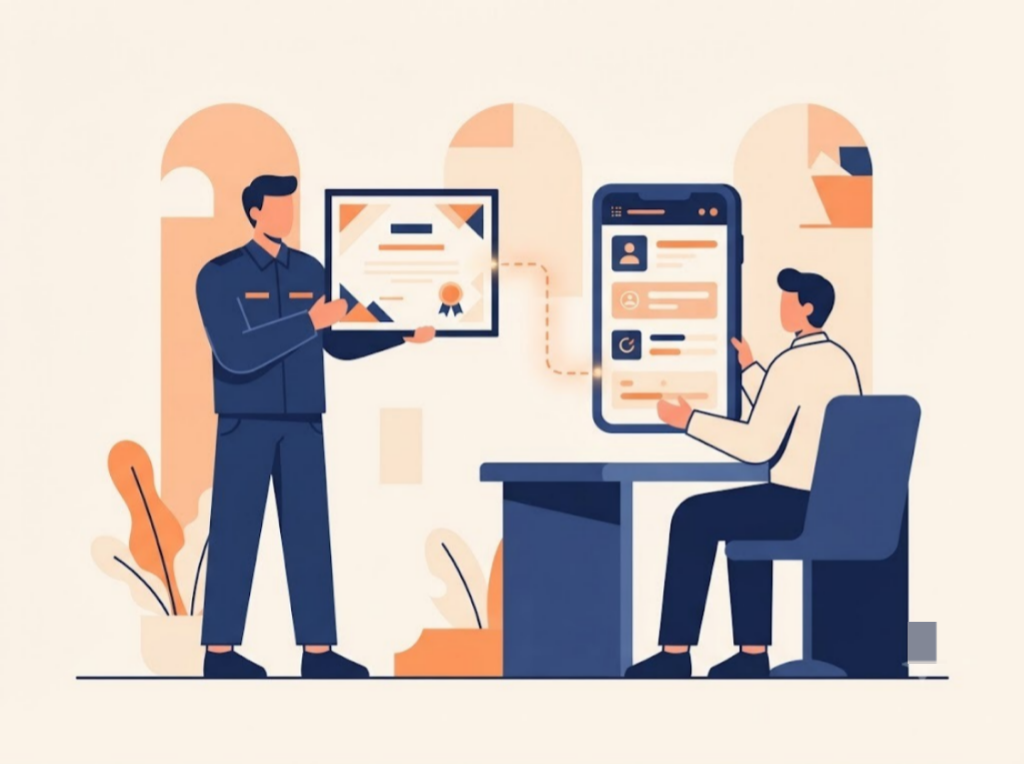
Authorised agents must show an ID card and carry an authorisation letter and a copy of the notice.
Never pay an agent in cash or to a personal account. Pay only into your bank or NBFC’s official account.

Unsure If the Agent at Your Door Is Real? Get Support
FREED Shield helps you understand your rights and report harassment.
Get Help With HarassmentWhat Is a Recovery Agent List?
When loan EMIs go overdue, many banks and NBFCs (finance companies that give loans but are not banks) hire outside agencies to collect the dues. A recovery agent list is the bank’s or NBFC’s own record of those agencies. It often shows the agency’s name, its address and the period it has been hired for.
One detail trips people up. The list names agencies, not every person who works for them. A single agency may send several different agents over a few months. That is why the ID card and the authorisation letter matter as much as the list itself. The list tells you the agency is real. The documents tell you this person really comes from that agency.
Why does it matter? The recovery agent list is the simplest way to tell a real agent from someone pretending to be one. A caller who says “I am from your bank” costs nothing to impersonate. Matching the agency against the lender’s published list is a useful first check, but it does not establish an individual agent’s identity. Confirm the person’s authorisation directly with the bank or NBFC before sharing information or making a payment.
If you want the background first, read who a recovery agent is and what the role covers. This blog is about the practical side: finding the list, running the checks, and knowing what changes from 1 January 2027.
Next, why checking is worth the few minutes it takes.
Why Should You Check If a Recovery Agent Is Authorised?
Two EMIs have slipped. A stranger calls from a mobile number and says, “Pay today on this UPI ID or we will come to your home.” Your stomach drops, and your thumb is already hovering over the payment app.
That is exactly the moment to pause. Fake callers use real borrowers’ fear. They know that someone with a missed EMI wants the call to end. And money paid to a fake agent does not reduce your loan by a single rupee. You would still owe the real dues, and you would be short the amount you sent.
Recovery agents are subject to identification and conduct requirements. Ask the person to show their ID and provide evidence of authorisation, then verify their details directly with your bank or NBFC. The specific documentation requirements depend on the applicable RBI directions and their effective dates.
So checking protects you either way. If the person is genuine, you have confirmed it and can talk calmly. If not, you have saved yourself a payment and a lot of worry.
Asking to see the agency’s entry is your right, not rudeness. You are not accusing anyone. You are doing what any careful person does before handing over money.
If the call came from someone connected to a loan app, our guide on app loan harassment covers that situation separately.
Where Can You Find Your Bank’s Recovery Agent List?
There are five places to look. Start with the first and work down.
- The official website of your bank or NBFC. Look under headings like “Recovery Agencies,” “Collection Agencies,” “Customer Service” or “Notices.” Type the web address yourself rather than clicking a link someone sent you.
- Your branch. Ask the branch manager whether the agency is on the bank’s records for your account.
- The official customer care number. Use the one printed on the back of your card or on the bank’s website, never the number the agent gives you.
- For app loans, the loan provider’s disclosures. The provider’s website must list its loan service providers (LSPs, companies that work for the loan provider) and what they do. It must also send you the recovery agent’s details by SMS or email before the agent contacts you.
- The earlier SMS or email about your overdue account. Many people already have the agency name sitting in their inbox.
Now an honest point. Today, publishing the recovery agent list is optional for banks under RBI’s 2008 rules, which say the agency details “may also be posted.” So some banks do not show it. From 1 January 2027, it becomes mandatory for banks and NBFCs to keep an up-to-date list on their websites.
That means a missing list today does not always mean something is wrong. It may simply mean your bank has not published it yet. In that case, the bank’s customer care and your branch are the places to confirm. For how agencies get onto these lists in the first place, see how recovery agents are appointed.

What the Law Says
For app loans, RBI requires your loan provider to send the recovery agent’s details by SMS or email before the agent contacts you.
Get Help With HarassmentHow to Check If a Recovery Agent Is Authorised by Your Bank, Step by Step
These seven steps combine the bank’s list with the agent’s own documents. You can run through them at the door or on the phone.
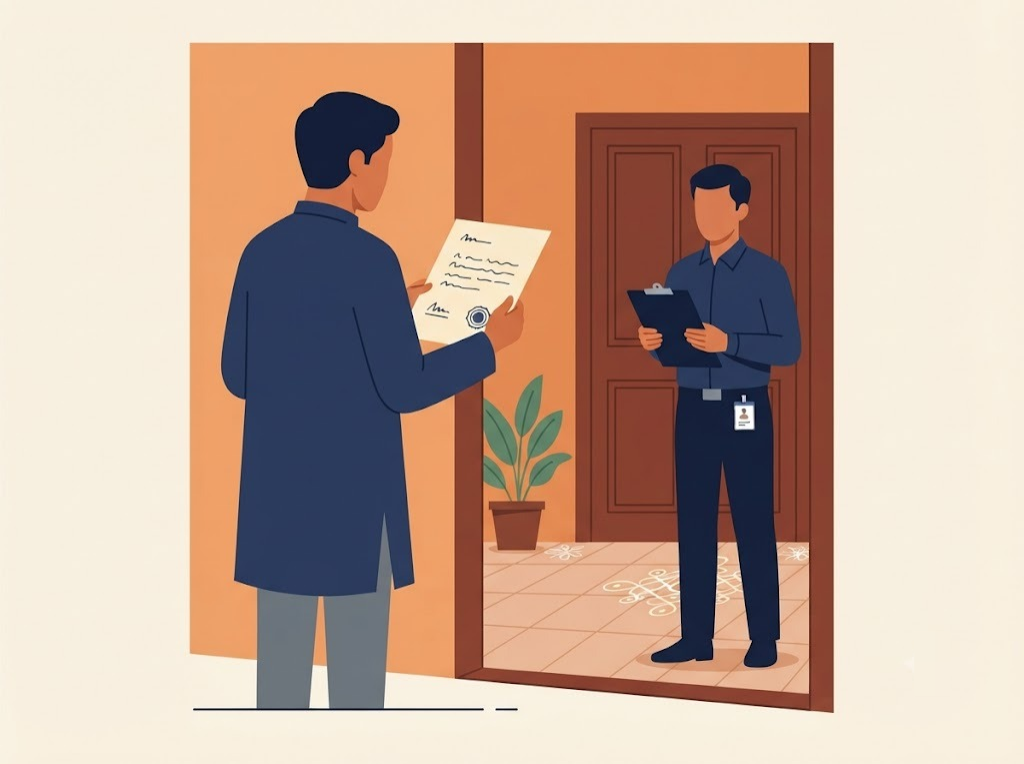
- Ask for the agent’s name and agency. Note the mobile number too.
- Ask which bank or NBFC and which loan account it is about. A real agent knows your loan account number.
- Ask to see the ID card and the authorisation letter. The letter should name your bank or NBFC and the agency.
- Match the agency with the recovery agent list. Check the website, your branch or the SMS you received.
- Call the official customer care number. Use the number from the website, not the agent’s.
- Ask about the IIBF certificate if you are unsure. Trained agents get one from IIBF (the Indian Institute of Banking and Finance).
- Pay only into the official account. Never cash, never a personal UPI ID.
If anything does not match, stop the conversation politely and report it to your bank or NBFC in writing. You do not need to argue or prove anything at the door.
Not sure how the certificate works? Here is how to verify an IIBF certificate step by step. Save your notes from the call, because they help if you need to complain later.
What Documents Should an Authorised Recovery Agent Carry?
Four documents matter. Here is what each one shows and what to look at.
What to Ask For
| Document | What it shows | What to check |
|---|---|---|
| ID card | Agent’s identity | Name and photo match the person, agency name shown |
| Authorisation letter | Your bank or NBFC has hired this agency | Bank or NBFC name, agency name, phone number |
| Copy of notice | Your account is overdue | Your name and loan account number |
| IIBF certificate | Agent is trained | Agent’s name on the certificate |
Honestly, the rules differ by loan provider and by date. For banks, RBI’s 2008 instructions already say agents should carry an identity card, an authorisation letter and a copy of the notice. From 1 January 2027, these requirements apply clearly to banks and NBFCs alike, and agents must display their ID. The new RBI directions introduce IIBF certification requirements for the recovery agents covered by the rules. The applicable deadline and transition period depend on the lender category and the specific provisions of the directions.
This blog does not say you may photograph documents or record the conversation. If you want a copy of anything, ask the agent politely and note the details in your notebook instead.
If an agent gives you a certificate to look at, check that the name on it matches the person standing in front of you. A certificate belongs to one person, so a photocopy of someone else’s does not help. Our guide on the recovery agent certificate explains what the training covers and what the certificate proves.
Agent Refused to Show ID or Turned Abusive?
FREED Shield helps you document and report it.
Report HarassmentWhat Changes for Recovery Agents From 1 January 2027?
On 6 August 2026, RBI issued new rules on recovery agents for banks, small finance banks and NBFCs. They take effect on 1 January 2027. Some rules already apply today, so the table shows both columns.
Recovery Agent Rules, Now and From 2027
| Rule | Today (till 31 Dec 2026) | From 1 January 2027 |
|---|---|---|
| Recovery agent list on website | Optional for banks; app-loan providers must list their LSPs | Mandatory for banks and NBFCs, updated within 7 days of any change |
| Telling you before contact | App loans: agent details by SMS or email before contact | Banks and NBFCs: agency details at least 1 day before the first home visit |
| ID and authorisation letter | Banks: ID, letter, copy of notice | Banks and NBFCs: ID displayed, letter and notice carried |
| IIBF certificate | Training expected for bank agents | Required; NBFC agents without it get 1 year |
| Contact hours | Calls 8 a.m. to 7 p.m. | Calls and visits 8 a.m. to 7 p.m., unless you ask otherwise |
In plain words: publishing the list stops being a favour some banks do and becomes a duty. You will be told who is coming before the first visit. Agents must show their ID. And visits, not just calls, fall inside the 8 a.m. to 7 p.m. window.
Remember that these are the 2027 rules. They are not in force yet. Until then, use the steps above, and see our guide to the current recovery agent rules for what protects you today.
What If the Recovery Agent Is Not on the List?
Stay calm, and work through these in order. A name that is missing from the list is a reason to slow down, not a reason to panic.
- Don’t pay anything. Not a token amount, not “just to stop the calls”.
- Don’t share an OTP, PIN or bank details. No genuine agent needs them.
- End the conversation politely. “I will confirm with my bank and get back to you” is enough.
- Call the official customer care number and report the person’s name and phone number.
- Write to the grievance officer of your bank or NBFC with the details.
- Report to the local police if someone is pretending to be from a bank to take money, as that may be fraud.
- If you already paid, tell your bank right away. The sooner it knows, the more it can do. Keep the transaction ID and any screenshots of the messages you received.
One honest line: An agency’s absence from a published list does not automatically prove fraud, particularly where publication is not yet mandatory. Contact the lender through an official channel to verify the agency and individual. If the lender does not resolve your concern, use its formal grievance process or the appropriate complaint channel.
For wording help, see a sample complaint letter. The full route to RBI is covered in our guide to the complaint process.
Not Sure Who to Report It To? Talk to Someone
A FREED counsellor can help you plan your next step.
Book My Free CallWhat Are Your Options If You Are Behind on Loan Payments?
An honest opener: checking the agent protects you, but the dues remain. Here are your options, in order.
- Ask your bank or NBFC in writing for more time or a changed repayment schedule. This costs nothing and keeps your record clean.
- Take a Loan Consolidation Plan if you are still paying several loans. One new loan pays off your existing loans and card dues, and you pay one lower EMI. Your CIBIL score is not hurt and starts improving over time. FREED’s Loan Consolidation Plan is built for people in this situation.
- Use loan settlement only if you genuinely cannot repay. Settlement is not something a borrower chooses out of preference. Banks and financial companies only consider it when you are in a genuine financial difficulty and are truly unable to repay the full amount. A settled loan shows a “Settled” mark on your credit report for up to 7 years, and settlement can bring dues down by up to 50%*. See the Loan Settlement Plan and our guide to loan settlement.
Use the simulator below to explore indicative credit-score scenarios. Actual results and recovery timelines vary according to your credit history, lender reporting and subsequent repayment behaviour. Treat the results as estimates, not guaranteed predictions.
Rates and ranges shown are indicative. Final terms decided by the bank. FREED is not a Loan Provider. No outcome is guaranteed. Please verify directly with your bank.
How FREED Helps If a Recovery Agent Crosses the Line
When recovery conversations cross the line into abusive, threatening, or harassing behaviour, FREED provides an added layer of support through FREED Shield, a dedicated borrower-support service. FREED Shield helps you understand your rights as a borrower and can assist you in preparing and submitting a complaint through the appropriate channels where necessary.
FREED Shield is open to everyone, not only FREED customers. FREED steps in when a call turns abusive or threatening, or when an agent visits your home or office without following protocol, for example by refusing to show an ID. You can file a complaint on the FREED app. If a harassment call is happening right now, you can call the FREED helpline for support.
If you have received a legal notice, FREED’s in-house team checks whether the notice is genuine and helps draft a reply if needed. This is pre-litigation support. To understand what these notices mean, read about a legal notice for loan recovery.
To be clear about what FREED does not do: FREED does not stop calls, and it does not speak to agents in standard cases. FREED Shield helps ensure that customers don’t have to face recovery-related pressure alone.
If you ever feel an agent is not who they say they are, FREED Shield can help you work out what to check and how to report it, even before you have matched them against the list.
FREED has settled 33,000+ accounts, counselled 20,00,000+ customers and managed ₹3,500 Cr+ debt. Rates and ranges shown are indicative. Final terms decided by the bank. FREED is not a Loan Provider. No outcome is guaranteed. Please verify directly with your bank.
Don’t Face Recovery Pressure Alone
Report a call or visit that crossed the line.
Report Harassment on FREEDTips for Dealing With Recovery Agents Safely
A few habits make every future call easier.
- Keep one notebook for every call and visit. Date, time, name, what was said. One book, one place.
- Tell family members what to say. “Please ask for ID, and say: please speak to him or her directly.” Short, polite, and it keeps everyone calm.
- Save your bank’s official numbers and email. The branch, customer care and grievance officer, all in one contact entry.
- Answer your bank in writing. A written reply creates a record that a phone call never does.
- Don’t argue, and keep it short. You are gathering facts, not winning a debate. A sentence like “Please send the details in writing” ends most uncomfortable moments.
- Check the list once now, before anyone calls. Ten quiet minutes today are easier than ten stressed minutes at the door.
Think of it as a small drill, like knowing where the fuse box is. You hope never to use it, and you are glad it is ready when you do.
The rules are getting stronger from 1 January 2027, and you already have rights today. Our guide on how to keep a record of every call shows what to write down and how to store it.
Sourcing and Verification
| Claim | Source |
|---|---|
| Banks “may” post agency details; ID card, authorisation letter, notice copy; IIBF training (2008) | RBI/2007-2008/296 |
| App loans: LSP list on website; agent details by SMS/email before contact | RBI Digital Lending Directions, 2025 (paras 8(iv)(2), 8(v)) |
| Banks from 1 Jan 2027: list on website with 7-day update (454K), 1-day notice before first visit (454L), ID and letter (454X), IIBF (454I), 8 a.m. to 7 p.m. (454Y(4)) | RBI/2026-27/223 |
| Small finance banks from 1 Jan 2027: same | RBI/2026-2027/224 |
| NBFCs from 1 Jan 2027: list with 7-day update (100K), 1-day notice before first visit (100L), ID and letter (100X), IIBF with 1-year window (100I), 8 a.m. to 7 p.m. (100Y(4)) | RBI/2026-27/230 |
| Calls 8 a.m. to 7 p.m. today; no intimidation | RBI/2022-23/108 |

Mohit Juneja
Mohit Juneja is FREED’s Content & Communication Lead with 12+ years of experience across content, media, advertising and digital communications. He holds a postgraduate diploma in Communications from Xavier Institute of Communications, Mumbai, and has worked with organisations including NDTV, The Indian Express, McCann Worldgroup and NABARD.
At FREED, he leads content and communication across loan management, debt resolution, debt consolidation and financial well-being. His work combines research, storytelling and consumer-focused communication to make complex financial topics easier to understand and act on. He has also scripted and produced 11 documentaries on rural development and agriculture for NABARD, with film's selected for the Mumbai International Film Festival.
mohit.juneja@freed.care

FREED is India's trusted loan management platform. Founded in 2020 and headquartered in Gurugram, FREED has counselled 20 lakh+ people on personal loans, credit cards, and app loans. FREED charges fees only on successful settlement, not upfront. FREED does not handle secured loans (home loans, car loans, gold loans).
Media Mentions