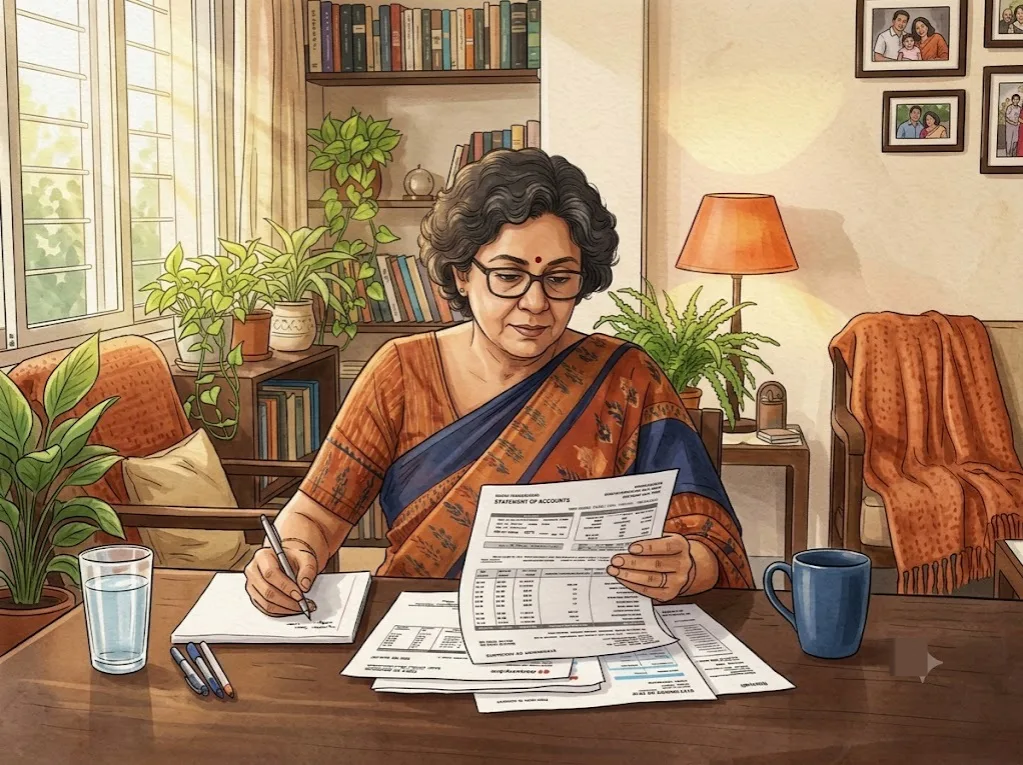
Punjab National Bank One Time Settlement Scheme: Who Can Apply
Punjab National Bank one time settlement scheme is an arrangement where PNB accepts an agreed amount, paid in one go or within a set time, as full and final payment on a loan the borrower can’t repay in full. It runs under PNB’s board-approved policy, and some schemes have set end dates.

Mohit Juneja
Reviewed by FREED India, Debt Resolution Specialists
 4.7/5
 ₹3,200Cr+
 20,000+
 20,00,000+4.7/5₹3,200Cr+20,000+20,00,000+
Key Summary

Punjab National Bank one time settlement scheme: PNB’s special OTS scheme on its own pages ran from 1 July 2022 to 31 March 2023.
Individual settlements run under PNB’s board-approved policy, under RBI’s 2023 framework.
Any settlement paid over more than 3 months is treated by the bank as restructuring.
RBI sets a minimum 12-month wait before the same bank gives you fresh credit.
A settled account shows “Settled” on your credit report for up to 7 years.

Can’t Repay Your PNB Loan in Full?
FREED negotiates with the bank and gets the settlement in writing.
Settle My LoansWhat Is the Punjab National Bank One Time Settlement Scheme?
Settlement is not something a borrower chooses out of preference. Banks consider it only when repaying in full has become genuinely difficult. If you have an overdue PNB loan or card, you’ve probably seen pages that talk about a “PNB OTS scheme” as if you could simply apply for it. The reality is more careful than that.
The Punjab National Bank one time settlement scheme is the way PNB agrees to take a lower, final amount on a loan. That can happen in two ways. Sometimes PNB runs a time-bound scheme with set dates and rules. Other times it settles one account at a time under its board-approved policy, after you ask in writing. Either way, the bank decides. You don’t qualify automatically.
Here’s what to expect:
- A bank, not the borrower, decides whether to settle. Even where a scheme exists, PNB reviews your account and your reasons for not being able to pay before it agrees to anything.
- Schemes can start and end. An old article may describe a scheme that closed years ago. Always check dates before you rely on one.
- Terms must be in writing before you pay. A call or a message isn’t an agreement. The offer should come on PNB letterhead.
This guide covers unsecured loans and cards. Secured loans such as home, car or gold loans follow different recovery routes, so the steps here won’t apply to them.
PNB’s scheme is one case of a wider pattern. For the rules every bank follows, see our guide to the one time settlement scheme for NPA accounts. And if “NPA” is new to you, here’s what an NPA account means and how recovery works.
So does PNB have a scheme running right now?
Want to See How PNB Reports Your Loan?
Check your report before you speak to the bank.
Check My Credit InsightsDoes PNB Have a One Time Settlement Scheme Running Now?
Here’s the honest answer, based on PNB’s own pages. As of the date this article was checked, PNB’s public website did not list a current, date-specific OTS scheme for individual borrowers. The bank may still consider individual compromise settlements under its board-approved policy. Confirm the latest position with PNB before applying. The “For Borrowers” page lists one OTS item, called “OTS Policy For MSE Borrowers”, with no date shown. And the only PNB scheme document we opened was a special scheme for NPA accounts up to ₹5 crore, which ran from 1 July 2022 to 31 March 2023.
That doesn’t mean PNB never settles loans. PNB may announce or conduct local settlement drives through its circle offices. Availability, eligibility and terms can vary, so ask the relevant PNB office for the current written scheme details. But the terms of local drives aren’t always published, and they can change from one circle to another.
Here’s where to check:
| Where to check | What you’ll find | Note |
|---|---|---|
| PNB “For Borrowers” page on pnb.bank.in | Policy links; one OTS item for MSE borrowers | The page showed “Last Updated 14-07-2026” when we checked |
| PNB Public Notices page | Notices when published | Check on the day you read this |
| Your branch manager or circle recovery office | Local drives and eligibility | Ask for the scheme’s written terms |
| Your PNB letters and messages | Offers sent to you | Check dates and who sent them |
If you do find a scheme, read its dates and eligibility lines before you apply. A scheme with a closing date can end before the bank finishes reviewing your request.
Whatever you find, this question comes first: what can you realistically pay? FREED’s EMI Score is a quick check of where your income, savings and loans stand, so you know your number before you talk to the bank.
Not Sure How Much You Can Afford to Pay?
See how much of your salary your EMIs take.
Check My EMI ScoreWho Is Eligible for a PNB One Time Settlement?
Eligibility comes from two places. The first is PNB’s own board-approved settlement policy. The second is RBI’s 2023 framework for compromise settlements, which every bank must follow. Here’s how common situations line up:
| Your situation | Can a bank consider settlement? | What to know |
|---|---|---|
| Overdue and genuinely unable to repay | Yes, under the bank’s policy | Written request; the bank decides |
| Account marked NPA | Often where settlement talks happen | See NPA classification and SMA stages |
| A court or recovery case is already filed | Possible | A consent decree may be needed |
| Classified as fraud or wilful default | Only with the Board’s approval | Not common; bank-specific |
| Still paying but stretched | Settlement isn’t the first path | Ask about changing the loan plan; see how an NPA account goes back to normal |
This is a general guide. Your loan agreement and PNB’s letters decide the details.
Three RBI rules shape every bank’s decision:
- Banks usually look at overdue status and the reason you can’t repay. That’s why an honest, specific explanation in your request matters more than a long one.
- A proposal for a fraud or wilful-default account needs the Board’s approval in every case. That’s RBI’s rule for all banks, including PNB.
- The approver must be at least one level above whoever sanctioned the loan. So a branch officer or a recovery agent can’t approve it alone.
To see how these rules work for every bank, read about the RBI framework behind every bank’s OTS. For the general eligibility picture, here’s one time settlement meaning, process and eligibility.
An example of what one past scheme excluded. PNB’s FY 2022-23 special scheme listed exclusions including specified fraud and wilful-default accounts, cases involving criminal action or admitted in NCLT, staff accounts, accounts with an existing settlement, loans against gold or jewellery, and written-off accounts. These exclusions applied to that particular scheme and should not be treated as PNB’s current universal eligibility rules. This is an example of one past scheme, not a current rule.
Nothing here means you “qualify” for something. Settlement is for borrowers who genuinely can’t repay. Whether it’s offered is the bank’s decision.
What Terms Has PNB Used in a Past OTS Scheme?
This section describes a scheme that ended on 31 March 2023. It’s shown to explain how PNB has structured terms, not as a current offer. The scheme was called the Non-Discriminatory and Non-Discretionary Special OTS Scheme FY 2022-23, and it covered NPA accounts with principal outstanding up to ₹5 crore. Here’s how it worked:
- Upfront payment with the offer. The borrower deposited a minimum of 20% of the OTS amount for balances up to ₹25 lakh, and 15% for balances above that up to ₹5 crore. The amount went in along with the written OTS offer.
- Time to pay. The balance was to be paid within 3 months of approval. The scheme allowed the bank to extend this in some cases, but RBI’s framework treats payment over more than 3 months as restructuring.
- Late payment. No interest applied if the full amount was paid within 3 months. After that, simple interest at the one-year MCLR (the bank’s lending rate benchmark) plus 1% applied.
- One missed instalment. Where the OTS was paid in instalments, a default on one instalment made the OTS fail.
- Post-dated cheques. The bank took cheques matching the repayment dates, once the sanction was conveyed.
Here’s how that structure looks in numbers. Say a bank agrees an OTS amount of ₹1,00,000 on a balance under ₹25 lakh. A minimum upfront payment of 20% is ₹20,000, deposited with the offer. The remaining ₹80,000 is due within 3 months of approval. For illustration, if the three-month payment period begins on 3 November, the corresponding date three months later would be 3 February. The actual due date must be taken from the bank’s written approval and settlement terms.
This example is illustrative. Figures are for explanation only. Final terms decided by the bank. FREED is not a Loan Provider. No outcome is guaranteed.
Today’s offer may differ from all of this, so read yours line by line. Here’s what a good loan settlement letter from the bank contains.
How to Apply for the Punjab National Bank One Time Settlement Scheme, Step by Step
There’s no single public application form for individual PNB borrowers that we could find, so applying means asking in writing and following the bank’s process. These 7 steps work whether you handle it yourself or with help:
- Get your exact outstanding in writing. Ask PNB for a statement showing principal, interest and charges separately. You need the real starting number, because agents sometimes quote figures that don’t match the bank’s books.
- Pull your credit report. See how PNB shows the account: overdue, NPA or written-off. You’ll compare it later, and every bureau gives you a free annual credit report.
- Check whether a PNB scheme is open. Use the table earlier in this guide. Schemes have end dates, and a closed one can’t help you.
- Write to your branch manager, or the circle recovery office named in the scheme. Explain your situation honestly. PNB’s past scheme said the upfront amount was to be deposited along with the OTS offer in writing, so expect the process to be paper-based. Here’s how to write a loan settlement letter to a bank.
- Get the offer on PNB letterhead. A phone call or message isn’t enough. Verbal offers can’t be enforced.
- Check every term against the table in the next section. Missing terms are hard to fix after you’ve paid.
- Pay only to the bank, and keep the receipt. PNB’s published recovery policy says cash is deposited by the borrower directly at the branch. So never hand money to an agent. Then collect your NOC after loan settlement and recheck your credit report.
For the general approach to any bank, here’s our guide on how to approach your bank and what to expect.
Notice what’s absent from this list: paying anyone before there’s a written offer. That’s where most problems start.

FREED Expert Tip
If anyone asks you to hand over cash or a “token amount” to start a PNB settlement, ask for PNB’s written terms first. Pay only at the branch or through the bank’s own channel.
Settle My LoansWhat Terms Should a PNB Settlement Letter Include?
A PNB settlement offer should cover each of these terms. The “why it matters” column ties each one to RBI’s rules:
| Term | What it should say | Why it matters |
|---|---|---|
| Outstanding breakdown | Principal, interest and charges, shown separately | Shows exactly what is being settled |
| Settlement amount | The amount in figures and words | Avoids “typo” disputes later |
| Payment schedule | Dates, all within 3 months | Over 3 months, the bank treats it as restructuring |
| Payment channel | PNB’s own account or the branch only | Protects you from fake collection |
| Full and final clause | “Fully and finally settled; no further claim” | A part settlement is restructuring, not settlement |
| Balance waived | No further recovery by the bank or any agency | Stops calls about the balance |
| Credit reporting | Reported as “Settled”, not “Closed” | Sets honest expectations |
| NOC | Issued within the timeline stated in the letter | Closes the paper trail |
| NACH and cheques | Auto-debit cancelled; post-dated cheques returned | Stops old EMIs being taken |
| Pending case | Withdrawal or consent decree, if a case is filed | Required under RBI’s framework |
| Approval | Shows who approved it | RBI requires approval one level above the sanctioning authority |
This is a general checklist. Banks use their own formats.
The 3-month line is the one to read twice. If PNB offers instalments, all of them should fall within 3 months. So if the agreement is made on 3 November, the last payment should be due by 3 February. Under RBI’s framework, a compromise settlement with an agreed payment period exceeding three months is treated as restructuring for regulatory purposes. Check the written schedule and ask the bank to explain the regulatory treatment if the payment period is longer.
The full and final clause is what ends the claim. If it’s missing or vague, a payment may count as a part payment, and you could still owe the rest.
If any term is missing, ask for a corrected letter before you pay. Here’s more on what to look for in a loan settlement letter from the bank.

What the Law Says
Under RBI’s 2023 framework, a settlement paid over more than 3 months is treated as restructuring, and approval must come from one level above the sanctioning authority.
Check My EMI ScoreWhat Happens to Your Credit Report After a PNB Settlement?
When you settle, the account’s status changes from overdue, NPA or written-off to “Settled”. That’s still a serious mark, and it isn’t the same as “Closed”. But it shows lenders the matter has been resolved, which an open NPA entry doesn’t.
Here’s what to expect:
- “Settled” stays on your report for up to 7 years. New loans and cards get harder to get during that time. Here’s how settlement affects your credit score.
- Check your report about 4 to 6 weeks after the final payment. Lenders report to the bureaus at least every 15 days, and the bureau then loads the data.
- A wrong entry must be fixed within 30 days of your complaint. That’s 21 days for the lender and 9 for the bureau. If it takes longer, you’re owed ₹100 a day. Here’s how to fix wrong entries on your CIBIL report.
- PNB must wait at least 12 months before giving you fresh non-farm credit. That’s RBI’s minimum cooling period after a compromise settlement. The bank’s own policy can set a longer wait.
- Written-off accounts show differently. Here’s how to clear a written-off status.
For rebuilding afterwards, see how a loan after settlement affects your CIBIL. FREED’s Credit Insights reads your Experian report and refreshes monthly, so you can watch the status change after you settle.
Want to Know Exactly How Your Report Will Look?
Your report in plain words, with steps to rebuild.
Check My Credit InsightsWhat Helps Before You Accept a PNB Settlement Offer?
Before you say yes to anything, these 6 tips protect you from the most common problems:
- Get every number in writing before agreeing to anything. That means the outstanding, the settlement amount, the dates and the payment account. If a number was only said aloud, it doesn’t exist yet.
- Never pay an agent without PNB’s written terms. Money handed over without terms may not count toward any settlement, and you could end up paying twice.
- Pay only at the branch or into the bank’s own account. Don’t pay cash to a person, or send money to a personal UPI ID or account. Ask for a receipt every time.
- Check whether a court or recovery case has been filed. If so, a settlement may need a consent decree, and the paperwork changes.
- Make sure every account you want settled is named. An account left off the letter stays fully payable. Match each one against your credit report.
- Keep copies of every message, letter and receipt. One folder, on paper and a scan. If anything is disputed later, that folder answers the question in minutes.
The same few checks run through all six tips: written, from the bank, to the bank. If an offer fails any of them, pause before paying.
Want Someone to Negotiate the Settlement for You?
No bank is paid until you approve the offer.
Settle My LoansWhat Are Your Rights if PNB Recovery Calls Continue?
Say you’ve written to PNB, you’re waiting for a reply, and the calls haven’t stopped. It’s stressful, but you still have clear rights. RBI’s 2022 rules for banks that use recovery agents say agents must not:
- Intimidate or harass you, verbally or physically
- Make threatening or anonymous calls
- Call you before 8 am or after 7 pm to recover overdue dues
- Send inappropriate messages on your phone or social media
The bank stays responsible for its agents. So if an agent crosses the line, the complaint goes to the bank, and the bank has to answer for it.
What to do if calls cross the line
- Keep a log and recordings. Note the date, time, number and what was said for every call. Save messages, and record calls where you can.
- Complain to PNB’s grievance team. Do it in writing, attach your records, and keep a copy. Here’s the full RBI complaint process for recovery agent harassment.
If a legal notice has arrived, here’s what to know about a legal notice for loan recovery.
How FREED Shield helps
If you are facing recovery agent harassment, FREED helps you understand your legal rights as a borrower, report inappropriate recovery practices, and raise complaints with your lender. Where harassment is frequent, our experts speak to recovery agents on your behalf. And if you receive a legal notice about your loan, FREED helps you understand your options and draft a suitable reply. FREED Shield is available to everyone, whether or not you’re on a FREED plan.
One honest point. Legitimate recovery calls continue until the dues are paid or settled. The rules stop harassment, not the bank’s right to ask for its money. What you can expect is that the calls stay polite, stay within the hours, and stay with you rather than your family or office.
What the Law Says
Under RBI rules, recovery agents can’t call before 8 am or after 7 pm, and they can’t threaten or harass you.
Get FREED Shield SupportHow FREED Helps With a PNB One Time Settlement
If you genuinely cannot repay your loans, FREED negotiates with your lenders to settle them for less than 50%* of your outstanding dues.
That ties straight back to this article. When there’s no public scheme to sign up for, a settlement happens one bank at a time, through a negotiation. FREED does that negotiation with the bank for you, because that’s where approval sits. And the money you set aside never sits with an agent or with FREED.
FREED is India’s trusted loan management platform. Over 20 lakh people trust it, and its founding team brings 50+ years of debt-resolution experience from the US. Here’s how the Loan Settlement Plan works:
- Your full situation is assessed. FREED looks at your loans, income and essential expenses, and builds a personalised plan around what you can realistically set aside.
- You save into an SPA. You put a fixed monthly amount into a Special Purpose Account (SPA) in your own name, held by an independent trustee, not by FREED.
- FREED negotiates once enough is saved. FREED talks to each bank, one account at a time.
- You decide. The bank decides the terms, and you accept or decline. No bank is paid until you authorise it.
- You get a settlement letter from the bank. On payment, each account ends with a letter from the bank.
How long it takes. The first settlement typically happens within about 4 months of enrolling, and the full programme typically takes around 1.5 years.
What to expect meanwhile. Your accounts stay overdue during the saving months, and recovery calls can continue. That’s where FREED Shield helps, making sure those calls stay within your rights.
Fees. FREED charges a success-based fee, and the evaluation fee is non-refundable.
So far, FREED has settled 33,000+ accounts, worth over ₹500 crore in settlement amount. FREED handles unsecured loans only, like personal loans, credit cards, BNPL and app loans. For PNB cards, here’s our PNB credit card settlement guide.
*Rates and ranges shown are indicative. Final terms decided by the bank. FREED is not a Loan Provider. No outcome is guaranteed. Please verify directly with your bank.
Get Your PNB Loan Settled, With Every Term in Writing
No bank gets paid until you say yes to the offer.
Settle My Loans
Mohit Juneja
Mohit Juneja is FREED’s Content & Communication Lead with 12+ years of experience across content, media, advertising and digital communications. He holds a postgraduate diploma in Communications from Xavier Institute of Communications, Mumbai, and has worked with organisations including NDTV, The Indian Express, McCann Worldgroup and NABARD.
At FREED, he leads content and communication across loan management, debt resolution, debt consolidation and financial well-being. His work combines research, storytelling and consumer-focused communication to make complex financial topics easier to understand and act on. He has also scripted and produced 11 documentaries on rural development and agriculture for NABARD, with film's selected for the Mumbai International Film Festival.
mohit.juneja@freed.care

FREED is India's trusted loan management platform. We help India settle their loans, consolidate their EMIs, improve their credit score, and manage their loans better. Over 20 lakh people trust FREED. We have managed more than ₹3,500 crore in loans and saved our users over ₹450 crore.
Media Mentions