Equifax Credit Report India: Download It Free & Read It Right
Equifax credit report is a record of your credit history maintained by Equifax Credit Information Services, one of India's four RBI-licensed credit bureaus. It lists your loan and credit card accounts, your repayment record, and every lender enquiry (query made when checking someone's creditworthiness) against your name, alongside your Equifax score (300–900).
Mohit Juneja
Reviewed by FREED India, Debt Resolution Specialists

 4.7/5
4.7/5 ₹3,200Cr+
 20,000+
 20,00,000+4.7/5₹3,200Cr+20,000+20,00,000+
KEY TAKEAWAYS

An Equifax credit report is one of four bureau reports Indian lenders can pull before approving a loan or card.
RBI mandates one free full credit report a year from every credit bureau, Equifax included. Equifax scores run 300–900; a higher score generally indicates lower credit risk.
The report has five sections: identification, credit summary, account details, enquiries, and score.
A second report in the same year usually means a paid subscription, not another free pull.
What Is an Equifax Credit Report?
Equifax is one of four credit bureaus licensed by the RBI to operate in India, alongside TransUnion CIBIL, Experian, and CRIF High Mark. It runs as a joint venture involving Equifax Inc. USA and Indian banks, including SBI and Bank of Baroda.
Most people only ever think about CIBIL. But plenty of banks and NBFCs (non-banking financial companies) pull Equifax instead, or alongside it, when deciding on a loan or card application. If you've only ever checked one bureau, you've only seen part of the picture.
Your Equifax credit report contains five things: your personal and identity details, an account summary, individual account records for every loan and card, your payment history, and your enquiry history, every time a lender has checked your file.
All of that feeds into your Equifax score, running 300 to 900. A higher number signals lower lending risk. For the score breakdown specifically, or a fuller look at how the four bureaus fit together, those are worth a separate read.
An Equifax score and a CIBIL score aren't the same number wearing two names. They're calculated differently by two separate companies, and they usually don't match exactly.

See Your Full Credit Picture, Not Just One Bureau
Check what's shaping your credit health today.
Check My CreditWhy Checking Your Equifax Report Actually Matters
Most people check CIBIL if they check anything at all. Few even know a separate Equifax record exists. And that gap can cost you.
Say someone applies for a personal loan with a CIBIL score that looks solid, 760, nothing to worry about. The application still gets rejected. The lender pulled Equifax instead, and found a discrepancy that the CIBIL report never showed.
That's not a rare scenario. A few things go unnoticed for years when nobody's looking: an error sitting quietly on the file, an old settled or written-off account still dragging the score down, an enquiry nobody remembers authorising.
None of this shows up unless you go check. And scores can genuinely differ by 30 to 50 points or more between bureaus, depending on what each one has on file; that's commonly observed, not a fixed rule.
Checking is step one. Knowing when it's time to check that's step two, and it's simpler than it sounds.
Signs You Should Check It Right Now
A few situations where 10 minutes now saves a headache later:
- Applying for a loan or credit card in the next 3 to 6 months.
- A recent rejection with no clear reason given.
- Planning a big purchase that'll need financing, a car, a home, or education.
- A missed or late payment sometime in the last two years.
- Never having checked any bureau report before, not once.
- Unfamiliar activity on file, a hard enquiry you don't remember authorising.
If more than one of these applies to you right now, that's your answer. None of them means something's wrong. They just mean it's worth building the habit of checking before you actually need to, not after a rejection forces the question.
How to Download Your Equifax Credit Report for Free
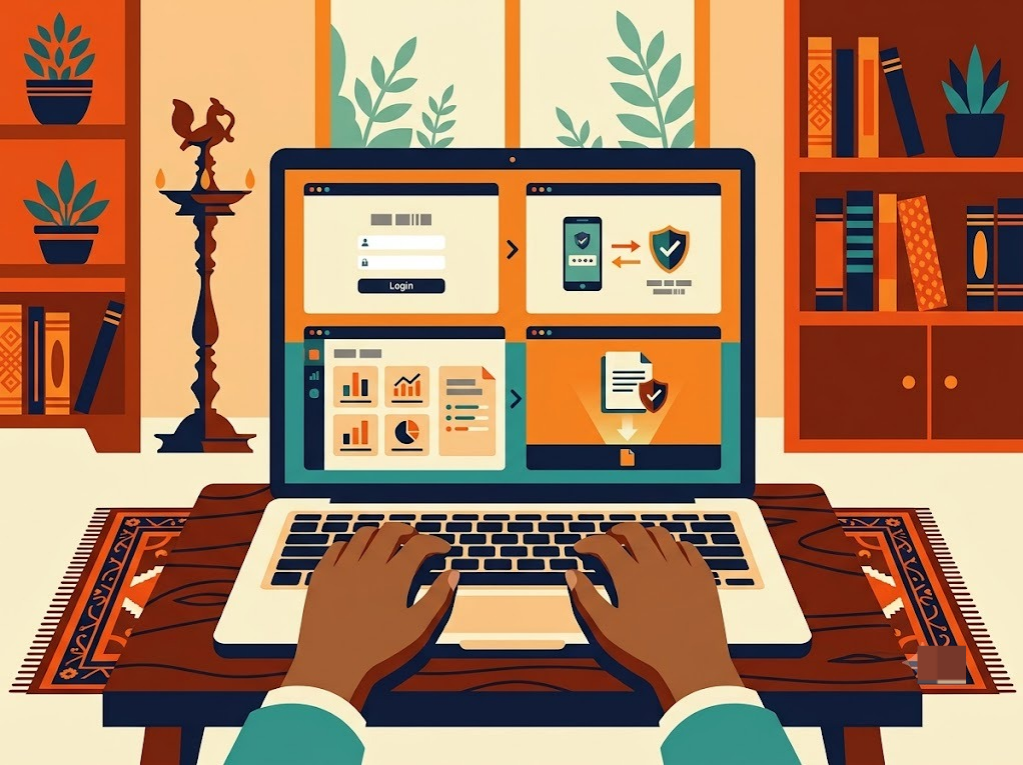
Five steps, start to finish.
- Go to Equifax India's official portal, equifax.co.in, and choose the free report option.
- Register with your name, email, and mobile number.
- Verify your identity, typically through Aadhaar-based OTP or your PAN.
- Answer a short identity-verification questionnaire based on your own credit history.
- Download or view the report online once verification clears.
This isn't a favour Equifax is doing you. RBI mandates one free full credit report per calendar year from every credit bureau as a right, not a courtesy.
Verification isn't always instant. Some accounts clear the questionnaire step in minutes; others take a bit longer depending on how much history is on file.
If you don't have a smartphone or digital KYC, you can still request the report by post or email, with scanned KYC documents attached. It just takes longer.
One pull a year is free. A second one in the same calendar year typically needs a paid subscription instead.
The same right applies to Experian and the other bureaus too, useful if you want to check more than one bureau without paying for it.

What the Law Says
RBI requires every credit bureau, including Equifax, to give you one free full credit report a year, on request, in electronic format.
Check your options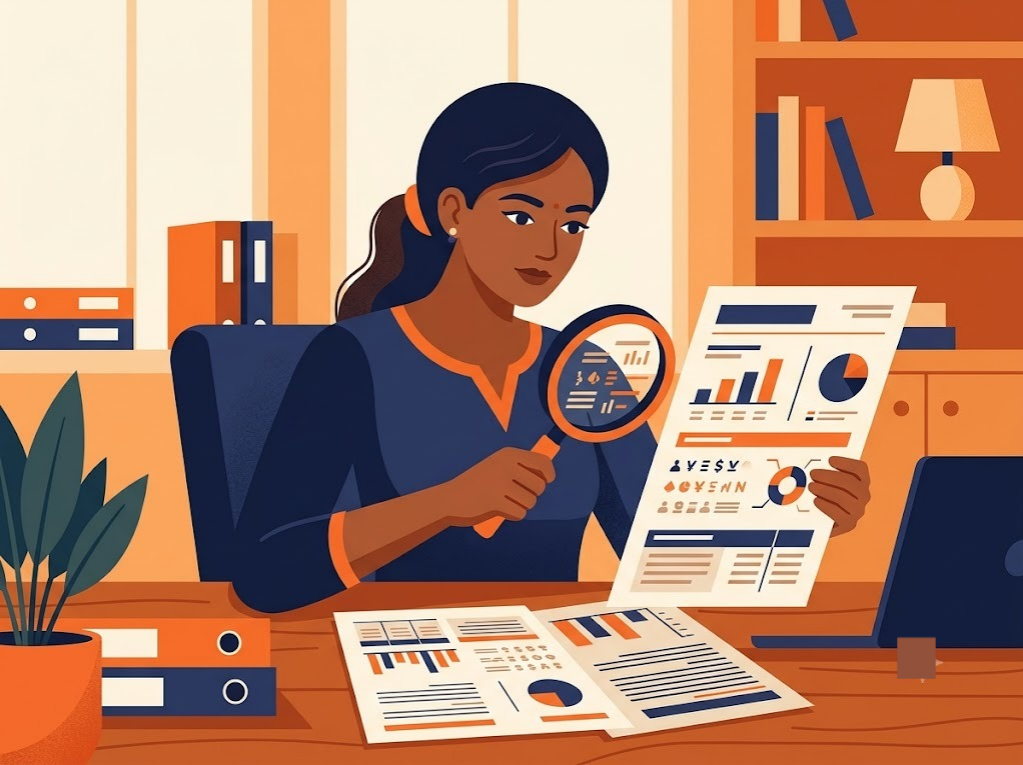
How to Read Your Equifax Credit Report (Section by Section)
Five sections make up the report. Here's what to actually look at in each one.
Identification and contact. Check that your name, date of birth, and address are correct. A wrong address alone can trip up verification later, when you least expect it.
Credit summary and score. The single number, plus a snapshot: total accounts, how many are active, how many are closed.
Account information. Every loan and card you've held, current, overdue, or settled and written off. This is where an old forgotten account tends to surface, the one you assumed was closed years ago but never confirmed.
Enquiry section. Every hard enquiry made against your file. A hard enquiry you don't recognise could mean identity misuse or just a lender you forgot you applied with. Either way, it's worth chasing down.
Score factors. Equifax's own stated reasons the number sits where it does.
If something in any of these looks wrong, don't panic. Note it down and move to the next section; that's exactly where the options live.
Reading your CIBIL report the same way is worth doing too, once you've got the hang of this one, since the structure carries over.
Get a Full Breakdown of What's Affecting You
A clear, personal read on your credit health.
Start My Credit CheckWhat Are Your Options If Something's Wrong
Three situations, three paths. Where you land decides what to do next.
A factual error. Wrong account, wrong amount, wrong status. Raise a dispute directly on Equifax's own portal. Credit Information Companies are required to investigate disputes and resolve them within the applicable regulatory timelines.
A genuinely low score from real missed payments or high utilisation. No shortcut here, just the habits that actually move the number: paying on time, keeping utilisation down, leaving old accounts open rather than closing them.
Multiple EMIs are stretching the budget thin, and that's what's dragging the score. If your total EMIs are creeping past roughly half your take-home salary, that's the general danger zone to know about. This is a separate conversation from the two above, and it's the one to have next.
None of these are mutually exclusive, either. It's entirely possible that more than one applies to you at once. Figure out which one fits, and start there.
How FREED Helps
Credit Insights is the closest match to what brought you here. It pulls Experian's report, not Equifax's, so it's worth being upfront about that. What it gives you is your score, what's actually affecting it in your specific case, and step-by-step recommendations to improve it, all for an affordable subscription.
Here's why that still matters even though you came in checking Equifax. Once you understand how to read one bureau's report properly, the next one gets a lot easier. Credit Insights turns that understanding into something ongoing, not a once-a-year check you forget about until the next rejection.
One more thing, for a different situation entirely. If what's dragging your score is several EMIs across different lenders rather than one bureau report, FREED's Debt Consolidation Program matches you to a lending partner and can combine multiple debts into one loan with one EMI. How this affects your credit score depends on your individual credit profile and repayment behaviour.
That's a separate conversation from the one this blog is really about. Still, it exists.
Tips to Keep Your Equifax Report Healthy
A handful of habits keep this in good shape, month over month.
- Pay every EMI and card bill by the due date, not just squeezed in before the next statement closes.
- Keep utilisation under 30% of your total available limit.
- Avoid applying for multiple loans or cards in a short window. Each one is a hard enquiry, and a cluster of them reads as stress.
- Don't close your oldest credit card just because it's unused. It helps your average account age.
- Re-check the report at least once a year, even when nothing feels wrong. Especially when nothing feels wrong.
None of this guarantees a specific outcome. It supports the number moving in the right direction over time.
Before you take any new credit action, see what it would do to your score first, not after.
Are You in a Loan Trap? Quick Check
Move the slider to your total EMIs as a % of monthly salary. See your debt stress level instantly.
EMIs as % of Monthly Salary
Sources
Claim | Source |
RBI mandates one free full credit report per calendar year from every credit information company, including Equifax, on request and in electronic format | RBI Notification RBI/2016-17/58, DBR.CID.BC.No.11/20.16.042/2016-17, "Free Annual Credit Report to Individuals," dated September 1, 2016: https://www.rbi.org.in/commonman/english/scripts/Notification.aspx?Id=1884 |

Mohit Juneja
Mohit Juneja writes educational content at FREED on debt management, credit scores, loan repayment, and borrowing best practices. His content is shaped by expert insights and industry knowledge, helping readers better understand their financial options and make informed decisions.
mohit.juneja@freed.care

FREED is India's trusted loan management platform. Founded in 2020 and headquartered in Gurugram, FREED has counselled 20 lakh+ people on personal loans, credit cards, and app loans. FREED charges fees only on successful settlement, not upfront. FREED does not handle secured loans (home loans, car loans, gold loans).
Media Mentions