Equifax Credit Score: Meaning, Range, and Usage
An Equifax credit score is a 3-digit number ranging from 300 to 900, generated by Equifax India, one of four RBI-licensed credit bureaus. Banks, NBFCs, and fintech lenders use it alongside or instead of CIBIL to assess how likely a borrower is to repay on time.
Mohit Juneja
Reviewed by FREED India, Debt Resolution Specialists
 4.7/5
4.7/5 ₹3,200Cr+
 20,000+
 20,00,000+4.7/5₹3,200Cr+20,000+20,00,000+
KEY TAKEAWAYS

Equifax credit score ranges from 300 to 900 in India, not 300-850. That figure applies to Equifax's global model, not the Indian one.
Equifax has operated in India since 2010, one of four RBI-licensed credit information companies.
Payment history and credit utilisation carry the most weight, similar to CIBIL, though the exact formula is proprietary.
Your Equifax score can differ from your CIBIL score for the same accounts, since each bureau uses its own scoring model.
One free Equifax report is available per year; additional pulls carry a nominal fee.
What Is an Equifax Credit Score
An Equifax credit score is a 3-digit number, somewhere between 300 and 900, that sums up your creditworthiness based on data reported by banks, NBFCs, and credit card issuers. Equifax India generates it using this shared pool of lender-reported information, the same way CIBIL does, just processed through Equifax's own system.
There's a specific point of confusion worth clearing up right away, since it trips up a surprising number of people searching this topic. Several websites quote a 300-850 range for Equifax, and that figure isn't wrong exactly; it's just the wrong country. That 300-850 scale belongs to Equifax's global model, used primarily in markets like the US. Equifax India's own published range is 300-900, the same scale CIBIL uses in India. If you're checking your score here, 900 is the ceiling you're working toward, not 850.
Equifax is one of four RBI-licensed credit information companies operating in India, alongside CIBIL, Experian, and CRIF High Mark. It's been active in the Indian market since 2010, making it one of the more established players here even though CIBIL remains the more commonly recognised name among borrowers.
Knowing what the score is matters less than knowing how it actually gets used, and that's where things start to differ meaningfully across lenders.

Equifax Score Ranges Explained
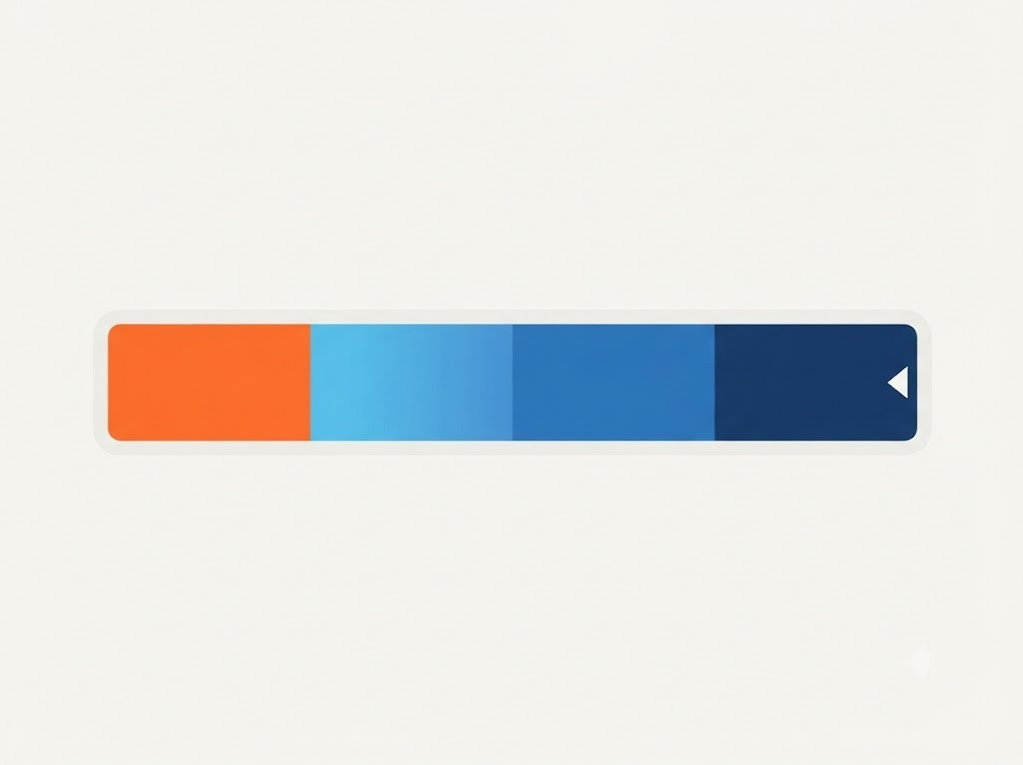
Band | Score Range | What It Generally Means |
Poor | Below 580 | High credit risk, borrowing becomes difficult |
Fair | 580-669 | Moderate risk, limited options, higher rates likely |
Good | 670-739 | Acceptable risk, most lenders approve comfortably |
Very Good / Excellent | 740+ | Low risk, best rates and fastest approvals typically available |
These bands are a general classification, not a universal rule. Different lenders set their own internal cutoffs on the Equifax scale, and the exact boundary between "good" and "excellent" can shift slightly from one source to another.
Someone sitting at 720 is generally viewed as a reliable borrower, likely to get approved without much friction, though possibly not at the absolute best rate on offer. Someone at 550 is going to face real resistance from most mainstream lenders, and if approved at all, it will likely come with a noticeably higher interest rate to offset the perceived risk. The gap between "fair" and "good," roughly the 660 to 680 zone, is often where the real shift in approval odds happens, similar to how CIBIL's bands work.
How an Equifax Score Is Calculated
Equifax doesn't publish its exact formula, but the broad factor weightings widely cited across the industry sit in a similar range to CIBIL's:
- Payment history (roughly 35%). The biggest single factor. Every on-time EMI or credit card bill strengthens the score; every missed or late payment pulls it down.
- Credit utilisation (roughly 30%). How much of your available credit you're actually using. Staying under 30% of your limit is the commonly cited target for protecting this part of the score.
- Length of credit history (roughly 15%). Older, well-managed accounts add stability. A thin or brand-new history caps how high the score can climb regardless of good behaviour.
- Credit mix (roughly 10%). A healthy blend of credit types, a card alongside a loan, for instance, generally reads better than relying on just one kind.
- New credit inquiries (roughly 10%). Frequent applications in a short window signal credit hunger, even if each one was individually reasonable.
These percentages are industry estimates commonly cited across financial content, not figures Equifax has officially disclosed as its exact formula. The company treats its scoring algorithm as proprietary, the same way CIBIL and the other bureaus do.
Equifax vs CIBIL, Why Your Scores Can Differ
Here's something worth understanding clearly, because it surprises a lot of people the first time they check both: it's entirely normal for your Equifax score to differ from your CIBIL score, even when both are pulling from the same credit history. This isn't a sign something's broken. Each bureau runs its own proprietary algorithm, and each may receive data from a slightly different set of reporting lenders, since not every bank reports to every one of India's four bureaus at the same frequency.
There's a practical implication worth knowing too. Some lenders, particularly fintechs and NBFCs offering quick digital loans, lean more heavily on Equifax data as part of their underwriting. CIBIL, meanwhile, remains the more commonly referenced bureau for larger, more traditional loans like home loans, and is the name most borrowers recognise by default.
This matters in a very concrete way: if a loan application gets rejected despite what you believed was a "good" CIBIL score, checking your Equifax report is a reasonable next step, not a redundant one. An issue dragging your score down might be visible on Equifax and simply not appear the same way, or at all, on your CIBIL report, since the two bureaus aren't always working from identical data.

Freed Expert Tip
If a loan gets rejected despite a good CIBIL score, check your Equifax report too. The issue holding you back might only show up there.
Check My Full Credit PictureHow to Check Your Equifax Credit Score
1. Visit Equifax's official site.
Go to the official Equifax India website directly, avoiding unverified third-party links that sometimes appear in search adss
2. Register or log in.
Complete PAN and mobile OTP verification to confirm your identity before your report can be generated.
3. Request your free report.
One free report is available per calendar year directly from Equifax, as mandated by the RBI. Additional pulls within the same year carry a fee, commonly cited around ₹100 to ₹250 per report depending on the plan, so confirm current pricing on Equifax's site before quoting a figure.
4. Compare against your CIBIL score.
Note any differences between the two. A gap of even 30 to 70 points isn't unusual and often points to bureau-specific reporting gaps worth understanding rather than assuming an error.
5. Dispute any errors.
Use Equifax's online dispute process for any incorrect or unfamiliar entries you spot while reviewing the report.
Worth remembering throughout: checking your own score, at any point in this process, is a soft inquiry and carries zero impact on the number itself, unlike a lender-initiated hard inquiry. FREED also offers a free credit check that pulls bureau data directly, useful if you'd rather have that first read done for you.

What the Law Says
Every individual is entitled to one free Equifax credit report per year, as mandated for all RBI-licensed credit bureaus.
Claim Your Free ReportWhat Affects Your Equifax Score Beyond the Basics
A couple of less obvious factors are worth knowing, since most competitor content skips straight past them.
Guarantor accounts. If you've ever guaranteed someone else's loan, that account, and any late payments made on it by the primary borrower, appears on your own Equifax report too. This can affect your score even though you're not the one who missed the payment, simply because you're legally on the hook for it alongside them.
Disputing errors. Equifax allows you to dispute incorrect information directly through its online portal, whether that's a duplicate entry, an account that isn't actually yours, or a payment logged incorrectly as late. This is worth doing proactively rather than waiting until a rejected application forces the issue.
Reviewing your report regularly matters just as much as watching the score number itself. A single unnoticed error, a wrongly reported guarantor default or a duplicated account can quietly hold a score down for years if nobody catches it. Checking once a year, using your free report, is a habit worth building even when nothing feels urgent.

When a Low or Falling Equifax Score Signals a Bigger Problem
A one-off dip isn't usually cause for concern. But when your score stays consistently low or keeps falling across multiple checks, that's worth paying closer attention to. Watch for these signs together, not in isolation: your score has stayed low or dropped across more than one check over the past few months, you're carrying high utilisation across multiple cards or loans at once, and you've been making only the minimum payment on your cards rather than clearing the full balance.
Any one of these on its own might be manageable. All three together usually point to a structural debt issue, something that won't be fixed by a single dispute or one on-time payment, but needs the underlying debt load itself addressed.
If your total EMIs and minimum dues already eat up more than 50% of your take-home salary, that's a strong signal in the same direction. From here, the path forward splits cleanly in two. If you're still managing to repay but are finding it difficult to manage multiple loans or credit cards, debt consolidation may be worth exploring.
If repaying in full has genuinely become impossible, settlement exists as a structured, last-resort path, worth exploring in more depth next.
Score Held Down by Multiple EMIs?
See whether debt consolidation may be an option for your financial situation.
Start My Consolidation AssessmentHow FREED Helps
Here's something that sets FREED's approach apart from a generic "check your score" tool: FREED's Credit Insights fetches your credit report powered by Experian, giving you a clear, plain-language read of what's actually on it rather than just a bare number. That matters, since, as covered above, most people looking at a raw report have no way of knowing what's helping or hurting their score — FREED translates the report into something you can actually act on.
From there, FREED's help depends on your financial situation. If you're still able to repay but are finding it difficult to manage multiple loans or credit cards, FREED's Loan Consolidation Plan helps eligible borrowers explore the possibility of combining multiple existing debts into a single loan through partnered financial institutions. Approval, loan terms, interest rates, and repayment obligations are subject to the lender's assessment and applicable policies.
If you're already in genuine financial difficulty and unable to repay your unsecured debts in full, FREED's Loan Settlement services assist eligible borrowers in negotiating and resolving unsecured debts with lenders. The outcome depends on the lender's approval, the borrower's financial circumstances, and other case-specific factors. A settled account may be reflected in your credit history in accordance with applicable credit bureau reporting practices.
Rates and ranges shown are indicative. Final terms are decided by the bank. FREED is not a Loan Provider. No outcome is guaranteed. Please verify directly with your bank.
Want a Fuller Picture of Your Credit Health?
FREED checks CIBIL and Equifax together, free.
Book My Free CallEquifax vs CIBIL, Quick Comparison
Factor | Equifax | CIBIL |
Score range | 300-900 | 300-900 |
Licensed in India since | 2010 | 2000 |
Commonly used for | Personal loans, credit cards, fintech/digital lending | Home loans, larger credit decisions, most widely referenced |
Free reports per year | 1 | 1 |
Which bureau a specific lender checks varies by institution and loan type. Both are RBI-licensed and equally valid; neither is presented here as "better" than the other.
The main practical difference isn't which bureau is more accurate; it's which one a given lender happens to lean on for a particular product. A digital-first NBFC processing a quick personal loan may weigh Equifax data more heavily than a traditional bank processing a home loan, which is exactly why checking both, rather than assuming CIBIL alone tells the whole story, is worth the extra few minutes.
Sources
Claim in Article | Source | Verification | |
|---|---|---|---|
1 | Equifax India's range is 300–900, not the 300–850 global figure some sites quote | Official Equifax India FAQ | The Equifax credit score ranges from 300 to 900 points; the higher the score, the more financially trustworthy a person is considered to be this directly confirms the article's correction, and is the strongest possible source since it's Equifax's own site |
2 | Equifax India licensed by RBI, operating since 2010 | Poonawalla Fincorp / Moneyview / Basic Home Loan | Equifax Credit Information Services Private Limited was established as an RBI-licensed Credit Information Company in 2010, a joint venture between Equifax Inc., USA, and seven leading Indian financial institutions |
3 | Scores can legitimately differ across bureaus by 30–70 points due to differing proprietary models and reporting lags | IIFL / Official Equifax FAQ | Score differences of roughly 30–70 points across bureaus are not uncommon, arising because each bureau uses its own scoring methodology and may receive data updates at different times; Equifax's own FAQ confirms it is likely that an individual will have different scores in each Bureau since each uses their proprietary scoring model |
4 | Score bands: below 580 poor, 580–669 fair, 670–739 good, 740+ excellent | IIFL | Scores above 740 are generally viewed favorably, while scores below 580 may make borrowing more difficult this matches your draft's band structure closely; note other sources (Buddyloan, Basichomeloan, Fincover) cite meaningfully different cutoffs (e.g., "good" starting at 700, "excellent" at 750+), so band edges genuinely vary by source — worth flagging as indicative, which your draft already does |
5 | One free Equifax report per year, additional pulls carry a nominal fee | Buddyloan | Equifax India offers one free credit report annually, with additional subscription options for regular monitoring and score simulation this resolves the; exact additional-pull pricing wasn't independently confirmed at a specific ₹100–250 figure, so that number should still be checked live before publishing |
6 | RBI mandates one free report/year per bureau, applies to all four CICs | Arthzo / RBI notification | Under RBI guidelines, every individual is entitled to one free credit report per year from each bureau that's 4 free reports annually |
7 | Neither bureau is officially "better"; usage varies by lender/product | Buddyloan / Paisabazaar | Equifax and CIBIL are both RBI-licensed credit bureaus in India, and neither is officially considered 'better' than the other they simply use different data and scoring models |

Mohit Juneja
Mohit Juneja writes educational content at FREED on debt management, credit scores, loan repayment, and borrowing best practices. His content is shaped by expert insights and industry knowledge, helping readers better understand their financial options and make informed decisions.
mohit.juneja@freed.care

FREED is India's trusted loan management platform. Founded in 2020 and headquartered in Gurugram, FREED has counselled 20 lakh+ people on personal loans, credit cards, and app loans. FREED charges fees only on successful settlement, not upfront. FREED does not handle secured loans (home loans, car loans, gold loans).
Media Mentions