CRIF Credit Report: India's Other Credit Bureau, Explained
A CRIF credit report is a detailed credit history compiled by CRIF High Mark, one of 4 RBI-licensed credit bureaus in India alongside CIBIL, Experian, and Equifax. It includes your accounts, payment history, and a 3-digit score between 300 and 900, and is especially detailed for NBFC and microfinance loans.
Mohit Juneja
Reviewed by FREED India, Debt Resolution Specialists

 4.7/5
4.7/5 ₹3,200Cr+
 20,000+
 20,00,000+4.7/5₹3,200Cr+20,000+20,00,000+
KEY TAKEAWAYS

CRIF High Mark is 1 of 4 RBI-licensed credit bureaus in India, alongside CIBIL, Experian, and Equifax.
“The score generally ranges from 300 to 900, the same numerical scale used by CIBIL. However, lenders set their own eligibility criteria.”
Particularly deep data coverage on NBFC, microfinance, and app-based or rural lending.
Your CRIF and CIBIL scores may differ because each bureau uses its own scoring model and may receive lender data at different times. There is no fixed or standard point difference.
One free full report per year, direct from CRIF High Mark's own website.
What Is a CRIF Credit Report?
CRIF High Mark is one of India's 4 RBI-licensed credit bureaus, alongside CIBIL, Experian, and Equifax. If you've only ever pulled your CIBIL score, CRIF can feel like an unfamiliar name, but it's doing the same regulatory job, just under a different brand. “The information available with each bureau can vary depending on lender reporting arrangements and timing.”
CRIF is a global credit information company headquartered in Bologna, Italy, with credit bureau operations running in more than 25 countries. It entered the Indian market in 2010, when a company called High Mark Credit Information Services received its RBI operating licence. High Mark ran independently for several years before CRIF acquired a majority stake in 2014 and rebranded the combined entity as CRIF High Mark, the name that now appears on your report. The India operation itself is headquartered in Mumbai, though the parent company remains Italian.
A CRIF credit report is built from the same broad categories any Indian bureau report would carry: your personal details as recorded by lenders, “An account or tradeline history covering loans and credit cards that lenders have reported to CRIF.”
month-by-month payment record, and a log of recent enquiries. All of this rolls up into a 3-digit credit score between 300 and 900, the same scale CIBIL uses, so although CRIF and CIBIL use the same numerical range, their scores are not directly interchangeable because each bureau uses its own scoring model and data.
What actually changes between bureaus isn't the format of the report; it's the underlying data each one has managed to collect, and that gap is largely a function of which lenders bother reporting to which bureau. That distinction is worth understanding before you look at your own numbers, since credit score vs CIBIL score is a confusion that runs deeper than most people realise, and CRIF sits right at the middle of it.

Why CRIF Data Looks Different From Your CIBIL Report
If you've pulled both your CIBIL and CRIF reports and noticed the scores don't match, that's normal, and it isn't a mistake on either side. Two things are usually driving the gap, and they're worth separating because they call for different responses.
The first is the scoring model itself. Each bureau- CIBIL, Experian, Equifax, and CRIF- runs its own proprietary formula. All four look at broadly similar raw ingredients: payment history, credit utilisation, account age, account mix, recent enquiries. But the weight given to each factor differs from one bureau's model to the next, so two bureaus working from largely the same underlying facts can still land on different final numbers. This is a modelling difference, not an error, and there's nothing to dispute here.
The second, and usually bigger, driver is reporting itself. Not every lender reports to every bureau, and even among lenders that do report to all four, the timing isn't always synchronised. Picture a borrower with a CIBIL score of 720 who pulls their CRIF report and sees 695, a 25-point gap. If that gap traces back to a two-year-old NBFC personal loan that reports to CRIF every month but only sends data to CIBIL sporadically, CRIF's file on that account is simply more current; even though CIBIL isn't wrong, it's just working with a thinner picture of that one loan.“The difference between bureau scores is not fixed and varies according to the available data, reporting timing and scoring model." and they tend to be widest for borrowers whose lending mix leans toward NBFCs, app-based loans, or smaller regional lenders rather than large national banks.
None of this means one score is the "real" one and the other is broken. It means you're looking at two honest, independently compiled files that haven't received identical information. So where does CRIF actually pull ahead, and for which kind of borrower does that gap matter most?
Where CRIF High Mark May Offer Additional Data
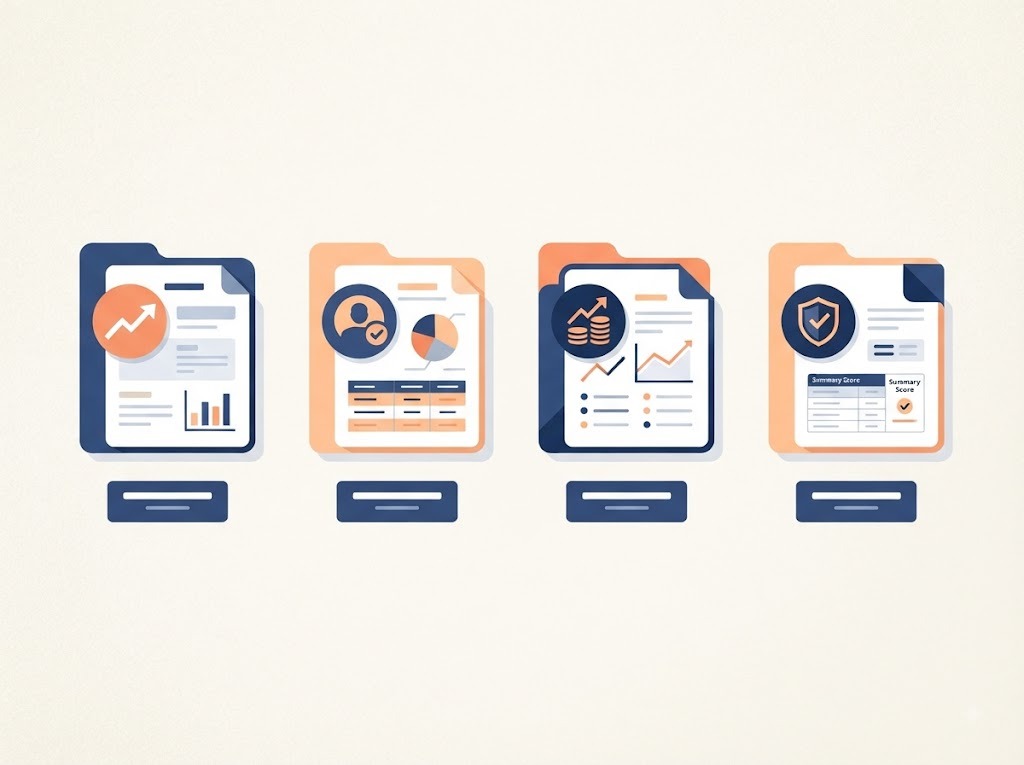
CRIF's particular strength is coverage that CIBIL doesn't always match as closely: NBFC lending, microfinance institutions, cooperative and rural banks, and smaller app-based lenders. This isn't incidental. CRIF built much of its early Indian business specifically around these segments, which is part of why it's often described as running one of the largest microfinance credit databases in the country.
Take a concrete example. Say a borrower has a ₹40,000 instant app loan taken through a fintech platform, alongside a ₹1.2 lakh personal loan from a mid-sized NBFC. Both lenders may report faithfully to CRIF every reporting cycle. CIBIL might show only one of the two accounts, or show the NBFC loan with an outdated balance if that lender reports to CIBIL less consistently. Pull only the CIBIL report in this situation, and you'd walk away with an incomplete picture of your own debt load, not because you did anything wrong, but because that's simply where this particular lender's reporting habits point.
The practical takeaway: if most of your borrowing has come through a large private or public sector bank, a home loan, or a credit card from a major issuer, CIBIL is likely to already show a fairly complete file. But if a meaningful share of your loans sit with app-based lenders, smaller NBFCs, or microfinance institutions, and this is increasingly common for borrowers who piece together several smaller loans rather than one large one, your CRIF report may capture detail CIBIL's file simply doesn't have yet. Anyone trying to get a full picture of everything currently owed against their PAN, not just what shows up on the bureau they happen to check first, is better served pulling more than one report. FREED's guide on how to check every active loan under your name walks through exactly this multi-bureau approach in more detail.

Freed Expert Tip
If most of your loans are from NBFCs or app-based lenders, pull your CRIF report too, not just CIBIL. It may show a more complete picture.
See how credit score differs from CIBIL scoreHow to Check Your CRIF Credit Report for Free
RBI's rules entitle you to one free full report per year, direct from CRIF High Mark's own website, verified through your PAN and an OTP sent to your registered mobile number or email. This is the same one-free-report-a-year entitlement that applies to CIBIL, Experian, and Equifax individually; each bureau owes you one, not one combined across all four. If you need to check more than once a year, CRIF also offers a paid report without the score attached, for a small one-time fee; confirm the current price directly on their site rather than relying on a figure quoted elsewhere, since it does change from time to time.
Step 1 - Visit CRIF High Mark's Website. Go to the official free credit report section on crifhighmark.com.
Step 2 - Enter Your Details. PAN, name, date of birth, and contact details, exactly as they appear on your PAN card.
Step 3 - Verify Identity. Confirm via OTP sent to your registered mobile number or email.
Step 4 - View and Download. Your score and full report generate instantly for viewing and download.
If you've already been through this process on CIBIL before, FREED's guide to downloading your CIBIL report walks through the equivalent steps there, and you'll notice the verification flow is nearly identical across bureaus.
What's in Your CRIF Report
- Personal information - your name, PAN, date of birth, and contact details exactly as lenders have submitted them, which is also usually the first place a factual error shows up if your name or date of birth was mistyped somewhere along the line.
- Account or tradeline summary - Loans and credit cards reported to CRIF, both active and closed, along with the sanctioned amount and current outstanding balance for each.
- Payment history and DPD entries - a month-by-month record of how consistently you've paid, using the same Days Past Due format you'd see on a CIBIL report; a string of zeros here is what you want to see across every account.
- Enquiry record - a log of which lenders pulled your report and when, useful for spotting an application you don't remember making.
- Personal credit score - the 300-900 number this whole report is built around, sitting at the top of the document alongside the rest of the detail.
CRIF also issues a separate business or commercial score for companies and registered entities, built from an entirely different dataset. That's a distinct product aimed at business lending decisions, not something an individual borrower needs to track; this article is specifically about the personal score. If you want a deeper walkthrough of how a DPD grid actually reads month to month, FREED's guide to reading a CIBIL report covers that mechanic in detail, and the same reading logic carries over to CRIF's version of the same field.
How to Dispute an Error on Your CRIF Report
Errors do turn up on CRIF reports, the same categories you'd expect on any bureau: a loan that isn't actually yours, a payment marked late when your bank statement shows it went through on time, or an account still showing "active" months after you closed it and received a formal closure letter. Say you closed a personal loan eight months ago, but your CRIF report still shows an outstanding balance and an open status. This is a straightforward dispute, not a genuine negative mark, and it's worth chasing down before it quietly affects a future loan application.
To raise it:
- File the dispute directly on CRIF High Mark's own website or dispute portal.
- Attach proof: an NOC, a payment receipt, or a formal closure letter from the lender, whichever supports the correction you're asking for.
- CRIF is required to investigate and respond within a set window under RBI's rules governing credit information companies.
One thing worth being clear on: fixing an error on your CIBIL report does not automatically fix the same entry on CRIF. Each bureau maintains its own independent file, built from whatever data lenders chose to send it, so if the same mistake shows up on both, each one needs its own separate dispute filed, with its own proof attached. FREED's guide on correcting your CIBIL score covers the equivalent CIBIL-side process step by step, and the CRIF process mirrors it closely enough that the same document checklist works for both.

What the Law Says
Under RBI's compensation framework for credit information companies (circular RBI/2023-24/72), a credit institution or bureau that fails to resolve a genuine dispute within a combined 30-calendar-day window owes the complainant ₹100 for every additional day of delay.
Learn how to clear a written-off entryWhat Are Your Options if Your CRIF Report Shows TroubleWhat Are Your Options if Your CRIF Report Shows Trouble
If your CRIF report shows something factually wrong, the dispute process above is the right first move, and it's usually resolved without needing to change anything about how you're actually repaying.
But if what you're seeing is accurate, several active EMIs or app loans genuinely stretching what you bring home each month, that's not an error to dispute; it's a repayment structure worth rethinking. Say your take-home pay is ₹48,000 a month and you're paying ₹11,000 across two app loans and ₹6,500 on an NBFC personal loan, ₹17,500 total, or roughly 36% of income Whether this repayment burden is manageable depends on the borrower’s income, essential expenses, other debts and individual circumstances.., but it's the kind of load that gets harder to manage the moment one expense goes sideways. For borrowers in this position who are still current on every payment. FREED’s Debt Consolidation Program can assess whether a borrower may qualify to combine eligible debts into one loan. Approval, interest rate, EMI, tenure and final terms depend on the lending partner’s assessment.
Settlement sits at the far end of this ladder, and it's a genuinely different situation: it's for borrowers who are unable to repay in full, not someone juggling several EMIs while still managing to pay on time. If that's closer to your reality, FREED's Debt Resolution Program can walk through what a settlement, with savings of up to 50%*, would actually look like for your specific accounts.
*Rates and ranges shown are indicative. Final terms decided by the bank. FREED is not a Loan Provider. No outcome is guaranteed. Please verify directly with your bank.
How FREED Helps
FREED's Debt Consolidation Program, also called "Reduce My EMI," assesses your full financial profile across every loan you're currently carrying, regardless of which bureau happens to show it most completely. That matters here specifically because, as the earlier section on data coverage explained, a borrower with several app loans or NBFC accounts might have debts that CIBIL alone wouldn't fully surface. FREED's assessment isn't built around a single bureau's file; it looks at your actual reported obligations wherever they sit.
Once that picture is complete, FREED may connect eligible applicants with a lending partner from its network. The lending partner independently assesses the application, and no approval or outcome is guaranteed. “If the application is approved and completed, eligible balances may be combined into one loan and one EMI running across different due dates and different bureaus. FREED handles the process end to end, so you're not the one chasing multiple lenders or comparing offers on your own. The fee is success-based, charged only once the consolidation is actually completed, never upfront.
If existing accounts are repaid, lenders may update their status with the credit bureaus to which they report. Reporting timelines are controlled by the lenders and bureaus, across whichever bureaus your individual lenders happen to report to. If your situation looks more like genuine inability to repay than several loans that are simply hard to juggle, settlement is the other path FREED offers, and that's a separate conversation worth having on its own terms.
FREED has settled 20,000+ accounts, counselled over 20,00,000 customers, and managed ₹3,200 Cr+ in debt to date.
Multiple App Loans Showing on Your Report?
See if one lower EMI fits your situation.
Start My Debt AssessmentIndia's 4 Credit Bureaus at a Glance
Bureau | Score Range | Known For |
CIBIL | 300-900 | Most widely used by banks |
Experian | 300-900 | Broad bank and NBFC coverage |
Equifax | 300-900 | Global group, India-specific range |
CRIF High Mark | 300-900 | Deepest NBFC, microfinance, rural lending data |
Rates and ranges shown are indicative. Final terms decided by the bank. FREED is not a Loan Provider. No outcome is guaranteed. Please verify directly with your bank.
Sources
Claim in Blog | Source |
|---|---|
CRIF High Mark: RBI licence 2010 (as High Mark), CRIF majority stake + rebrand 2014, one of 4 RBI-licensed CICs | CRIF High Mark's own press release, June 2014 link (correctly not rbi.org.in this is CRIF's own corporate history, not an RBI regulatory claim, so a non-rbi.org.in source is the right call here) |
30-day combined dispute resolution window, ₹100/day compensation for delay | RBI/2023-24/72, DoR.FIN.REC.48/20.16.003/2023-24, Oct 26, 2023 rbi.org.in link |
Every individual is entitled to one free full credit report (incl. score) per year from each licensed CIC, including CRIF | Master Direction RBI (Credit Information Reporting) Directions, 2025, RBI/DoR/2024-25/125, §9(1)(i) rbi.org.in link |

Mohit Juneja
Mohit Juneja writes educational content at FREED on debt management, credit scores, loan repayment, and borrowing best practices. His content is shaped by expert insights and industry knowledge, helping readers better understand their financial options and make informed decisions.
mohit.juneja@freed.care

FREED is India's trusted loan management platform. Founded in 2020 and headquartered in Gurugram, FREED has counselled 20 lakh+ people on personal loans, credit cards, and app loans. FREED charges fees only on successful settlement, not upfront. FREED does not handle secured loans (home loans, car loans, gold loans).
Media Mentions