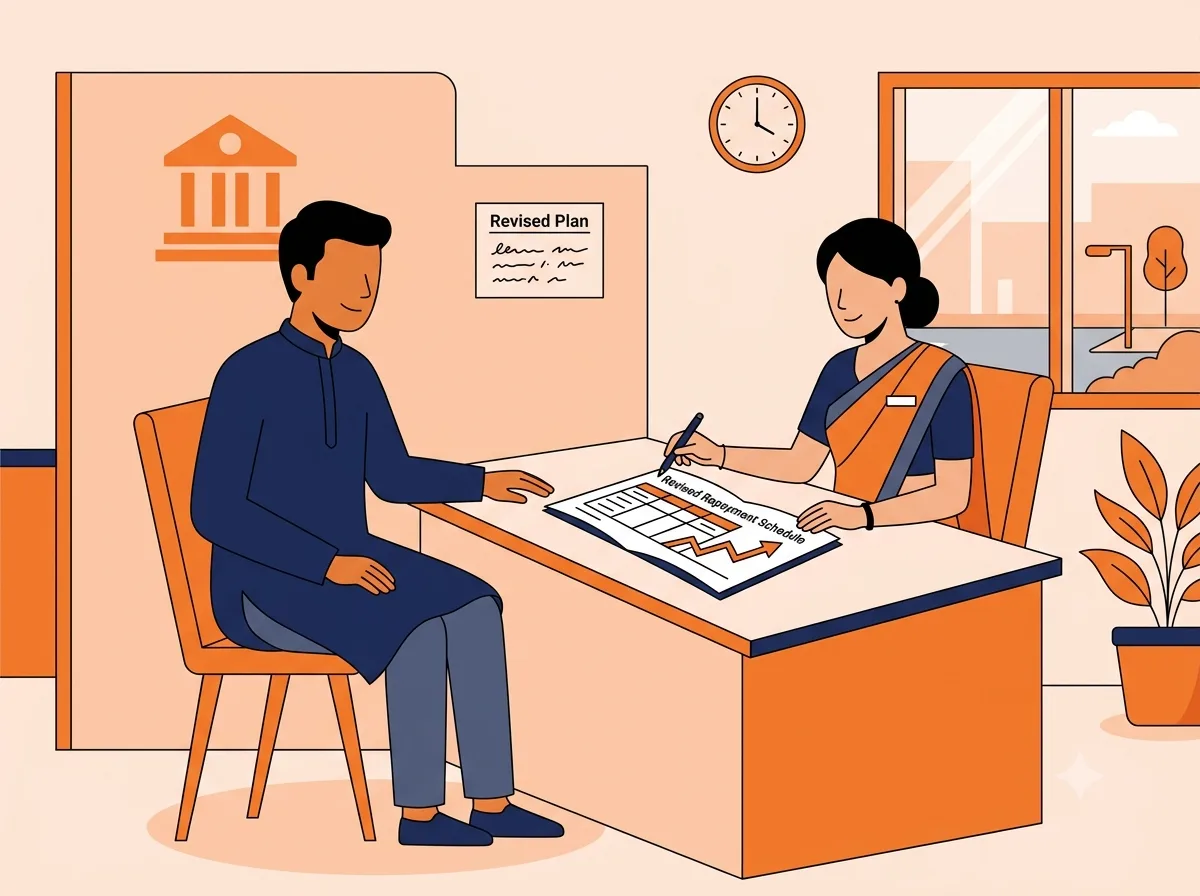
Debt Restructuring vs Debt Settlement: Which Fits You?
Debt restructuring changes the terms of your existing loan, such as the repayment time or EMI, and you still owe the full amount. Debt settlement involves a lender agreeing to accept less than the full outstanding amount under specified conditions. Restructuring may suit borrowers who can repay under revised terms. Settlement may be considered when full repayment is not feasible, but approval depends on the lender’s assessment and applicable policy.

Mohit Juneja
Reviewed by FREED India, Debt Resolution Specialists
 4.7/5
 ₹3,200Cr+
 20,000+
 20,00,000+4.7/5₹3,200Cr+20,000+20,00,000+
Key Summary

Debt restructuring changes your loan terms. Debt settlement closes the loan for less than you owe.
Restructuring suits borrowers who can keep paying on new terms. Settlement is for genuine inability to repay.
RBI treats a settlement paid over more than 3 months as a restructuring, so the line is thin.
Both leave a mark on your credit report. Ask your bank or finance company in writing how each will be reported.
If you are still paying several EMIs, consolidation may fit better than either.
What Is the Difference Between Debt Restructuring and Debt Settlement?
Settlement is not something a borrower chooses out of preference. Banks and finance companies only consider it when you genuinely cannot repay in full.
Restructuring is a different thing. It keeps the loan alive on new terms: same bank, same debt, maybe a longer repayment time, a lower EMI or a payment pause. Settlement ends the loan for a reduced lump sum.
Point | Restructuring | Loan settlement |
|---|---|---|
What changes | The terms of the same loan | The loan ends for a reduced lump sum |
Do you still owe the full amount? | Yes | No, the bank accepts less as full and final |
Typical stage | Often early, while you can still pay | Usually after the account is overdue |
Who it suits | Borrowers who can keep paying on new terms | Borrowers who genuinely cannot repay in full |
What it needs from you | A hardship request and the bank’s approval | A hardship request, a lump sum and the bank’s approval |
How it may be reported | Ask your bank in writing | Shown as “Settled” |
Can it be undone? | Not once you accept the new terms in writing | Not once paid. The “Settled” mark stays on your report |
Rates and ranges shown are indicative. Final terms decided by the bank. FREED is not a Loan Provider. No outcome is guaranteed. Please verify directly with your bank.
Here is the part most pages skip. RBI’s framework says a compromise settlement (an agreement to pay less than the full dues) where the agreed amount is paid over more than 3 months is treated as a restructuring. It also says any arrangement involving part settlement falls under the definition of restructuring. The classification depends on the actual terms of the arrangement, so review the lender’s written offer and confirm how it will be classified and reported.
Read the full rules in our guide to loan restructuring under RBI rules, and see how a one-time settlement works.

What the Law Says
RBI treats a compromise settlement paid over more than 3 months as a restructuring, so the label on your paperwork matters.
Know Your RightsWhat Is Restructuring, and Who Is It For?
Restructuring means asking your bank to change how you repay the same loan. It may involve a revised repayment period, changes to instalments or a temporary payment pause, depending on the lender’s approval. A longer tenure or a pause may increase the total interest payable.
It needs the bank’s approval. Nothing changes until you accept the new terms in writing.
Who does it suit? Borrowers who can keep paying on new terms. Usually that means an early stage, with a hardship that has a foreseeable end, such as a job search or recovery from an illness.
Who does it not suit? Two groups. First, people with several loans at different banks, because restructuring one loan does not change the others. Second, people who cannot pay even a reduced EMI.
As a general observation, banks tend to have more options to offer when you approach them before you miss EMIs. That is not a promise, and no bank has to grant a request. For the full explainer, read restructuring explained, our guide on how to restructure debt, and the difference between loan rescheduling and restructuring.
What Is Loan Settlement, and Who Is It For?
Loan settlement means the bank accepts a reduced lump sum as full and final payment. The account is then reported as “Settled”.
It is for borrowers who genuinely cannot repay in full. Timing and eligibility depend on the lender’s policy and the account’s circumstances, and it does not always need the account to be marked NPA first. It also needs one lump sum that you can arrange.
Lenders assess compromise-settlement requests under RBI’s requirements and their own approved policies. So no company or caller can promise you an outcome. The framework lets a bank settle. It does not give you a right to a settlement.
FREED’s Loan Settlement Plan covers unsecured loans only, such as personal loans and credit cards. To see how overdue accounts get labelled, read about NPA accounts.

Not sure whether you can still keep paying?
A FREED counsellor can go through your loans with you.
Check My OptionsWhich One Fits Your Situation?
Start with five questions.
- Are you still paying every EMI?
- Is the hardship temporary, with a realistic end?
- How many banks or finance companies do you owe?
- Is the account overdue or already marked NPA?
- Can you arrange one lump sum?
Your answers point to a route. They do not give a verdict.
| Your situation | What may fit | Why |
|---|---|---|
| Job loss, with savings or a notice period and a job search under way | Restructuring or a pause. Ask early | The hardship has an end, so new terms can bridge it |
| A permanent salary cut, but you can still pay a lower EMI | Restructuring | You can keep paying on revised terms |
| Four or five loans and cards, all current, all taking too much of your income | Consolidation, see below | One EMI replaces several |
| No income, 90 or more days overdue, with a lump sum available | Loan settlement may be considered | Full repayment is not possible, and a lump sum exists |
| One small loan overdue, and the bank is cooperative | Talk to the bank. Any route | The balance is small, so weigh cost against effort |
Rates and ranges shown are indicative. Final terms decided by the bank. FREED is not a Loan Provider. No outcome is guaranteed. Please verify directly with your bank.
Every row says “may fit” because it depends on the bank. If your EMIs consume a large share of your take-home pay, review your budget and repayment options. The right level of concern depends on your essential expenses, other obligations and available savings. Check where you stand with the EMI Score, and read our guide to the debt-to-income ratio.
Are You in a Loan Trap? Quick Check
Move the slider to your total EMIs as a % of monthly salary. See your debt stress level instantly.
EMIs as % of Monthly Salary
How Do They Compare on Your Credit Report?
Settlement is reported as “Settled”, not “Closed”. A settled account may be reported differently from an account repaid in full, and this can affect how lenders assess a future application. The effect on your score depends on your overall profile. Check your report, and confirm the reporting treatment with the lender.
Restructuring is different, and it is harder to pin down. A restructured account may be marked as restructured. But how your bank classifies and reports it is the bank’s decision under RBI rules, and the effect on your score depends on the rest of your profile. So we will not rank the two.
One instruction does hold. Before you accept restructuring, ask the bank in writing three things:
- How will it be reported?
- Will the account’s classification change?
- What do I need to do to keep it on track?
Here is a point many readers miss. Banks send updates to the credit bureaus on set dates, and credit-information reporting and correction are subject to RBI requirements. If an entry is wrong, raise a complaint with the lender and the bureau, and ask what compensation applies to your case. Do not assume any payment is automatic.
You can see how your accounts look with Credit Insights, which reads your credit report. Nobody can promise a recovery time. Read what a restructured loan means, and the impact of debt settlement on credit score.

FREED Expert Tip
Before accepting any new terms, ask the bank in writing how the change will appear on your credit report.
Talk to a FREED CounsellorWhat About Debt Consolidation?
There is a third route. It fits people who are still paying several unsecured loans and cards.
A new loan from a lending partner pays them off, and you are left with one EMI and one date. Your score does not drop. FREED’s Loan Consolidation Plan charges zero fee to the customer and needs a CIBIL score of 700 or above.
How does it differ? Restructuring changes one loan at the same bank. Settlement closes a loan for less. Consolidation swaps several loans for one.
It is not for borrowers already deep in default. If that is you, the other two routes are the ones to look at. Compare debt consolidation with restructuring and a personal loan with debt consolidation.
How Do You Ask for Restructuring or Settlement?
Both start in writing. The steps differ.
To ask for restructuring:
- Write to customer service or the loan team, before you miss an EMI where possible.
- Explain the hardship with papers, such as a job-loss letter, medical bills or income proof.
- Ask for specific terms.
- Get the revised terms and the reporting treatment in writing.
- Follow the new schedule strictly.
To ask for settlement:
- Get a written outstanding statement.
- Send a hardship request with papers to the collections team.
- Wait for a written offer.
- Check the letter for your name, account number, amount, deadline and “dues cleared, reported Settled” wording.
- Pay only by a traceable channel, into the bank’s own account.
- Collect the settlement letter and the NOC (no objection certificate, the bank’s proof that nothing more is due).
No bank has to accept either request. Recovery calls may also continue while you talk. Keep records of abusive or threatening recovery communications and raise a complaint through the lender’s grievance process or the appropriate authority.
For wording help, read how to write a loan settlement letter to a bank, what a final settlement letter should show, and the RBI guidelines for recovery agents.
How Does FREED Help When You Are Choosing Between These Routes?
Restructuring is something you ask your own bank for. FREED does not negotiate it.
What FREED does is help you see the options. A counsellor looks at your loans and helps you work out which route fits: restructuring with your bank, the Loan Consolidation Plan, or the Loan Settlement Plan.
The FREED Loan Settlement Plan (also called the Debt Resolution Program or “Settle My Loans”) helps borrowers move from financial distress to a structured path toward resolving their debt and rebuilding their financial future.
Here is how it works. FREED reviews your full financial picture and builds a personalised plan. You save a fixed monthly amount into a Special Purpose Account (SPA), held by an independent trusteeship company. When the corpus is enough, FREED negotiates with your bank or finance company and prepares documents and letters. The bank or finance company decides the final terms. You approve each settlement before any payout. It takes time, because the savings come first.
FREED covers unsecured loans only.
On fees: an evaluation fee applies, and it is non-refundable. A separate success-based fee applies only when a settlement is completed. Banks may reduce dues by up to 50%*.
Rates and ranges shown are indicative. Final terms decided by the bank. FREED is not a Loan Provider. No outcome is guaranteed. Please verify directly with your bank.
Read more about the Debt Resolution Program.
33,000+ accounts settled | 20,00,000+ customers counselled | ₹3,500 Cr+ debt managed

Mohit Juneja
Mohit Juneja is FREED’s Content & Communication Lead with 12+ years of experience across content, media, advertising and digital communications. He holds a postgraduate diploma in Communications from Xavier Institute of Communications, Mumbai, and has worked with organisations including NDTV, The Indian Express, McCann Worldgroup and NABARD.
At FREED, he leads content and communication across loan management, debt resolution, debt consolidation and financial well-being. His work combines research, storytelling and consumer-focused communication to make complex financial topics easier to understand and act on. He has also scripted and produced 11 documentaries on rural development and agriculture for NABARD, with film's selected for the Mumbai International Film Festival.
mohit.juneja@freed.care

FREED is India's trusted loan management platform. Founded in 2020 and headquartered in Gurugram, FREED has counselled 20 lakh+ people on personal loans, credit cards, and app loans. FREED charges fees only on successful settlement, not upfront. FREED does not handle secured loans (home loans, car loans, gold loans).
Media Mentions