Muthoot Finance Personal Loan CIBIL Score: What Muthoot States and What to Check
Muthoot Finance's personal loan page says a credit score "should be 750 or above", and that some schemes accept scores "starting from 600". The page is undated and conflicts with itself on age and collateral, so confirm current terms with Muthoot before you apply.

Mohit Juneja
Reviewed by FREED India, Debt Resolution Specialists
 4.7/5
 ₹3,200Cr+
 20,000+
 20,00,000+4.7/5₹3,200Cr+20,000+20,00,000+
Key Summary

Muthoot's own page says 750 or above, with some schemes from 600. It isn't dated.
Its pages give two age ranges and mention collateral inconsistently.
Income, years of service and tenure aren't stated on the page.
The Muthoot Finance personal loan CIBIL score is one input. Income and obligations count too.
Check your report first, and fix errors before applying.
What Is the Muthoot Finance Personal Loan CIBIL Score Requirement?
Muthoot Finance's personal loan page states that a credit score "should be 750 or above", while also mentioning that some schemes may start from 600. The same page contains conflicting information about applicant age and collateral requirements. This guide explains what Muthoot states, what remains unclear, and what you should confirm before applying. Muthoot Finance is a non-banking financial company (NBFC), not a bank.
Muthoot's page says the score "should be 750 or above", and that some schemes accept scores "starting from 600". Its FAQ says "A credit score of 750 or more." The page has no date, so we can't say how current it is.
Read that as Muthoot's stated expectation, not a promise. The page doesn't say which schemes accept lower scores, and it doesn't say which bureau's score Muthoot uses. Muthoot's score blog names CIBIL as a widely used scoring system but doesn't say Muthoot uses it.
Treat the Muthoot Finance personal loan CIBIL score as a guide, then check with Muthoot for your case. For how scores relate to personal loans in general, see our guide on the CIBIL score for a personal loan, and for score bands see our score and eligibility guide.
Why Do People Search for the Muthoot Finance Personal Loan CIBIL Score?
Usually because they want to know whether to apply, or whether a decline was about the score. Here are the common reasons.
They're about to apply and want to know if they're ready.
They know Muthoot for gold loans and are checking whether its personal loans work the same way.
They were declined elsewhere and want an NBFC option.
They've seen different figures on different sites and want the source.
That last reason is the important one. A page that quotes a number without a date, or two numbers that don't agree, is hard to rely on. That's why we quote Muthoot's own wording and say when it conflicts.

Not Sure Which Option Fits You?
Open the FREED app, add your details and see which plan fits your situation.
See My Options on FREEDWho Is Muthoot Finance?
Muthoot Finance is an NBFC, a non-banking finance company, not a bank. That doesn't change how your score works, because the score still comes from a credit bureau. But it matters when you compare. An NBFC sets its own lending policy, and its pages may follow a different style from a bank's.
We used only muthootfinance.com pages for what Muthoot says. Search results also showed a policy PDF from Muthoot Capital and loan pages on third-party sites. We left them out: the first appears to be a different company, and the others aren't Muthoot's own words.
What Else Does Muthoot Say About Eligibility?
Here's what its personal loan page gives, and where it's unclear.
Item | What Muthoot's page says |
|---|---|
Credit score | "Should be 750 or above"; some schemes "starting from 600" |
Age | "At least 18 years" in one place; "between 21 and 67 years" in the FAQ |
Income | No fixed amount; "may vary based on the creditworthiness and loan requirements of the borrower" |
Employment | Salaried at a public or government organisation, or an "established and reputed private sector organisation"; self-employed who meet the income requirement |
Years of service | A minimum applies; the number isn't stated |
Loan amount | Starts "from INR 50,000" |
Tenure | Not stated |
Collateral | The page describes the loans as having none, but the FAQ mentions "100% collateral security" |
Two rows need an answer before you rely on them. The age range and the collateral line contradict themselves on Muthoot's own page.
Which Age Range Applies to a Muthoot Finance Personal Loan?
Muthoot's page gives two. The eligibility section says lenders generally require applicants to be "at least 18 years of age". The FAQ says applicants should be "between 21 and 67 years of age". The page doesn't reconcile them.
So if you're 18, 19 or 20, or close to 67, don't assume either figure. Ask Muthoot which one applies to the scheme you want. The FAQ range is the only one that states an upper limit, but we don't know which one applies, and we won't guess for you.
What About the Collateral Conflict?
The page describes its personal loans as needing no collateral, yet its FAQ says applicants should be able to provide "100% collateral security". Both can't be the rule for the same loan.
This matters because collateral changes the risk you're taking. If a loan needs security, you could lose the asset if you can't repay. So before you apply, get the answer in writing, and don't sign anything that mentions collateral until you understand it.
Why Do Muthoot's Own Pages Conflict?
We can't say, and Muthoot doesn't explain. Plausible reasons are older text, different loan schemes on one page, or a page written for more than one product. These are our guesses, not Muthoot's words. What matters is what you do about it.
- Don't rely on one line. Compare the page with the FAQ.
- Ask Muthoot directly which scheme you'd apply under, and what it needs.
- Get terms in writing before you pay any fee.
- Check the date. Undated pages may be out of date.
If you see a Muthoot loan advertised by someone who isn't Muthoot, check the lender's name carefully. Don't share your OTP or card PIN with anyone who calls about a loan.
Want Your Full Report, Not Just a Number?
See your Experian report with FREED Credit Insights.
Check My Credit Insights
How Does Your CIBIL Score Fit Into the Decision?
It's one input among several. A lender may review the credit accounts and repayment information reported by credit bureaus, along with recent credit enquiries. However, a credit report may not contain every account or obligation you hold. Here are the things it's likely to look at.
- Payment history: late or missed EMIs and card payments.
- Current obligations: the number of open loans and cards, and their EMIs.
- Card use: how much of your limit you're using.
- Recent applications: several in a short time can look like a cash squeeze.
- Account status: any account marked Settled or Written Off.
So even when you know the Muthoot Finance personal loan CIBIL score Muthoot states, the score alone doesn't settle the outcome. It sits beside income and obligations, which we cover next.
How Do Income and Existing EMIs Fit In?
Muthoot says its loan amount depends on monthly income and expenses, and that the minimum income "may vary based on the creditworthiness and loan requirements of the borrower." So your score and your income are read together. A higher score may help, but it doesn't remove the need for income that covers the EMI.
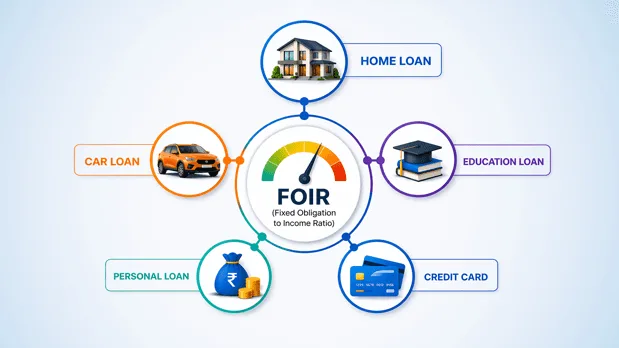
A simple self-check helps. Add up your current EMIs and divide by your monthly take-home pay. The higher that share, the less room a new EMI has. Lenders often call this ratio FOIR. For how lenders weigh EMIs against income, read our guide to FOIR and loan eligibility.
Muthoot hasn't published a FOIR limit on the pages we read, so we don't give one.
What Documents Does Muthoot List?
Muthoot's FAQ lists a salary certificate, three years of income tax returns, identity proof and address proof. It also mentions salary proof and bank statements for salaried applicants, and income tax returns and profit-and-loss statements for self-employed applicants. Since the page is undated, confirm the current document requirements before applying. Confirm the current list with Muthoot, because the page is undated.
Get these ready early, because missing papers cause more delays than people expect.
- ID and address proof, with matching names.
- Salary proof for the period Muthoot asks for.
- Bank statements that show your salary or income coming in.
- Income tax returns, for the years it asks for.
- Profit and loss statements, if you're self-employed.
The name and date of birth on your documents should match your PAN and your credit report. A mismatch can slow things down.
Which Bureau Does Muthoot Use for a Personal Loan?
We couldn't confirm it. Muthoot's score blog names CIBIL as "one of the most widely used credit scoring systems in India", with scores from 300 to 900, but it doesn't say Muthoot uses it. The personal loan page says "credit score" without naming a bureau.
That matters because each bureau has its own model, so your number can differ from one to another. If Muthoot checks a different bureau from the one you looked at, your score on its screen may not match yours.
How Do You Check Your Score Before You Apply?
Use CIBIL's own website and its free yearly report. CIBIL says it provides "one CIBIL Score and Report without any charge once a year". RBI's directions say the same for bureaus: one Free Full Credit Report, including your score, once during January to December, on request after you verify your identity.
- Open the official CIBIL website. Type the address yourself.
- Register with your name, PAN and mobile number, and confirm with an OTP.
- Choose the free report, not a paid plan.
- Save the report and note the date.
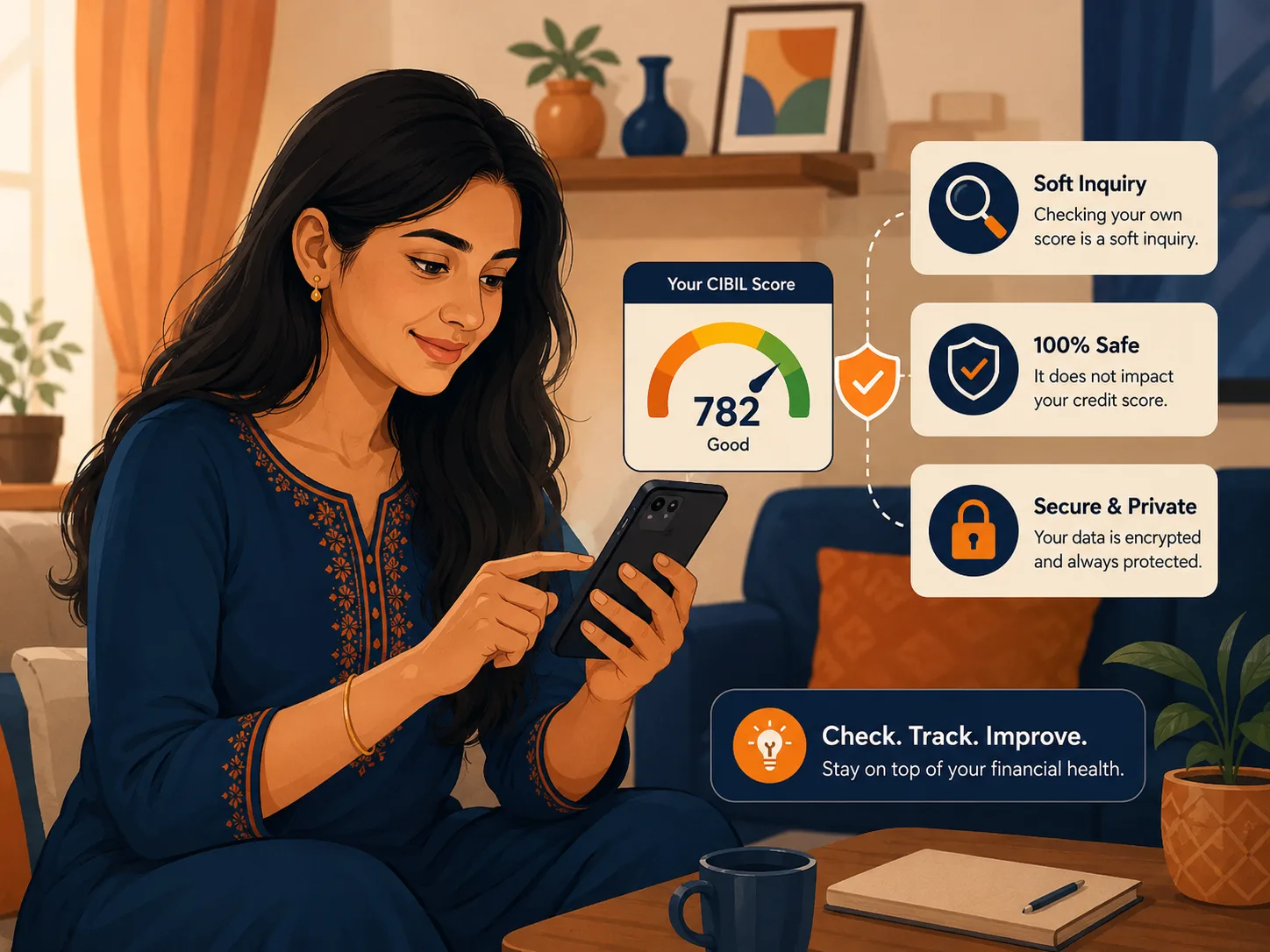
If you already have a myCIBIL account, log in, open "My Account" and click "Get your Free Report". Checking your own score doesn't lower it. CIBIL's free page says "Checking your own credit score doesn't impact it." See our guide to the official CIBIL score check website.

What the Law Says
Checking your own score does not lower it. Each credit bureau must give you one free full credit report with your score every calendar year. If a wrong entry isn't fixed within 30 days of your complaint, you may get ₹100 for each day of delay.
Check My Credit InsightsWhat Should You Check on Your Report Before Applying?
Go through each account and match it to your papers. A wrong entry can cost you more than a small score gap.
- Every account is yours.
- Balances match your latest statements.
- Days past due show zero for months you paid on time.
- Closed loans show as closed, with a zero balance.
- Status is right: Standard, Closed, Settled or Written Off.
- Personal details are correct: name, PAN, address, date of birth.
- Enquiries are yours. Each should match an application you made.
Note any account that looks wrong, with the month and what it should say. For a guide to each section, see how to read your CIBIL report.
How Do You Fix a Wrong Entry Before You Apply?
Raise it with the bureau and the lender, in writing, and keep every reference number.
- Raise a dispute with the bureau online. CIBIL's FAQ says a dispute may take approximately 30 days to resolve.
- Write to the lender that reported the entry.
- Attach proof: a statement, receipt or no-dues letter.
- Check again once the bureau replies.
Start before you apply. RBI's rule sets the timing: the lender has 21 days to send the corrected details, and the bureau pays ₹100 a day if a complaint isn't resolved within 30 days. Don't count on compensation. It doesn't cover disputes about how a score is calculated. For the full process, read our guide on fixing wrong entries.
Not Sure Which Option Fits You?
Open the FREED app, add your details and see which plan fits your situation.
See My Options on FREEDWhat Happens to Your Score When You Apply?
When you apply for a loan, the lender may make a hard enquiry on your credit report. Multiple credit applications within a short period may affect your score and how lenders assess your borrowing profile. There is no universal number of enquiries that is guaranteed to have no impact.
So before you apply anywhere, check your own report and fix what's fixable. Apply once, to the lender that fits. If you're declined, don't rush to apply to three more. For the difference between enquiry types, see our guide on soft and hard inquiries.

FREED Expert Tip
Before you apply, add up your current EMIs and divide by your monthly take-home pay. If more than half your pay is already committed, a new loan is likely to be refused or cut down, so a smaller loan may suit you better.
Check My EMI ScoreWhat If Your Score Is Below the Muthoot Finance Personal Loan CIBIL Score Muthoot States?
You have two options: raise it, or ask whether a scheme fits your profile. Muthoot's page says some schemes accept scores "starting from 600", but doesn't say which ones or on what terms. Ask Muthoot directly.
- Pay every EMI and card bill on time. This matters most.
- Lower your card use before you apply.
- Clear small dues that sit unpaid.
- Avoid new applications in the weeks before you apply.
- Check your report for errors and dispute them.
Give changes time. A report updates when lenders send their data, so a payment you make today may not show for a few weeks. RBI's directions say lenders report as on the 9th, 16th, 23rd and the last day of each month, or at shorter agreed intervals. For habits that build a score, see our guide on how to build a credit score.
What If Muthoot Declines Your Application?
A decline isn't a final verdict. Ask what drove it, then fix that.
- Ask Muthoot for the reason.
- Check your CIBIL report for errors, using the steps above.
- Fix what you can: disputes, small dues, card balances.
- Wait before you apply again. Muthoot's pages that we read give no waiting period, so ask.
- Apply once, not to several lenders at the same time.
Only the lender knows the reason, and it may not share all of it. Don't assume it was your score, because income, documents and obligations count too. A decline doesn't mean you can't get a loan, but another application with nothing changed may bring the same answer and add another enquiry.
What Mistakes Do Applicants Make With NBFC Personal Loans?
Most avoidable problems come from a short list of mistakes.
- Relying on one number from one page, when the page conflicts with itself.
- Not asking about collateral, and signing before you understand it.
- Applying to several lenders at once.
- Reapplying straight after a decline, with nothing changed.
- Mismatched details: a name or date of birth that doesn't match your PAN.
- Missing documents.
- Paying a fee up front before you've seen the terms in writing.
- Taking the biggest loan offered instead of the one your pay can carry.
Avoid these, and you've covered most of what's in your hands. That's more useful than any single score.
How Does FREED Help You Track Your Score?
FREED Credit Insights shows your credit report and score, and points to what’s holding the score back, with a step-by-step plan to improve it. The report comes from Experian, not CIBIL, so the two scores may not match. Each bureau scores you with its own model, and a small difference between them is normal.
Over 30,000 borrowers trust Credit Insights, and over 20 lakh people trust FREED. FREED isn't a loan provider. Credit Insights explains your report, and it doesn't remove entries that are correct. If something is wrong, you still raise the dispute with the bureau and the lender.
Use it next to your CIBIL check. If both show your accounts the same way, you can relax. If they differ, check the dates first. You can start on the Credit Insights page.
Track Your Score in One Place
Check your Experian report with FREED Credit Insights.
Check My Credit Insights
What If Your EMIs Feel Too Heavy, or You Can't Repay a Loan?
Match the fix to your situation. Here are three routes.
- Errors on the report. Dispute them, using the steps above.
- Still paying, but stretched. If most of your salary goes towards paying multiple EMIs, FREED's Loan Consolidation Plan helps you combine multiple loans into a single monthly EMI. This can reduce your monthly EMI burden by up to 50%.* It's only for people who haven't missed payments. Read more about the Loan Consolidation Plan.
- Cannot repay. Settlement is not something a borrower chooses out of preference. If you genuinely cannot repay your loans, FREED negotiates with your lenders to settle them for less than 50%* of your outstanding dues. Read more about the settlement programme.
Rates and ranges shown are indicative. Final terms decided by the bank/lender. FREED is not a Loan Provider. No outcome is guaranteed. Please verify directly with your bank.
Outcomes vary by lender and borrower profile. Settlement terms are decided by the lender. No percentage is guaranteed.
Don't take a new loan just to clear an old one without comparing the full cost. A new loan adds an enquiry and a new EMI.
Not Sure Which Option Fits You?
Open the FREED app, add your details and see which plan fits your situation.
See My Options on FREED
Mohit Juneja
Mohit Juneja is FREED’s Content & Communication Lead with 12+ years of experience across content, media, advertising and digital communications. He holds a postgraduate diploma in Communications from Xavier Institute of Communications, Mumbai, and has worked with organisations including NDTV, The Indian Express, McCann Worldgroup and NABARD.
At FREED, he leads content and communication across loan management, debt resolution, debt consolidation and financial well-being. His work combines research, storytelling and consumer-focused communication to make complex financial topics easier to understand and act on. He has also scripted and produced 11 documentaries on rural development and agriculture for NABARD, with film's selected for the Mumbai International Film Festival.
mohit.juneja@freed.care

FREED is India's trusted loan management platform. We help India settle their loans, consolidate their EMIs, improve their credit score, and manage their loans better. Over 20 lakh people trust FREED. We have managed more than ₹3,500 crore in loans and saved our users over ₹450 crore.
Media Mentions