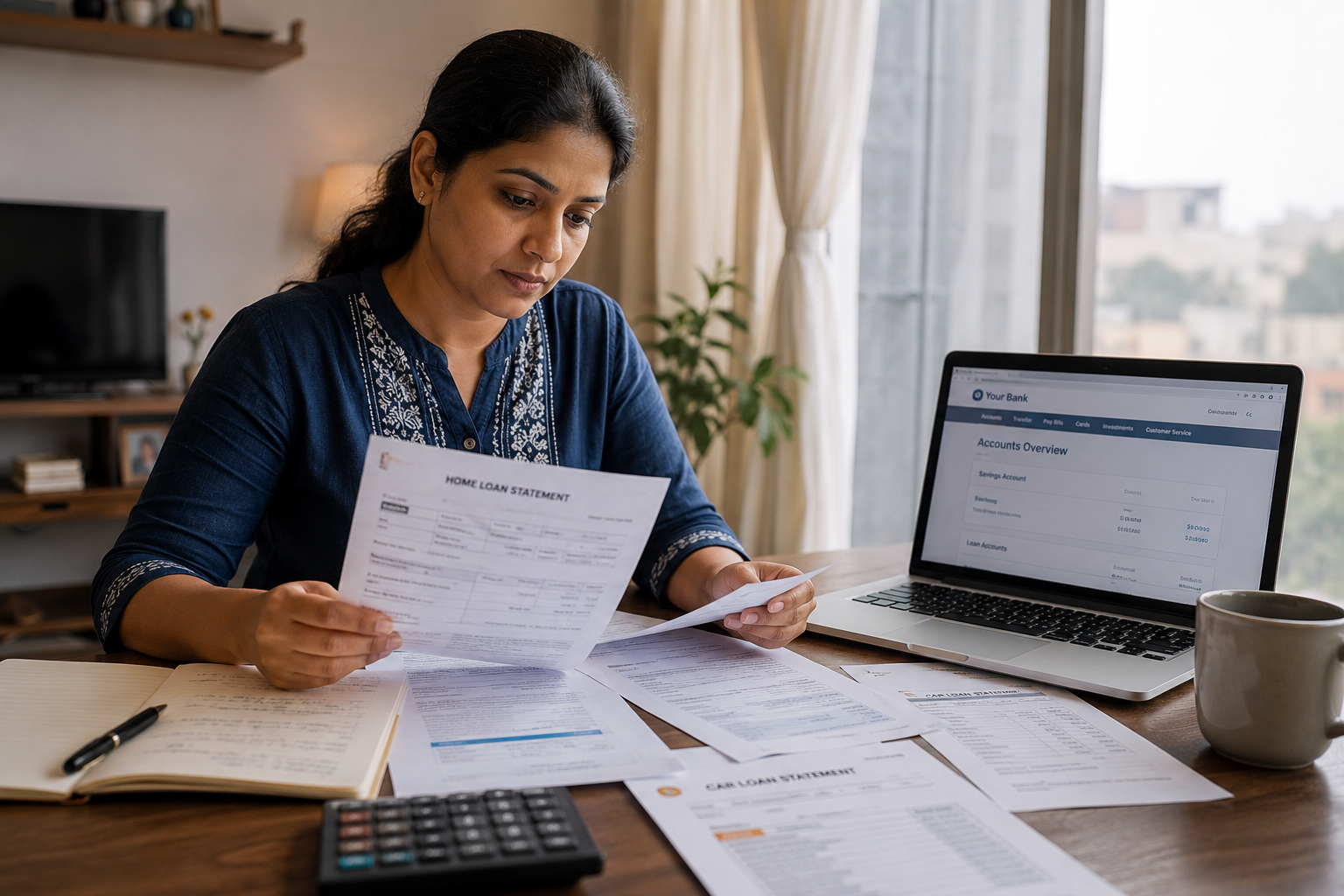
What CIBIL Score Is Needed for a Personal Loan?
Most banks in India want a CIBIL score of 700 to 750 for a personal loan. NBFCs and digital lenders often go as low as 650, sometimes 600 for smaller amounts. But the number alone doesn't decide approval, income, existing EMIs, and loan amount all carry weight too.

Mohit Juneja
Reviewed by FREED India, Debt Resolution Specialists
 4.7/5
4.7/5 ₹3,200Cr+
 20,000+
 20,00,000+4.7/5₹3,200Cr+20,000+20,00,000+
Key Takeaways

Banks generally want 700–750 for a personal loan. NBFCs work with 650+. Some digital lenders go as low as 600.
Borrowers with stronger credit profiles generally qualify for more competitive interest rates and loan terms, depending on the lender.
The score you need also shifts with loan amount, smaller loans have more room, larger ones demand more.
Clearing the minimum score doesn't guarantee approval. FOIR and employment stability matter just as much.
Below 600, most banks won't even consider you. A narrow set of NBFCs or secured options are what's left.
What CIBIL Score Do Banks Require for a Personal Loan?
Banks sit at the strict end. They're lending depositors' money, so their risk tolerance runs tighter than an NBFC's ever will.
Most major banks, public and private, land somewhere around 700 to 750 as a working minimum. Public sector banks skew stricter, often holding closer to 720 or even 750 as a typical eligibility benchmark, with less room to bend on individual cases. Private banks spread out a bit more, some starting around 680 to 700, though the good terms still sit above that line.
At 750 and up, banks start competing for you instead of the reverse. Approval moves faster, rates settle toward the lower end, and processing fees sometimes disappear altogether. Fall short of that and clear the minimum anyway, expect a higher rate and possibly a smaller approved amount than you asked for.
One thing to keep in mind: a bank's published minimum is a filter, not a promise. Two people with the identical 720 score can walk away with different outcomes, depending on income, job type, and what else they already owe.

What CIBIL Score Do NBFCs and Digital Lenders Accept?
NBFCs and digital lenders start from a meaningfully lower floor, and the reason comes down to where their money comes from. Banks lean on depositor funds, which keeps them cautious. NBFCs raise capital through their own borrowing, which buys them room to look at a wider pool of applicants.
Most NBFCs settle around 650 as a practical minimum, and some go comfortably down to 600 for smaller loan amounts. Digital-first lenders push further still, pulling in signals beyond the score itself, bank statement patterns, how often you use UPI, how regular your income actually is. That's how a borrower with a 680 score and a steady salary credit can get approved somewhere a bank just turned them down.
The cost shows up elsewhere. Interest here typically runs 18% to 36% a year, well past the 10% to 18% a bank charges someone with a strong score. Loan amounts get capped lower too, often ₹25,000 to ₹2 lakh for lower-score applicants, with shorter repayment windows attached. It's a real path when a bank isn't an option, just go in knowing exactly what it costs.
Does the CIBIL Score Requirement Change With Loan Amount?
Yes, and this part gets skipped over more than it should. How much you're asking for changes how much risk the lender is taking on, separate from your score entirely.
Under ₹50,000 to ₹1 lakh gives you the most room. A smaller amount is easier for a lender to absorb if things go wrong, so the bar drops here, some digital lenders will approve applicants sitting at 600 to 650 for loans in this range.
₹1 lakh to ₹5 lakh usually wants 650 to 680 at minimum, sometimes more depending on how the lender weighs risk. NBFCs are most active and most competitive right in this band.
₹5 lakh and above generally pushes the requirement to 700 or higher. A bigger amount means the lender wants a longer, cleaner track record backing it.
Above ₹10 lakh through a bank typically needs 750 as a practical floor. At this size, banks make far fewer exceptions, and the gap between a 650 score and a 780 score can mean well over a lakh in extra interest across the loan's tenure.
The pattern holds across most lenders: bigger amount, higher bar, since the lender's exposure grows right alongside it.

What Happens at Each Score Band?
Breaking the range into bands makes it easier to see exactly where you land and what that actually means.
- 1
750–900, Excellent.
Best rates, fastest approvals, highest loan amounts, across nearly every bank and NBFC. Processing tends to move quicker too, fewer manual checks slowing things down.
- 2
700–749, Good.
Most banks and NBFCs approve here, terms are competitive, just not the top-tier numbers reserved for 750+. There's real room to negotiate at this level.
- 3
650–699, Fair.
Banks get cautious. Some still approve, plenty won't. NBFCs and digital lenders are the more dependable route here, at a noticeably higher rate than someone above 750 would pay.
- 4
600–649, Limited.
Traditional banks are unlikely to say yes. A handful of digital lenders and NBFCs remain, generally for smaller amounts and higher cost, leaning harder on income and bank statement patterns to make up for the score.
- 5
Below 600, Very Limited.
Most formal lenders, banks and NBFCs alike, treat this as high default risk and decline outright. A secured loan or a co-applicant with a stronger score becomes the realistic way forward.

What the Law Says
RBI's position is that banks cannot reject first-time borrowers solely for lacking credit history, though internal risk policies still apply on a case-by-case basis.
Ask FREED About Your SituationWhat Matters Besides the CIBIL Score Number
Clearing the threshold doesn't guarantee approval, and that catches more applicants off guard than it should.
FOIR, your Fixed Obligation to Income Ratio, sits right up there with the score itself. It measures how much of your monthly income is already tied up in EMIs and other financial commitments. As a common underwriting practice rather than a universal rule, most lenders want that under 40% to 50%. Existing commitments already eating up most of your income? A 750+ score won't necessarily fix that, the lender sees no real room left in your budget, regardless of the number on top.
Employment stability counts too. A long run at one employer reads as lower risk than frequent job-hopping, even against the identical score.
Income relative to the loan amount gets checked directly. Strong score, modest income, large loan request, still a common combination for a decline or a scaled-down offer.
An existing relationship with the lender can tip things your way. A bank where you already hold a clean-history account sometimes bends further than it would for a stranger walking in cold.

FREED Expert Tip
An incorrectly reported late payment may affect how future lenders assess your credit profile. Reviewing your credit report before applying can help identify reporting errors. Check your report for errors before you apply, not after a rejection.
Get Your Report Reviewed by FREEDHow to Improve Your Approval Odds Before Applying
A handful of deliberate moves before you apply can change how this plays out.
1. Check your report for errors first. A wrong entry or a mislabeled late payment can be quietly dragging your score down without you knowing, sometimes by a lot.
2. Skip multiple applications in a short window. Each formal loan application creates a hard enquiry that future lenders may consider during credit assessments. Stack several close together and that adds up right when you need the score at its best.
3. Ask for less. A smaller amount is easier to approve at a borderline score, it's simply less exposure for the lender.
4. Bring in a co-applicant if you're on the edge. A co-applicant with a stronger score and steady income strengthens the combined application, sometimes enough to flip a decline into an approval.
Small, deliberate moves before applying tend to matter more than sitting around waiting for the score to climb on its own.
Not Sure Where You Stand?
Understand what's actually affecting your score before you apply.
Check My Score
If Your Score Isn't There Yet, What FREED Can Do If Existing Debt Is the Cause
CIBIL Score Bands and What They Mean for a Personal Loan
Score Range | Category | What You Can Expect |
750–900 | Excellent | Best rates, fastest approval, highest loan amounts, most banks and NBFCs |
700–749 | Good | Most banks and NBFCs approve, competitive but not top-tier rates |
650–699 | Fair | Banks cautious, NBFCs and digital lenders approve at higher rates |
600–649 | Limited | Traditional banks unlikely, select digital lenders and NBFCs for smaller amounts |
Below 600 | Very Limited | Most formal lenders decline, secured loans or co-applicant needed |
Existing Debt Pulling Your Score Down?
See if consolidation or settlement fits better than a new loan.
Check Your Options
Mohit Juneja
Mohit Juneja writes educational content at FREED on debt management, credit scores, loan repayment, and borrowing best practices. His content is shaped by expert insights and industry knowledge, helping readers better understand their financial options and make informed decisions.
mohit.juneja@freed.care

FREED is India's trusted loan management platform. Founded in 2020 and headquartered in Gurugram, FREED has counselled 20 lakh+ people on personal loans, credit cards, and app loans. FREED charges fees only on successful settlement, not upfront. FREED does not handle secured loans (home loans, car loans, gold loans).
Media Mentions