RBI Rules for Education Loan Recovery: What Every Borrower Must Know
RBI rules for education loan recovery are the guidelines that banks and NBFCs (non-banking financial companies) must follow when collecting overdue payments from borrowers. These rules cover how recovery agents can contact you, what they cannot do, what options you have to restructure or pause your EMIs, and when you can formally complain. The goal is to make the recovery process legal, fair, and respectful, not punitive.

Mohit Juneja
Reviewed by FREED India, Debt Resolution Specialists
 4.7/5
4.7/5 ₹3,200Cr+
 20,000+
 20,00,000+4.7/5₹3,200Cr+20,000+20,00,000+
KEY TAKEAWAYS

RBI rules for education loan recovery apply the moment you miss an EMI, not just when accounts are formally declared NPA (loan marked as bad by the bank)
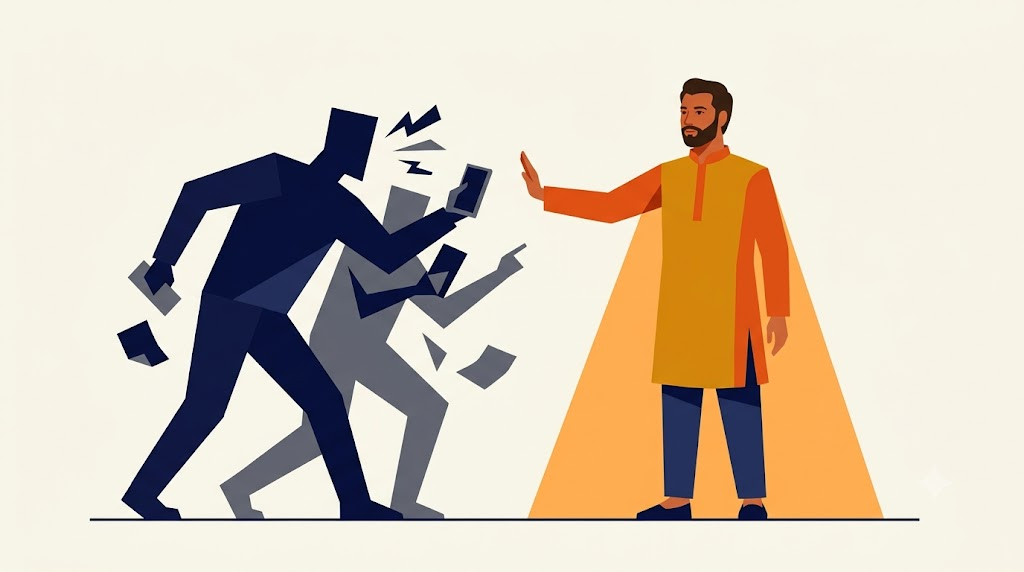
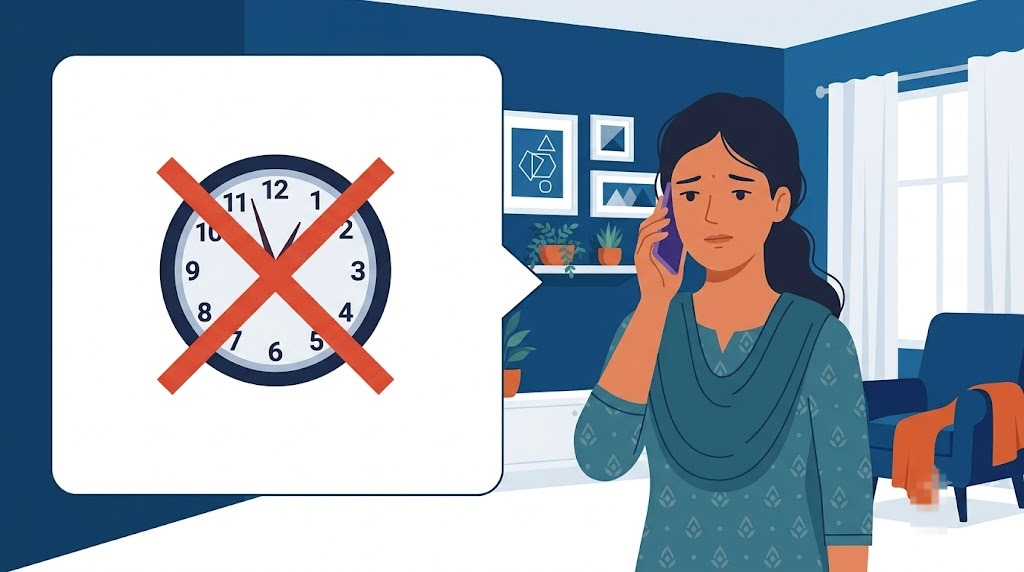
Recovery agents cannot call before 8 AM or after 7 PM, visit without prior notice, or contact your employer or family members
Banks may consider restructuring requests in line with applicable RBI guidelines and their internal policies
Original property documents must be returned within 30 days of full repayment. Delay attracts ₹5,000 per day compensation to you. (https://www.rbi.org.in/Scripts/NotificationUser.aspx?Id=12535&Mode=0 )
If recovery agents cross the line, complaints go to the bank's nodal officer first, then to the RBI Banking Ombudsman. up to ₹30 lakh for financial loss and up to ₹3 lakh for harassment or mental anguish.
What Does "Education Loan Recovery" Actually Mean Under RBI Rules?
Education loan recovery is the process by which a bank or NBFC contacts you to collect overdue payments on your education loan. Under RBI rules, this is not arbitrary. Every step the bank takes, from the first reminder to assigning a recovery agent, must follow a defined framework.
The process doesn't start at the crisis stage. It begins with the very first missed EMI. At that point, you're in the reminders stage. The bank sends SMS alerts, emails, and written notices. No recovery agent is assigned yet.
The situation changes after 3 consecutive missed EMIs. At that point, your account is formally classified as NPA (loan marked as bad by the bank). This is a significant step. The RBI Financial Stability Report June 2024 flagged education loans as one of the segments with rising NPA levels, though the share of NPA in overall education loan portfolios varies by bank type. Writer must retrieve the exact figure before publish. [(RBI IRACP Norms — Income Recognition, Asset Classification and Provisioning: https://www.rbi.org.in/Scripts/NotificationUser.aspx?Id=11580&Mode=0 )]
Once NPA is declared, the bank may assign a recovery agent. This is when the RBI's Fair Practices Code kicks in fully. From this point forward, every contact the agent makes, every visit they attempt, every word they use, is governed by RBI rules. You have rights at every stage. Knowing them early gives you more time to act.
What Are Recovery Agents Allowed and Not Allowed to Do?
Conduct | Allowed | Not Allowed |
Call timing | 8 AM to 7 PM only | Calls before 8 AM or after 7 PM |
Home visits | With prior written notice | Without notice or at restricted hours |
Third-party contact | None permitted | Contacting employer, family, or friends |
Language used | Polite, factual | Abusive, threatening, intimidating |
Public shaming | Prohibited entirely | Social media posts or broadcasts about the default |
Account statement | Must be provided on request | Cannot be refused |
Extra charges | Only as per loan agreement | No agent fees or invented charges |
Under RBI Circular RBI/2022-23/108, threats, intimidation, public shaming, and abusive language by recovery agents are explicitly prohibited — not just discouraged. A verified violation gives you grounds for a formal complaint with the bank's Grievance Redressal Officer and, if unresolved, with the RBI Ombudsman, who has the discretion to award compensation based on the merits of the case. [(RBI/2022-23/108: https://rbi.org.in/Scripts/NotificationUser.aspx?Id=12378&Mode=0)]
One important protection: if you have a pending formal grievance with the bank about your account, the bank cannot forward your case to a recovery agent until that grievance is resolved. File your complaint in writing. Email creates a timestamped record. [(RBI Draft Responsible Business Conduct Amendment Directions 2026 - Press Release: https://www.rbi.org.in/Scripts/BS_PressReleaseDisplay.aspx?prid=62215)]

What the Law Says
Under RBI's Fair Practices Code (Master Circular, July 2024), banks are fully accountable for every action their recovery agents take. A harassment complaint against the agent is a complaint against the bank, not just the agency.
Speak to an ExpertWhat Happens Step by Step When You Default on an Education Loan?
Understanding what comes next helps you prepare. Here's the actual sequence.
- 1
First Missed EMI, Reminders Begin
The bank sends SMS, email, and written notices about the overdue EMI. Bounce charges and late fees are added to your outstanding. No recovery agent is assigned at this stage. Contact the bank in writing immediately — this is the easiest stage to address.
- 2
3 Consecutive Missed EMIs, NPA Classification
Your account is formally marked NPA (loan marked as bad by the bank). This triggers internal escalation. The bank may now transfer the case to a recovery agency. RBI's Fair Practices Code for recovery agents now applies fully.
- 3
Recovery Agent Assigned
The agent contacts you within permitted hours (8 AM to 7 PM). Home visits require prior written notice. You have the right to ask for their bank-issued ID card and a written authorisation letter. You can also request a full statement of your account at any point. The bank cannot refuse this.
- 4
Negotiation and Restructuring Window
This is your opportunity to act before legal proceedings begin. Submit a written request for restructuring or moratorium, supported by documents showing genuine financial difficulty. Under RBI's Fair Practices Code, banks are required to acknowledge and consider such requests. They are not obligated to approve, but they must engage with a genuine hardship case. [(RBI Fair Practices Code: https://www.rbi.org.in/Scripts/NotificationUser.aspx?Id=12378&Mode=0 )]
- 5
Legal Notice Issued
If no resolution is reached, the bank issues a formal legal notice giving you a time window to respond or repay. This step is serious. Seek guidance from a qualified advisor immediately. Do not ignore the notice.
- 6
DRT or Settlement
For accounts above a certain threshold (typically ₹20 lakh, writer must verify current DRT jurisdiction limit), the bank may approach a Debt Recovery Tribunal (DRT, a special government court for loan cases established under the Recovery of Debts Due to Banks and Financial Institutions Act, 1993). Alternatively, if repayment has become genuinely impossible, a negotiated settlement may be explored as

Struggling to Keep Up With Your Education Loan EMIs?
Talk to a FREED counsellor. Understand your options before the bank makes the next move.
Speak to a FREED CounsellorWhat Are Your Rights When the Bank Starts Recovery?
Borrower rights exist from the moment recovery begins. They don't kick in only after things escalate. Here's what you're entitled to right now.
Right to written notice before any home visit.
A recovery agent cannot show up at your home without prior notice. If they arrive unannounced, you are not required to engage. Ask for their ID and authorisation letter before any conversation begins.
Right to a statement of account on request.
You can ask for a full breakdown of what you owe, covering principal, interest, penalties, and charges, at any point. The bank must provide this. They cannot refuse.
Right to request restructuring or moratorium.
Under RBI guidelines, banks are required to consider your request for restructuring (change the loan plan, with revised EMI, longer tenure, or adjusted interest) or moratorium (temporary EMI pause) when you show genuine financial distress. Job loss, a medical emergency, or a gap in employment after graduation are all valid grounds. The bank must engage with your request. They don't have to approve it, but they must consider it seriously. (RBI Fair Practices Code: https://www.rbi.org.in/Scripts/NotificationUser.aspx?Id=12378&Mode=0 )
Right to return of original property documents within 30 days of full repayment.
Effective December 1, 2023, RBI rules require banks to return any original documents they hold, including property papers and certificates, within 30 days of your loan being fully repaid. If they delay, you are entitled to ₹5,000 per day in compensation for every day beyond that deadline [writer: verify against RBI circular, December 2023].
Right to file a grievance without escalation being paused.
As long as a formal grievance is pending with the bank, the bank cannot forward your case to a recovery agent. Filing a written complaint creates a hold on the recovery process. [(RBI Draft Responsible Business Conduct Amendment Directions 2026: https://www.rbi.org.in/Scripts/BS_PressReleaseDisplay.aspx?prid=62215 )]
What Is Loan Restructuring and Can You Ask for It?
Restructuring means changing your loan plan. It isn't the same as defaulting or settling. It's a formal request to your bank for revised repayment terms: a lower EMI, a longer tenure, a temporary pause on principal payments, or an interest rate concession. You're still repaying. You're asking for a structure that's possible given your current income.
Moratorium (temporary pause on EMIs) is different. It's a time-limited stop on repayments. Interest still runs during this period and is typically added to the outstanding principal. But it buys time if you're between jobs or facing a short-term income gap.
Under RBI guidelines, the standard moratorium for education loans runs for the course duration plus 6 to 12 months, or until you secure employment, whichever is earlier. If you're still struggling after that window, you can apply for an extension by showing documented financial distress.
What counts as verifiable distress for the bank:
- Job loss with supporting documentation (termination letter, employer email)
- Medical emergency affecting income (hospitalisation records, doctor's certificate)
- Income gap post-graduation (proof of job search, rejection letters)
- Business loss for self-employed borrowers (bank statements, CA certificate)
Submit your request in writing. Attach all supporting documents. Keep a copy of everything, including the submission receipt or email acknowledgement. Banks are required to consider the request. The decision is theirs. But an undocumented verbal request is easy to ignore. A written one with evidence is not.
Interest concessions are also possible in cases of demonstrated hardship. Ask specifically. Don't assume the bank will offer it unprompted.
Are You in a Loan Trap? Quick Check
Move the slider to your total EMIs as a % of monthly salary. See your debt stress level instantly.
EMIs as % of Monthly Salary
What Options Do You Have Before Settlement Becomes Necessary?
There are several steps worth taking before settlement enters the picture. Work through them in order.
Talk to the bank directly, in writing.
Call first to find out who the right person is: the collections team, not customer care. Then follow up with a formal written letter or email. State your situation clearly. Ask what options they can offer. A written request creates a record. A phone conversation doesn't.
Request a moratorium extension.
If you're still within or just past your moratorium period, ask for an extension. Show documentation of why repayment isn't possible yet. Banks have offered extensions in cases of genuine employment difficulty.
Ask for loan restructuring (change the loan plan).
Request a revised repayment schedule with lower EMIs over a longer tenure, or an interest rate concession. Submit documents. This may help borrowers continue managing repayments before settlement becomes necessary.
Check government subsidy schemes.
If you're from an economically weaker section, check eligibility for the Central Sector Interest Subsidy (CSIS) scheme or CGFSEL (Credit Guarantee Fund Scheme for Education Loans). These are government programmes that can reduce your interest burden during the moratorium period. Writer must verify current scheme status and eligibility criteria before publish.
Consider whether settlement applies to your situation.
Loan settlement is not something a borrower chooses out of preference. Banks only consider it when you are in genuine financial difficulty and truly unable to repay the full amount. It is a last resort, not a shortcut. If settlement is reached, the "Settled" status stays on your CIBIL report for up to 7 years and signals to future banks that the full amount was not repaid. This affects your ability to get loans later.
For unsecured education loans (no collateral pledged), FREED's Loan Settlement Plan can help if you've reached the point where repayment in full is genuinely not possible. FREED builds a savings fund in your name and negotiates with the bank once sufficient funds are ready. You authorise every settlement before any money moves. FREED helps borrowers settle their unpaid/overdue loans at up to 50% less."*
*Settlement waiver up to 50% is indicative, not a guarantee. Final terms are decided by the bank.
How to File a Complaint If a Recovery Agent Crosses the Line
Keep records first. Every complaint is only as strong as the evidence behind it. Save call logs with dates and times, screenshots of messages with timestamps visible, and copies of any written notices you've received. Put them together before you write to anyone.
- 1
Step 1: Write to the bank's nodal officer.
Every bank operating under RBI oversight must have a designated nodal officer for grievances. Find their contact details on the bank's official website. Send a formal written complaint with your account number, a description of what happened, and the evidence you've collected. The bank is required to respond within 30 days.
- 2
Step 2: Escalate to the RBI Integrated Ombudsman.
If the bank doesn't respond within 30 days, or the response doesn't resolve the issue, file online at cms.rbi.org.in. This is free. The Ombudsman can issue binding orders and award compensation of up to ₹30 lakh for financial loss and up to ₹3 lakh for harassment or mental anguish caused by the bank or its agents.
- 3
Step 3: File a police complaint for criminal harassment.
If the agent's conduct crossed into criminal territory, including physical threats, intimidation, or sustained targeting of your family, file an FIR at your local police station. BNS Section 351 (criminal intimidation) and Section 296 (obscene acts) may apply. Writer must verify the correct current BNS sections before publish. A missed EMI is a civil matter. What the agent did is

Getting Threatening Calls From Recovery Agents?
Know exactly what you can do about it.
Book My Free CallHow Can FREED Help With an Education Loan Situation?
Education loans come in two types. Unsecured education loans (typically below ₹4 lakh, no collateral) and secured education loans (above ₹7.5 lakh, with collateral pledged: property papers, fixed deposits, or a third-party guarantee). FREED handles unsecured debt. This matters for what kind of help applies to you.
If your education loan is unsecured:
FREED's team can assess your situation and, if repayment has become genuinely impossible, help you explore whether a structured settlement makes sense. FREED handles the negotiation with the bank on your behalf, builds the required savings fund in your name, and gets the settlement done once the funds are ready. You authorise every step.
If your education loan is secured:
FREED cannot handle the loan settlement directly. But FREED can still help. If recovery agents are crossing the line, calling at restricted hours, contacting your family, or using threatening language, FREED can help you understand your rights clearly and help you prepare the right complaint letter for submission to the bank's nodal officer or the RBI Ombudsman. FREED Shield helps ensure that customers don't have to face recovery-related pressure alone.
In either case, one conversation with FREED's team is enough to understand what applies to your situation. No pressure. No push toward any product that doesn't fit.

FREED Expert Tip
Document every recovery agent call: date, time, and what was said. A single written complaint with evidence to the bank's nodal officer can help ensure your concerns are formally recorded and escalated. FREED's team can help you put that complaint together if you need support.
Read MoreRecovery Process Stages
- 1
First Missed EMI: Reminders Begin
Bank sends SMS, email, and written notices about the overdue EMI. Bounce charges and late fees are added. No recovery agent at this stage.
- 2
3 Consecutive Missed EMIs: NPA Classification
Your account is formally marked NPA (loan marked as bad by the bank). The bank may transfer recovery to a collection agency. RBI's Fair Practices Code for recovery agents now applies fully.
- 3
Recovery Agent Contact
The assigned agent calls within RBI-permitted hours (8 AM to 7 PM). Home visits require prior written notice. You have the right to ask for their ID, authorisation letter, and a statement of your account.
- 4
Negotiation and Restructuring Request
Submit a formal written request for restructuring (change the loan plan) or moratorium extension (temporary EMI pause). Attach documents showing genuine financial difficulty.
- 5
Legal Notice Issued
If no resolution is reached, the bank issues a formal legal notice with a response window. Seek guidance from a qualified advisor immediately. Do not ignore this notice.
- 6
DRT or Settlement
If the amount qualifies, the bank may approach a Debt Recovery Tribunal (DRT, a special government court for loan cases). Alternatively, a negotiated settlement may be explored as a genuine last resort when repayment has become truly impossible.
What Recovery Agents Can and Cannot Do Under RBI Rules
Conduct | Allowed | Not Allowed |
Call timing | 8 AM to 7 PM only | Calls before 8 AM or after 7 PM |
Home visits | With prior written notice | Without notice or at restricted hours |
Third-party contact | None permitted | Contacting employer, family, or friends |
Language used | Polite, factual | Abusive, threatening, intimidating |
Public shaming | Prohibited entirely | Social media posts, WhatsApp broadcasts about the default |
Account statement | Must be provided on request | Cannot be refused |
Extra charges | Only as per loan agreement | No agent fees or invented charges |
Rules shown are based on RBI Master Circular DBR.LEG.BC.21/09.07.005/2024-25, July 2024. Verify directly with your bank or a qualified advisor for your specific case. FREED is not a legal services provider.

Mohit Juneja
Mohit Juneja writes educational content at FREED on debt management, credit scores, loan repayment, and borrowing best practices. His content is shaped by expert insights and industry knowledge, helping readers better understand their financial options and make informed decisions.
mohit.juneja@freed.care

FREED is India's trusted loan management platform. Founded in 2020 and headquartered in Gurugram, FREED has counselled 20 lakh+ people on personal loans, credit cards, and app loans. FREED charges fees only on successful settlement, not upfront. FREED does not handle secured loans (home loans, car loans, gold loans).
Media Mentions