L&T Finance Recovery Agent and Loan Settlement: What to Know
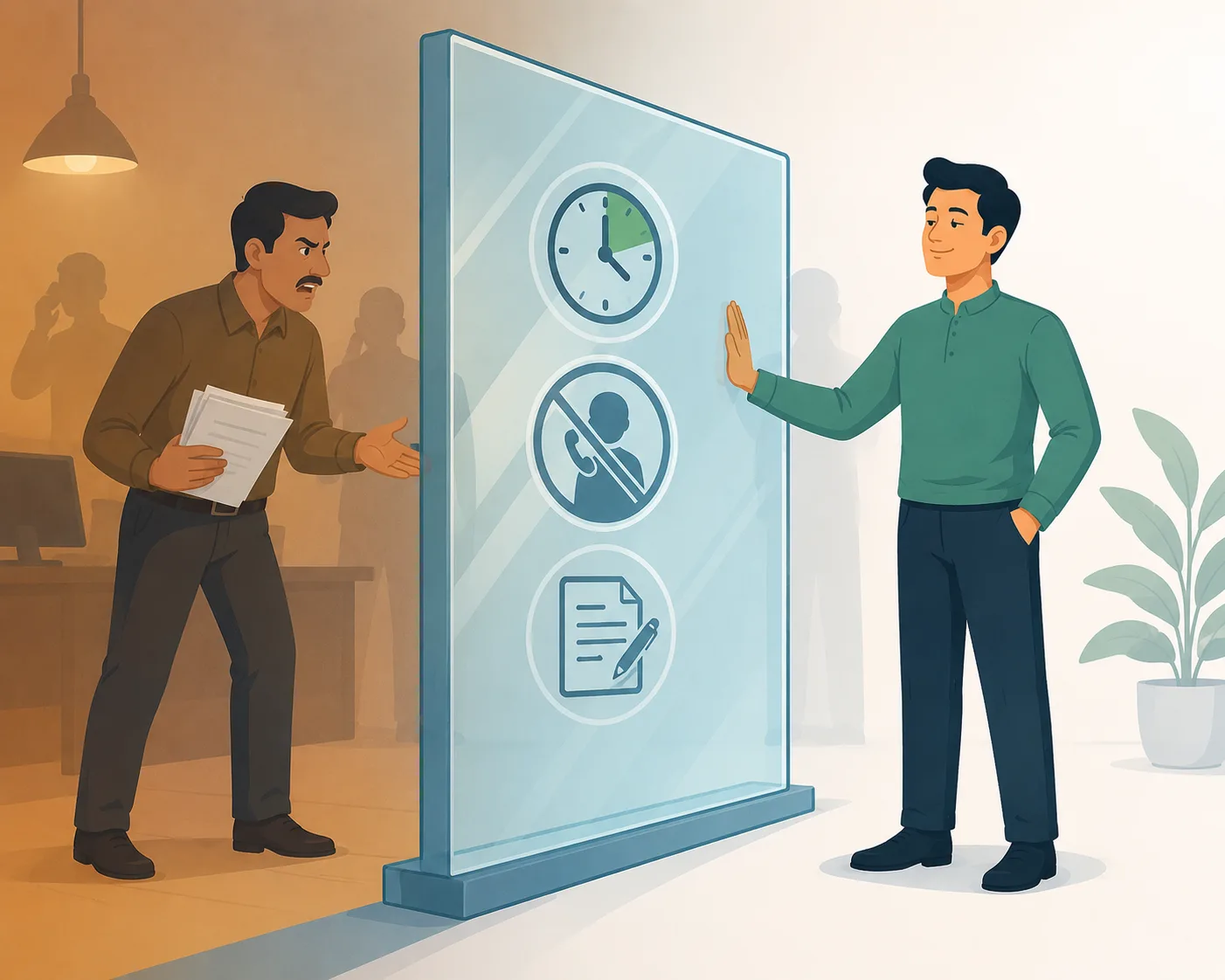
An L&T Finance recovery agent is a person or agency that contacts borrowers on behalf of the lender when EMIs are overdue. Like every lender's agent, they must follow RBI conduct rules on timing, behaviour and identity. You also have a defined way to complain if those rules are not followed.

Mohit Juneja
Reviewed by FREED India, Debt Resolution Specialists
 4.7/5
 ₹3,200Cr+
 20,000+
 20,00,000+4.7/5₹3,200Cr+20,000+20,00,000+
KEY TAKEAWAYS

A recovery agent contacts you to collect overdue EMIs. They are not allowed to threaten, abuse or shame you.
RBI directions that take effect on 1 January 2027 limit contact to 8:00 am to 7:00 pm unless you ask otherwise.
L&T Finance publishes a grievance ladder: customer care, Grievance Redressal Officer, Principal Nodal Officer, then RBI.
Keep a written record of every call, visit and message. It makes any complaint stronger.
Settlement is a last resort for people who genuinely cannot repay. A waiver of up to 50%* is the lender's call.
Who Is an L&T Finance Recovery Agent and Why Are They Calling?
A call comes from an unknown number, and the caller says it is about your loan. If you have a loan with L&T Finance, you may wonder who an L&T Finance recovery agent really is and what they are allowed to do. This guide explains the RBI rules that apply to every lender, how to raise a complaint through the lender's published steps, and what your options are if repaying in full has become difficult. It is a rules-and-rights guide, and it applies equally to all lenders.
Your phone rings. The number is unknown, and the caller mentions an L&T Finance loan. Many people feel their heart race in that moment, and they are unsure who is actually on the line.
A recovery agent is someone the lender, or an agency the lender hires, uses to follow up on overdue EMIs. Their job is to remind you about pending dues and discuss how to pay. They are not courts, and they are not police.
The follow-up usually moves in a pattern like this:
A reminder SMS or call. This is the first nudge, usually soon after an EMI is missed.
Calls from a collections team or an agency. These calls continue if the dues stay pending.
A written notice. The lender sends a letter or email stating the overdue amount.
A legal step. This happens only if the dues stay unpaid and earlier steps get no response.
Banks and finance companies do not always follow every step in this order. Treat the list as a common pattern, not a promise.
Here is a worked example. For example, if your EMI is ₹12,400 and you miss three instalments, the unpaid EMIs would total ₹37,200, excluding any applicable charges, interest or other overdue amounts. Most borrowers in this position are not careless. A job loss, a medical bill or a delayed salary is usually the real reason.
One point matters a lot. Lenders must follow the applicable regulatory requirements when using recovery agents. If an agent threatens, abuses or improperly pressures you, document what happened and raise a complaint with the lender. Check the current RBI directions to confirm the specific requirements that apply. You can read the wider picture in our guide to RBI guidelines for loan recovery. Next, let us look at the exact rules an agent must follow.

What Rules Must an L&T Finance Recovery Agent Follow?
These are RBI rules for all lenders. They apply to L&T Finance in the same way they apply to every other bank and finance company. The point of the rules is simple: a lender can ask for its money, but it must do so with respect.
Here are the main rules in the RBI's recovery directions:
Contact hours are 8:00 am to 7:00 pm. Calls or messages outside this window are allowed only if you ask for them or agree to them.
Dues are discussed only with you or your guarantor. An agent should not discuss your loan with your family, neighbours or colleagues.
Agents must carry an ID card and an authorisation letter. The lender must also share the agency's details with you at least one day before the first in-person visit.
Agents must avoid sensitive moments. These include a bereavement, a medical emergency or a marriage function in the family.
The lender must keep a record of recovery calls for six months. A grievance officer's details must also appear in recovery communications, so you know where to complain.
Timing needs a clear note. These RBI directions take effect on 1 January 2027. Until then, the existing Fair Practices rules apply. So please read the list above as the standard that lenders are moving to, and not as something already in force on every point.
Here is why this helps you in daily life. Say a call comes at 9:30 pm from a number you do not know. Under the new rules, that call would be outside the permitted window unless you had agreed to it. Noting the time and number makes your complaint stronger.
You can read more in our guides on personal loan recovery rules and payment recovery agents' rights.
Under RBI directions effective 1 January 2027, recovery contact is limited to 8:00 am to 7:00 pm unless the borrower asks otherwise.

What the Law Says
Under RBI directions effective 1 January 2027, recovery contact is limited to 8:00 am to 7:00 pm unless the borrower asks otherwise.
Read RBI Rules on Loan RecoveryWhat Counts as Harassment by a Recovery Agent?
A firm reminder is allowed. Harassment is not. The difference lies in how the agent speaks and what the agent does.
Usually acceptable:
- A polite call within the permitted hours.
- A written reminder about the overdue amount.
- An agent who shows ID and explains the dues clearly.
Crosses the line:
- Threats, abusive language or shouting.
- Calls or messages outside the permitted hours.
- Contacting your relatives, neighbours or co-workers about your debt.
- Turning up without an ID card or authorisation letter.
- Threats of arrest.
The RBI directions treat calls or messages outside the permitted hours, and pressure on relatives, friends or co-workers, as harsh practice. These behaviours are not allowed, however large the dues are.
Two facts can bring real calm. A recovery agent cannot arrest anyone. And on an unsecured personal loan, an agent cannot seize your assets on the spot. If an agent says otherwise, that is a sign the conversation has gone wrong, and you can note it down.
Sometimes the stress of constant calls takes a toll on mental health. You can read about your protections in our guide on mental harassment by bank. Your rights also continue after a default, as explained in understanding your rights as a borrower, even if you default.
How Do I Complain About an L&T Finance Recovery Agent?
If an agent has crossed the line, you have a clear path to complain. Follow these steps in order. Each one builds on the last.
Step 1: Write down what happened. Note the date, time, phone number, agent name and what was said. Notes written the same day are easy to trust later.
Step 2: Save your evidence. Keep call logs, screenshots of messages and, where it is lawful, a call recording. Evidence turns a complaint from "he said, she said" into a clear record.
Step 3: Raise it with customer care first. Ask for a complaint reference number. The number lets you refer to the same complaint again at each higher level.
Step 4: Write to the Grievance Redressal Officer. Do this if customer care does not resolve it. Attach your notes and the reference number so the officer sees the full history.
Step 5: Escalate to the Principal Nodal Officer. Use this step if the earlier level has not resolved the issue. This is the lender's last internal level.
Step 6: Take it to the RBI if it is not resolved within one month. You can use the RBI Complaint Management System or the RBI Integrated Ombudsman Scheme. Keep copies of all your complaints and replies ready.
These levels are taken from the grievance page that L&T Finance publishes on its own website. Please copy the current phone numbers and email addresses from that official page, because contact details can change. We cannot promise a result or a time frame at any level.
If you need a format for your letter, see our sample complaint letter against recovery agents. For record keeping, read our guide on how to document threats and harassment from recovery agents.
Complaint Routes Compared: Which One to Use First
Each route has a different job, and the order matters. The table below shows when to use each one.
Route | When to use it | What to keep ready | What to expect |
|---|---|---|---|
Customer care | First contact for any concern | Loan account number, date and time of calls | A complaint reference number |
Grievance Redressal Officer | Customer care did not resolve it | Reference number, your notes, screenshots | A written response |
Principal Nodal Officer | The earlier level did not resolve it | All previous replies | Final internal review |
RBI Complaint Management System | Not resolved within one month | Copies of all complaints and replies | Escalation outside the lender |
FREED Shield | Any time you want your notice or the agent's conduct reviewed | The notice, messages, call log | Review by the in-house legal team, pre-litigation only |
Rates and ranges shown are indicative. Final terms decided by the bank. FREED is not a Loan Provider. No outcome is guaranteed. Please verify directly with your bank.
In practice, you move up the ladder only when the level below does not resolve the issue. Do not skip levels unless there is a good reason, because the higher levels usually want to see what happened below.
One more point helps. A complaint about an agent's conduct and a dispute about your loan balance are two separate things. Raise them separately, so each one gets a clear answer. For example, if an agent was abusive and you also think a late fee is wrong, write two short complaints.
Keep every call, message and reply in one folder with dates. A clear timeline makes any complaint easier to act on.
Get Help With My Notice
Keep every call, message and reply in one folder with dates. A clear timeline makes any complaint easier to act on.
Get Help With My NoticeCan You Settle an L&T Finance Loan?
Settlement is not something a borrower chooses out of preference. A lender may consider settlement when a borrower is experiencing financial difficulty, but approval is not guaranteed. The decision and terms depend on the lender's policy and the circumstances of the account. For secured loans, missed payments can also lead to enforcement action involving the asset, subject to the applicable law, loan agreement and required procedures. If you can still pay, even with effort, other options come first, such as asking for a revised repayment plan.
When settlement is considered, this is how it works. The lender agrees to accept a lower amount as the full and final payment. The waiver (the discount on what you owe) can be up to 50%*, and it is the lender's decision. The loan is then marked as settled on your credit report. A settled account may be reported differently from an account repaid in full. This can affect how future lenders assess a credit application. Check your credit report and ask the lender how the account will be reported before agreeing to settlement.
Here is an illustrative example. It is for understanding only, and it is not a lender quote. Say ₹3,00,000 is outstanding. The lender agrees to ₹1,80,000 as the full and final amount. The waiver is ₹1,20,000. The loan then shows as Settled on your report.
For a secured loan, such as a vehicle or home loan, the terms differ. The lender can also act on the asset that backs the loan. You can read about that in our guide to the SARFAESI Act.
If a settlement is agreed, read the papers carefully before you sign. Our guide on the loan settlement agreement lists what to check. Afterwards, you can rebuild your credit through the steps in steps to rebuild your credit score after a loan default. FREED's Loan Settlement Plan is built for borrowers who are truly unable to repay in full. There is a non-refundable evaluation fee.
Please do not stop paying to get a better offer. Missed payments add late charges and interest, and they hurt your credit score further.
*Rates and ranges shown are indicative. Final terms decided by the bank. FREED is not a Loan Provider. No outcome is guaranteed. Please verify directly with your bank.
What Should You Do When a Recovery Agent Calls or Visits?
You do not need to argue or to panic. A calm, steady approach protects you best. Follow these steps.
Stay calm and ask for the agent's name, agency and ID. A genuine agent can give you these easily, and it tells you who you are speaking to.
Ask which loan account and what amount the call is about. This makes sure the call is about your loan and not someone else's.
Note the date, time and number. A written record helps if you need to complain later.
Say you will reply in writing. Ask the agent to send the details by message or email. A written trail is clearer than a phone call.
Do not share bank PINs, OTPs or card details. A genuine recovery agent does not need them.
If the call is outside permitted hours, or the agent threatens or abuses you, end the call and note it down. Record what was said while it is fresh.
Check your own loan statement for the actual overdue amount. Do this before you agree to anything, so you know the real figure.
You can also ask the lender for a payment plan in writing. A written plan shows that you want to find a way to pay. Our guide on the top 10 ways to manage your debt lists more ideas.
Please do not hide from calls or ignore them. A short, calm reply in writing keeps you in control. If the stress feels heavy, our guide on what can be done when debts make you feel depressed may help.
How FREED Helps With Recovery Pressure
FREED Shield helps ensure that customers don't have to face recovery-related pressure alone. Anyone can use FREED Shield, not only enrolled customers.
FREED Shield helps you understand your rights, keep records of what happened, and report harassment through the right channels. Its in-house legal team can also review a legal notice you received. The team checks whether the notice appears legitimate, tells you whether it needs a reply, and helps you draft one if it does. FREED provides pre-litigation support only. This means FREED does not give legal representation once a case is filed in court.
After that, the right help depends on where you stand.
If you are still paying your EMIs. FREED's Loan Consolidation Plan is for people who can still repay but need a smarter way to manage their debt. If you can still repay but are struggling with multiple EMIs, debt consolidation may be worth exploring. Depending on the interest rate, repayment tenure, fees and eligibility, it may simplify repayments or reduce the monthly instalment. However, a lower EMI is not guaranteed, and taking a new loan does not automatically improve your credit score. Compare the total repayment cost and review the terms before deciding.
If repaying in full is genuinely not possible. The Loan Settlement Plan is the last resort. It follows a structured path, and any outcome is the lender's decision.
It also helps to know where your credit report stands. Check Credit Insight shows your Experian-based score, what affects it, and the steps to improve it.
If you are unsure which step is right, FREED counsellors are available for a call. There is no pressure, just someone to think it through with you.

Mohit Juneja
Mohit Juneja writes educational content at FREED on debt management, credit scores, loan repayment, and borrowing best practices. His content is shaped by expert insights and industry knowledge, helping readers better understand their financial options and make informed decisions.
mohit.juneja@freed.care

FREED is India's trusted loan management platform. Founded in 2020 and headquartered in Gurugram, FREED has counselled 20 lakh+ people on personal loans, credit cards, and app loans. FREED charges fees only on successful settlement, not upfront. FREED does not handle secured loans (home loans, car loans, gold loans).
Media Mentions